
TourLink
À propos
Murghab brings the Pamir Highway back to the body: thin air, wind, wide streets, and a horizon that makes distance visible.
A Murghab visit is easier when it has a simple order: arrive gently, let the body catch up, take care of supplies and road news, then choose one high-country direction instead of folding every lake and pass into the same outing.
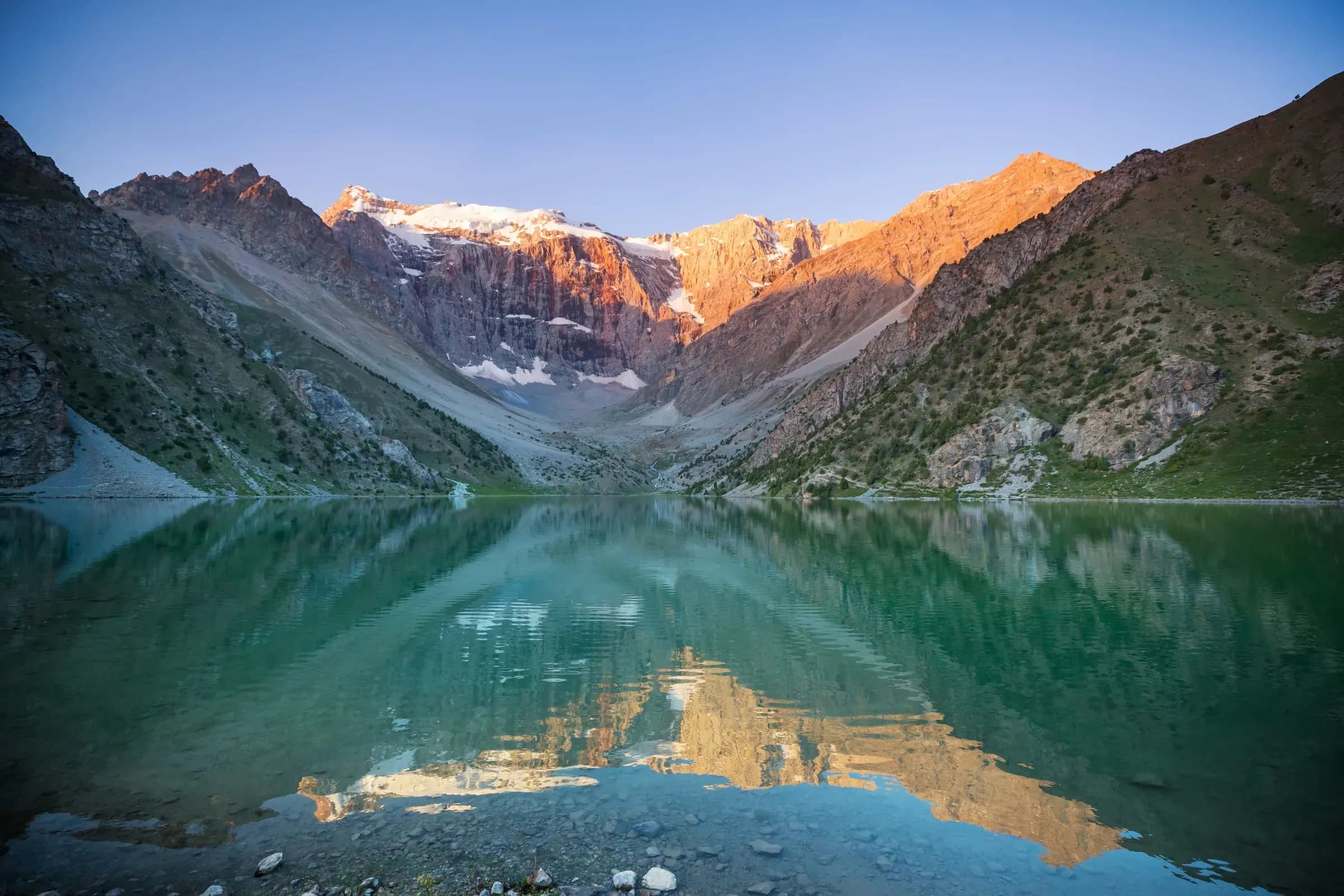
Murghab helps narrow the next decision. Karakul, Ak-Baital, Rangkul, Alichur, and Khorog each need their own weather, fuel, vehicle, permit, and altitude check.
Agencies and travellers who need Murghab as a readable stop — strong places, honest pacing, and logistics that hold.
Getting around
A Murghab visit is easier when it has a simple order: arrive gently, let the body catch up, take care of supplies and road news, then choose one high-country direction instead of folding every lake and pass into the same outing.
Road sequence
Murghab helps narrow the next decision. Karakul, Ak-Baital, Rangkul, Alichur, and Khorog each need their own weather, fuel, vehicle, permit, and altitude check.
After a long road section, Murghab asks for a slower first hour: water, warmth, an unhurried walk, and attention to how the body responds.
Route map
The map anchors Murghab as the eastern Pamir road town. It explains the setting; it does not guarantee that every onward road is open on the day you travel.
What to notice
Murghab itself is the first thing to read: the supply stop, bazaar rhythm, road junction, and the way altitude slows ordinary movement. High lakes and passes belong only when same-day checks support them.
Murghab High Pamir Town is where the Pamir Highway stops feeling like a line on the map. Thin air, wind, low houses, shop counters, tea tables, and long horizons bring the eastern plateau close. The stop is most useful when it stays simple: arrive slowly, ask what the road is doi
Ouvrir le lieuMurghab moments
The strongest Murghab moments are modest: arriving slowly, letting errands become contact with town life, and choosing the next road from fresh advice.
Karakul, Ak-Baital, Rangkul, Alichur, or the return toward Khorog each needs weather, fuel, vehicle, permit, and altitude checks before departure.
Tea, bread, basic supplies, or a road question can make Murghab feel less like a transfer and more like the place where the plateau becomes real.
Thin air, wind, wide streets, and a long horizon show how gently the next high-Pamir stage should begin.
Before you go
Murghab is most useful when it protects the route from hurry. Rest, road news, supply checks, and one clear onward choice matter more than collecting every high-Pamir name.
The first Murghab decision is physical, not sightseeing: move gently, watch how the body responds, and keep the next section realistic.
In Murghab, the next road belongs in one conversation: the body, the driver, the weather, and the map.
A supply run or tea stop can bring warmth, road information, and a short reset before the plateau.
Karakul, Ak-Baital, Rangkul, Alichur, and Khorog are not small variations of the same plan. Each changes distance, altitude, road quality, and the safety margin.
Leave Murghab only after the route feels current: your body, road conditions, and one high-Pamir direction all aligned.
At a glance Place
High Pamir town in eastern Tajikistan, inside the Pamir & GBAO tourist region.
Stay
Usually one night; add time only when altitude, weather, road checks, or the onward route need it.
Route role
High-road town stop before choices toward Karakul, Ak-Baital, Rangkul, Alichur, or Khorog.
Season and comfort
Wind, cold, road surface, altitude, and long distances matter more than a tidy timetable.
Confirm before departure
Permits, border-zone rules, fuel, vehicle, road condition, accommodation, and weather need current review.
Where to continue
Khorog is the clearest return to town scale. Dushanbe anchors the lower-road start, while Ishkashim and Wakhan remain wider Pamir choices when their own route checks are current.
Khorog gives the Pamir route a riverside town stop: Botanical Garden paths, Panj and Gunt river air, GBAO checks, and onward choices toward Wakhan, Bartang, or Murghab.
VoirDushanbe is Tajikistan's calm arrival city: Rudaki Avenue shade, national museums, tea-house stops, and first choices toward Hissar, Varzob, or higher valleys.
VoirIshkashim is the Pamir route's turn toward Wakhan: Panj River views, border etiquette, village roads, permits, weather, and local access advice before the next valley.
VoirLa ville en détail
Temps de marche, lieu de nuit et quand les sorties à la journée ont du sens.
1–2 nights is usually enough when the old core or main anchors get a full walking window. City tone: “High Pamir road town under a wide sky”.
Commencez d'abord par la promenade urbaine compacte. Les sorties seulement après que le centre se soit posé — sinon l'arrêt ressemble à un transfert avec des monuments collés.
Restez assez près pour un retour du soir à pied ou un court transfert. Thé, dîner et un second passage dans les rues restent ainsi faciles sans brûler le lendemain matin.
Sur demande
Nous aidons les agences à poser un rythme réaliste et à choisir le bon mouvement suivant — sans précipiter les lieux qui comptent.