
TourLink
À propos de la ville
Tashkent often begins with motion: an early flight, a train platform, the smell of bread near Chorsu, then the metro, museums, and wide avenues.
Tashkent is large, but a visitor day becomes clearer when arrival, the old city, metro interiors, museums, city squares, and the road out of the capital are held in one calm rhythm.
Arrival and the old city come first; after that, the day has room for one calm continuation: the metro, a museum, the modern centre, or the road toward Chimgan.
Agencies and travellers who need Tashkent as a readable stop — strong places, honest pacing, and logistics that hold.
Getting around
Tashkent is large, but a visitor day becomes clearer when arrival, the old city, metro interiors, museums, city squares, and the road out of the capital are held in one calm rhythm.
City rhythm
Arrival and the old city come first; after that, the day has room for one calm continuation: the metro, a museum, the modern centre, or the road toward Chimgan.
International flights, rail stations, and hotel timing decide how much of the city can fit before the first walk.
On the route
The map keeps arrival, Chorsu, Hazrati Imam, the metro, and the Applied Arts museum visible; Kukeldash, Amir Timur Square, history museums, modernist avenues, Sheikhantaur, Suzuk-Ota, or Chimgan should be added only when the pace is calm.
What to see
Khast Imam and Chorsu give Tashkent its old city; the metro, Kukeldash, Amir Timur Square, the Applied Arts Museum, history museums, Sheikhantaur, Suzuk-Ota, and contemporary cultural spaces show the capital beyond arrival.
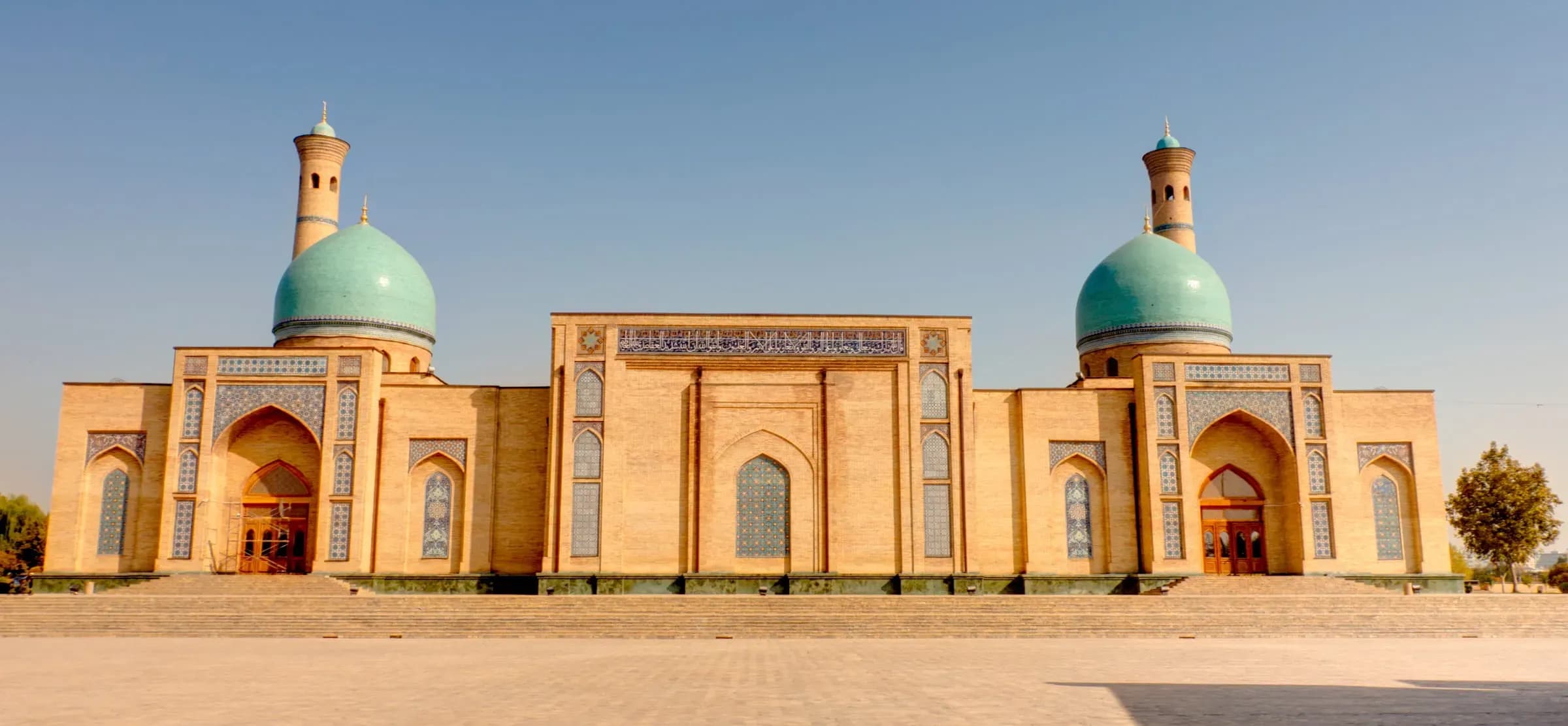
Khast Imam gathers old Tashkent at a calmer scale: courtyards, tiled portals, madrasahs, mosques, shade, and a manuscript tradition. After the movement of Chorsu, the ensemble gives the city a quieter voice.
Ouvrir le lieu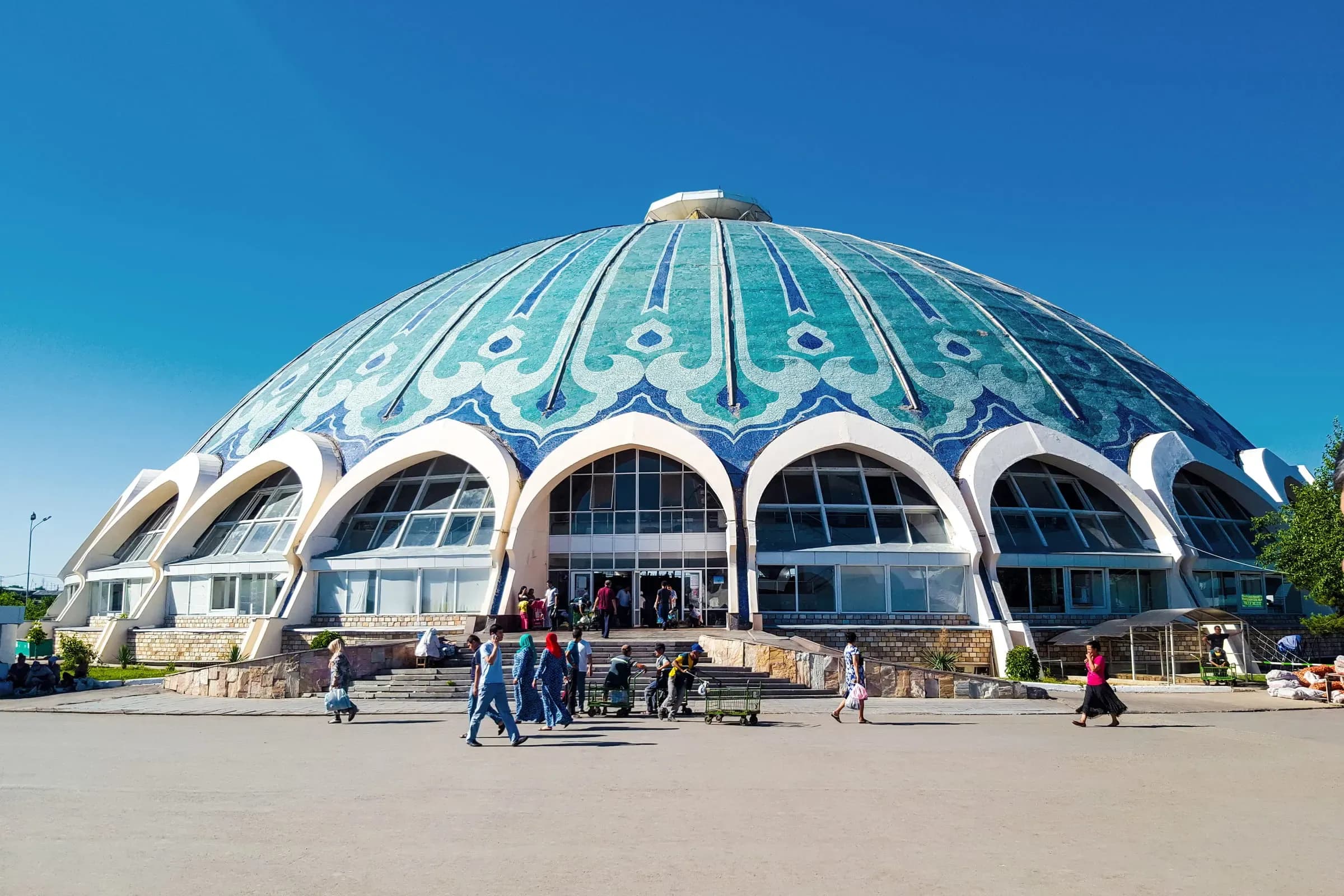
Chorsu makes old Tashkent immediate: a blue dome above the market, bread steam at the entrances, sellers behind dairy, dried fruit, spices, and hot-food rows. Before the quieter courtyards of Kukeldash or Khast Imam, the city feels lived-in and close.
Ouvrir le lieu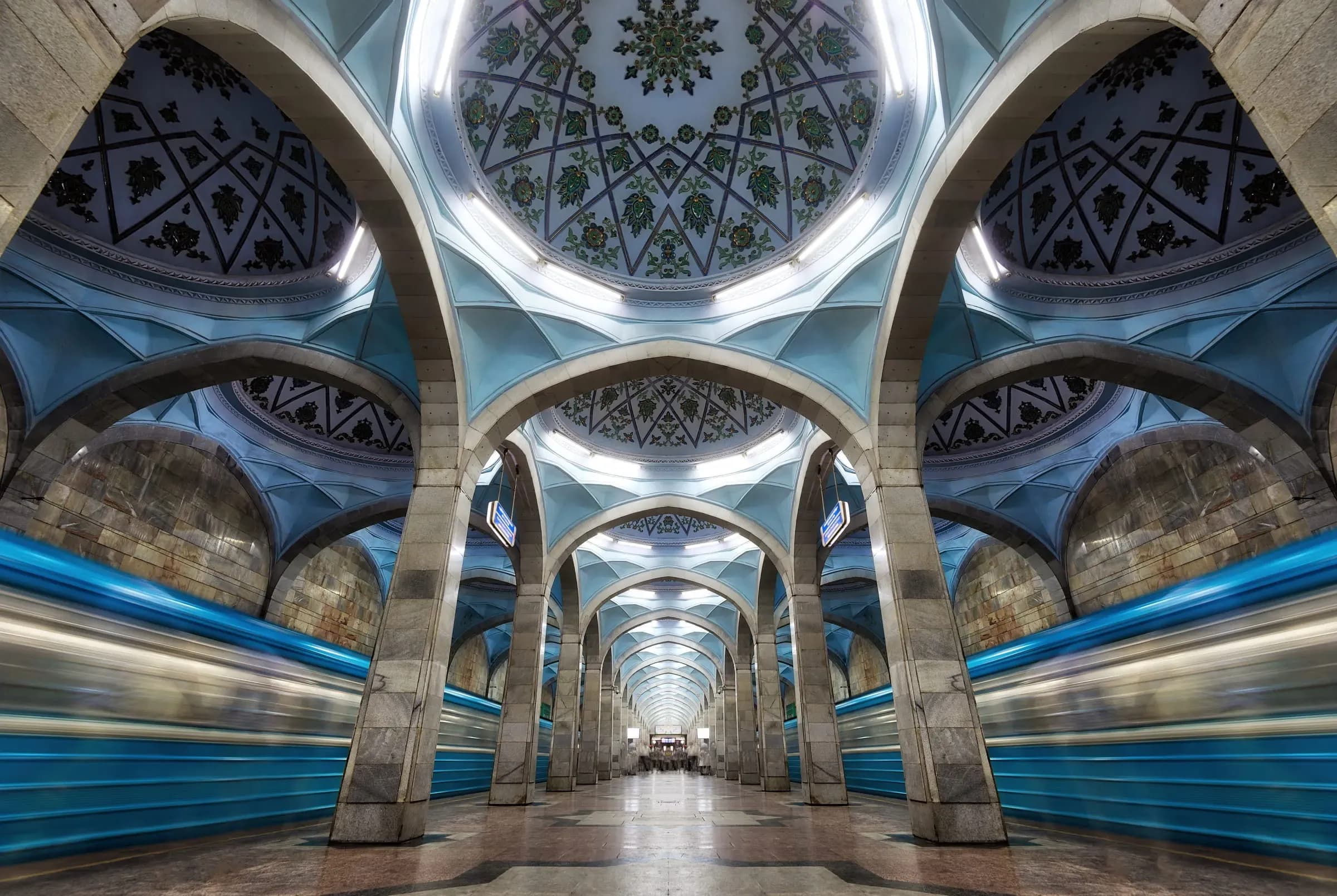
In Tashkent, the metro is not only a way across town. You step below the streets and find blue arches, marble, lamps, mosaics, portraits of poets and thinkers, space-themed Kosmonavtlar, and people moving through the capital as usual.
Ouvrir le lieu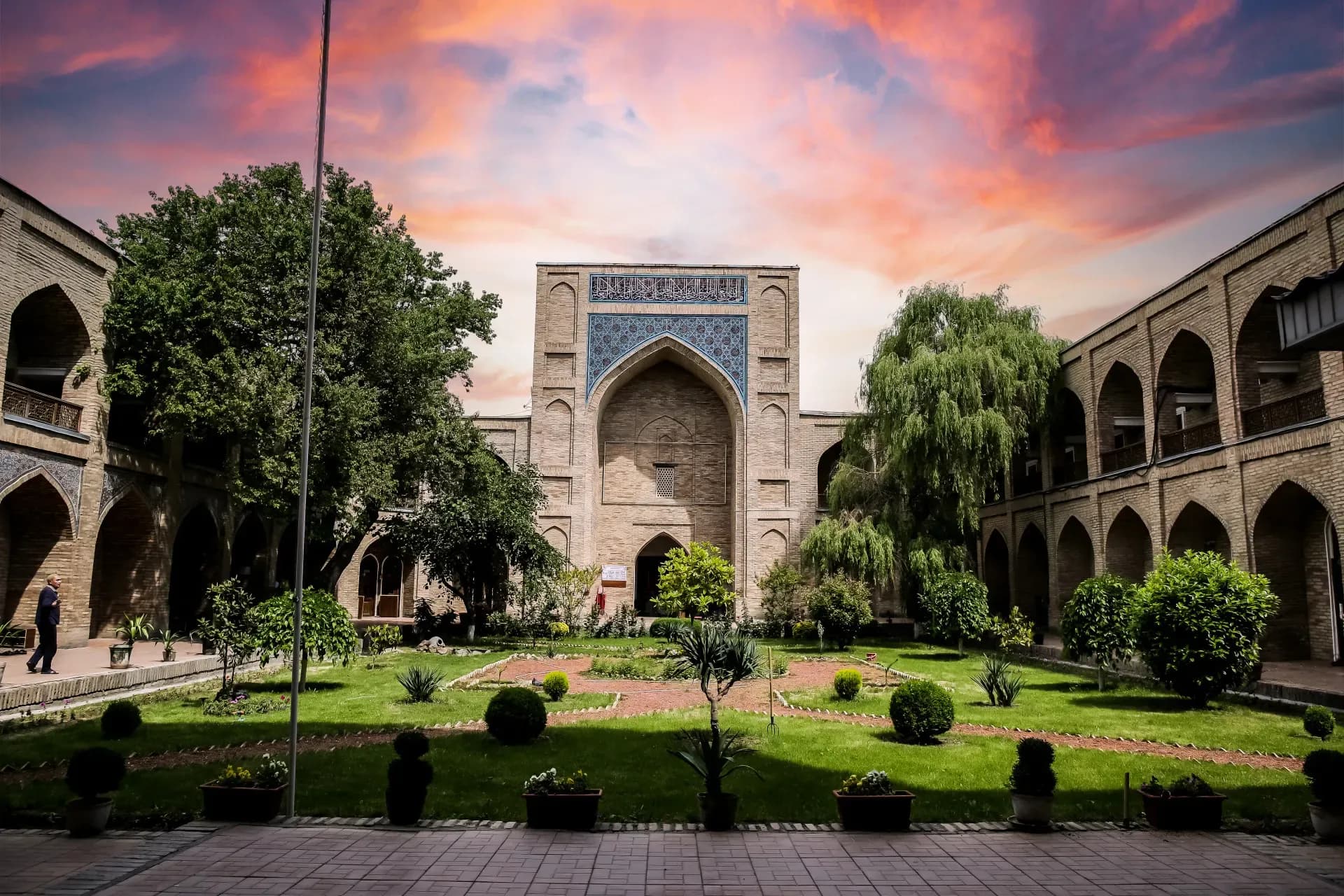
Beside Chorsu's market streets, Kukeldash lowers the tempo. Brick, blue tile, a shaded courtyard, and an active religious and educational setting remind you that old Tashkent is still used with care.
Ouvrir le lieu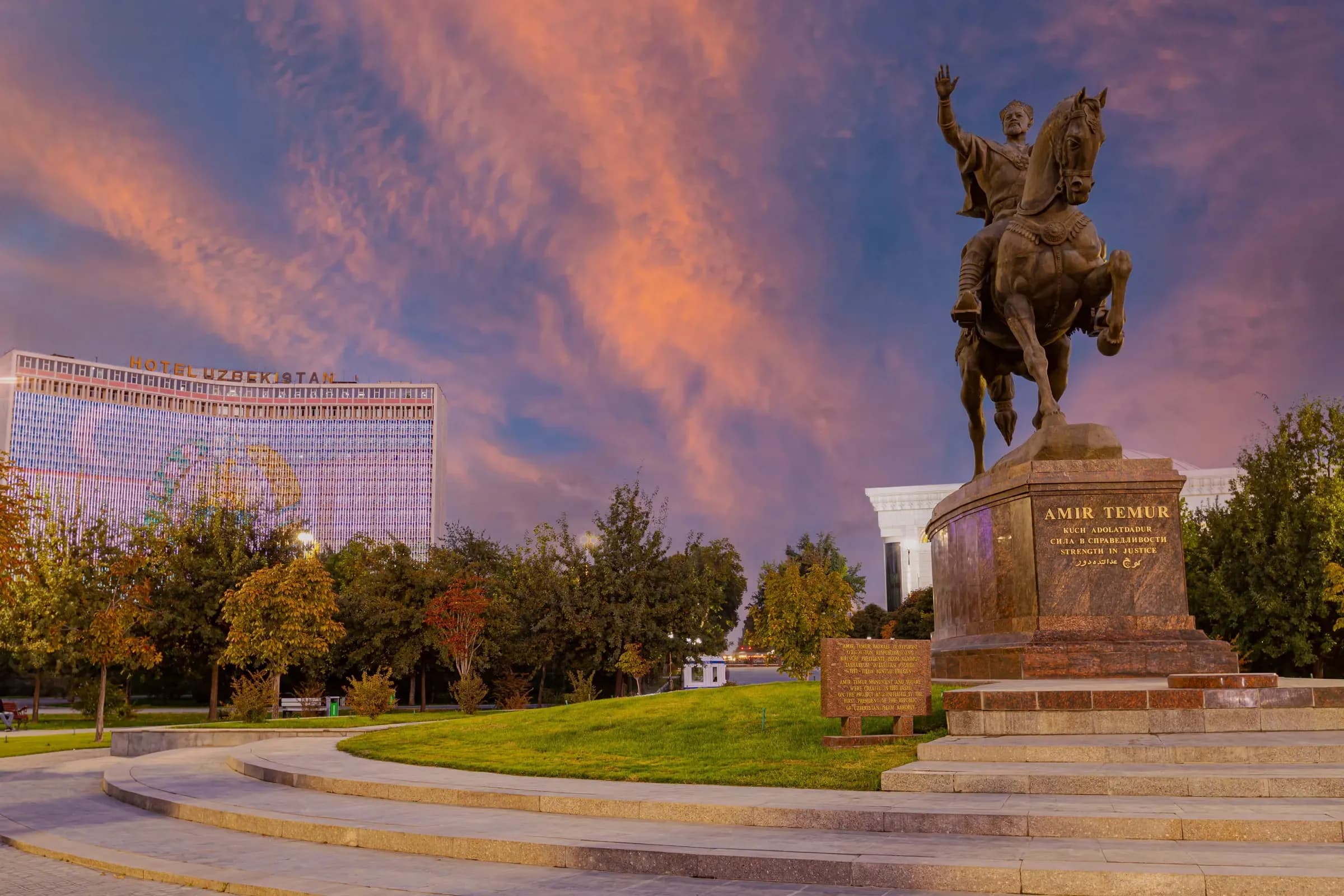
Between broad avenues, trees, nearby metro, and the bronze equestrian monument, the square gives Tashkent a clear central marker. It belongs as a compact stop: take in the statue and garden, then continue toward metro halls, museums, or old-city streets.
Ouvrir le lieu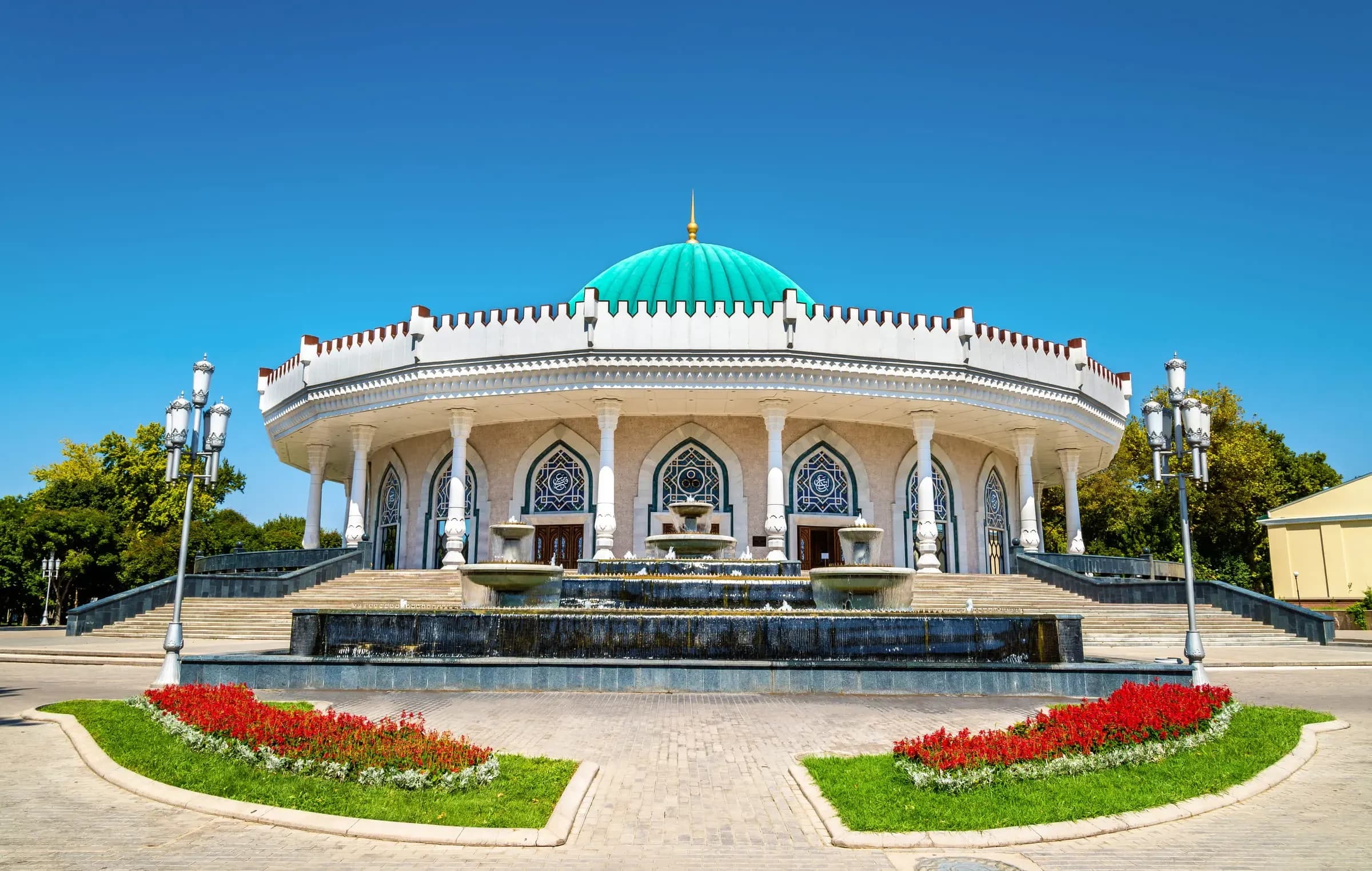
Amir Temur Square gives the monument; the museum gives the story room to settle. Inside the round turquoise-domed building, murals, a crystal chandelier, maps, models, miniatures, and display cases point the Tashkent visit onward to Samarkand and Shakhrisabz.
Ouvrir le lieu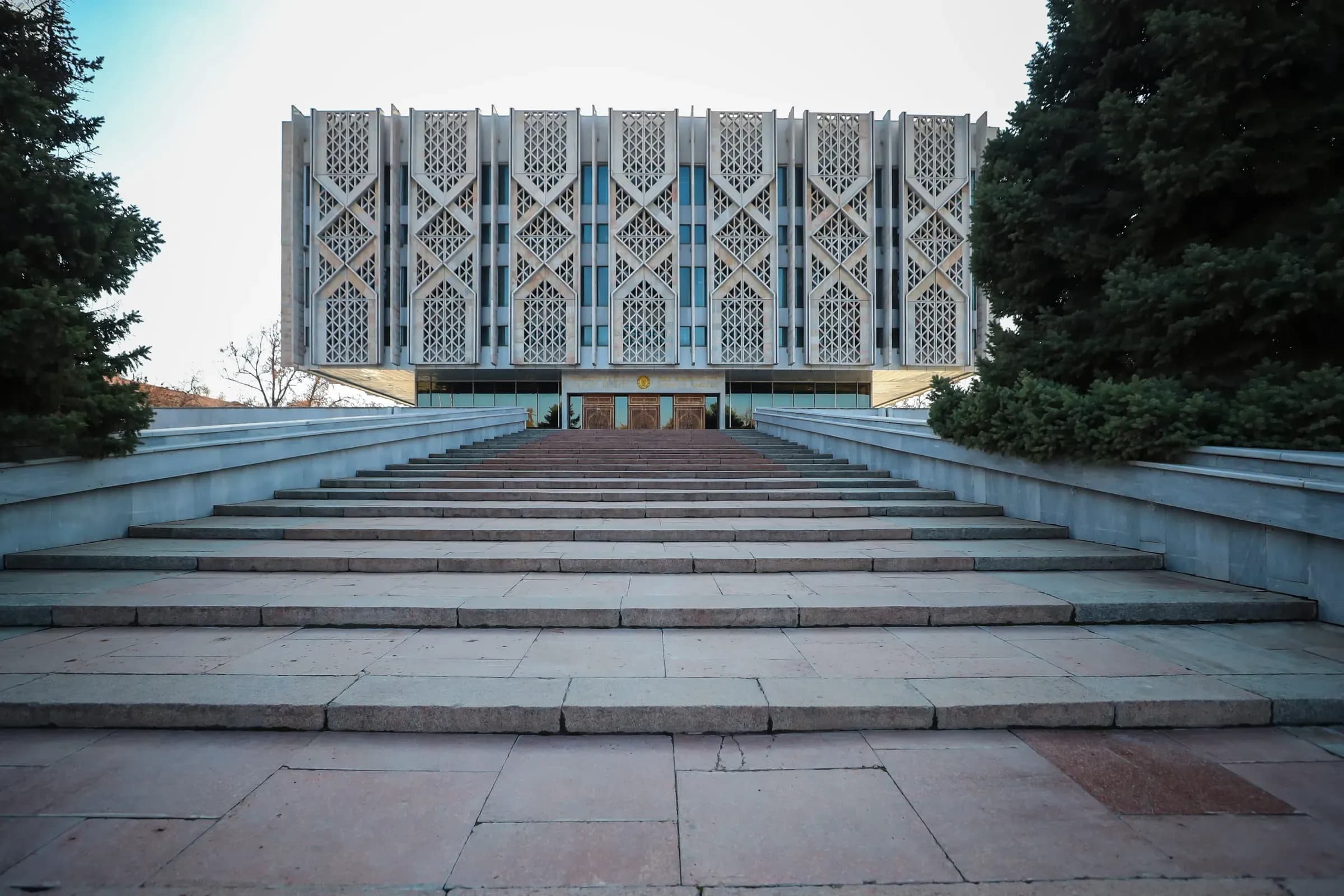
The facade is already part of the story: a cube-like 1970 building wrapped in pale geometric screens. When the museum is open, the visit can move from that modernist shell into Uzbekistan's deeper historical arc; during repairs, it belongs only as a short exterior architecture pa
Ouvrir le lieu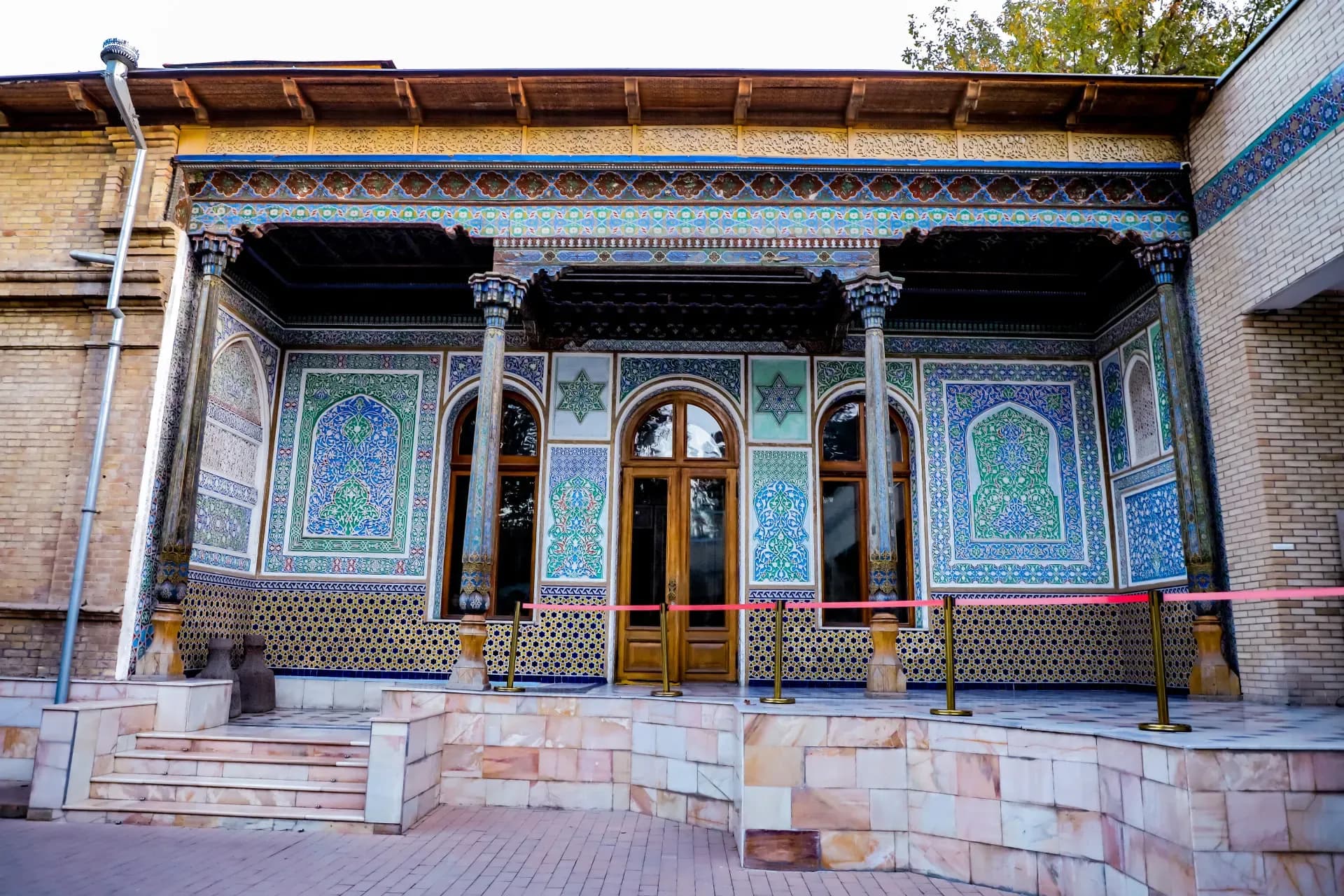
At the State Museum of Applied Arts, the building teaches the eye before the vitrines do. Painted panels, carved columns, wooden doors, ceramics, embroidery, jewelry, textiles, and ganch detail make applied art something you can read room by room.
Ouvrir le lieu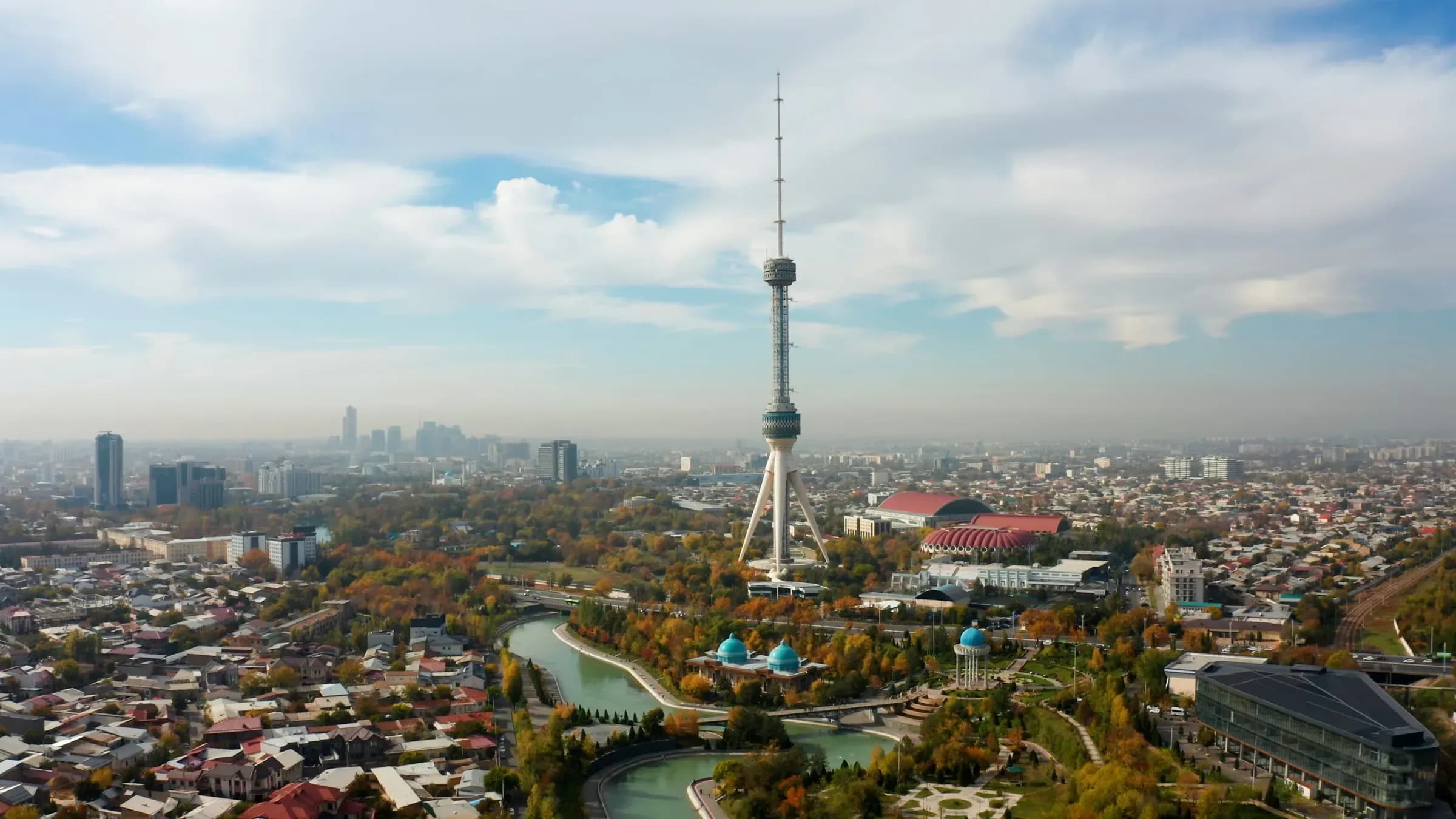
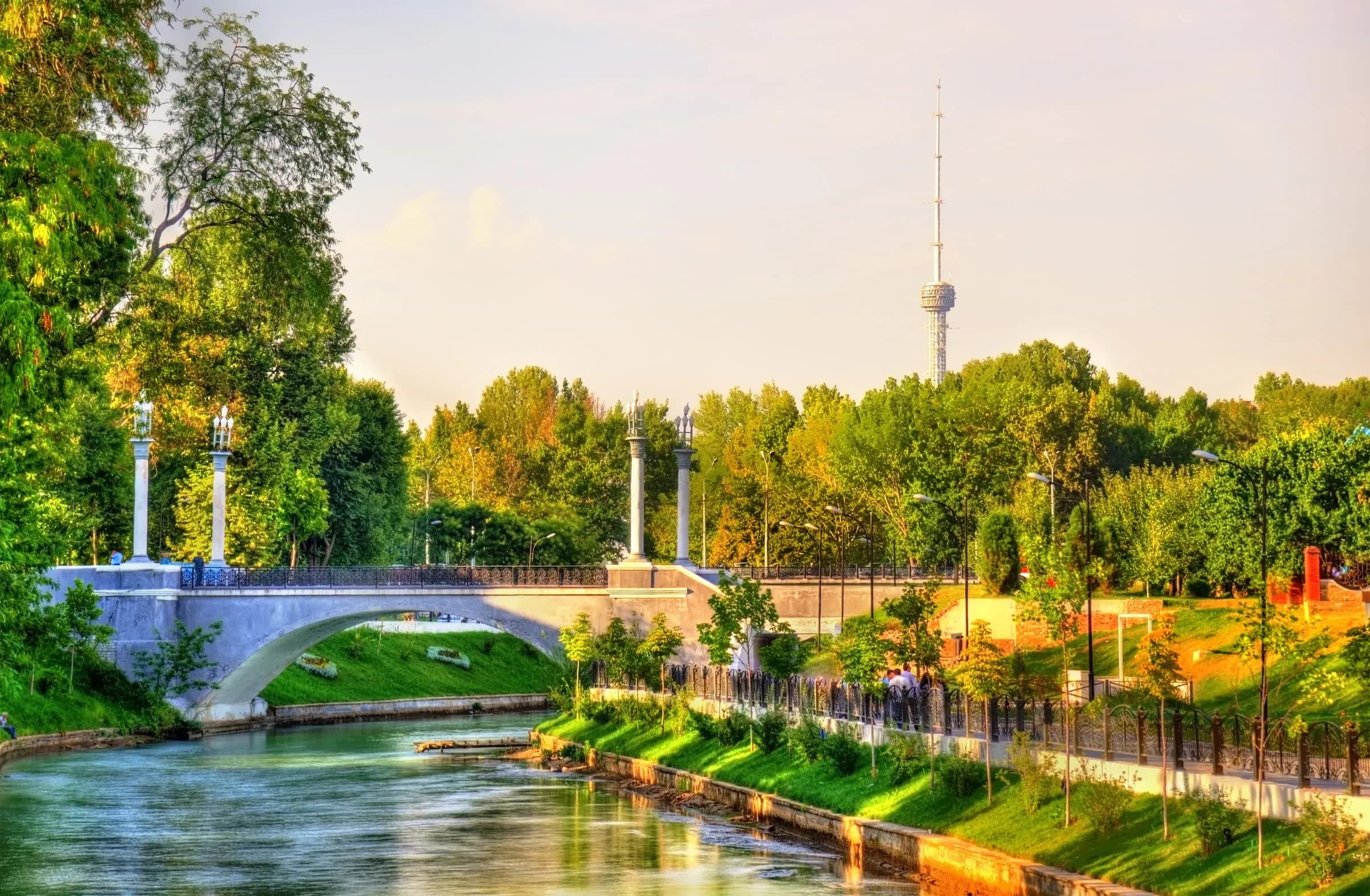
From the TV Tower, Tashkent stops being separate streets, museums, markets, and squares and becomes one wide capital below you. The 375 m landmark is still a working broadcast tower, so the visit belongs on a confirmed public route, with a view from around 100 m and enough flexib
Ouvrir le lieu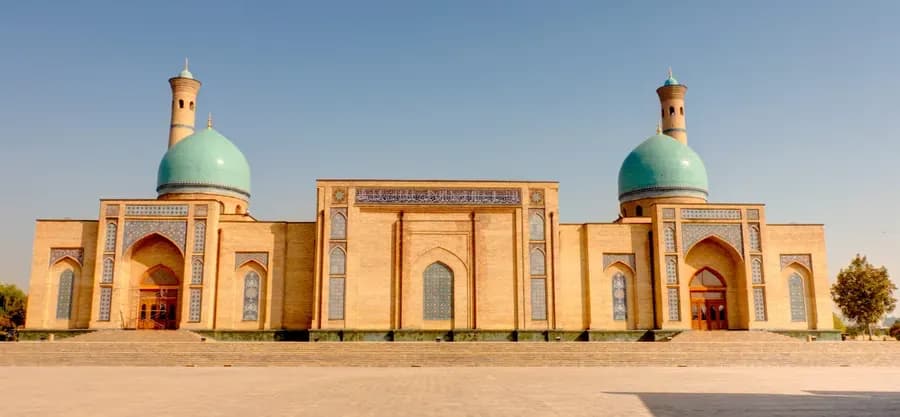
Sheikhantaur is easy to miss if you read Tashkent only through traffic, markets and landmark squares. Behind the surrounding city streets, three preserved mausoleums remember Sheikh Hovendi at-Tahur, Kaldyrgach-biy and Yunus Khan, adding a quiet old-city pause after Chorsu, Kukel
Ouvrir le lieu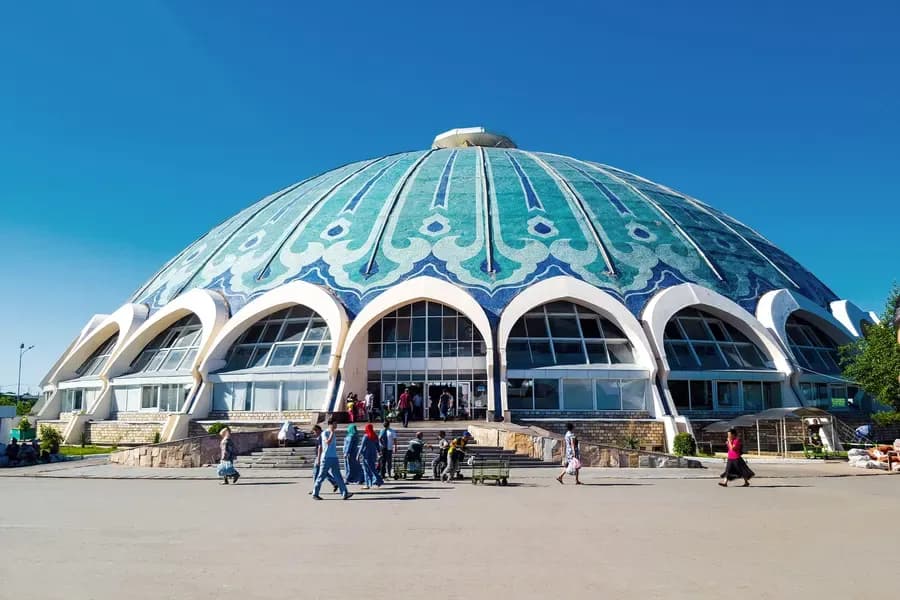
Near Chorsu, Suzuk-Ota slows the old-city route down. The complex brings together a mosque, mausoleum, restored mahalla space and craft tradition, so Tashkent's religious memory meets the handwork of its craftspeople.
Ouvrir le lieu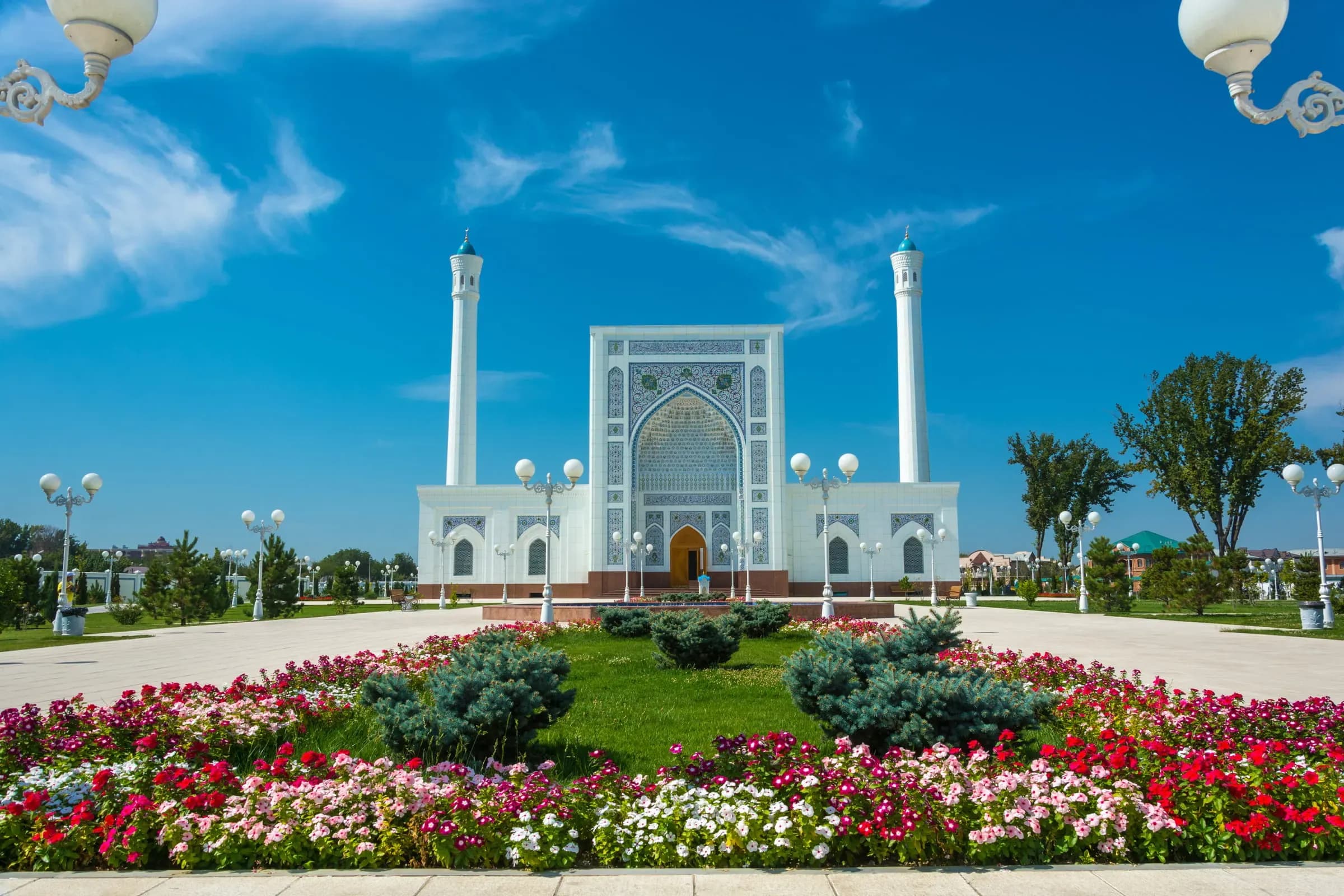
Minor Mosque gives Tashkent a bright contemporary landmark: white marble, two slim minarets, a turquoise dome and gardens beside the Ankhor canal. The visit feels strongest when it stays respectful, unhurried and aware of prayer-time rhythm.
Ouvrir le lieu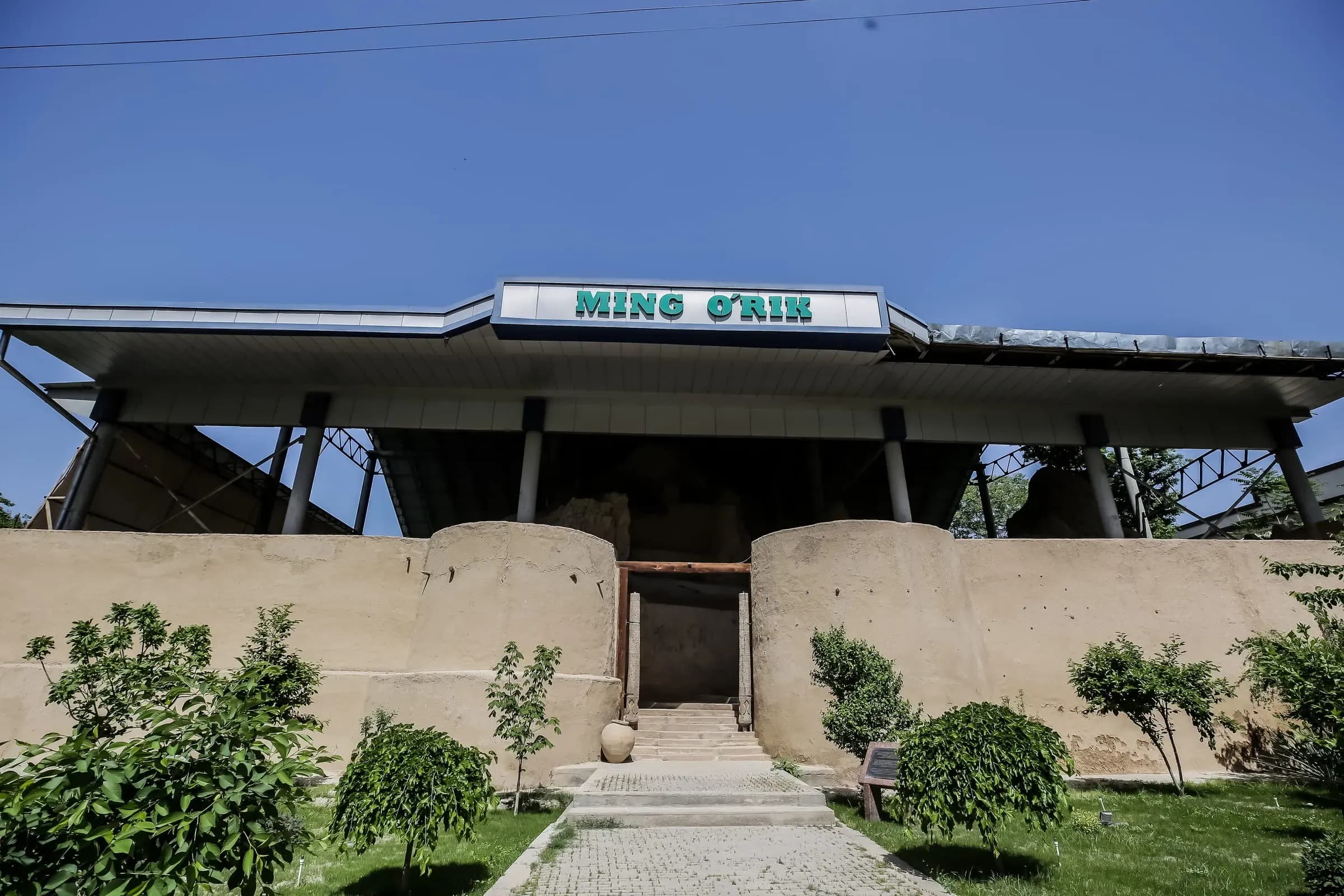
Ming Urik is modest at first sight: an urban entrance, a roofed excavation, clay walls, pottery and reconstructed domestic corners. With a guide's explanation, the stop turns present-day Tashkent toward the earlier city of Chach and the fortified life that once stood near today's
Ouvrir le lieuCity rhythm
These are living city moments, not a checklist: tea after the old city, the metro, museum quiet, courtyard lunch, and evening avenues give Tashkent room to breathe.
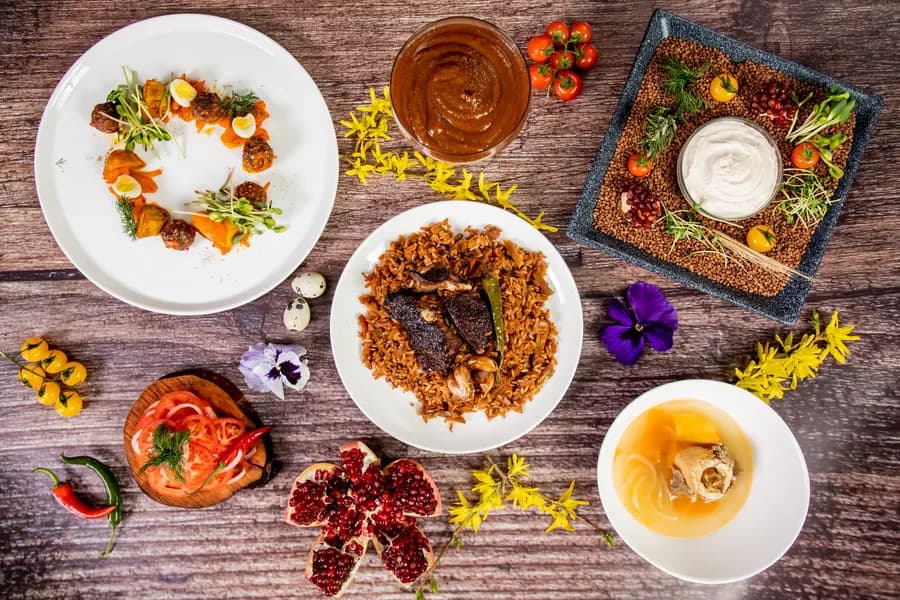
In a shaded courtyard near the old-city lanes, the table fills slowly: bread torn by hand, greens, soup, and tea poured before the next old-city story. You are not rushing between sights; for a while Tashkent keeps the pace of lunch.
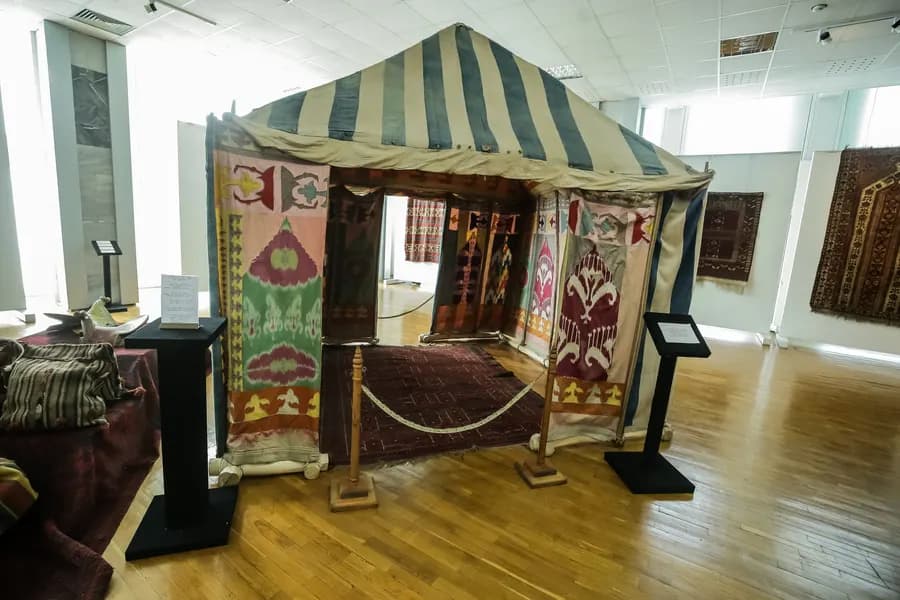
In a museum room, the city becomes quieter: ceramics, embroidery, and carved wood ask for attention rather than speed. You notice pattern, material, and the hands behind them.
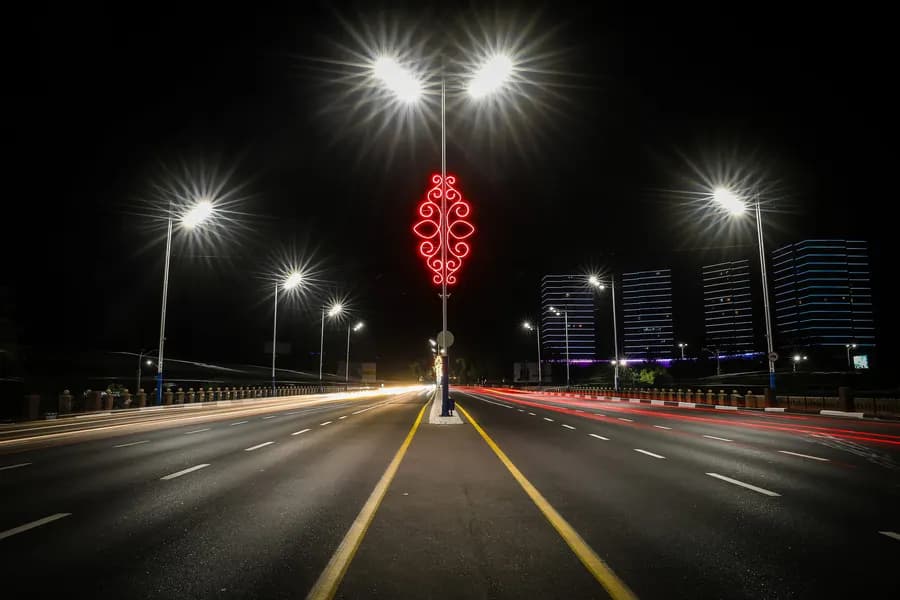
By evening the city opens wider: fountains, parks, traffic, families walking late, and light caught in the trees. You step out of a museum day into a living capital, where an ordinary evening helps you feel the city.
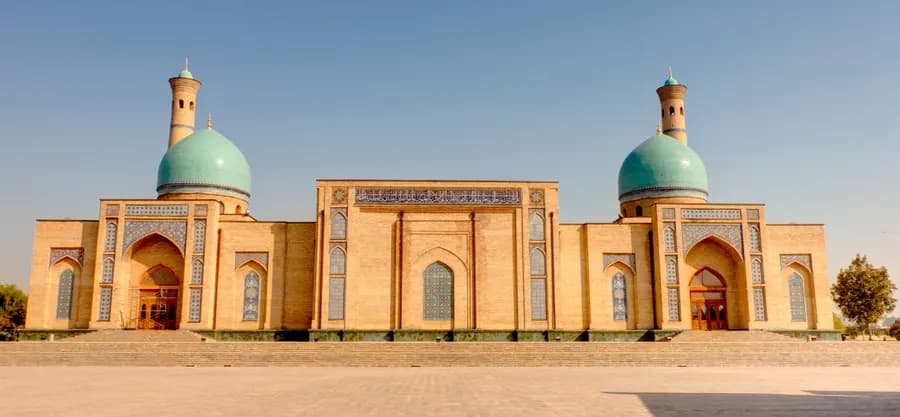
After the mosaic portals and courtyards of the old city, tea feels like part of the route. A cup cools in your hand, the conversation turns toward the mahalla, and Tashkent becomes a calm conversation rather than a list of sights.
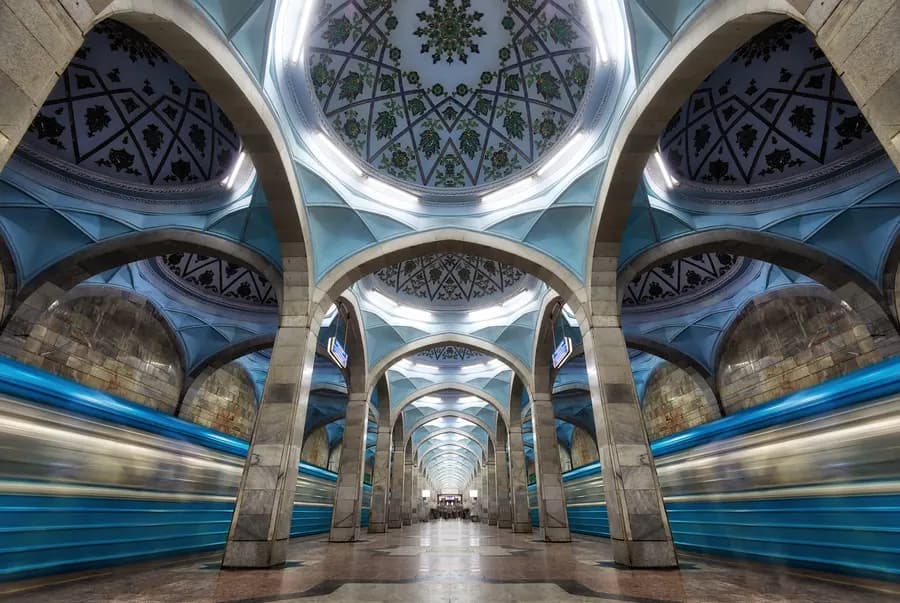
A train arrives as if it were ordinary, but the station feels like a hall: marble, lamps, mosaics, and the quiet flow of passengers. You ride not only for transport, but to see how daily Tashkent became architecture.
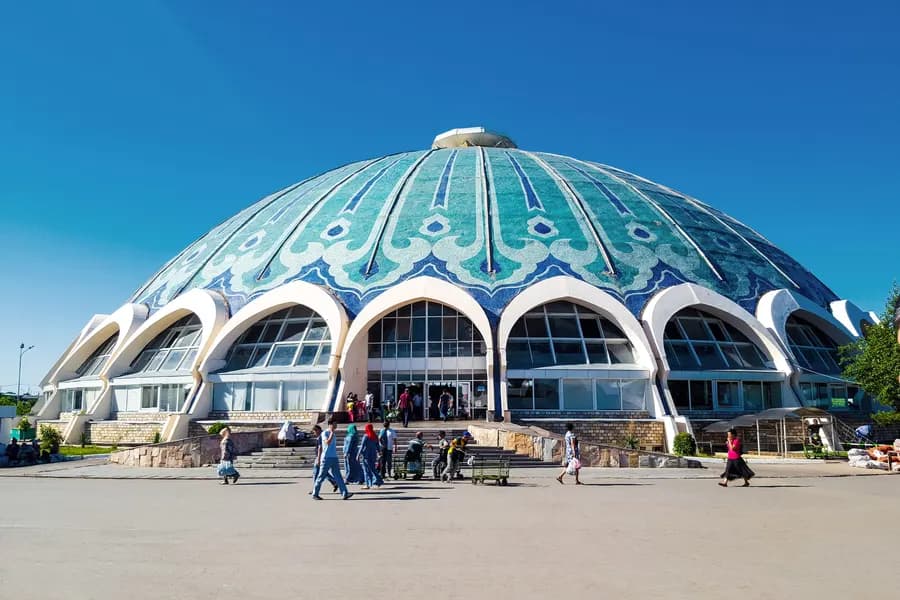
Under Chorsu’s blue dome, the day starts with hot bread, dried fruit, and voices calling across the stalls. You have time to slow down, taste, ask, and hear how Tashkent wakes up.
Before you go
Tashkent is easier to plan by the rhythm of the day, not by a list of places: arrival, the old city, metro and museum time, then one calm continuation before the mountains or the train onward.
Most routes begin at the airport or station. A calm transfer, realistic hotel timing, and a short first walk keep the city from becoming only a set of transfers.
Tashkent opens the journey better when the first day does not try to show the whole city at once.
Chorsu, Khast Imam, Kukeldash, and nearby mahalla lanes are easier to feel in the morning, when it is simpler to move between courtyards, the bazaar, and old-city streets.
Metro stations, the Applied Arts Museum, history museums, city squares, modernist avenues, and new cultural spaces show the capital without rushing. A day is clearer with one such continuation, not every stop at once.
Chimgan and Charvak can give the route air, but they need a clear road-and-weather check. Some journeys keep Tashkent as a city day; others let it become a calm start before the mountain road or the train to Samarkand.
If you do not try to see everything at once, Tashkent becomes a clear first day of the route: old-city morning, metro or museum time, then one outing or the train onward.
At a glance Stay
1-2 nights; add one more for museums, architecture, mountains, or late arrivals.
Getting there
Most international travelers enter Uzbekistan through Tashkent International Airport.
Getting around
The metro, short taxi rides, and planned transfers keep the day comfortable; the old-city sights are not all walking distance from the modern centre.
Season and pace
Spring and autumn are easiest for walks; summer needs early city time, metro and museum shade, and later starts; winter keeps museums and the metro strong.
Tour programs
Tashkent usually opens or closes a journey through Uzbekistan: arrival, the old city, the metro, museums, a Chimgan outing, or the train onward meet here naturally.
Nearby
The next move is usually mountain air, lake views, or the high-speed rail continuation toward Samarkand.
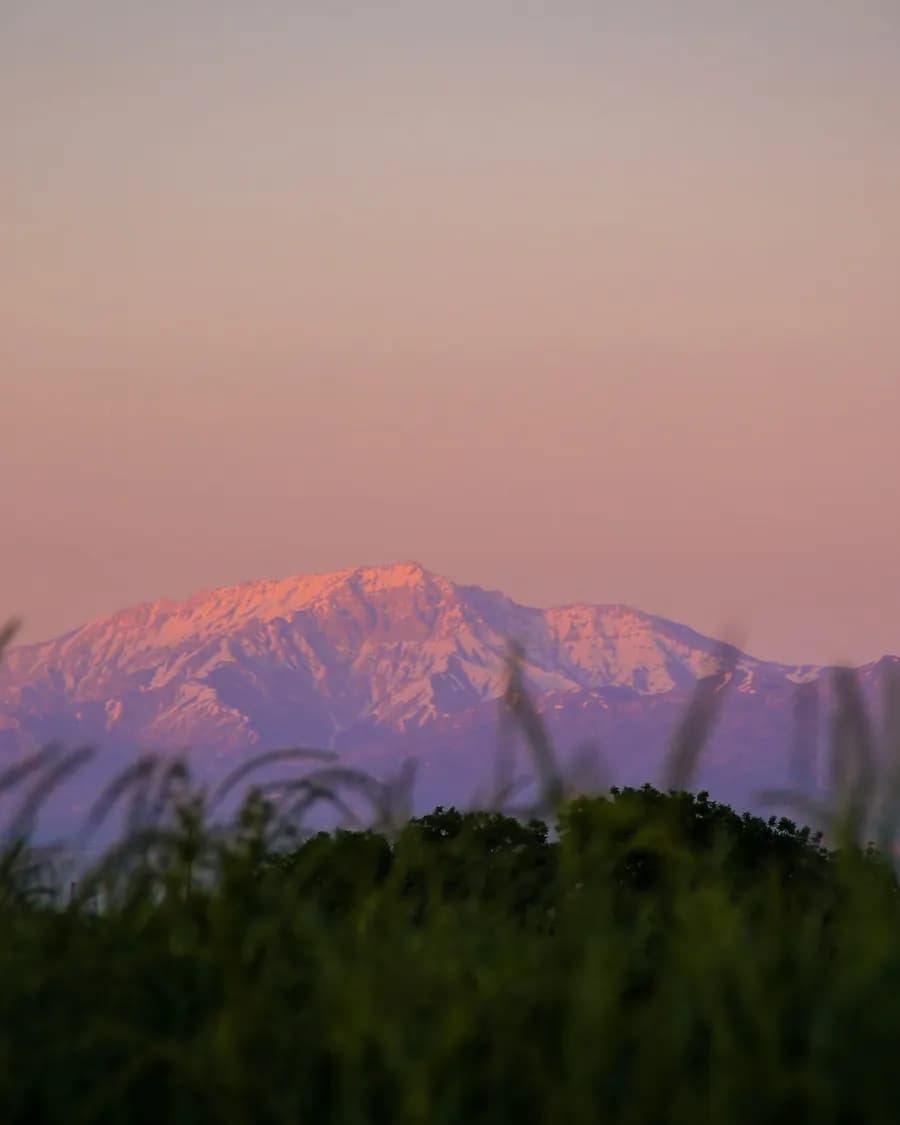
Chimgan gives Tashkent routes their closest mountain turn: foothill roads, Charvak water, open slopes, resort facilities, and guided gorge routes when conditions fit.
Voir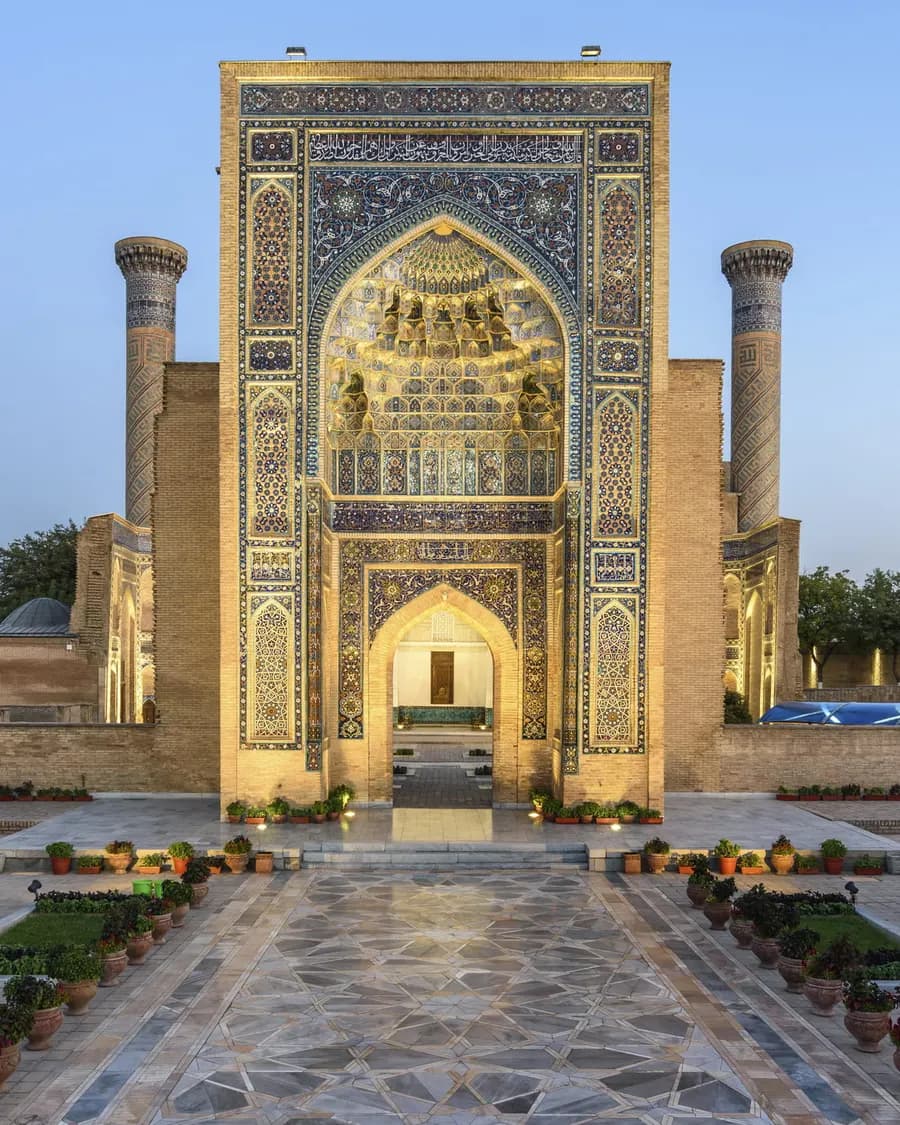
Samarkand brings the route to monumental scale: Registan, Shah-i-Zinda, Bibi-Khanym, Gur-e-Amir, Siab Bazaar, Afrosiab, and Ulugh Beg Observatory.
VoirLa ville en détail
Temps de marche, lieu de nuit et quand les excursions ont du sens.
one focused city day plus overnight is usually enough when the old core or main anchors get a full walking window. City tone: “The capital where Uzbekistan begins moving”.
Commencez d'abord par la promenade urbaine compacte. Les sorties seulement après que le centre se soit posé — sinon l'arrêt ressemble à un transfert avec des monuments collés.
Restez assez près pour un retour du soir à pied ou un court transfert. Thé, dîner et un second passage dans les rues restent ainsi faciles sans brûler le lendemain matin.
Sur demande
We help agencies set a realistic pace and choose the right next move — without rushing the places that matter.