
TourLink
About
Ishkashim sits low beside the Panj, where the road from Khorog begins to feel like Wakhan: slower, closer to the river, and more sensitive to conditions.
Use Ishkashim as a calm decision point: arrive from Khorog, ask locally about the next section, keep photography respectful near the border, and leave only when permits, road conditions, and weather line up.
At Ishkashim, the Pamir route becomes a choice. Wakhan villages, fortress roads, Garm Chashma, and river viewpoints should be confirmed close to travel, not assumed from the map.
Agencies and travellers who need Ishkashim as a readable stop — strong places, honest pacing, and logistics that hold.
Getting around
Use Ishkashim as a calm decision point: arrive from Khorog, ask locally about the next section, keep photography respectful near the border, and leave only when permits, road conditions, and weather line up.
Route sequence
At Ishkashim, the Pamir route becomes a choice. Wakhan villages, fortress roads, Garm Chashma, and river viewpoints should be confirmed close to travel, not assumed from the map.
The road follows valleys and river bends before Ishkashim. A slower arrival leaves space for road news, fuel questions, and the next permit check.
Route map
The map marks the Tajik-side town on the Panj. It is an orientation point, not a live access guarantee for border-side roads, hot springs, or fortress routes.
What to notice
Ishkashim does not need a long checklist. Its value sits in the Panj, the small bazaar rhythm, the turn toward Wakhan, and the hot-spring or fortress roads that need fresh access checks before you go.
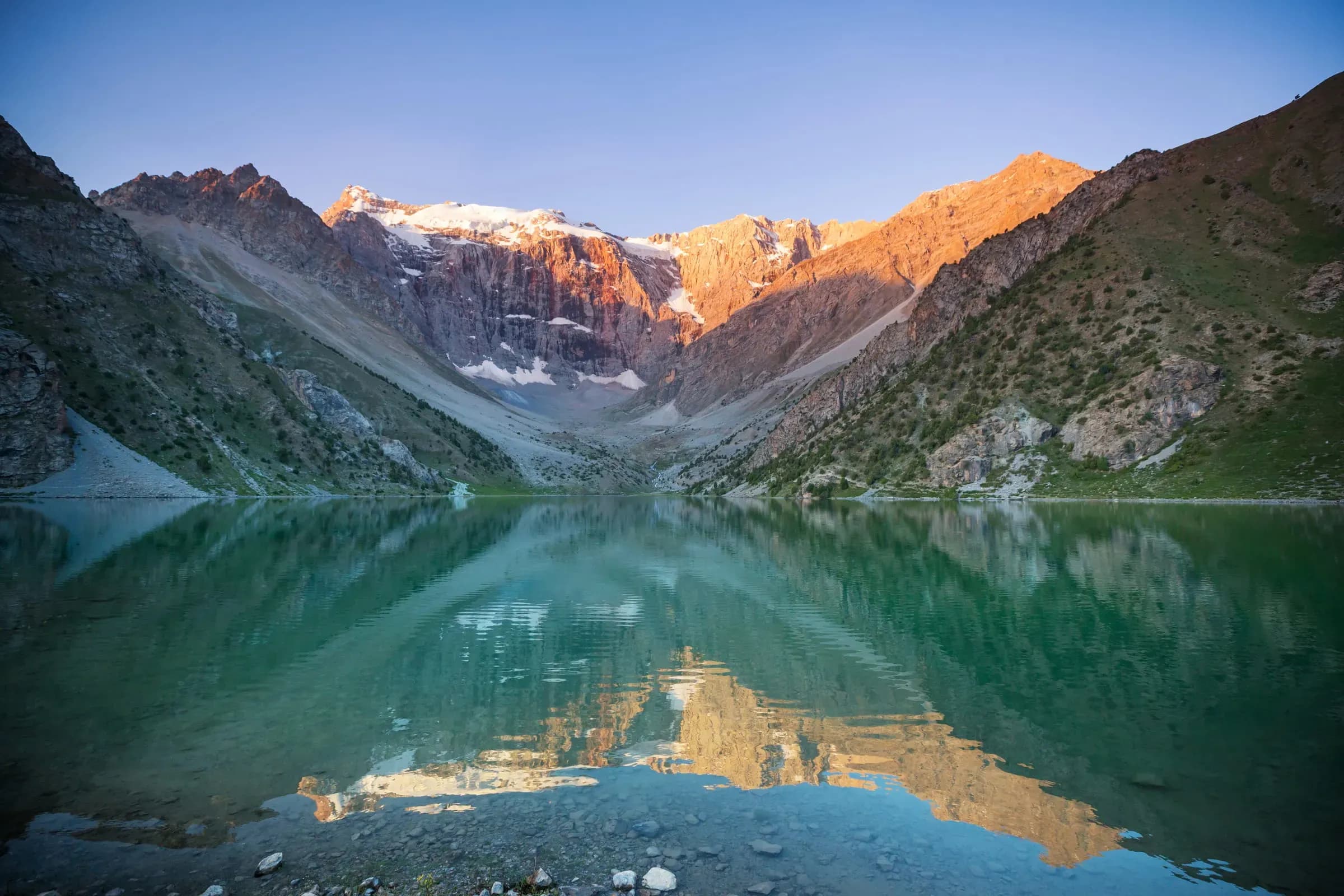
Garm Chashma turns the Ishkashim road toward a warmer side valley. Mineral water, pale limestone terraces, mountain air, and a small sanatorium setting give the stop a different mood from a fortress, river view, or high-pass photograph. Come only with fresh local advice: the side
Open placeIshkashim moments
In Ishkashim, the useful moments are small: where the road turns, how the river-border feels, and which local advice should guide the next section.
The turn from Khorog toward Wakhan slows beside the Panj, where villages, river bends, and access advice shape the next section.
River views are part of the beauty, but people, homes, and border-side life ask for quiet movement and respectful photography.
Before leaving town, confirm road news, permits, weather, vehicle comfort, and hot-spring or fortress access in a fresh conversation.
Before you go
Ishkashim is where an onward plan needs a fresh read. The river may look calm, but permits, border sensitivity, road surface, weather, and local access can change the next valley section.
After Khorog, Ishkashim makes the Pamir route feel narrower and slower. The river stays close, villages move into the foreground, and the next road asks for more patience than the map suggests.
In Ishkashim, the next road is best chosen with the river in sight and the latest local advice in hand.
The Panj gives Ishkashim its strongest visual memory, but it is also a border where people live. Move quietly, ask before photographs, and let the town remain itself rather than a scene arranged for visitors.
Wakhan, Garm Chashma, fortress roads, and river viewpoints should be chosen after fresh local advice. Conditions, permits, and comfort change the route more than distance alone.
Leave Ishkashim only when the Wakhan direction is still valid: permits, weather, road, driver, and border etiquette checked.
At a glance Place
Town on the Tajik side of the Panj, inside the Pamir & GBAO tourist region.
Overnight stop
Usually one night when the route turns toward Wakhan; add time only when access, weather, or road conditions call for it.
Route role
Wakhan-turn stop between Khorog, Panj River villages, hot-spring roads, fortress routes, and wider Pamir choices.
Season and comfort
Road surface, valley heat or cold, snow higher up, and border-zone sensitivity matter more than a fixed timetable.
Before departure
Check GBAO and border-zone permits, vehicle, driver, weather, road condition, accommodation, and local access again before leaving.
Where to continue
Khorog is the nearest larger town anchor. Murghab turns the route toward the eastern plateau, while Dushanbe remains the lower-road start or return point.
Khorog gives the Pamir route a riverside town stop: Botanical Garden paths, Panj and Gunt river air, GBAO checks, and onward choices toward Wakhan, Bartang, or Murghab.
ViewMurghab steadies the eastern Pamir route: thin air, simple town errands, fuel and permit checks, and one clear choice toward Karakul, Ak-Baital, Rangkul, Alichur, or Khorog.
ViewDushanbe is Tajikistan's calm arrival city: Rudaki Avenue shade, national museums, tea-house stops, and first choices toward Hissar, Varzob, or higher valleys.
ViewCity in detail
Walking time, overnight location, and when day trips make sense.
one focused city day plus overnight is usually enough when the old core or main anchors get a full walking window. City tone: “Where the Pamir road turns toward Wakhan”.
Start with the compact city walk first. Day trips only after the centre has settled — otherwise the stop feels like a transfer with monuments attached.
Stay close enough for an evening return on foot or a short transfer. That keeps tea, dinner, and a second pass through the lanes easy without burning the next morning.
On request
We help agencies set a realistic pace and choose the right next move — without rushing the places that matter.