
TourLink
About
Tajikistan turns vertical quickly — valleys, ancient Zeravshan towns, then Pamir altitude that resets the clock.
Dushanbe starts with plane trees and valley roads; Penjikent and Sarazm open older history; Khorog resets scale before the Pamirs. Permits, road condition and overnight rhythm belong in the product design — not as footnotes after the brochure.
Spare time for the road, honest altitude planning, and hosts who make remote days feel human.
Travellers ready for mountain seriousness — and agencies that need a partner who plans permits and pace before the first climb.
Route logic
The strongest journeys keep three travel worlds distinct: Dushanbe and Hissar for arrival, Penjikent and Zeravshan for archaeology, and Khorog with the Pamirs for altitude and long-road timing.
Route choices
Capital walks, Zeravshan archaeology, and Pamir mountain roads ask for different energy. Separating them keeps the journey calmer and more memorable.
Shaded avenues, museums, cafes, and nearby valley roads let travelers settle before the journey climbs.
Route anchors
The map shows the main country anchors; drive times, permits, and mountain access still need a fresh seasonal check.
Route ideas
Until published tour programs are ready, we shape Tajikistan itineraries around altitude, permits, road time, and local hosts.
Tourist regions
For travel, Tajikistan is easier to understand through valleys and mountain systems: Dushanbe & Hissar for arrival, the Fann Mountains & Zeravshan for archaeology and lake roads, Pamir & GBAO for high-country travel, with Khujand and Khatlon waiting as later northern and southern extensions.
Dushanbe & Hissar Valley is Tajikistan's calm arrival region: capital walks, museum time, Hissar Fortress context, and the first mountain road toward Varzob.
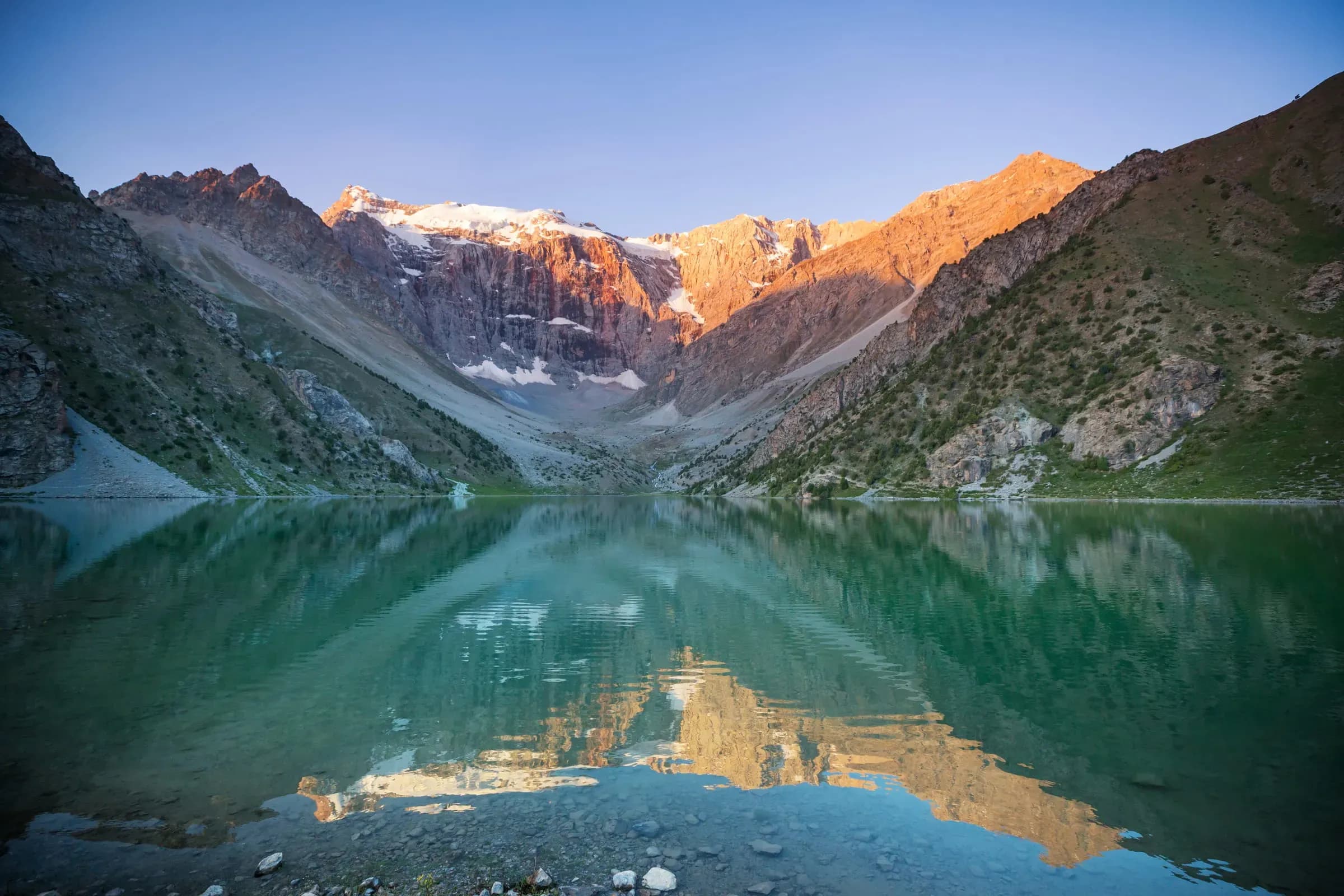
ViewFann Mountains & Zeravshan links Penjikent and Sarazm with Iskanderkul, Seven Lakes, Artuch, and Alovaddin, turning western Tajikistan from Sogdian history toward slower mountain roads.
View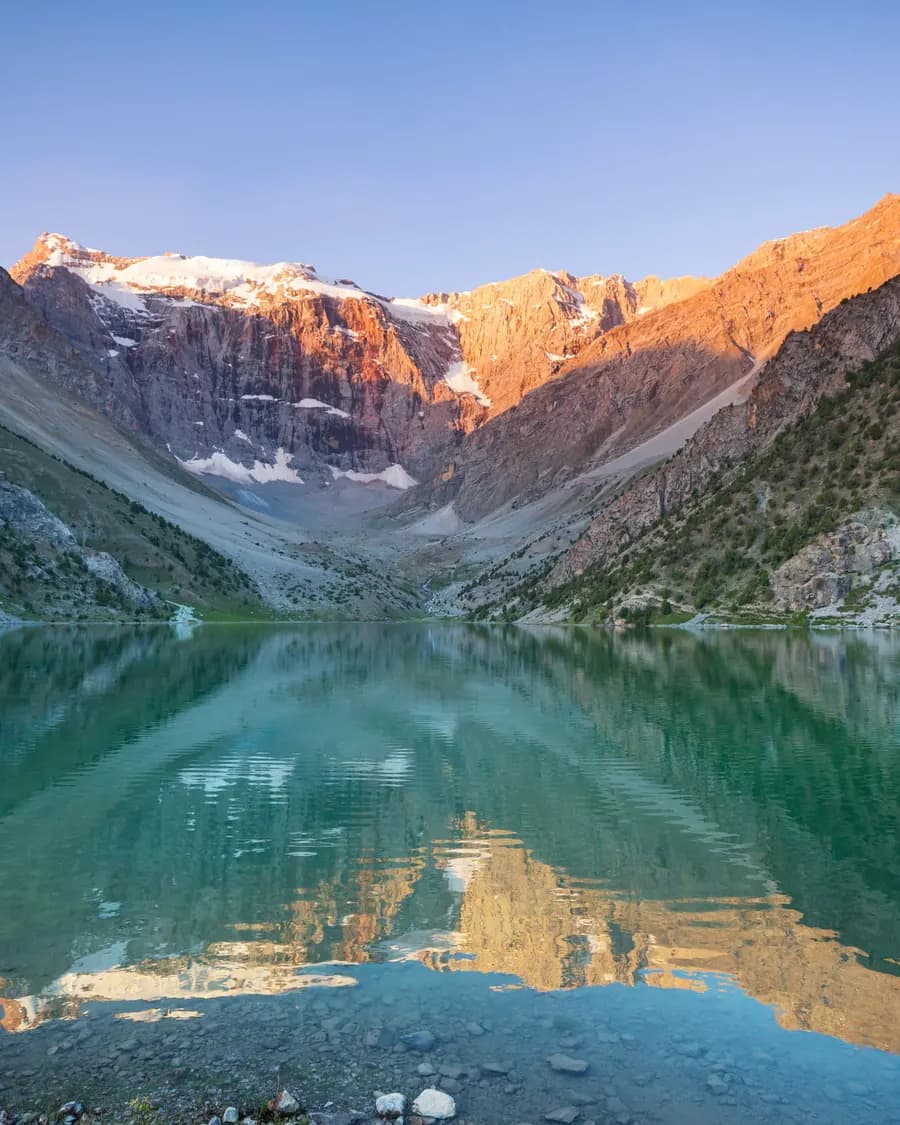
Pamir & GBAO is Tajikistan’s high-road region: Khorog, the Panj and Gunt valleys, the Botanical Garden, and onward choices toward the Wakhan, Murghab, Bartang, and Karakul.
ViewKhatlon & Southern Archaeology carries Tajikistan south of Dushanbe into Kulob, Bokhtar, Nurek, Ajinatepa, and Kalai Hulbuk, where archaeology, heat, and access checks shape the route.
ViewKhujand & Northern Tajikistan follows the Syr Darya into Tajikistan's northern valley: Khujand's bazaar and fortress, Istaravshan's craft town, Isfara's orchard edge, and road choices that need local timing.
ViewWhen to go
Valley heat, high passes, Nowruz, and Pamir access change the country quickly; the right season depends on how high the journey goes.
Spring starts in Dushanbe, Khujand, Penjikent, and the lower valleys. Nowruz brings public color; April and May add blossoms, markets, and easier valley roads. High Pamir and some Fann routes still need fresh access checks.
June to August is the main window for the Fann Mountains and the Pamir Highway. Lowlands can be hot, but altitude brings long light, open passes, homestays, lakes, and roads that hold together better. Serious mountain routes still need buffer days.
September often gives the clearest air and strongest mountain light. October can be beautiful in lower valleys, though high roads change fast. By November, compact cultural programs are safer than ambitious mountain crossings.
Winter suits Dushanbe, Khujand, Hissar, and selected lowland visits more than high-road travel. Pamir Highway sections, remote valleys, and high passes require caution, flexible timing, and local weather checks.
Planning basics
Visa Check visa and permits Many passports have short visa-free entry; others use an e-visa. Pamir/GBAO travel may need an additional permit, so check the rule before the route is fixed.
Money Somoni and cash Cards are most useful in Dushanbe and larger cities. Carry somoni cash for villages, homestays, markets, mountain roads, and driver stops.
Safety Altitude and roads Altitude, remote roads, weather, border zones, and long drives matter here. A calm itinerary is safer than a tight one.
Транспорт Дорога — часть путешествия Transport The road is part of the journey
Routes in detail
Use these notes to brief clients on transfers and overnight logic in Tajikistan.
For a first programme, 6–9 nights usually holds: keep the classic spine readable, then add one extension only if the season and group pace allow it. Use “Where the Pamirs touch the sky” as the brief for what the country actually sells.
Plan long road or rail legs as part of the product, not leftovers between hotels. Evening or overnight moves, buffer mornings, and one clear anchor per day keep Tajikistan sellable for agencies.
Split the trip into readable chapters: heritage days, then one nature or foothill pause, then return to the main city line. Clients remember clarity more than packing every highlight into one week.
On request
We plan with time for the road — permits, altitude, conditions, and local teams included.