TourLink
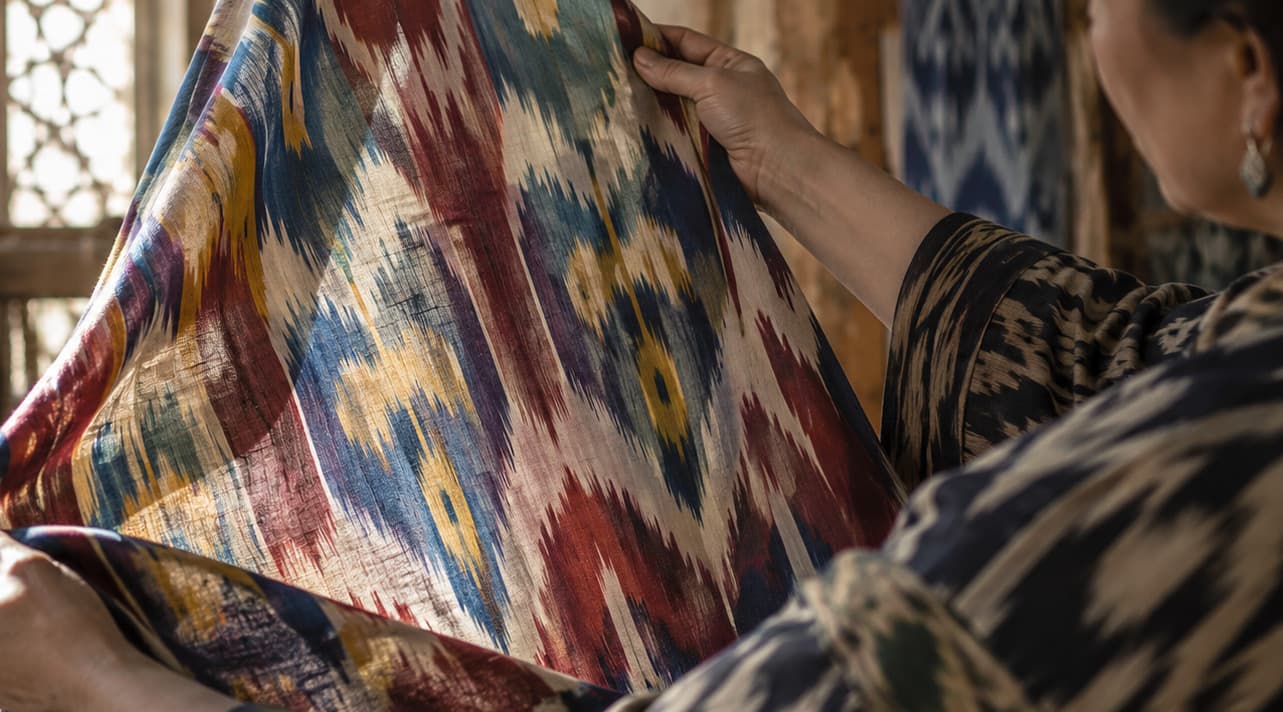
First come the threads, knots and colour. Only then comes weaving.
The pattern is set before weaving
Threads, colour, weaving
To ask before you buy
At first, the fabric can look painted. Then you notice the soft edges of the colour and the movement of the pattern, and you want to understand how it was made. In ikat, selected sections of thread are tied to protect them from dye. After several stages of colouring, the prepared threads go to the loom, where the pattern gradually takes shape through weaving. The maker has to imagine the final result long before it can be seen as a whole.
01
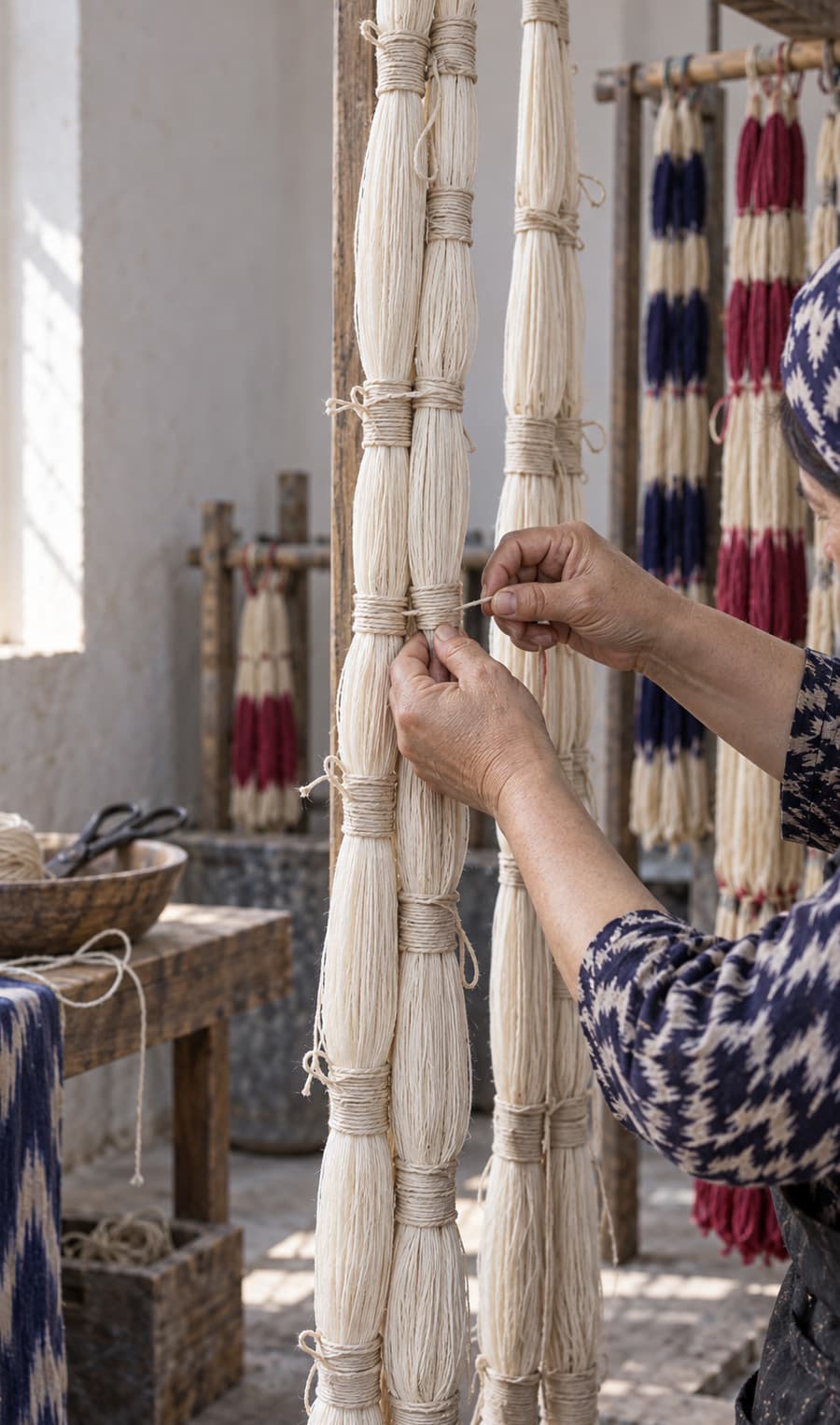
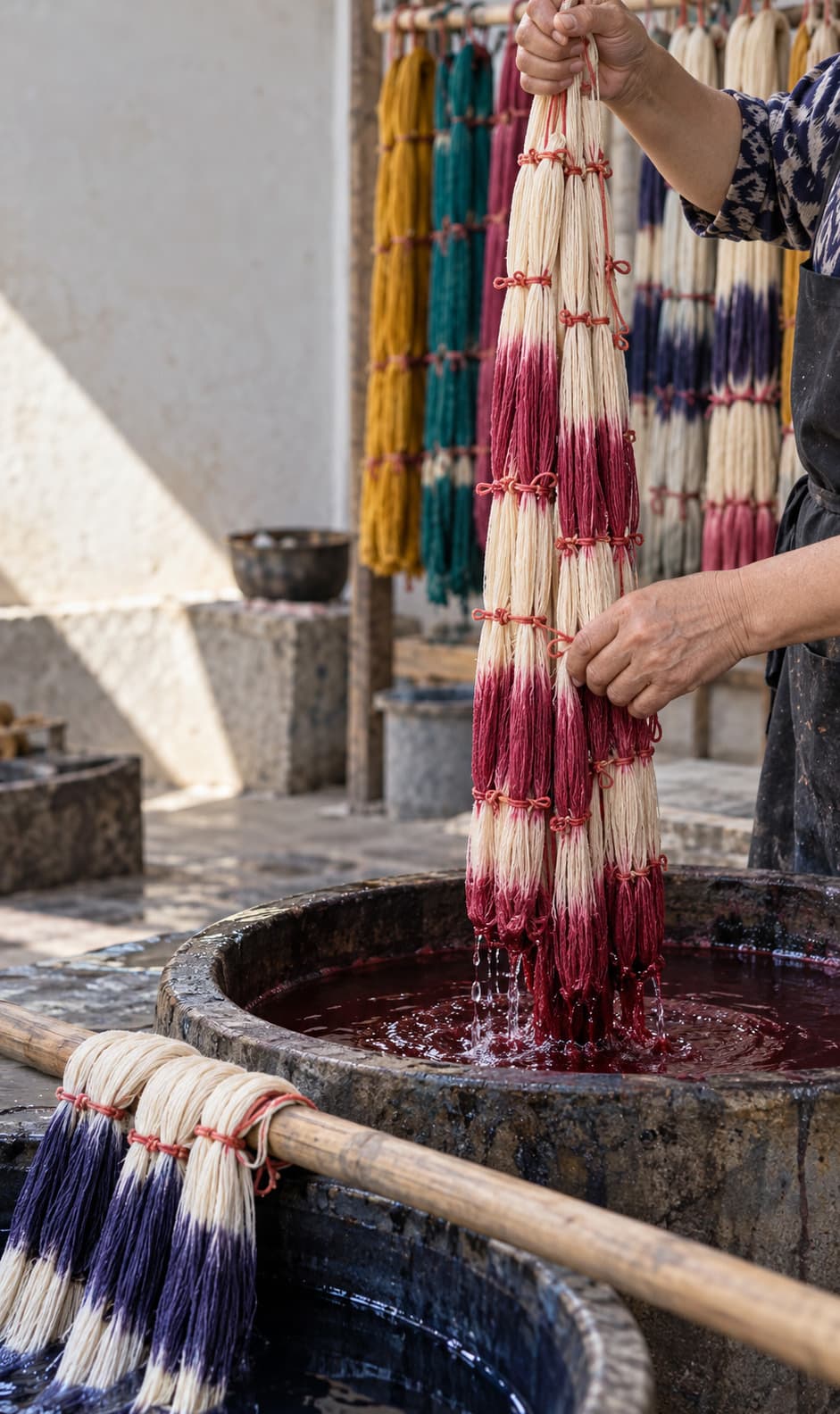
Threads. Selected sections of thread are tied tightly to protect them from the dye. The future rhythm of the pattern is already being set: what looks like a system of knots will later become a coloured motif.
Colour. The threads are dyed in stages, uncovering and protecting the required areas again and again. Colour appears in layers. The maker controls the intensity and anticipates how different shades will meet once the threads are woven.
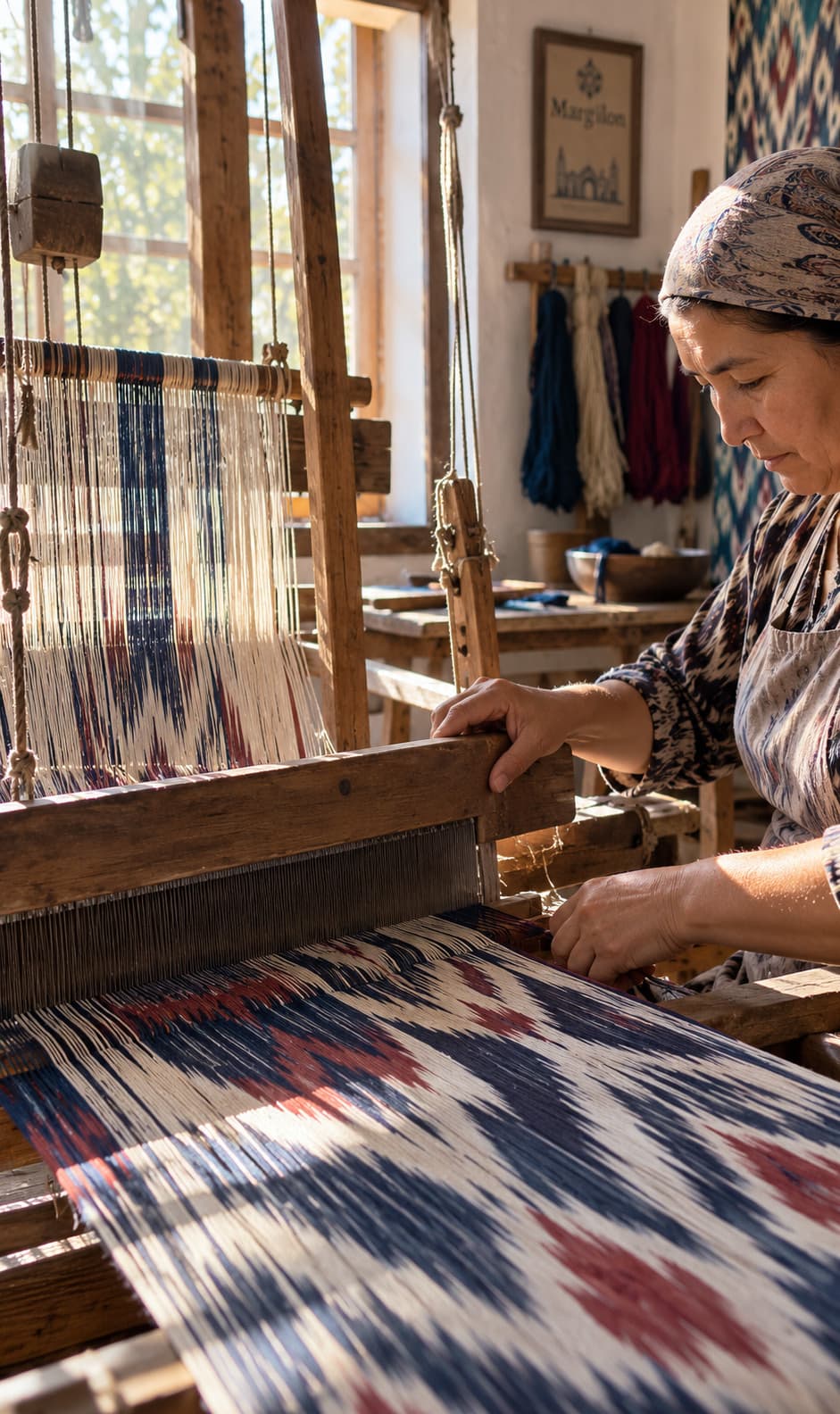
Weaving. The prepared threads are stretched on the loom and woven together. The pattern emerges gradually; small shifts become part of ikat's living character. This is where the maker's precision and experience are especially visible.
02
In a finished object, colour and pattern are easy to notice. In a workshop, attention shifts to the sequence of decisions: where the pattern begins, how thread movement is anticipated, what can still be corrected and what has already become part of the result.
After seeing the process, the fabric is no longer simply a beautiful purchase: you begin to see the time, experience and work behind it.
03
In Rishtan, the same principle applies to ceramics. With a potter, you want to ask how the clay behaves; with a glaze specialist, when the final colour becomes clear.
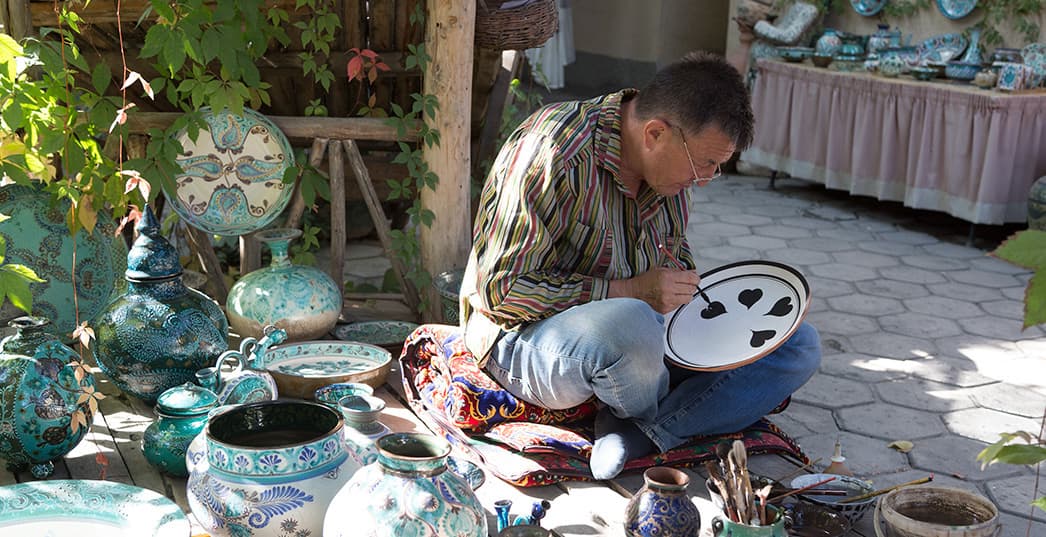
In Gijduvan, the materials and techniques change again. A good craft itinerary does not squeeze everything into one hurried day: it leaves time to see the process and talk to the person who understands it.
04
A short conversation can help you understand an object before you purchase it.
Buying is optional. What matters more is seeing the process, asking a question and understanding the object before it reaches your home.
Ask the maker
Share
A tour on this topic
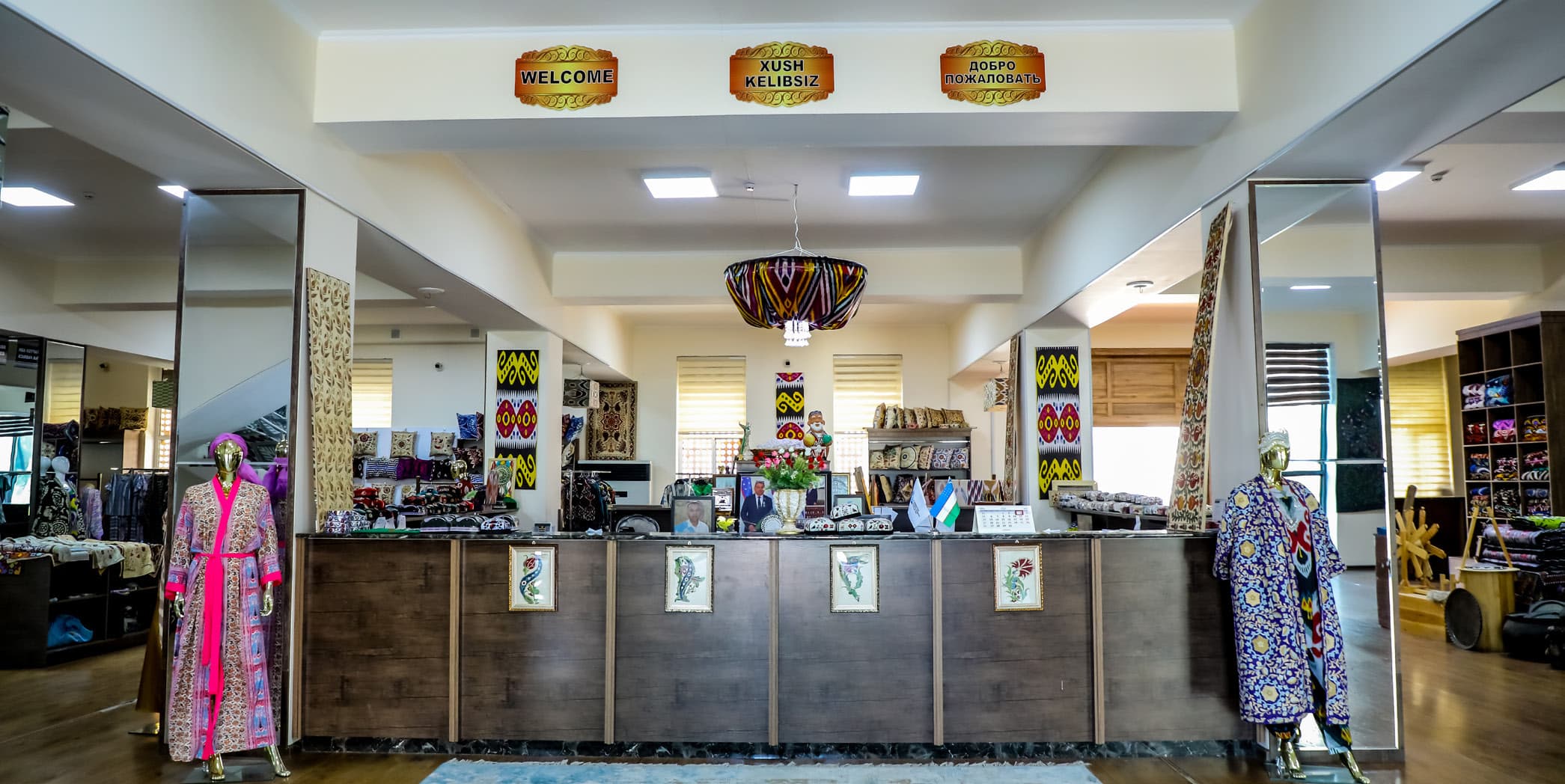
An 11-day private tour: Margilan for silk and ikat, Rishtan for ceramics, the Meros paper workshop in Samarkand, then Bukhara and Khiva.
More on the topic