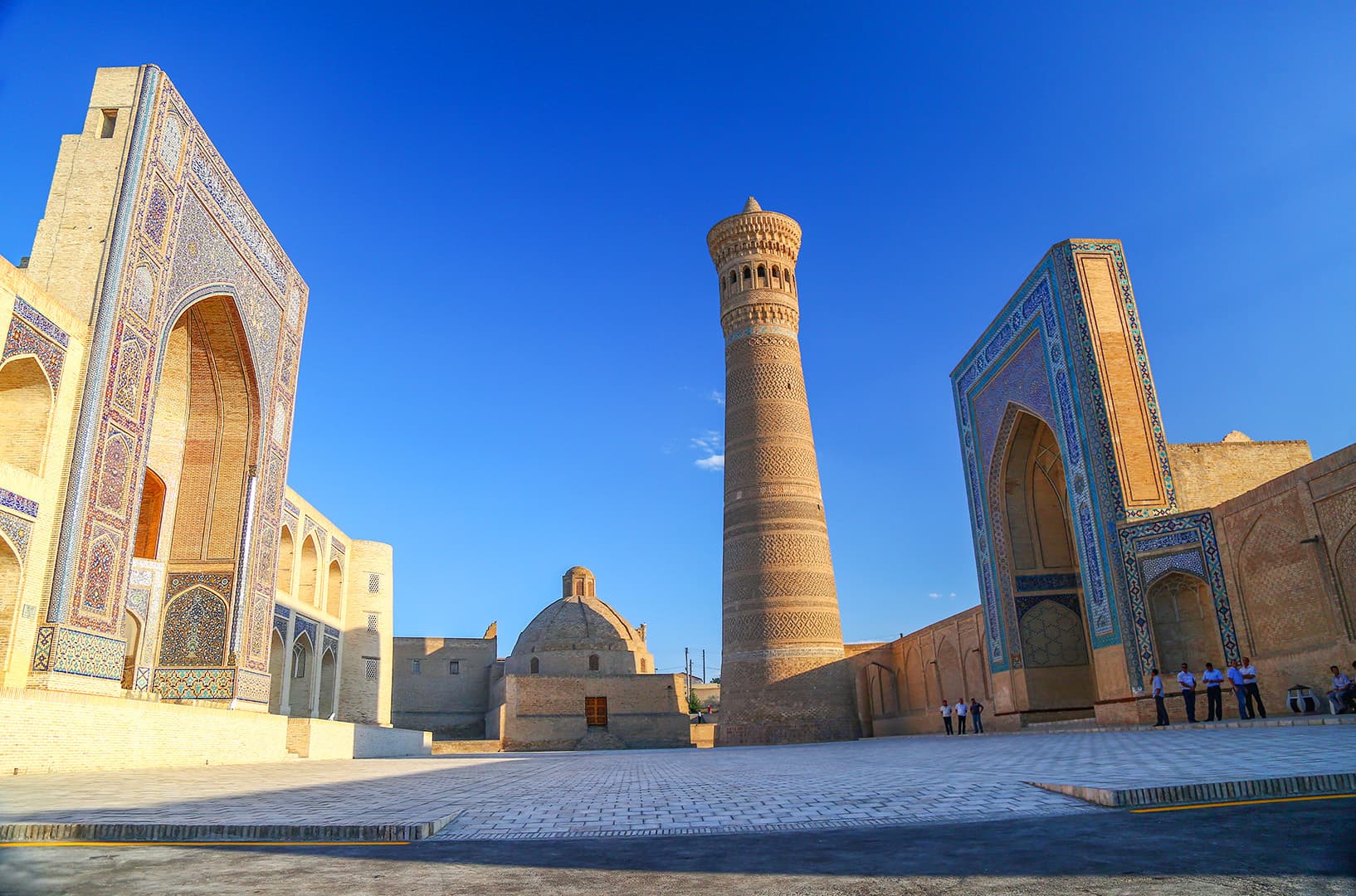
TourLink
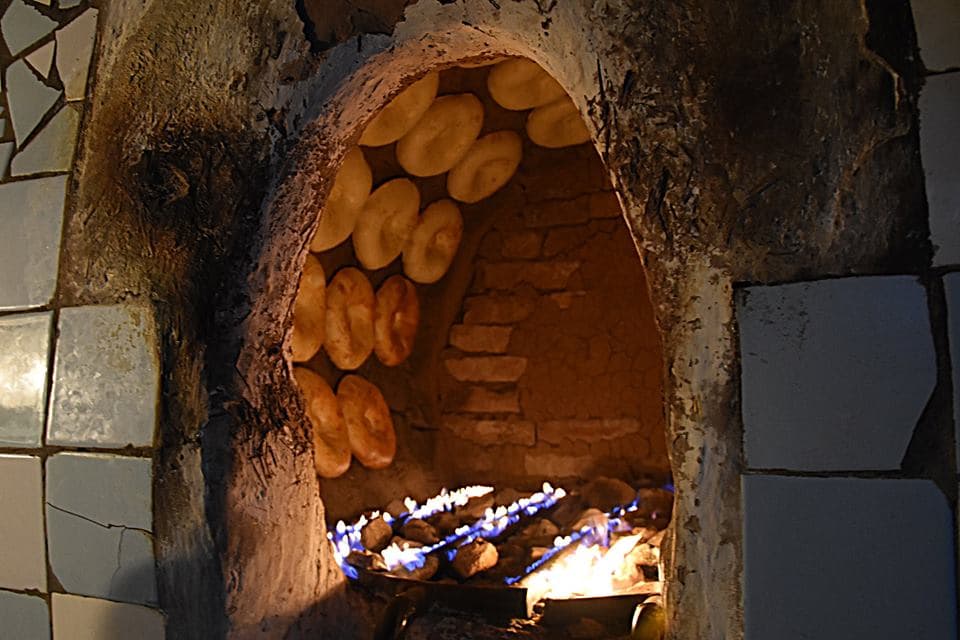
Bread from a clay oven, a heavy cast-iron kazan and fire. Everything else is ways of combining them.
Bread, always
Kazan
Plov at lunch, kebab in the evening
Uzbek cuisine stands on three things: bread from a clay oven, a heavy cast-iron kazan and fire. Everything else is ways of combining them. Below is what to eat, where, and at what time of day — because the hour matters more than the address.
01
Any meal in Uzbekistan starts with non, the round flatbread. It is baked on the inner wall of a tandoor, a clay oven first heated with wood, then the dough is slapped straight onto the hot wall. Before baking, the middle is pressed and pricked with a chekich, a stamp with a ring of pins. The dot pattern is not decoration: it keeps the centre from puffing up. The result is two textures — the edge rises and crunches, the middle stays dense.
Bakers argue about water. Samarkand non is heavy and keeps for weeks; it is brought to Tashkent as a gift. In the city they like to repeat that outside Samarkand nobody gets this bread right: different water, different flour. Impossible to verify, but the flatbreads do travel. Bukhara bread is thinner. In Khorezm they bake a flatbread thickly dusted with sesame and nigella.
Bread comes with rules, and it is better to know them in advance: it is torn by hand, never cut, and never placed bottom-up. More about table customs — in the article on traditions.
02
Almost everything that cooks long cooks in a kazan. It is a heavy cast-iron bowl with a round bottom, set into a brick shell over wood or gas. Cast iron holds heat, and because of the round bottom the fat gathers in the centre. For long braising there is nothing better.
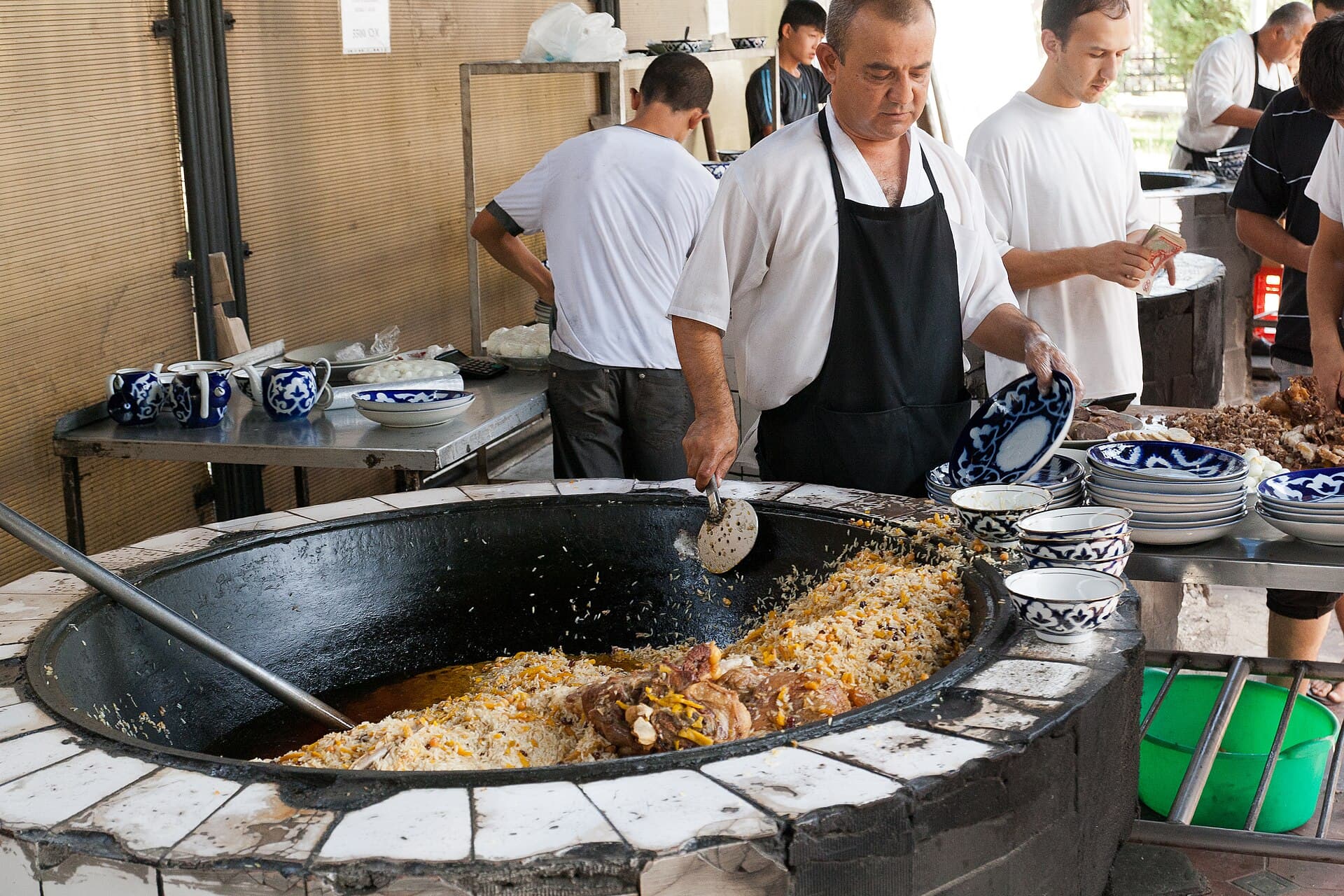
The simplest example is dimlama. Meat, onion, carrot, potato, cabbage, tomatoes and pepper go into the kazan raw, in layers, almost without water. The lid closes for two hours. The vegetables give off so much juice that they braise themselves, and nothing is stirred until serving.
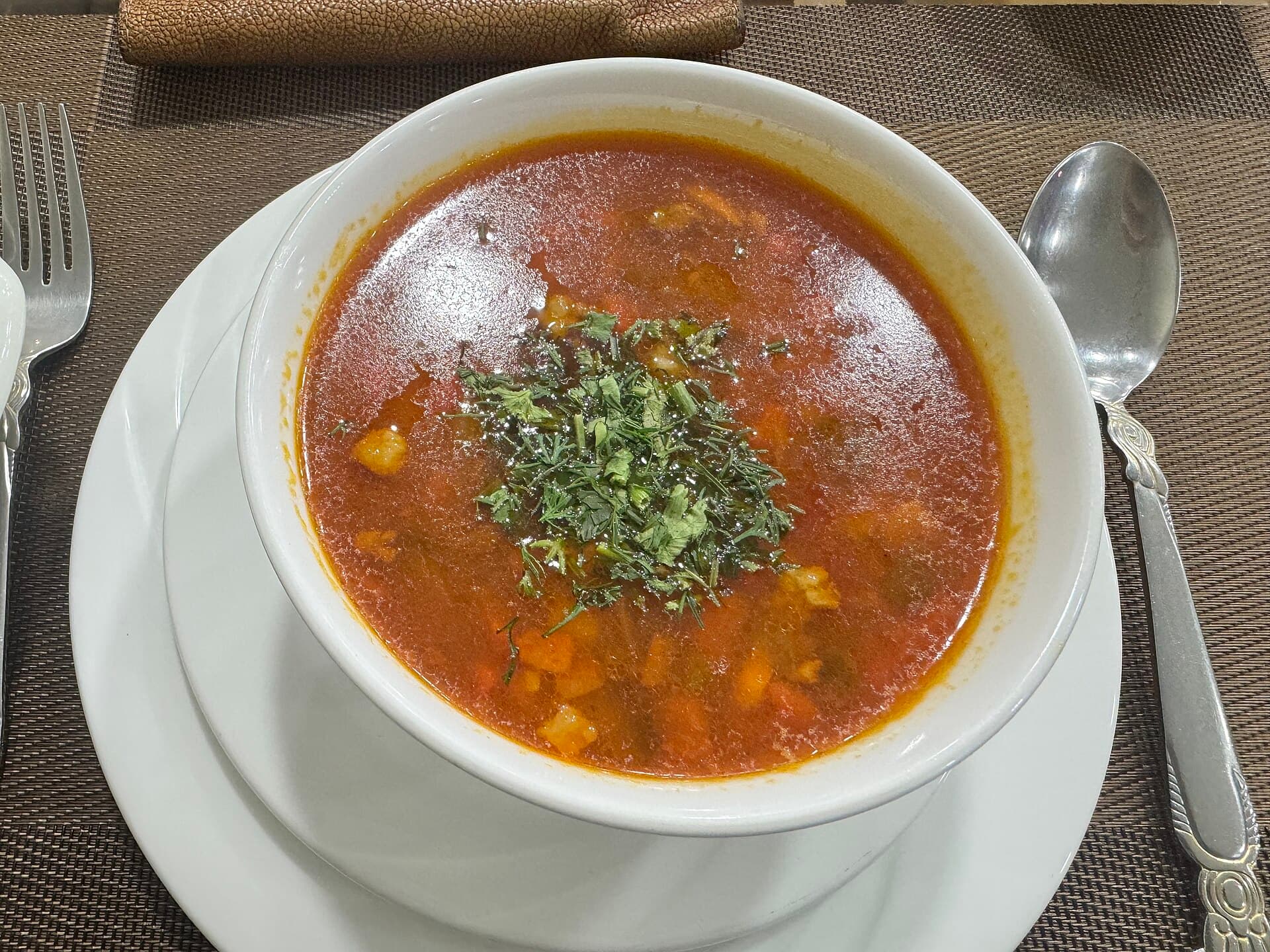
Shurpa is the everyday lunch soup: lamb on the bone, whole vegetables, a clear broth. It comes in a piala, meat and vegetables on a separate plate. Mastava is the same but with rice, thicker, often with a spoon of katyk on top. Both soups are eaten at lunch. In the evening you will hardly find them.
Plov is cooked in a kazan too, but that is a separate conversation — it deserves its own page.
03
Lagman came from the Uyghurs and stayed. The noodles are pulled by hand: rolled, stretched, slapped against the table until they are long enough to fold into a ring. They are boiled and covered with a thick gravy of lamb, pepper, garlic and vinegar. If you ask for it fried, they bring kovurma-lagman, closer to a stir-fry than to a soup.
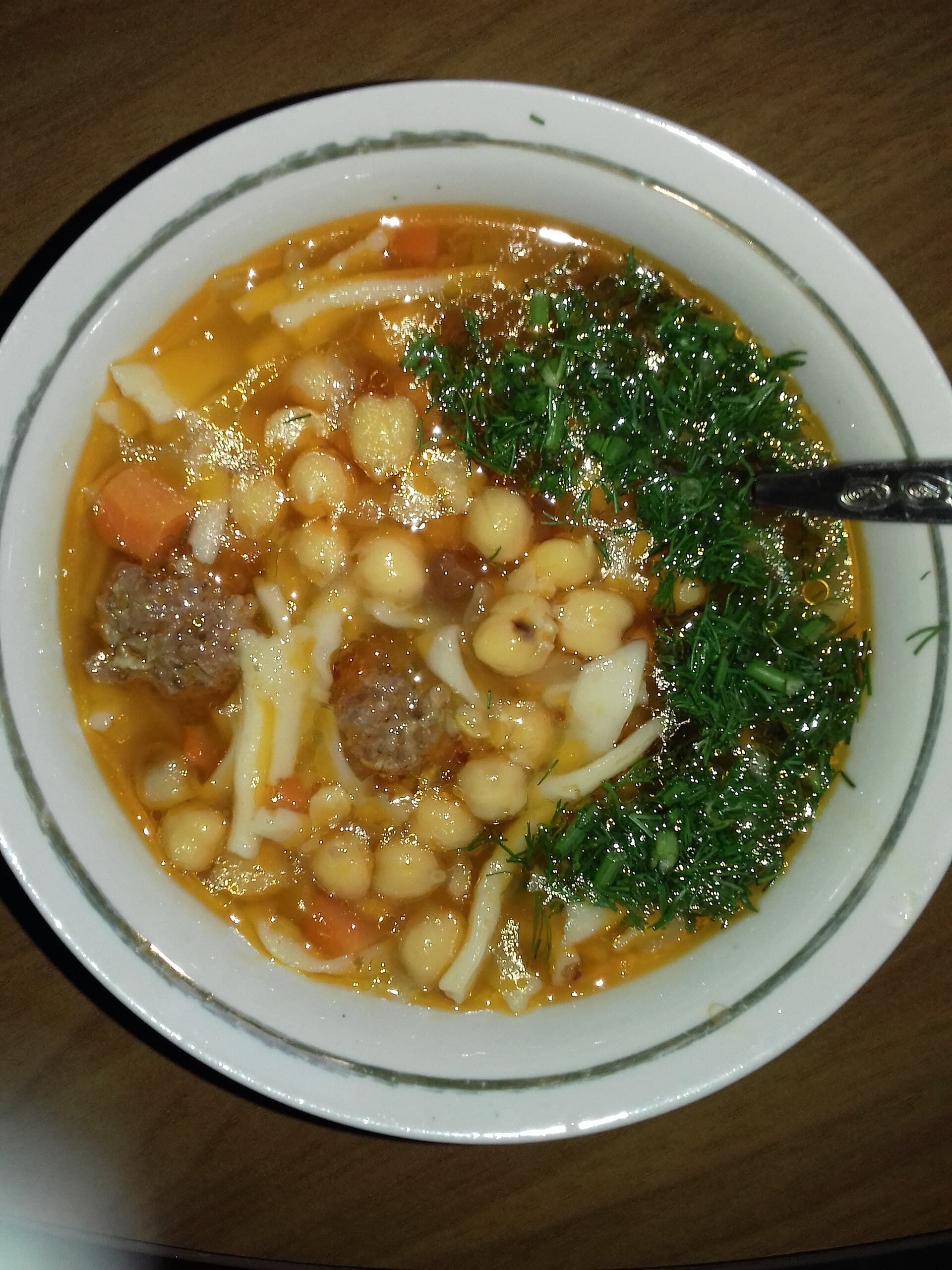
Manti are large steamed dumplings. The filling is chopped, not minced, lamb, plenty of onion and a cube of tail fat that melts in the steam. They come with katyk or sour cream. Chuchvara are small dumplings, boiled and served in broth. Khonim is the lazy version: the dough is rolled out as a sheet, the filling wrapped as a roll, steamed whole and cut into pieces. Naryn is known to few visitors. Boiled dough is cut into thin ribbons, mixed with slices of kazy, horse sausage, and served cold, with a cup of broth on the side. In Tashkent there are places that cook nothing else.
04
Kebab is grilled on flat metal skewers over coals in a narrow long mangal. The standard is lamb, cut so that lean pieces alternate with pieces of fat on the skewer. Minced meat on a skewer is called lyulya. All of it arrives on a bed of raw onion with vinegar and sumac. The onion is not a garnish — it is eaten together with the meat.
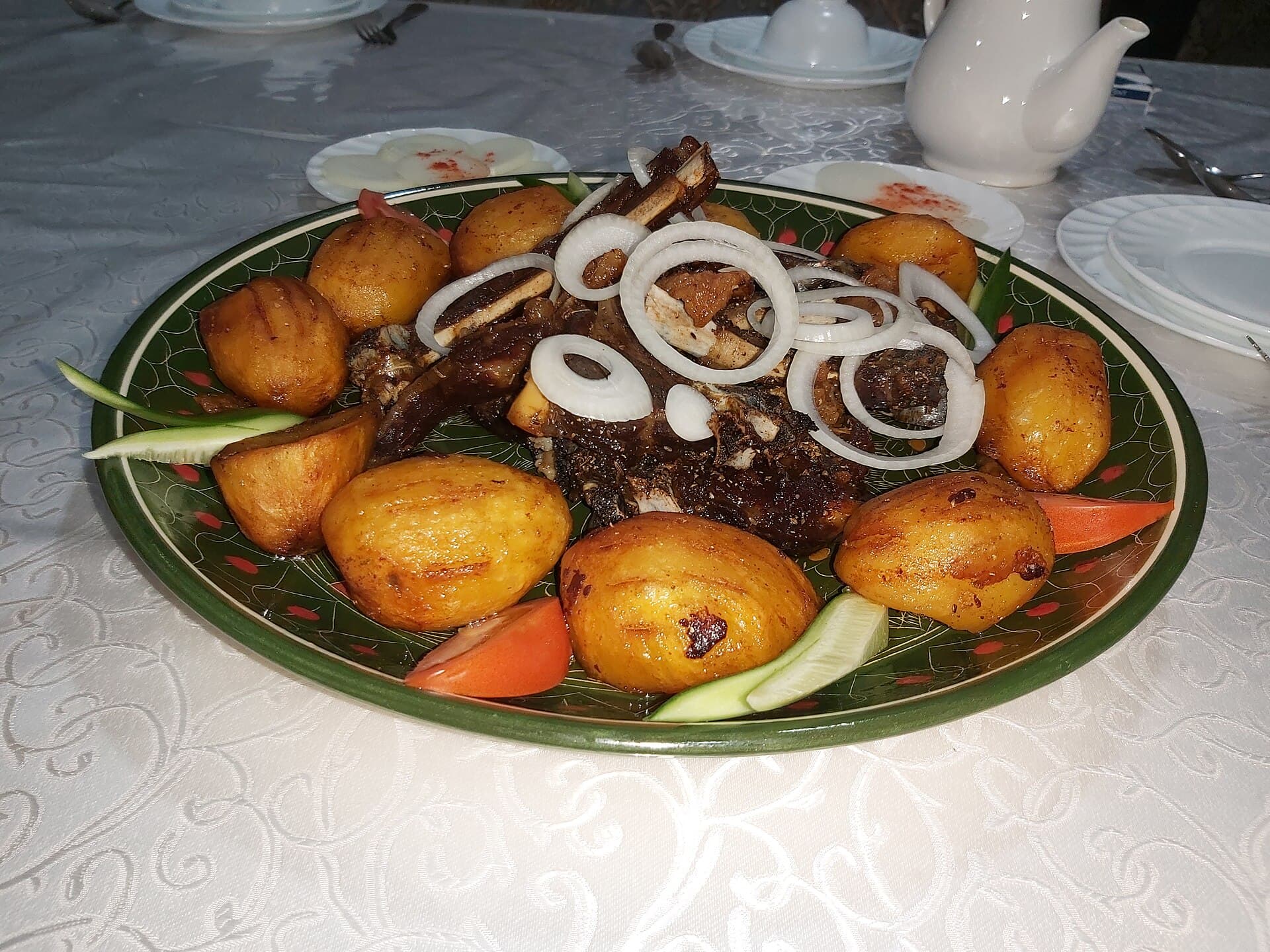
Kazan-kabob is the fried version: lamb ribs and potatoes in a generous amount of fat, until everything browns. Tandyr-gusht is a leg of lamb sealed into the bread oven for several hours. In Bukhara and around Samarkand it is sold by weight on weekends.
05
The main salad is achichuk: tomatoes and onion sliced very thin, salt, sometimes pepper. It exists for the sake of plov, because plov is fatty and achichuk cuts the fat. It is put on the table before the plov.
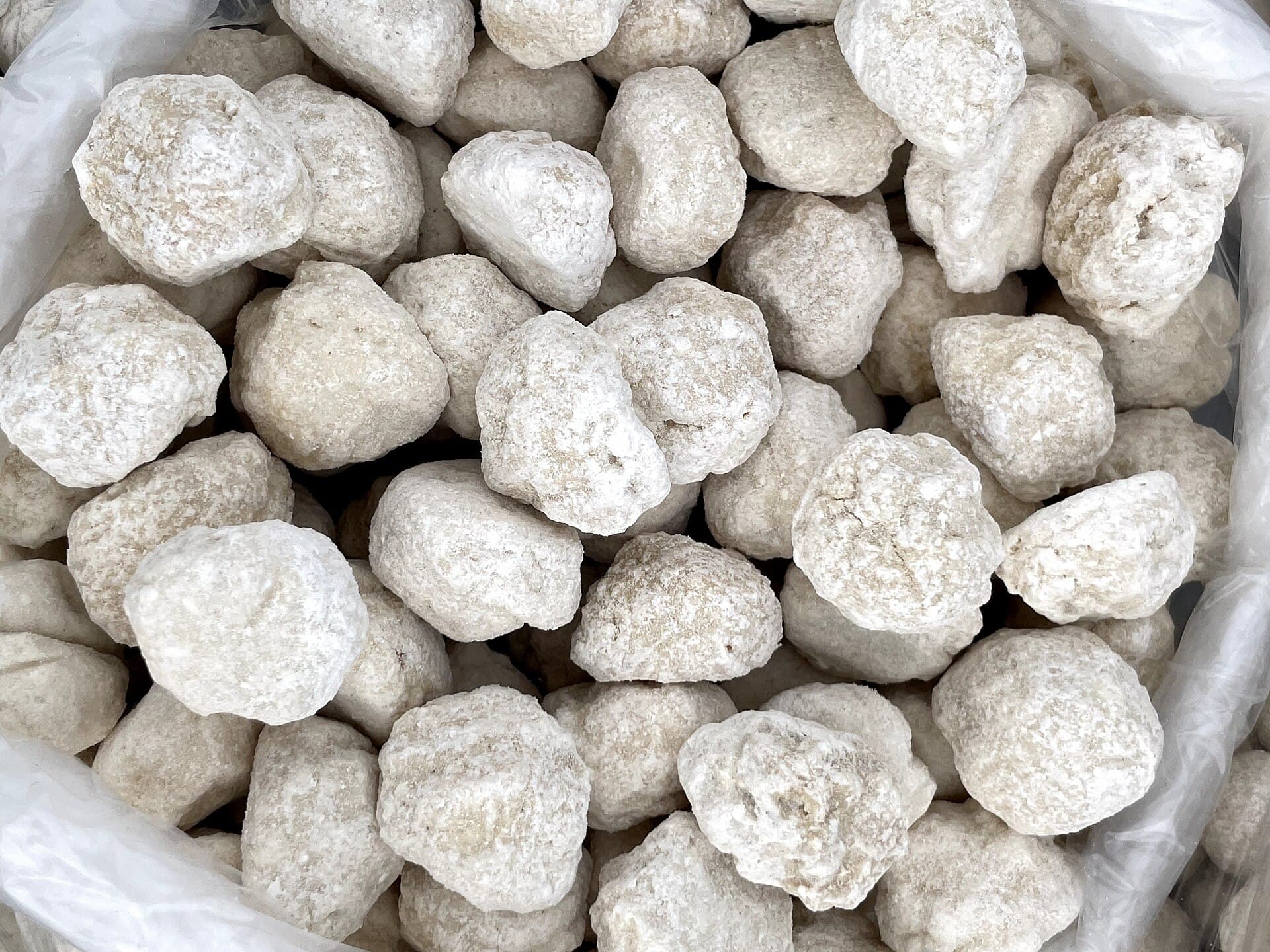
Dairy here is sour. Katyk is a drinking yogurt. Suzma is the same but strained, eaten with bread and greens. Kurt is suzma rolled into hard salty balls and dried in the sun. Shepherds take kurt along, and children gnaw it like candy. The taste is an acquired one — worth trying.
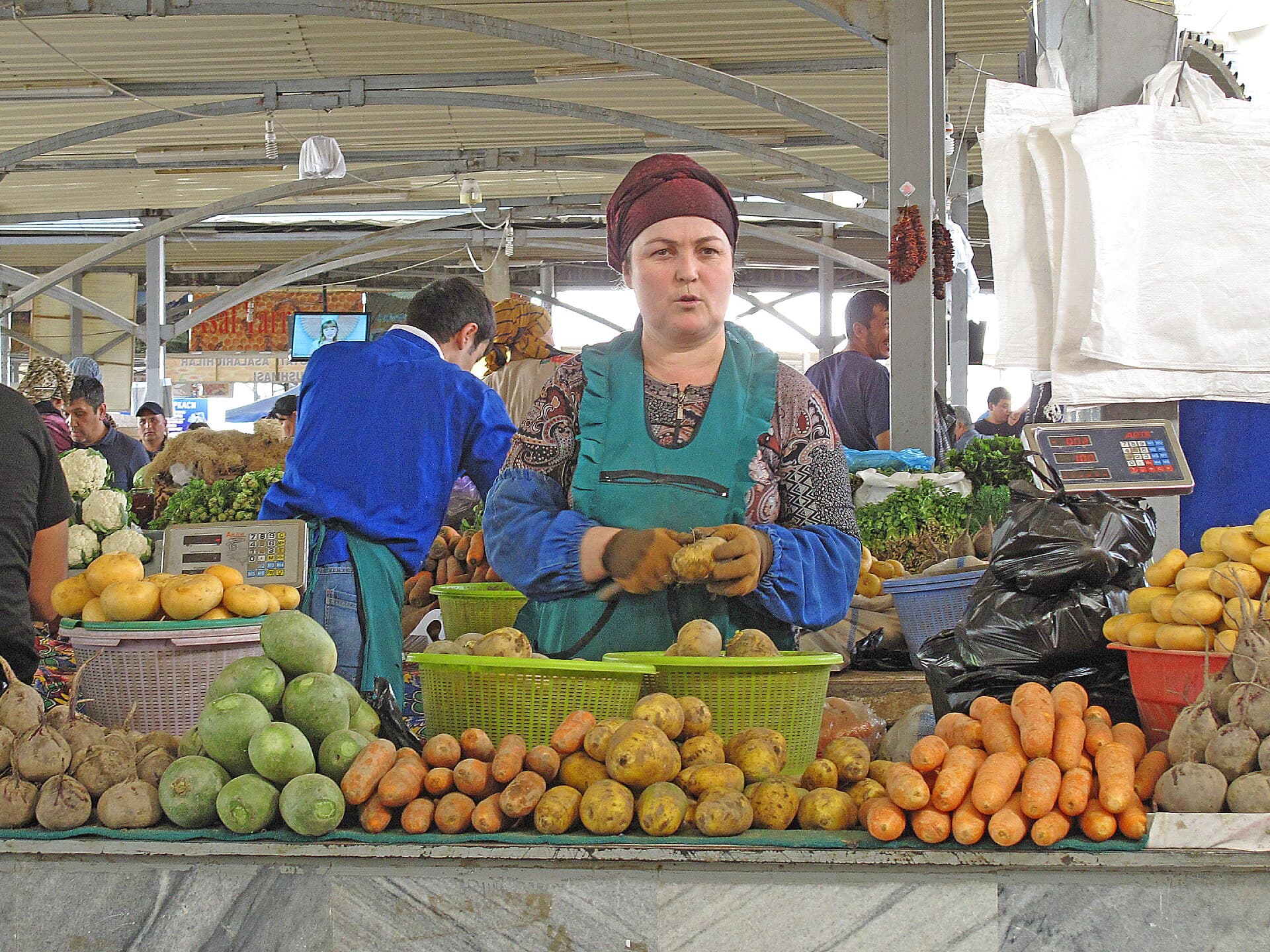
Summer belongs to melons. They come in dozens of named varieties, and Khorezm sellers name not only the variety but the field. Grapes, apricots and pomegranates are discussed with the same seriousness. Dried apricots, raisins and nuts are set on the table at the start of any meal, next to the sweets.
06
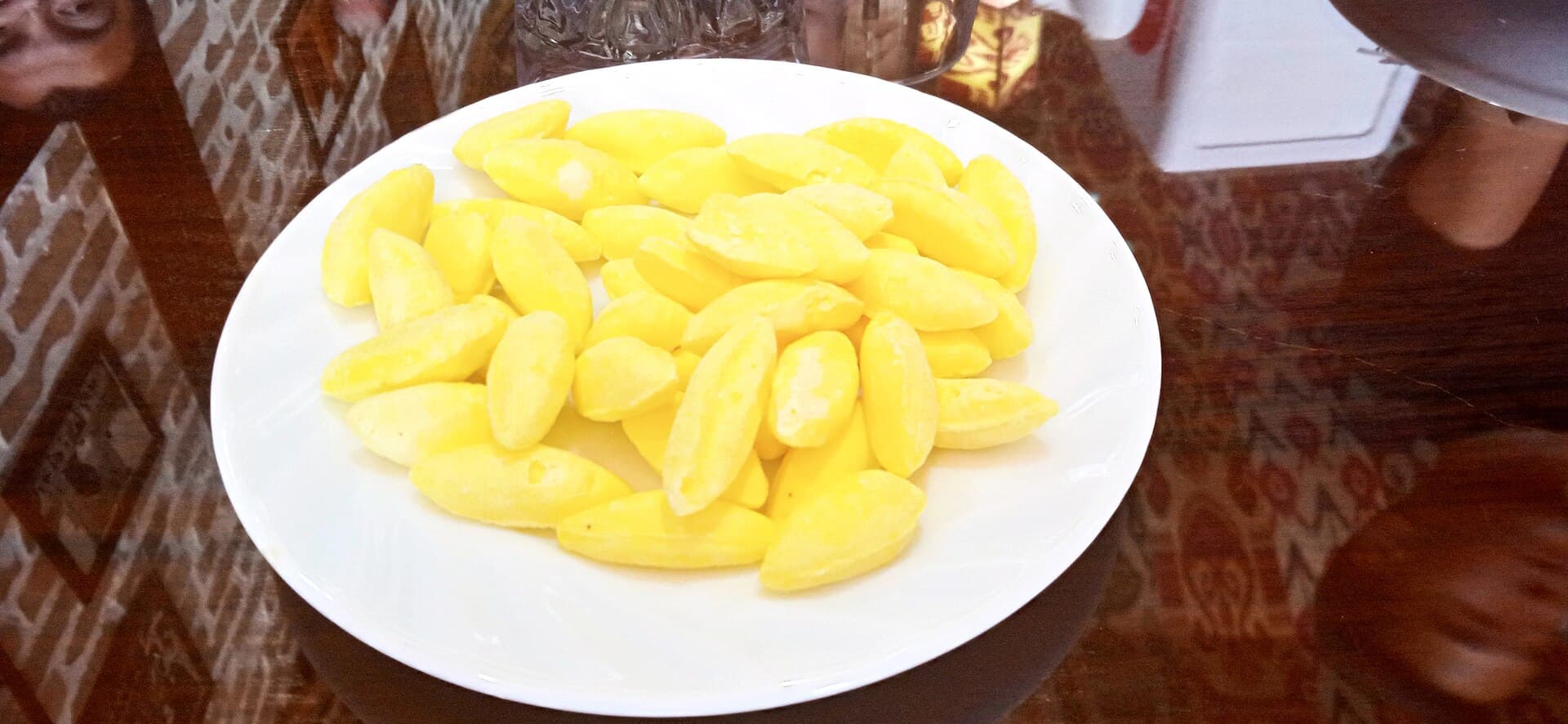
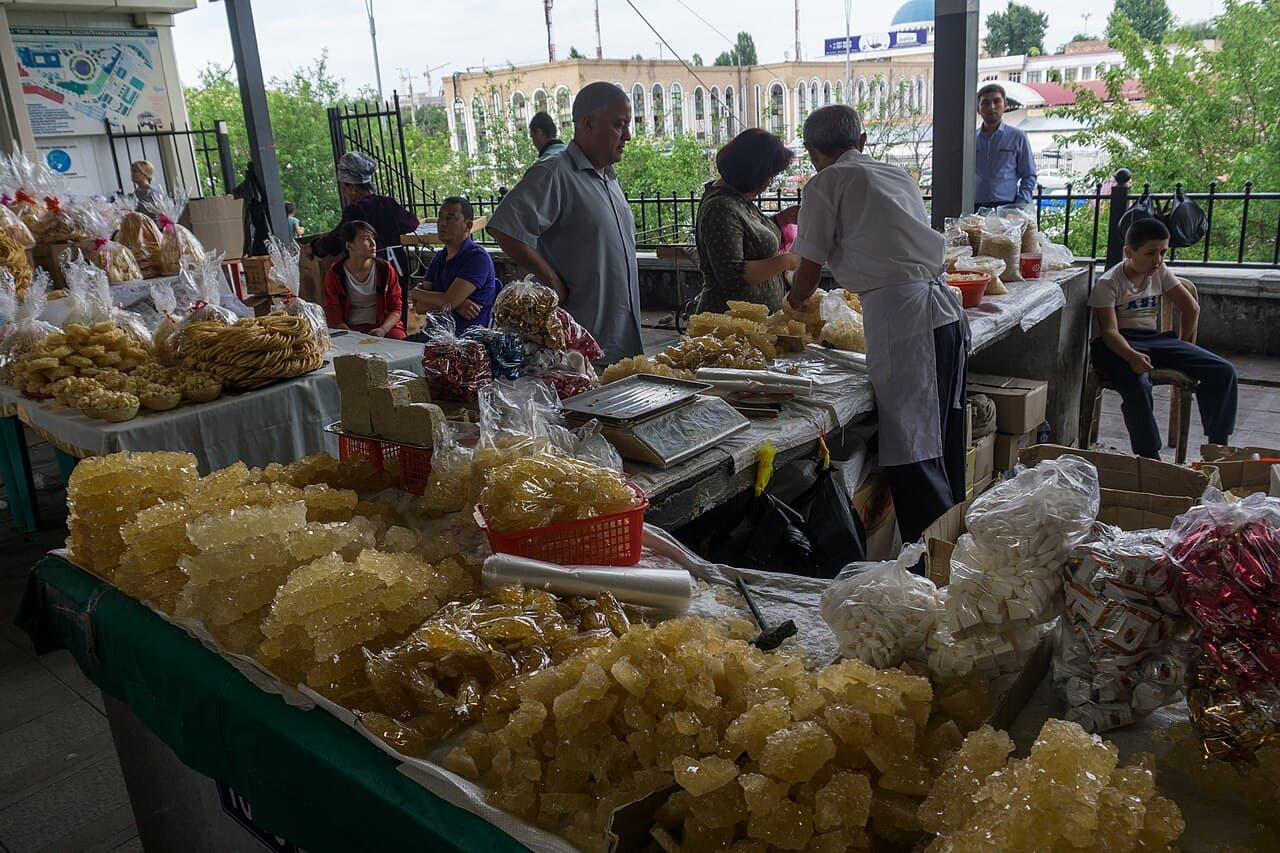
Green tea is drunk almost everywhere, black in Tashkent and among Russian speakers. Neither milk nor sugar goes into the piala. The sweetness is on the table: navat, sugar crystals grown on a thread, amber chunks given for a cold; halva in a dozen kinds, including flour halva on butter; parvarda, caramels white with flour. Nishalda, a white foam of whipped egg whites with sugar and liquorice root, is made for Navruz and Ramadan. It is one of the few things Uzbeks themselves call too sweet.
07
The country is small, but the food in it differs. In the Fergana Valley they cook fattier and spicier than anywhere else, with more pepper. Bukhara and Samarkand are drier and sweeter, with more dried fruit. Khorezm has its own vocabulary: tukhum-barak, for example, a boiled dumpling with a liquid egg inside. Karakalpak cuisine in the north-west was built on fish from the Aral Sea and has been quietly disappearing with the water since the sixties.
08
Places here specialise. A place that cooks plov usually cooks only plov, opens around eleven and closes when the kazan is empty. Kebab places open towards evening. Somsa is gone by midday. If you want to try everything, the day is built around these hours, not around the sights.
What and when
Share
A tour on this topic
Seven days with morning plov, bazaars and a family dinner in every city. No museum marathons, with time for food.
More on the topic