TourLink
After the first wide view of walls and gates, look again: at wood, colour and space.
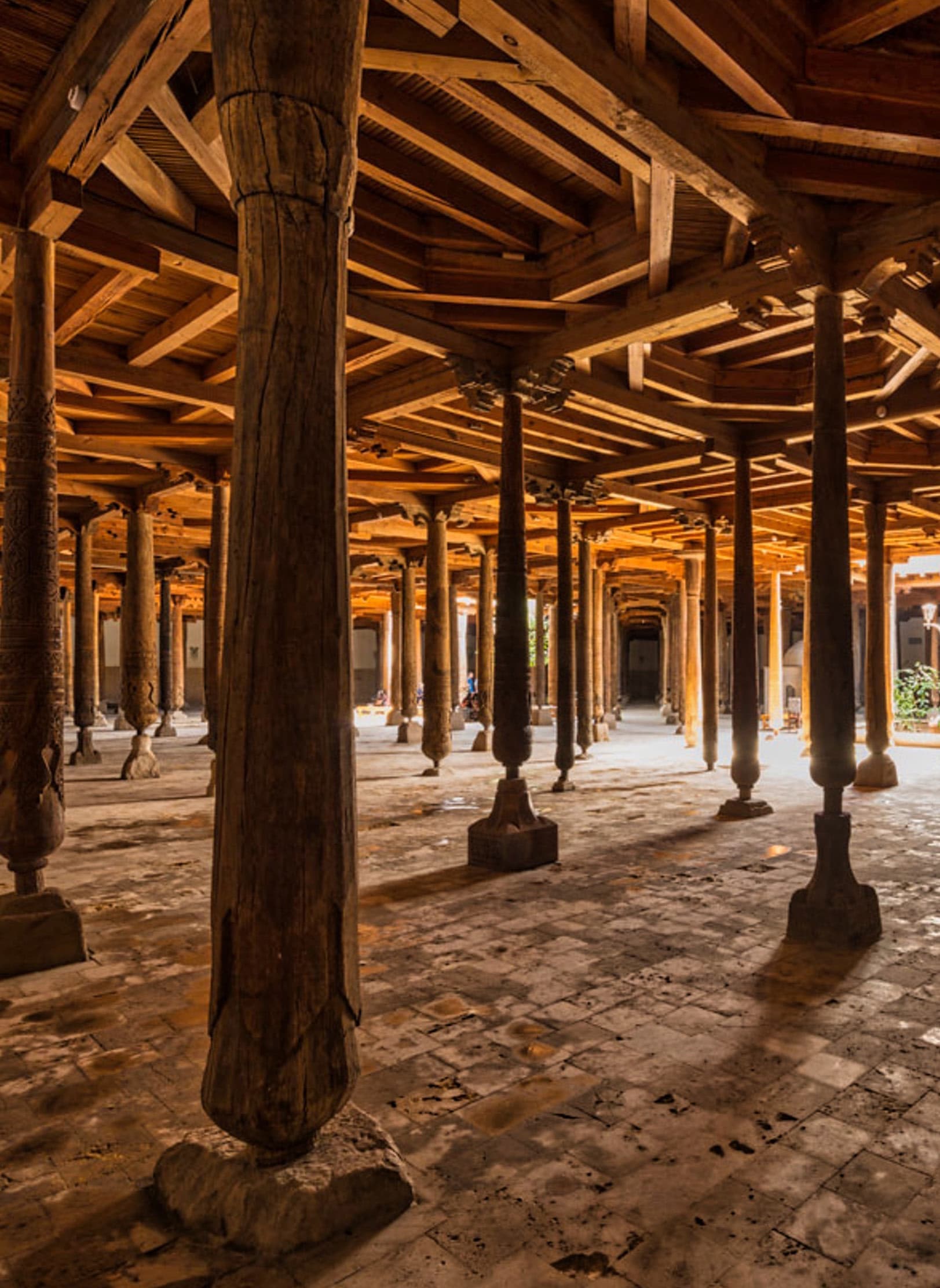
Carved columns of the Juma Mosque
Turquoise glaze of Kalta Minor
Courtyards and rooms of Tash-Hauli
Khiva has the impact of a city that reveals itself all at once: walls, gates and the dense silhouette of the old town. But after the first wide view, it is worth changing scale.
01
Inside the Juma Mosque, your eye first catches the rhythm of the wooden columns, then the differences in carving and form. Light and the depth of the hall become as much a part of the experience as the ornament itself.
You do not need to know the name of every motif. Compare two columns instead.
Compare two columns
After the Juma Mosque, wood continues to appear in courtyards and homes: carved doors, columns, ceilings and aivan. Rather than memorising the names of motifs, compare how the carving changes from one surface to another and how light reveals its depth. Historic details are there to be looked at, not touched.
02
Outside, attention shifts to glazed ceramics. Kalta Minor stands out for its broad silhouette and turquoise surface. Its unusual shape is the result of unfinished construction: the minaret never reached its intended height.
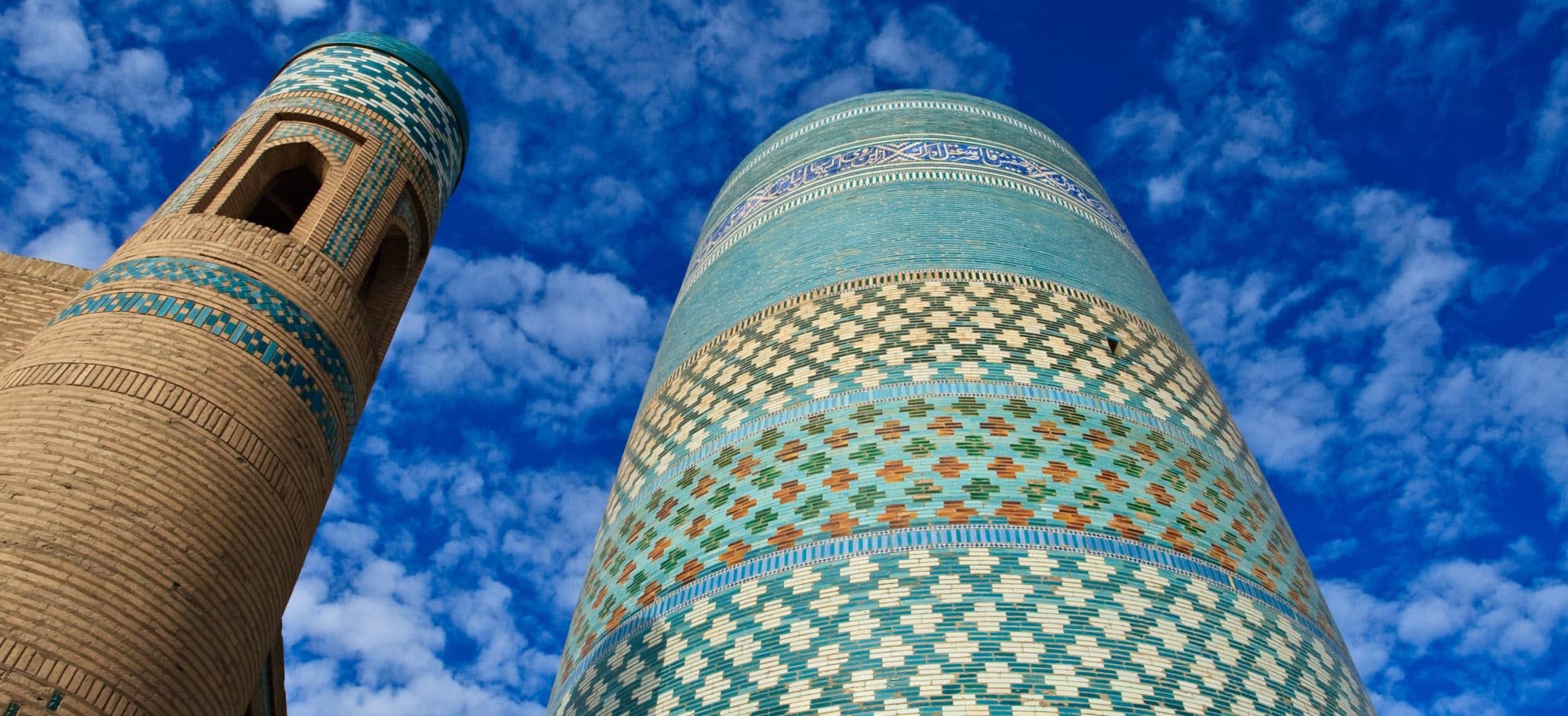
Take both a wide view and a close detail — back home, each will recall Khiva differently.
03
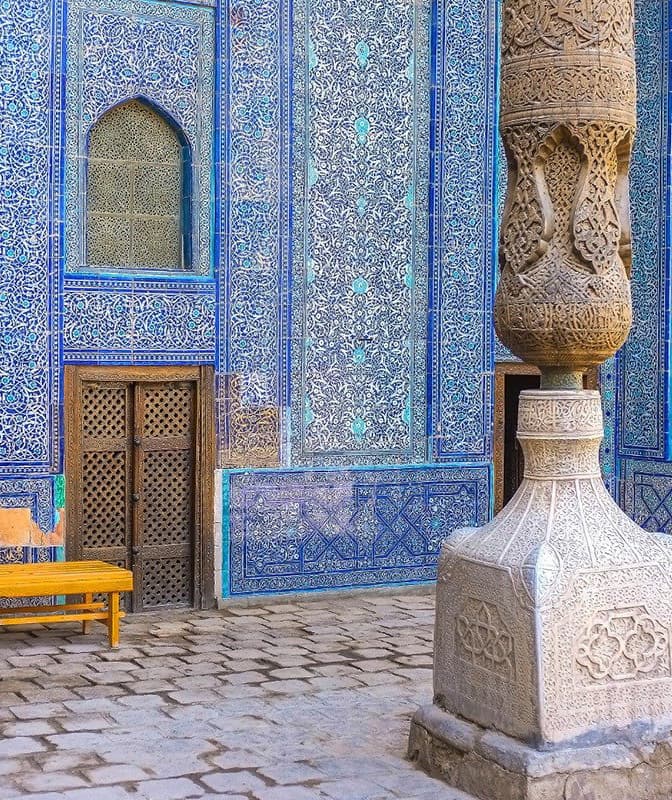
At Tash-Hauli Palace, notice how courtyards and rooms, open and enclosed areas, decoration and movement relate to one another. The walk stops feeling like a checklist of sights and gains a theme of its own: what the city is made of, how space changes and how it affects the person moving through it.
04
Ichan-Kala is not the whole city. Beyond the historic walls, everyday life continues: people work, study, meet and go about their day.
Khiva impresses at first sight. The real pleasure begins with the second look.
Share
A tour on this topic
Eight days through Tashkent, Khiva, Bukhara and Samarkand, with a full day in Khiva for fortresses, madrasas and courtyards, on foot and without rushing.
More on the topic