
TourLink
About
Khatlon begins south of Dushanbe, where the road opens into warmer valleys and the Vakhsh landscape starts to set the pace.
Most routes enter from Dushanbe, then turn toward one southern emphasis: Kulob's cultural route, Bokhtar and the Vakhsh Valley, Nurek's reservoir road, or the Ancient Khuttal archaeology anchors.
Heat, road time, site access, guide availability, and shade decide how much belongs in one Khatlon leg.
Agencies and travellers who need Khatlon & Southern Archaeology as a readable stop — strong places, honest pacing, and logistics that hold.
Getting around
Most routes enter from Dushanbe, then turn toward one southern emphasis: Kulob's cultural route, Bokhtar and the Vakhsh Valley, Nurek's reservoir road, or the Ancient Khuttal archaeology anchors.
What to decide
Heat, road time, site access, guide availability, and shade decide how much belongs in one Khatlon leg.
Kulob brings pilgrimage context, older streets, market life, and the road toward Hulbuk into one readable southern stop.
Route anchors
Five anchors give the region its shape: Kulob for cultural rhythm, Bokhtar for Vakhsh Valley movement, Nurek for reservoir-road context, and Ajinatepa plus Kalai Hulbuk for Ancient Khuttal archaeology.
Region character
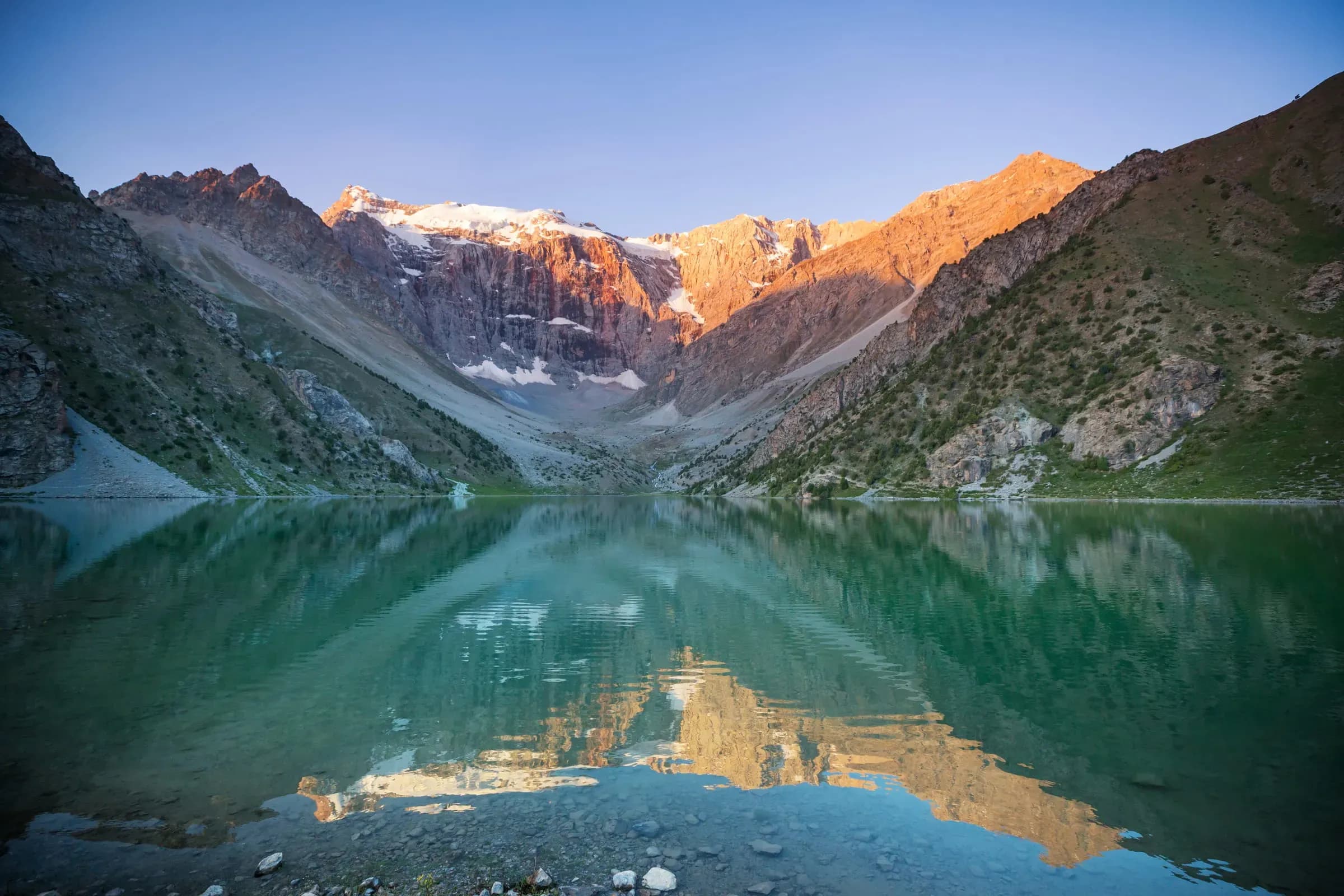
Khatlon is not a quick add-on below Dushanbe. Its value comes from the way river valleys, living towns, reservoir roads, and serious archaeology change the texture of a Tajikistan journey. «Khatlon opens when the route explains the south instead of rushing through it.»
Region areas
Kulob is the strongest cultural anchor. Bokhtar keeps Vakhsh Valley movement practical, while Nurek adds reservoir-road context when current access and timing make it appropriate.
South of Dushanbe, Kulob slows the route into a more local scale. The Hamadani courtyard, market streets, museum time, and the wider Ancient Khuttal story give the city its reason to stay before you choose whether to continue toward Hulbuk or return north.
Open placeSouth of Dushanbe, Bokhtar brings the route down into warmer valley country. Market streets, regional museum time, Ajina Teppa nearby, and the Vakhsh road network make the southern leg easier to understand before it moves again.
Open placeNurek changes the southern road before it becomes a long Khatlon journey. Water appears between dry hills, the dam gives the landscape its scale, and the right visit stays clear-eyed: confirmed viewpoints, no casual infrastructure access, and an early choice between returning to
Open placeWhat to see
The region is shaped by Kulob pilgrimage context, Ajinatepa, Kalai Hulbuk, Nurek water, the Vakhsh Valley, Hulbuk routes, and Takhti-Sangin as a separate archaeology route that needs access review.
At Hulbuk, the road from Kulob leaves the shrine city for the palace world of Ancient Khuttal. Reconstructed walls, a broad citadel plan, baked brick, carved ganch, ceramics, coins, and jewellery bring a medieval road network into view. Treat the map marker as orientation and che
Open placeMir Sayyid Ali Hamadani Mausoleum is the quiet turn in Kulob's city route. The shrine keeps the memory of a 14th-century poet, scholar, philosopher, and Sufi figure, and its garden setting asks for a slower, more respectful visit. Come with modest dress, ask locally which areas a
Open placeRegion in detail
Pace, season, and how this region connects to the next stop.
2–4 days usually works if you keep one strong core and treat outer stops as deliberate choices. The region brief is “Ancient Khuttal, southern valleys, and reservoir roads”.
Use neighbouring cities as clean handovers: arrive with a calm first night, leave after one completed chapter, and avoid stacking two long transfers on the same day.
Heat, altitude, road condition, and opening hours change the product more than the brochure list. Build the region around what stays comfortable for the group that week.
On request
We help agencies set a realistic pace and choose the right extensions — without rushing the places that matter.