
TourLink
About
Nurek changes the southern road before it becomes a long Khatlon journey.
Treat Nurek as a short, careful road stop. The value is in the approach, the reservoir views, and the hydropower setting; dam entry, facility visits, boating, swimming, shoreline access, and photography rules all need date-specific local confirmation.
The clearest plan leaves Dushanbe without cramming the day, gives Nurek time for the road and water, then returns north or continues south only when the wider Khatlon route is already planned.
Agencies and travellers who need Nurek as a readable stop — strong places, honest pacing, and logistics that hold.
Getting around
Treat Nurek as a short, careful road stop. The value is in the approach, the reservoir views, and the hydropower setting; dam entry, facility visits, boating, swimming, shoreline access, and photography rules all need date-specific local confirmation.
Route sequence
The clearest plan leaves Dushanbe without cramming the day, gives Nurek time for the road and water, then returns north or continues south only when the wider Khatlon route is already planned.
The road from the capital is part of the reason to come: the city thins out, hills dry, and the Vakhsh valley begins to shape the view.
Route map
The map marks Nurek between Dushanbe, Bokhtar, and Kulob. It is orientation, not an access guarantee: viewpoints, security-sensitive zones, heat, and road timing still need local checks.
What to see
Keep Nurek compact: arrive from Dushanbe, take in the reservoir from confirmed viewpoints, treat the dam as an interpreted story, then choose whether to return or continue south.
Nurek moments
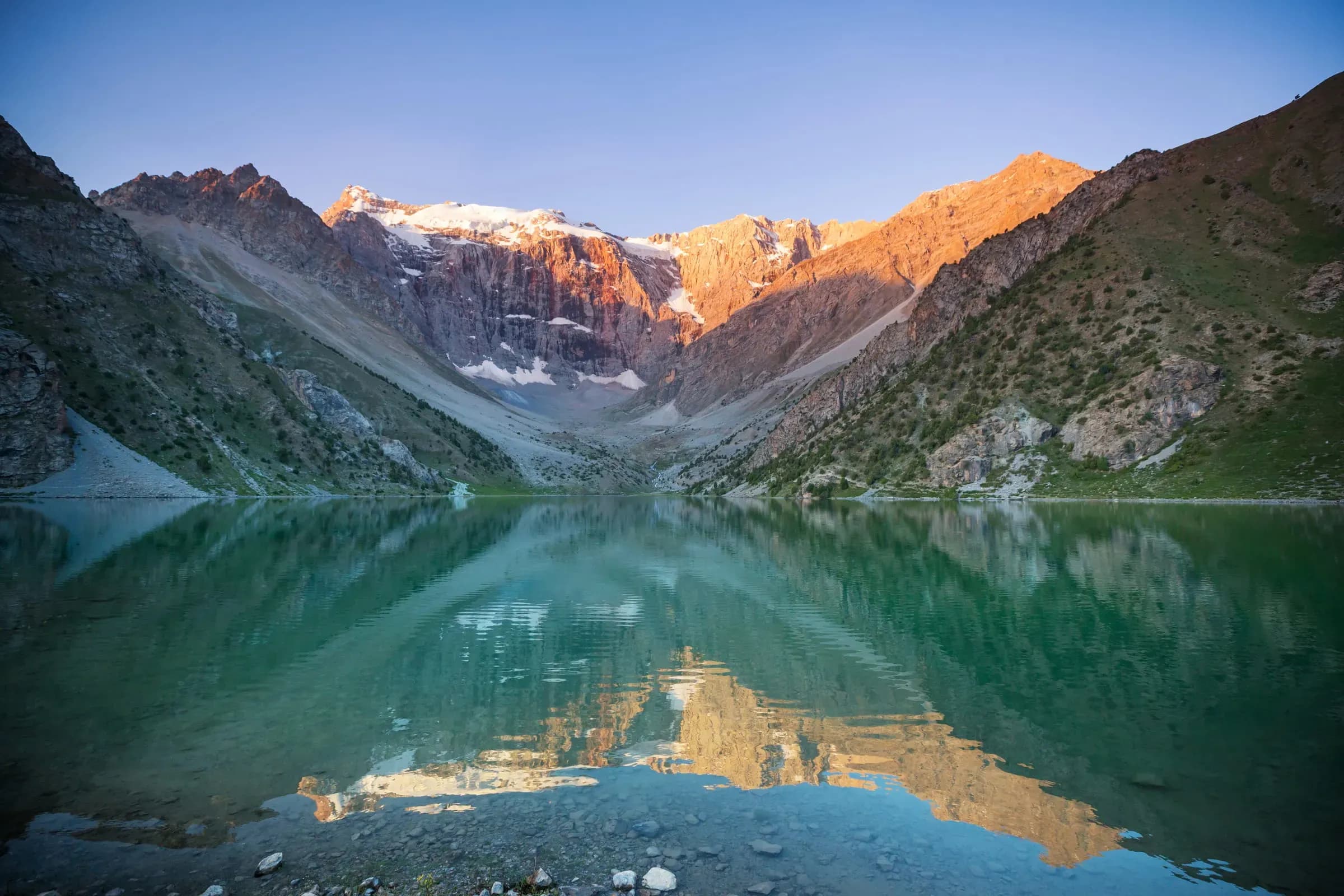
Three small moments make Nurek useful: the road from Dushanbe, the dam story from safe viewpoints, and the decision to return or continue south.
The drive gives Nurek room to breathe: dry hills, Vakhsh water, and enough time to decide whether the route turns back or moves south.
Nurek's engineering scale helps explain the valley, but keep it to confirmed public viewpoints unless a current permission opens more.
After the reservoir, choose one direction: a calm return to the capital or a planned continuation toward Bokhtar, Kulob, and southern Khatlon.
Before you go
Nurek is most useful when the plan stays honest: a short reservoir-road stop, not a claim of open access to sensitive infrastructure.
The shift from Dushanbe to reservoir country is enough to make Nurek meaningful. It does not need a long list or a shoreline promise that is not confirmed.
Nurek is clearest as a road decision: water in the hills, hydropower scale, and access checked before the route promises more.
The hydropower setting gives the place scale, but access to infrastructure is not a casual sightseeing item. Treat the dam as an interpreted story unless permissions are clear.
Nurek can close a compact Dushanbe day or start the move toward Bokhtar and Kulob. Trying to do both at once makes the stop feel rushed.
Come for reservoir scale and a measured road day. Leave dam access, shoreline recreation, boating, swimming, and facility visits out unless the local check says yes.
At a glance Place
Reservoir-road town in Khatlon & Southern Archaeology, southeast of Dushanbe.
Visit shape
Usually a day route from Dushanbe or a short, checked stop before southern Khatlon.
What matters
Vakhsh reservoir views, the dam's hydropower story, safe road viewpoints, and the Dushanbe-Khatlon decision.
Access
Dam areas, shoreline activity, facility visits, boating, swimming, photography, and recreation claims need local confirmation before they enter a program.
Comfort
Heat, shade, water, vehicle comfort, and return distance shape how long the stop should be.
Where to continue
Dushanbe is the natural start or return. Bokhtar and Kulob make sense when Nurek is part of a planned Khatlon route, not an overloaded day.
Dushanbe is Tajikistan's calm arrival city: Rudaki Avenue shade, national museums, tea-house stops, and first choices toward Hissar, Varzob, or higher valleys.
ViewBokhtar gives southern Tajikistan a human start: bazaar streets, regional museum context, nearby Ajina Teppa, and Vakhsh Valley roads shaped by local advice.
ViewKulob gives southern Khatlon a measured stop around the Hamadani shrine, market streets, museum time, and the carefully chosen road toward Hulbuk or Dushanbe.
ViewCity in detail
Walking time, overnight location, and when day trips make sense.
2–3 nights is usually enough when the old core or main anchors get a full walking window. City tone: “Water, dry hills, and the Vakhsh hydropower story”.
Start with the compact city walk first. Day trips only after the centre has settled — otherwise the stop feels like a transfer with monuments attached.
Stay close enough for an evening return on foot or a short transfer. That keeps tea, dinner, and a second pass through the lanes easy without burning the next morning.
On request
We help agencies set a realistic pace and choose the right next move — without rushing the places that matter.