TourLink
Impression · Khiva
By day it is a museum. By evening it is a town again.
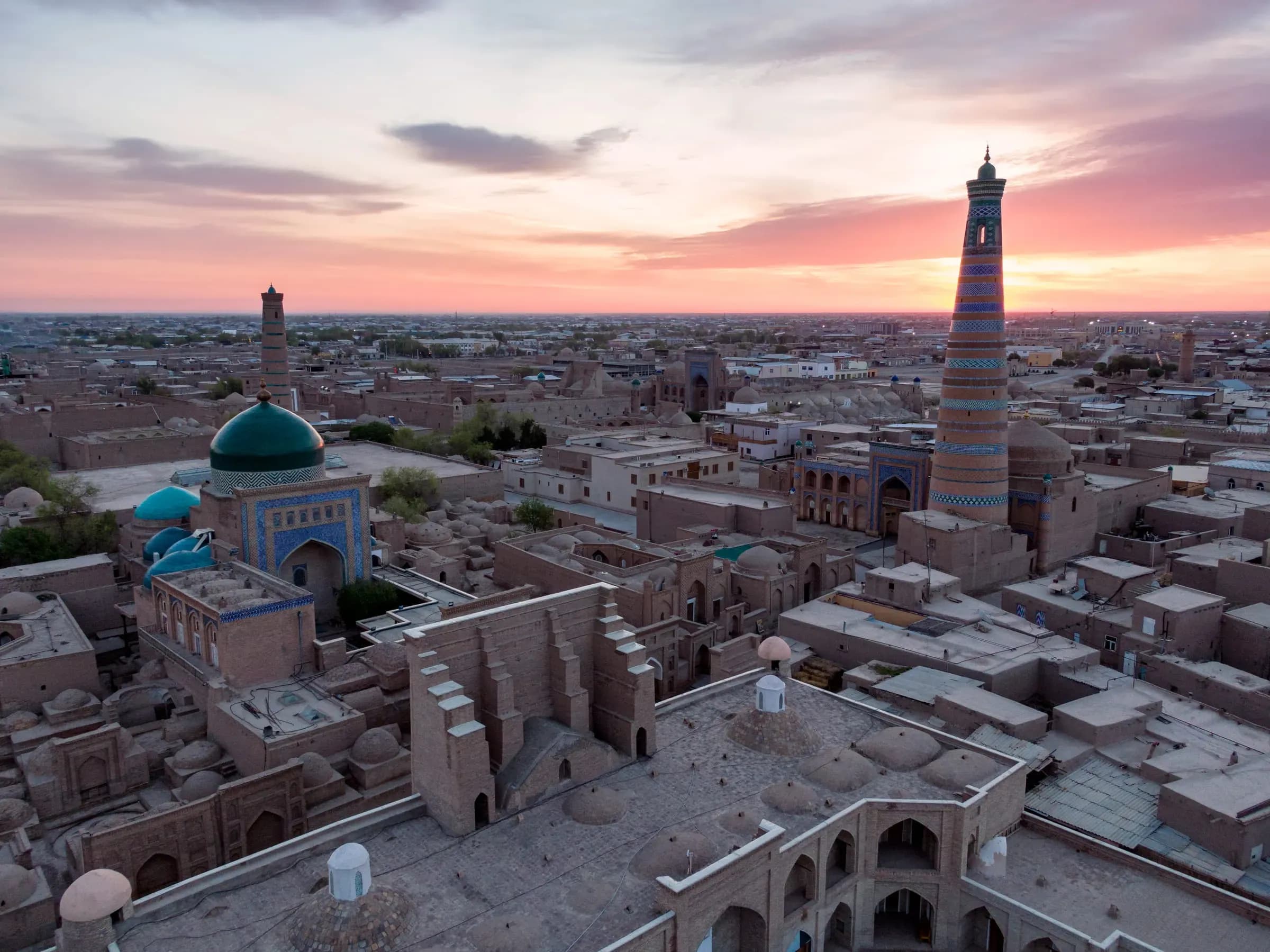
The last tour bus pulls away from the West Gate at half past six. After it, the people left inside Itchan Kala are the ones who live here, and a handful who knew it was worth staying on.
Itchan Kala is Khiva's inner town behind a clay wall, and people still live in it. That is rare: most of the old cities of Central Asia have either been destroyed or turned into museums without residents. Here children play outside the madrasa, a woman carries a carpet out to beat it against a seventeenth-century wall, and nobody finds it remarkable.
In the evening the light comes in low along the streets and the clay turns warm. The main street runs gate to gate in ten minutes, but in the evening that is not the street to walk. Turn into the first lane to the left of the Kalta Minor, the squat unfinished minaret in turquoise tile. The khan began it in 1852, wanted the tallest in the world, and died before it was done. Since then it has stood as a stump 29 metres high, and in the evening its shadow falls right across the street.
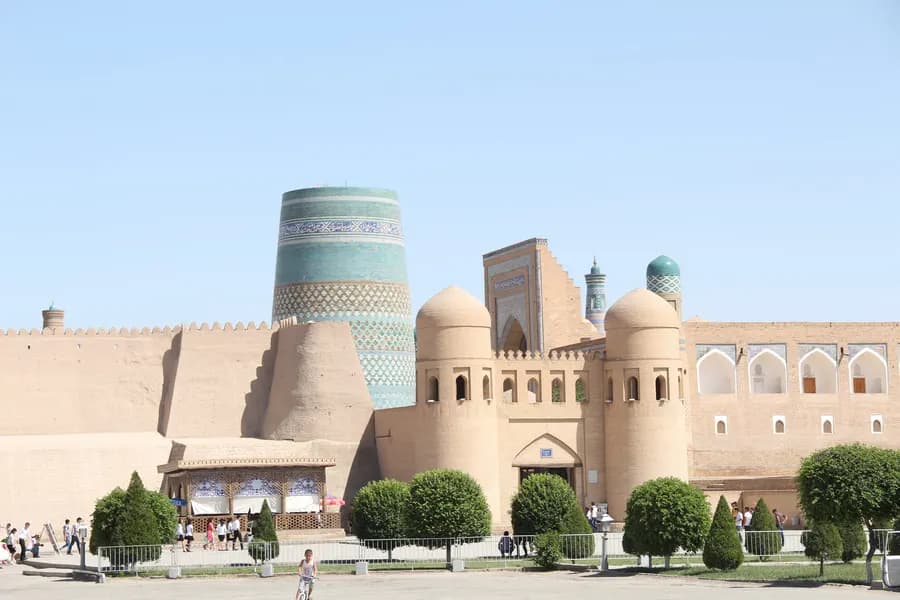
Off the lanes are courtyards. In the daytime their doors are shut; in the evening they open. Houses whose owners are expecting visitors can be stepped into: to look at the carved columns of the aivan and at how a house turned inward is put together. Woodcarving is Khiva's craft, and the best examples are not in the museum but on these doors.
Towards dusk, climb the wall by the West Gate: the stairs there stay open after six. From up there you can see the whole inner town — domes, minarets, flat roofs with ladders. The tallest minaret, Islam Khoja, was built in 1910 and was the last of the big ones. By day people look down from it; in the evening people look up at it.
When it gets dark the floodlights come on and Itchan Kala starts to look like a stage set. But at that hour the streets smell of supper coming out of the courtyards, and that will not let you forget that the set is inhabited.
Share
More impressions