
TourLink
About
On the Syr Darya, Khujand still feels like a trading city before it feels like a checklist of sights.
Keep the first visit inside central Khujand: market, sacred complex, fortress museum, and river. Istaravshan, Isfara, Kayrakkum, and the Fann side each need separate timing, so the next move should be chosen rather than folded in by default.
Begin where Khujand is loudest, then let the visit quiet down at Sheikh Muslihiddin before the fortress museum brings the older city into focus.
Agencies and travellers who need Khujand as a readable stop — strong places, honest pacing, and logistics that hold.
Getting around
Keep the first visit inside central Khujand: market, sacred complex, fortress museum, and river. Istaravshan, Isfara, Kayrakkum, and the Fann side each need separate timing, so the next move should be chosen rather than folded in by default.
First move
Begin where Khujand is loudest, then let the visit quiet down at Sheikh Muslihiddin before the fortress museum brings the older city into focus.
City map
Use the map to keep the city readable: Panjshanbe for market life, Sheikh Muslihiddin for the sacred center, and the fortress museum for Sogdian memory and the Temurmalik story.
What to see
Three central stops explain Khujand without turning the visit into a list: Panjshanbe Bazaar for everyday trade, Sheikh Muslihiddin for pilgrimage and etiquette, and the fortress museum for older Sughd memory.
Panjshanbe Bazaar gives Khujand an immediate human scale. Its name means Thursday, a memory of market day, while today's visit is built from bread, fruit, spices, textiles, household goods, voices, and the quick movement of the city center.
Open placeAfter the movement of Panjshanbe Bazaar, Sheikh Muslihiddin slows the center of Khujand. The complex gathers a revered mausoleum, mosque, and madrasa memory in a courtyard where visitors come for prayer, pilgrimage, and a quieter kind of attention.
Open placeKhujand Fortress and Historical Museum turns a central city walk toward older Sughd. Start with the walls and towers for scale, then continue into the museum rooms when they are open for artifacts, textiles, mosaics, dioramas, and Temurmalik memory.
Open placeCity moments
Khujand feels strongest when the visit changes volume: market noise in the morning, a quieter hour by the river later, and one onward choice made with real timing rather than wishful distance.
Panjshanbe means Thursday, but the market's memory is more than a name: bread, fruit, spices, textiles, and household goods give Khujand its first human scale.
After the bazaar, sacred complex, and museum, the riverfront gives the city a calmer hour before transfers or the next road.
Istaravshan, Isfara, Kayrakkum, and the Fann side are different commitments; Khujand reads better when one direction is chosen with current timing.
Before you go
It is easy to treat Khujand as transit, but the city loses its shape when the center is rushed. Plan enough time for market life, sacred-place etiquette, museum rooms, and a calmer hour by the Syr Darya.
Panjshanbe Bazaar sets the scale with bread, fruit, spices, textiles, household goods, and the Thursday-market meaning preserved in its name.
Khujand starts in market noise, lowers its voice at Sheikh Muslihiddin, and returns to older Sughd inside the fortress museum.
Sheikh Muslihiddin is close enough to keep the central walk compact, but the mood changes quickly. Dress and voice matter because the mosque, mausoleum, and madrasa complex is a sacred place, not only an architectural stop.
Khujand Fortress and the historical museum bring the visit back to older Sughd: fortress walls, museum rooms, Sogdian memory, and the Temurmalik story before the road continues.
Come for the bazaar and fortress, but let the sacred courtyard and Syr Darya keep Khujand from becoming only a transfer.
At a glance Place
Northern Tajikistan city on the Syr Darya in the Khujand & Northern Tajikistan tourist region.
Main visit
Panjshanbe Bazaar, Sheikh Muslihiddin Mosque and Mausoleum, Khujand Fortress and Historical Museum, plus time by the Syr Darya when timing fits.
Pace
Best as a focused city stop, not a rushed transfer.
Access and etiquette
Check museum access, sacred-place etiquette, market timing, transport, and border-sensitive roads close to travel.
Route fit
Pairs with Istaravshan, Isfara, Kayrakkum, Penjikent, Seven Lakes, or wider Fann routes only when each road has enough time.
Nearby
Dushanbe frames longer Tajikistan arrivals. Penjikent, Seven Lakes, and Iskanderkul point toward the Zeravshan and Fann side; Istaravshan and Isfara stay as northern extensions for a separately checked plan.
Dushanbe is Tajikistan's calm arrival city: Rudaki Avenue shade, national museums, tea-house stops, and first choices toward Hissar, Varzob, or higher valleys.
ViewPenjikent anchors the western Fann Mountains route with Ancient Penjikent, UNESCO Sarazm, the Rudaki Museum, market life, and the first road choices toward Seven Lakes or Iskanderkul.
ViewSeven Lakes, or Haftkul, carries the route above Penjikent into the Shing Valley: colour-changing water, village-road pauses, and a higher climb that depends on road, weather, vehicle, and daylight.
View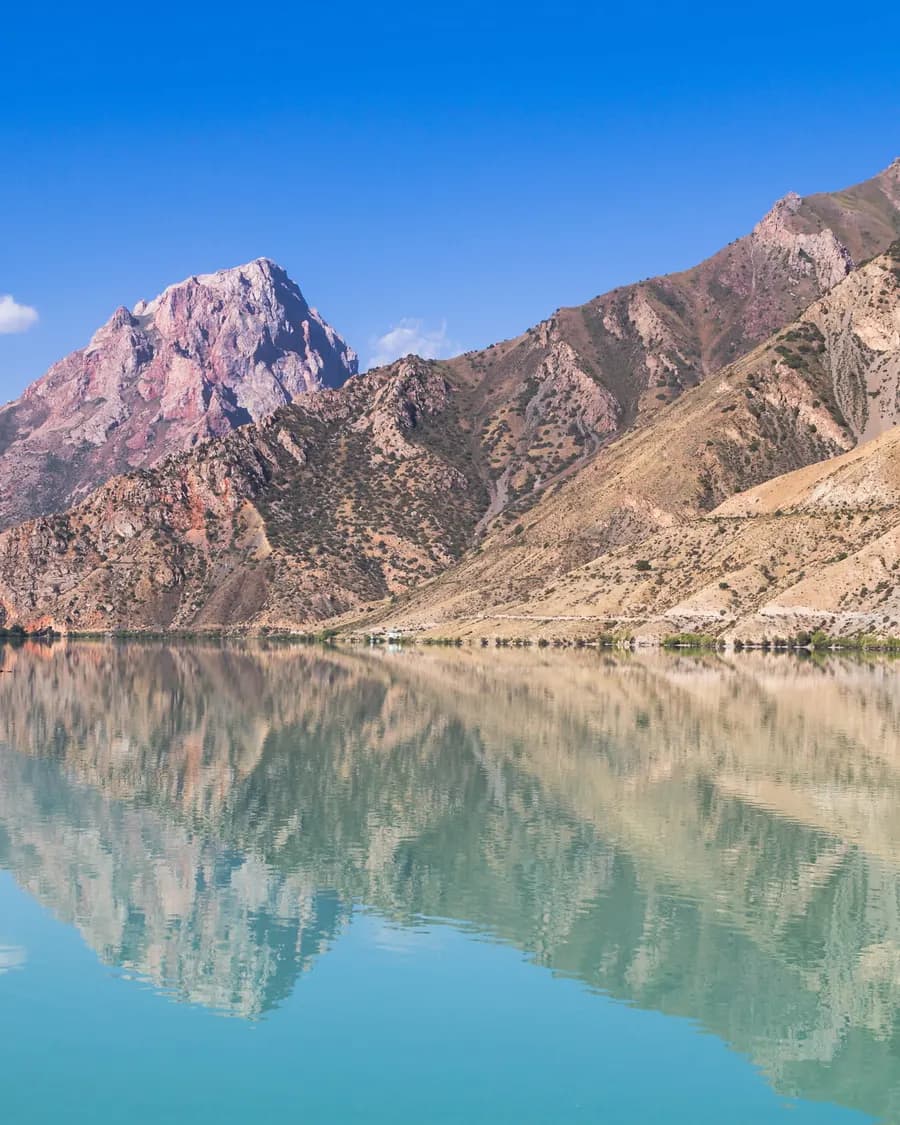
Iskanderkul is the lake-area pause in the Fann Mountains: turquoise water, red-grey slopes, a waterfall side walk, and road checks before the route climbs farther.
ViewCity in detail
Walking time, overnight location, and when day trips make sense.
1–2 nights is usually enough when the old core or main anchors get a full walking window. City tone: “Syr Darya trading city at Tajikistan's northern gate”.
Start with the compact city walk first. Day trips only after the centre has settled — otherwise the stop feels like a transfer with monuments attached.
Stay close enough for an evening return on foot or a short transfer. That keeps tea, dinner, and a second pass through the lanes easy without burning the next morning.
On request
We help agencies set a realistic pace and choose the right next move — without rushing the places that matter.