TourLink
About
Ashgabat & Nisa opens Turkmenistan at city scale and archaeological scale.
Ashgabat and Nisa work best as two connected movements: capital orientation first, then an archaeological outing with its own pace, cooler hours, and current access check.
Ashgabat keeps arrival, museum context, and city scale clear before the road turns toward Parthian earthworks.
Agencies and travellers who need Ashgabat & Nisa as a readable stop — strong places, honest pacing, and logistics that hold.
Getting around
Ashgabat and Nisa work best as two connected movements: capital orientation first, then an archaeological outing with its own pace, cooler hours, and current access check.
Start here
Ashgabat keeps arrival, museum context, and city scale clear before the road turns toward Parthian earthworks.
Avenues, parks, monuments, and open space help the traveler feel how the capital presents itself before the visit moves indoors or toward the foothills.
Region frame
Ashgabat and Nisa are the route-ready public anchors. Gokdepe, Kow-Ata, Arkadag, and Anau stay in the wider Ahal map until each has current source, timing, and access review.
Region character
Together, Ashgabat and Nisa answer the first two questions in Turkmenistan: how the modern capital presents itself, and how quickly the story moves toward older empires, trade routes, and fortified foothill landscapes. «Ashgabat brings the first scale; Nisa makes the same region older, quieter, and more archaeological.»
Region areas
Ashgabat and Nisa are the current public pair: the capital for arrival, museums, and orientation; Nisa for the Parthian outing near the foothills. Gokdepe, Kow-Ata, Arkadag, and Anau remain wider Ahal context until reviewed.
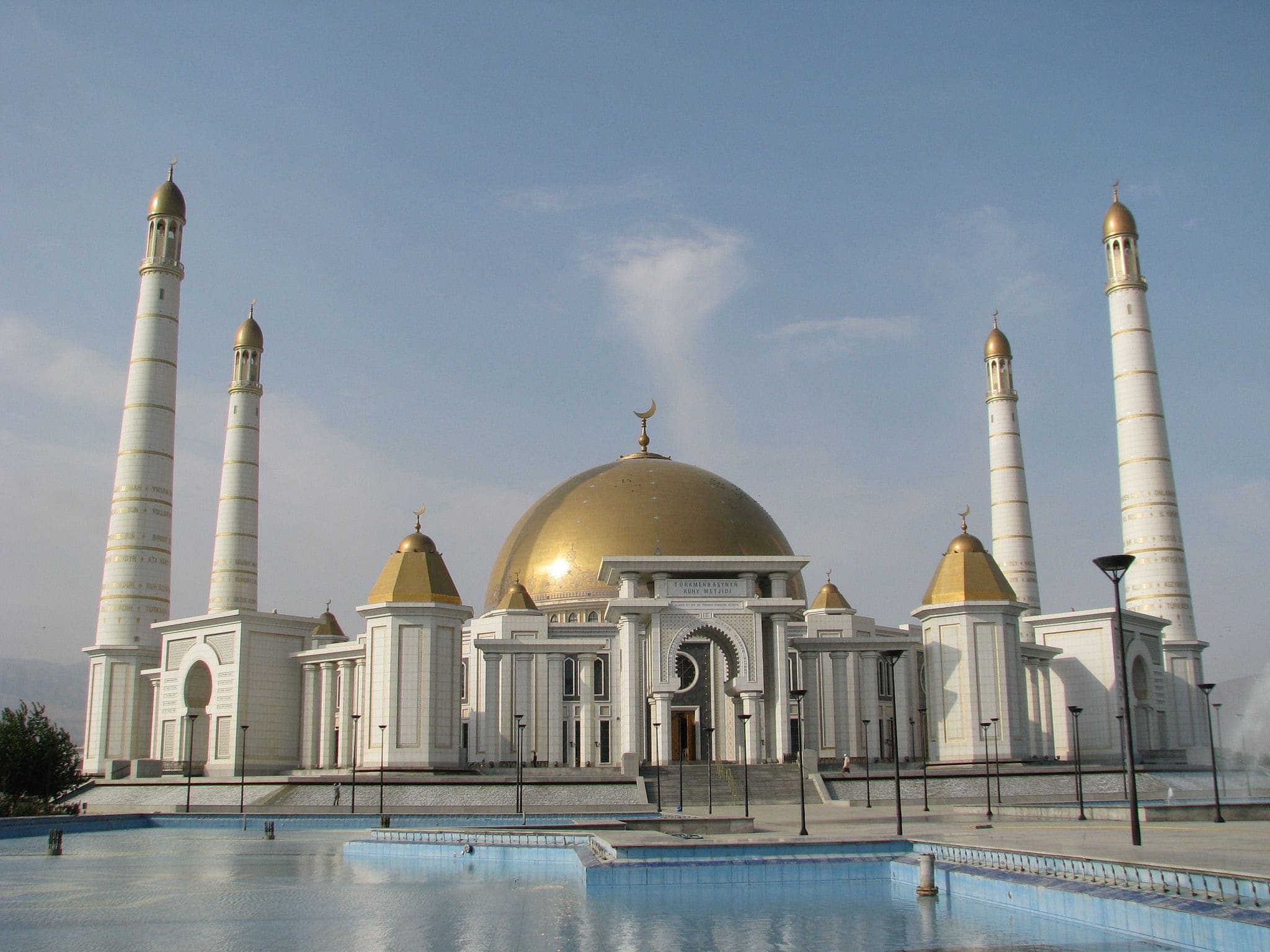
Ashgabat first shows Turkmenistan through formal scale, then brings it closer. White-marble avenues and ceremonial parks set the capital's public face; the State Museum, carpet galleries, and the road toward Nisa bring the visit back to objects, craft, and older history.
Open placeNisa sits just outside Ashgabat, but it changes the age of the journey. The white capital falls behind, the ground opens into low Parthian walls, and Old and New Nisa begin the older story that leads toward Mary, Merv, and the desert.
Open placeWhat to see
The current anchors pair Ashgabat's monuments and museum rooms with Nisa's Parthian earthworks. Together they keep the opening route both civic and archaeological.
At Old Nisa / Mithradatkert, the Nisa outing becomes physical. Low wall lines cross open ground, the sky stays wide, and the Parthian story moves from museum context into a place you walk carefully.
Open placeNisa is a quiet archaeological stop just outside Ashgabat: two low tells, open sky, and earthen walls that once belonged to an early Parthian capital. The visit is strongest when Old and New Nisa are seen together, with museum time and the foothill setting helping the fragments m
Open placeNew Nisa is the quieter companion to Old Nisa inside the UNESCO-listed Parthian Fortresses of Nisa. Old Nisa gives the visit its fortress image; New Nisa widens the view toward settlement ground, open distance, and the Kopet-Dag edge. Come expecting a contextual archaeological st
Open placeNeutrality Monument rises from Ashgabat's southern ceremonial landscape as a 95-meter white-marble structure on three pylons. The form recalls a Turkmen tagan, the hearth stand, while viewing levels and the golden figure make the stop a quick lesson in how the capital uses height
Open placeAfter Ashgabat's monument parks, the National Museum changes the scale. Ancient History, Margush, Parthia, medieval routes, carpet halls, and state symbols give the capital an interior thread before the journey turns toward Nisa, Merv, or the desert road.
Open placeAfter Ashgabat's white marble, monument parks, and national museum halls, the Turkmen Carpet Museum brings the route down to wool, knot, motif, and the hands behind them. Its halls are tied to a craft tradition recognized by UNESCO and to a national museum collection of about 2,0
Open placeIndependence Monument and Park makes Ashgabat's civic scale physical: a broad park approach, fountains and statues, and a 118-meter column crowned with a gilded crescent and five stars. The lower form recalls a Turkmen yurt; if the Museum of Independence is open, the stop can mov
Open placeRegion in detail
Pace, season, and how this region connects to the next stop.
3–5 days usually works if you keep one strong core and treat outer stops as deliberate choices. The region brief is “Marble avenues, Parthian earthworks, and Ahal foothills”.
Use neighbouring cities as clean handovers: arrive with a calm first night, leave after one completed chapter, and avoid stacking two long transfers on the same day.
Heat, altitude, road condition, and opening hours change the product more than the brochure list. Build the region around what stays comfortable for the group that week.
On request
We help agencies set a realistic pace and choose the right extensions — without rushing the places that matter.