
TourLink
About
Ashgabat first shows Turkmenistan through formal scale, then brings it closer.
Ashgabat is easier to follow when the first city movement stays clear: arrival and scale, one monument park, one museum or craft stop, and a deliberate choice about Nisa.
From the outside, the capital can feel large and official. Slow the pace and step indoors once, and the city becomes easier to understand through archaeology, pattern, and craft.
Agencies and travellers who need Ashgabat as a readable stop — strong places, honest pacing, and logistics that hold.
Getting around
Ashgabat is easier to follow when the first city movement stays clear: arrival and scale, one monument park, one museum or craft stop, and a deliberate choice about Nisa.
City sequence
From the outside, the capital can feel large and official. Slow the pace and step indoors once, and the city becomes easier to understand through archaeology, pattern, and craft.
Start with avenues and public spaces so the capital's scale makes sense before you move into individual stops.
City frame
Start with the capital itself. Nisa, Gokdepe, and the Ahal foothills belong as deliberate route choices, not casual additions at the end.
What to see
Focus the first city movement on Ashgabat's clearest anchors: monument parks for scale, the State Museum for history, and the Carpet Museum for craft and pattern.
Independence Monument and Park makes Ashgabat's civic scale physical: a broad park approach, fountains and statues, and a 118-meter column crowned with a gilded crescent and five stars. The lower form recalls a Turkmen yurt; if the Museum of Independence is open, the stop can mov
Open placeNeutrality Monument rises from Ashgabat's southern ceremonial landscape as a 95-meter white-marble structure on three pylons. The form recalls a Turkmen tagan, the hearth stand, while viewing levels and the golden figure make the stop a quick lesson in how the capital uses height
Open placeAfter Ashgabat's monument parks, the National Museum changes the scale. Ancient History, Margush, Parthia, medieval routes, carpet halls, and state symbols give the capital an interior thread before the journey turns toward Nisa, Merv, or the desert road.
Open placeAfter Ashgabat's white marble, monument parks, and national museum halls, the Turkmen Carpet Museum brings the route down to wool, knot, motif, and the hands behind them. Its halls are tied to a craft tradition recognized by UNESCO and to a national museum collection of about 2,0
Open placeAfter Ashgabat's marble avenues, monument parks, and museum rooms, Tolkuchka / Altyn Asyr Bazaar changes the city's texture. The route moves toward market lanes, fabric, carpet rows, household goods, voices, traffic, and everyday trading on the Bagtyyarlyk side of Ashgabat. This
Open placeAfter Ashgabat's monument parks, wide avenues, and museum rooms, Ertugrul Gazi Mosque changes the pace. Four white minarets, a dome, a courtyard fountain, and Turkish-style detail bring the route into an active religious place rather than another ceremonial landmark. The mosque i
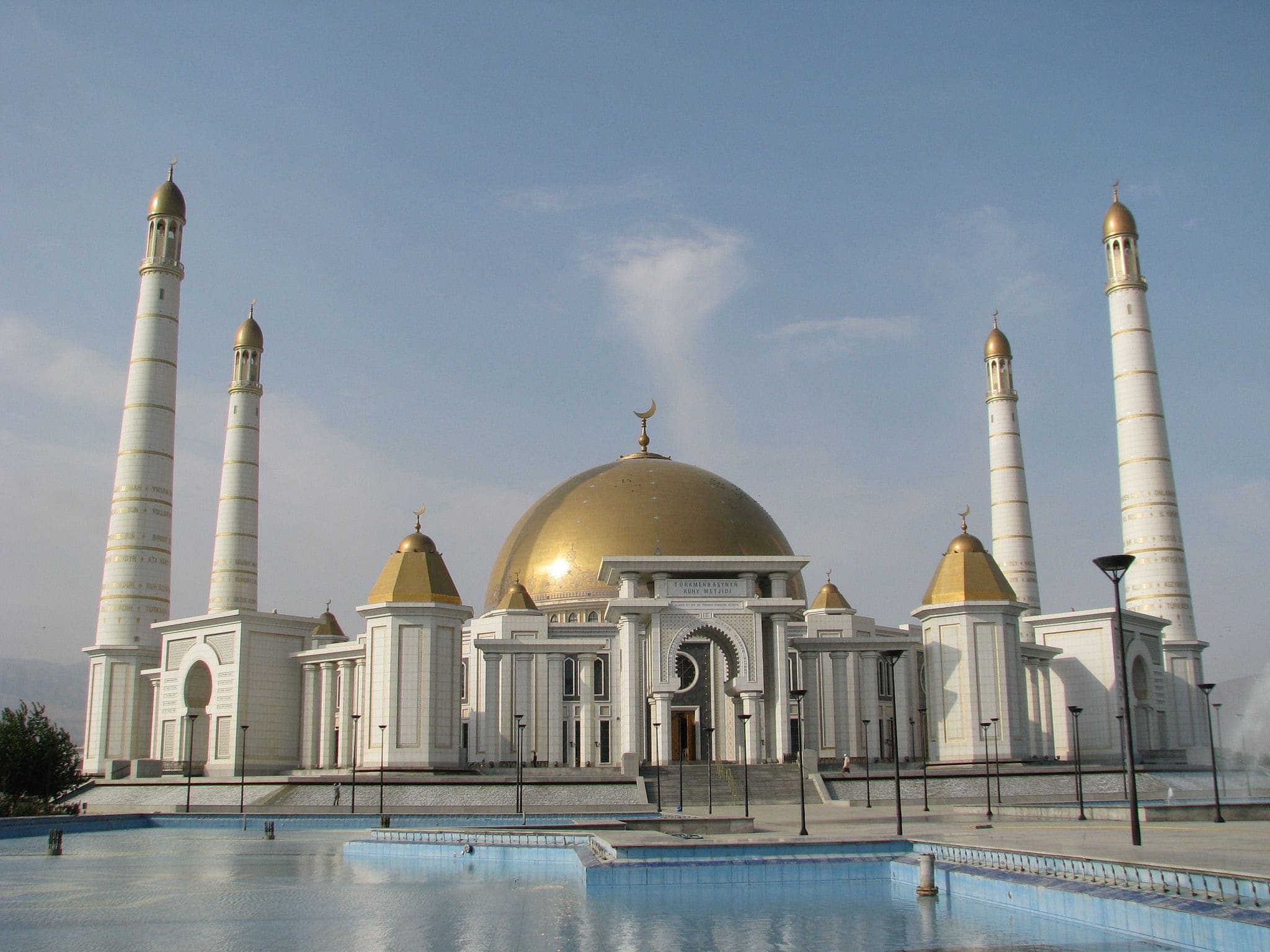
Open placeAfter Ashgabat's museums and monument parks, Turkmenbashi Ruhy Mosque takes the route west to Gypjak. The setting changes quickly: central-city monuments give way to a white-marble mosque complex, four high minarets, fountains, and a memorial tone that calls for a quieter visit.
Open placeCity moments
The strongest moments move from white-marble scale to museum rooms, carpet craft, and the first archaeological road toward Nisa.
The National Museum gives the capital a quieter historical stop before the route turns toward Nisa and older archaeological ground.
In the Carpet Museum, wool, pattern, and scale bring the capital back to handwork after its open formal spaces.
White stone, wide avenues, monument parks, and the Kopet Dag edge set the formal scale travelers meet on arrival.
Before you go
Ashgabat is easier to enjoy when the first movement stays measured: open spaces, one monument park, one museum or craft stop, and a clear decision about Nisa or the next road.
Keep the first movement broad. Avenues, parks, and monument silhouettes show why Ashgabat feels formal before you step inside.
Ashgabat should not become a drive past white facades; one museum room or carpet motif can make the capital feel human.
Museum rooms and carpet displays bring the city closer. They bring archaeology, wool, pattern, and craft memory into a capital that can otherwise feel distant from its boulevards.
Nisa turns the route from capital orientation toward archaeology. Treat it as its own choice when heat, access, or onward travel toward Mary and Merv matters.
Keep the first Ashgabat movement simple: city scale, one monument park, one interior stop, and a considered choice about Nisa or the next road.
At a glance Stay
Enough for arrival, one city circuit, one museum or craft stop, and a separate Nisa decision when the route allows.
Route role
Best for airport arrival, city orientation, first museum context, and the transition toward Ahal or Mary.
Main anchors
The strongest stops pair public symbolism with archaeology, objects, and craft.
Light and heat
Open spaces can feel exposed; museum and craft stops help balance hotter months.
Where to continue
Nisa is the immediate archaeological continuation. Mary is the clearest onward city when the route turns toward Ancient Merv; other Ahal and desert roads should stay separate choices, not casual add-ons.
Near Ashgabat, Nisa turns the first Turkmenistan route toward Old and New Nisa, low earthen walls, open foothill light, and Parthian history.
ViewGokdepe gives the Ashgabat route a quieter Ahal stop: mosque etiquette, the Geok Tepe fortress site, and a westward road that needs careful timing.
ViewMary is the city-side start for Ancient Merv, with arrival services, museum rooms, an overnight pause, and the road into the Murghab oasis.
ViewDarvaza is the Karakum route leg where the crater, road hours, heat, wind, and overnight plan need a fresh local check before they belong in the journey.
ViewCity in detail
Walking time, overnight location, and when day trips make sense.
1–2 nights is usually enough when the old core or main anchors get a full walking window. City tone: “White marble, museum rooms, and the road to Nisa”.
Start with the compact city walk first. Day trips only after the centre has settled — otherwise the stop feels like a transfer with monuments attached.
Stay close enough for an evening return on foot or a short transfer. That keeps tea, dinner, and a second pass through the lanes easy without burning the next morning.
On request
We help agencies set a realistic pace and choose the right next move — without rushing the places that matter.