
TourLink
About
After Ashgabat's museums and monument parks, Turkmenbashi Ruhy Mosque takes the route west to Gypjak.
The stop's value is not only size.
Keep this stop clear on the map and in the day plan — Gypjak's marble mosque and memorial setting.
Agencies and travellers who need Turkmenbashi Ruhy Mosque as a readable stop — honest timing and a clear place on the route.
On the map
One clear point for Turkmenbashi Ruhy Mosque — Gypjak's marble mosque and memorial setting.
Place
The map pin marks this attraction so the stop stays readable in the day plan.
Why this place
The stop's value is not only size. Turkmenbashi Ruhy Mosque helps travelers understand Ashgabat beyond the central avenues: white marble, formal religious architecture, memorial space, and a slower, more restrained way of moving than in a museum or monument park. «This is not another city landmark for a quick stop; it is a mosque and memorial setting that changes the tone of an Ashgabat route.»
What you'll see
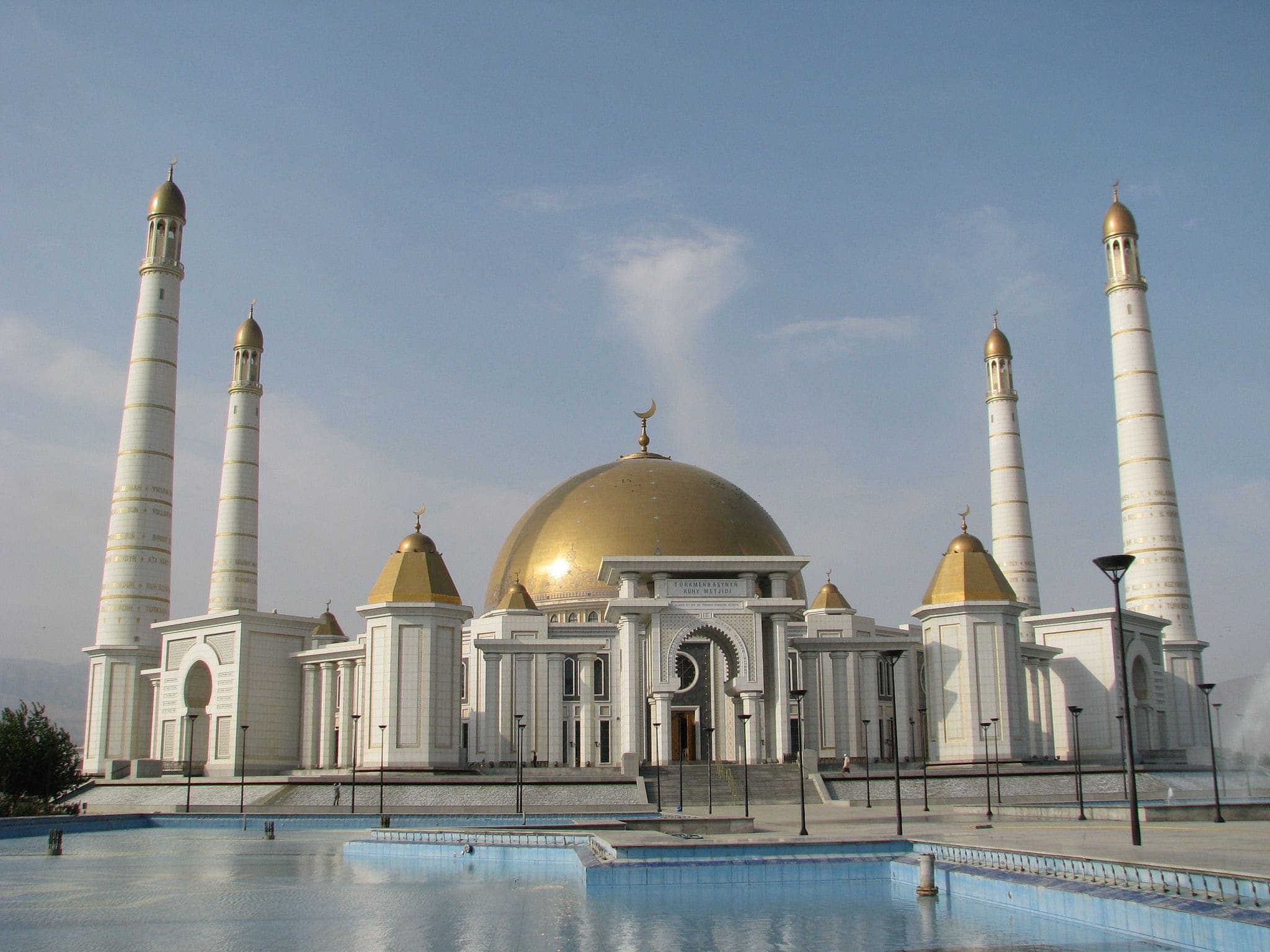
The visual story is clear even when the visit stays outside: white marble, four high minarets, the dome and fountain setting, and the memorial zone beside the mosque.
How to visit
Plan this as a living religious and memorial place. Access, dress, prayer-time rhythm, and photography rules should be confirmed before the stop is set.
What to add nearby
Keep the next stop within the capital's wider reading: another mosque, museum rooms, and monument parks that explain how Ashgabat balances worship, memory, craft, and formal scale.
Ertugrul Gazi Mosque adds a living religious stop to Ashgabat: four white minarets, Turkish-style architecture, an Azadi Street setting, and access that should be checked locally.
ViewNational Museum of Turkmenistan brings Ashgabat indoors through Ancient History, Margush, Parthia, Middle Ages, carpets, and the objects that prepare Nisa and Merv.
ViewIndependence Monument and Park shows Ashgabat at ceremonial scale: a 118-meter column, yurt-shaped base, fountains, statues, and nearby museums.
ViewNeutrality Monument gives Ashgabat a high point: three pylons shaped around a Turkmen tagan, viewing levels, a golden figure, and a useful stop between parks and museums.
ViewPlace in detail
Timing, best hours, and how this stop fits neighbouring pins.
a focused half-day with buffer is a practical range for most groups. Keep the stop readable: one clear arrival, one clear exit. Place tone: “Gypjak's marble mosque and memorial setting”.
Prefer early morning or late afternoon. That usually improves comfort, photos, and how the stop feels in the sequence around ashgabat.
Treat it as one clear pin on the map: arrive intentionally, avoid sandwiching it between two rushed monuments, and keep the next move short enough that the group still has energy.
On request
We help agencies place this stop with realistic timing — without rushing the places that matter.