
TourLink
About
After Khudoyar Khan Palace, Jami Mosque, and the royal memorials, Miyon Hazrat brings Kokand into a more intimate scale: enclosed courtyards, student rooms, ganch details, mosque space, and the room that brings Mukimi into the visit.
The first impression is not about size.
Keep this stop clear on the map and in the day plan — Three courtyards and Mukimi's room in Kokand.
Agencies and travellers who need Miyon Hazrat Madrasah as a readable stop — honest timing and a clear place on the route.
On the map
One clear point for Miyon Hazrat Madrasah — Three courtyards and Mukimi's room in Kokand.
Place
The map pin marks this attraction so the stop stays readable in the day plan.
Why this place
The first impression is not about size. A carved gateway leads to courtyards and rooms where the madrasah's history is tied to study, prayer, and the memory of the Kokand poet Mukimi.
What you'll see
Look for the shift from gateway to courtyards: carved wood, brickwork, ganch interiors, student rooms, and the room-museum that connects the place with Mukimi.
How to visit
The visit is compact, but it loses meaning if it becomes only a name between larger monuments. Let the courtyards, open rooms, and Mukimi context shape the stop.
What to add nearby
Jami Mosque brings the columned courtyard, Norbut-biy and Kamol-Kazy keep the madrasah line clear, and Dakhma-i-Shahan carries the route toward the khanate memorials.
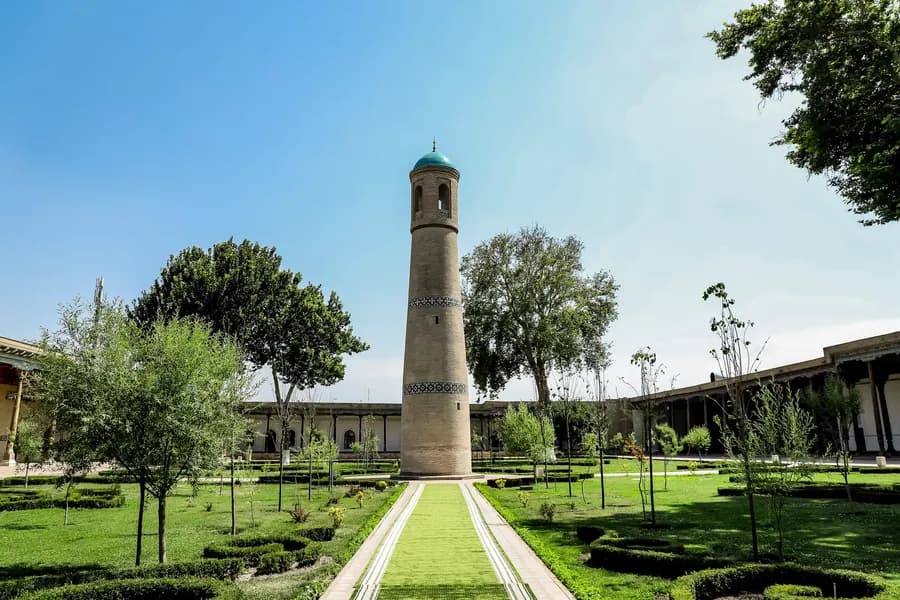
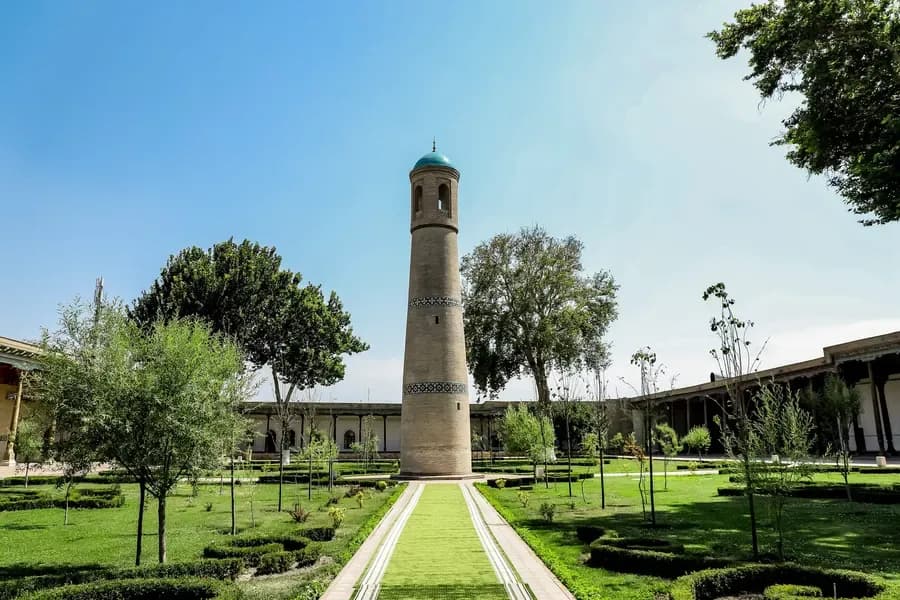
Jameh Mosque in Kokand brings 98 wooden columns, a broad courtyard, a khanaka, and a minaret into the route beside Khudoyar Khan Palace.
View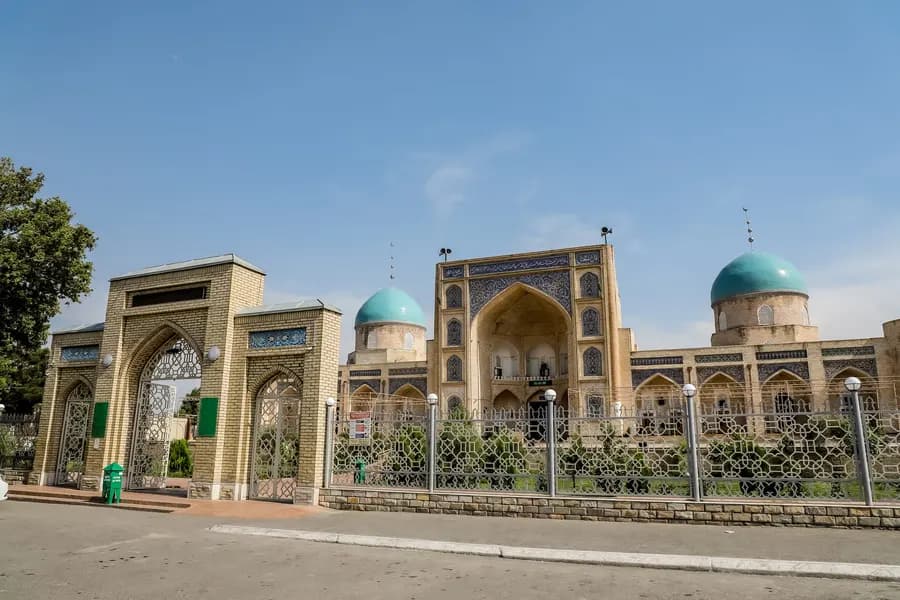
Norbut-biy Madrasah in Kokand brings a brick courtyard, hujras, corner towers, and study history into the route near Chorsu.
View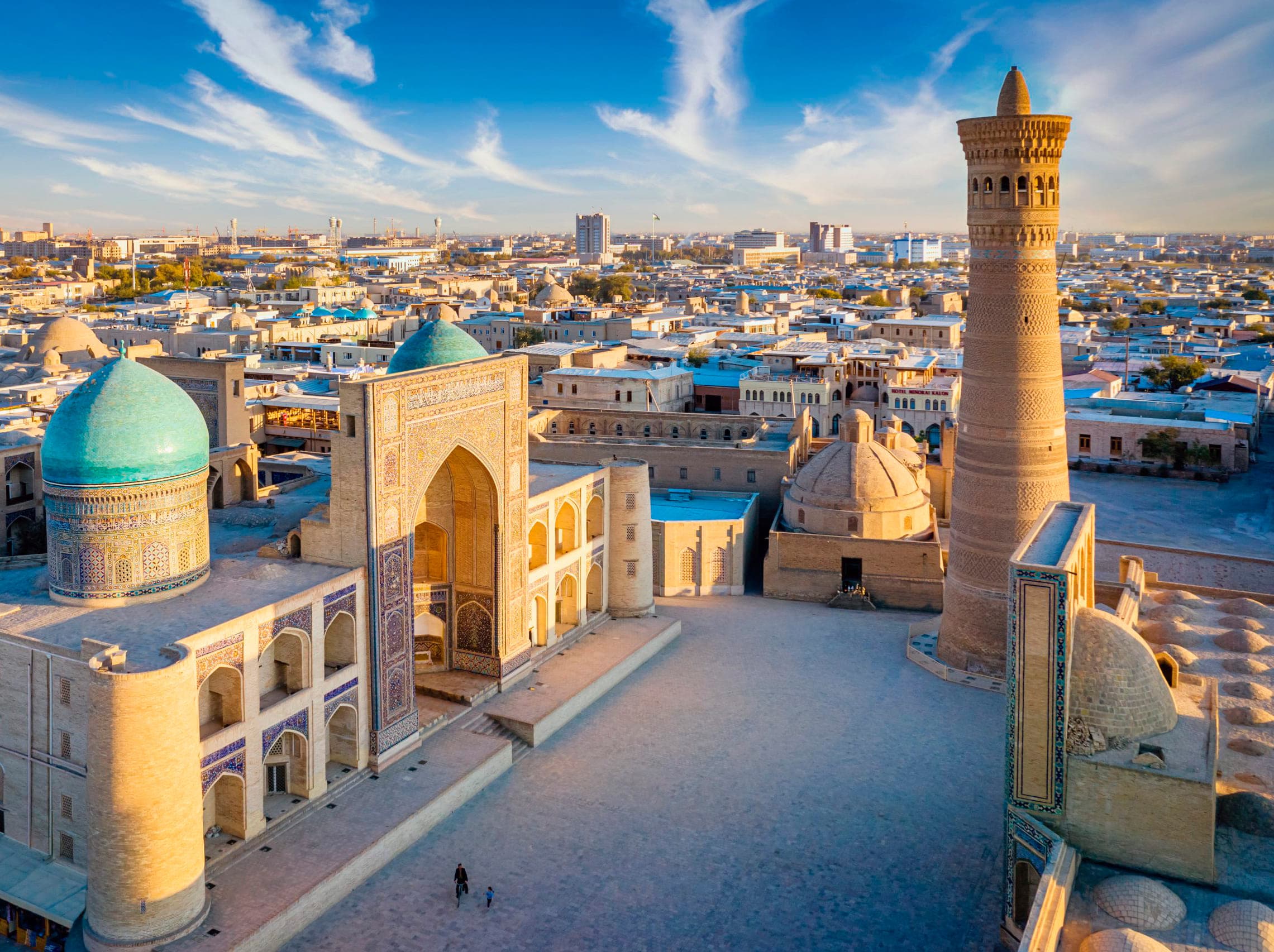
Kamol-Kazy Madrasah in Kokand adds a decorated portal, courtyard hujras, a darskhona, and a mosque-ayvan west of the Jami complex.
View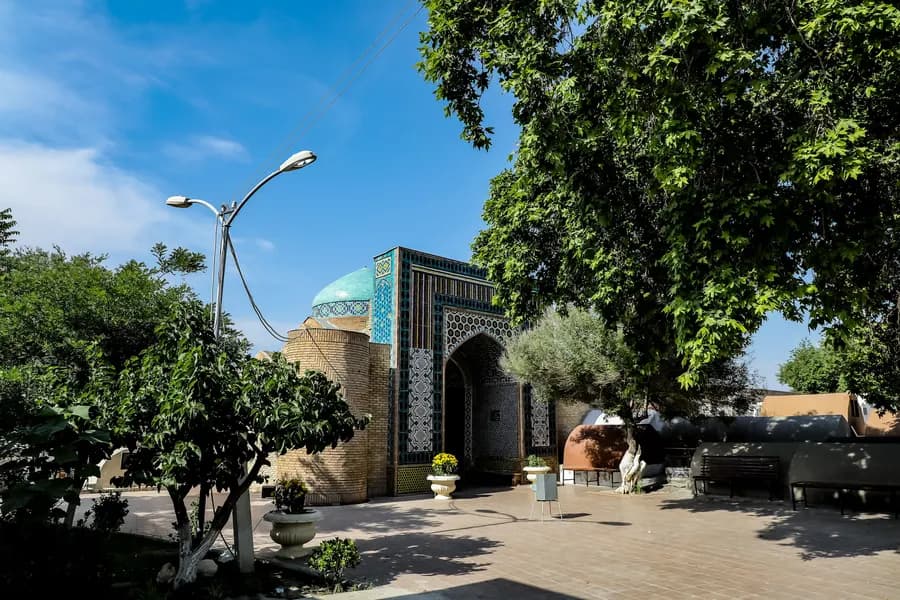
Dakhma-i-Shahan in Kokand brings the khanate story into a family memorial: carved wood, a courtyard, burials, Quranic inscriptions, and Nodira's memory after the palace and Jameh Mosque.
ViewPlace in detail
Timing, best hours, and how this stop fits neighbouring pins.
1–2 hours is a practical range for most groups. Keep the stop readable: one clear arrival, one clear exit. Place tone: “Three courtyards and Mukimi's room in Kokand”.
Prefer when the light is soft and queues are lighter. That usually improves comfort, photos, and how the stop feels in the sequence around kokand.
Treat it as one clear pin on the map: arrive intentionally, avoid sandwiching it between two rushed monuments, and keep the next move short enough that the group still has energy.
On request
We help agencies place this stop with realistic timing — without rushing the places that matter.