
TourLink
About
Karshi Bridge makes Qarshi immediately legible: ten brick arches over the Kashkadarya River, a 16th-century crossing tied to Abdullah Khan II, and the old trade-road memory that still shapes the city's sense of movement.
The bridge gives Qarshi a place to begin.
Keep this stop clear on the map and in the day plan — Ten arches, river air, and the city's trade-route memory.
Agencies and travellers who need Karshi Bridge as a readable stop — honest timing and a clear place on the route.
On the map
One clear point for Karshi Bridge — Ten arches, river air, and the city's trade-route memory.
Place
The map pin marks this attraction so the stop stays readable in the day plan.
Why this place
The bridge gives Qarshi a place to begin. Before the mosques, madrasahs, market streets, and the road back toward Shakhrisabz, the city starts here with arches, river air, traffic, footsteps, and the memory of a crossing that mattered to trade.
What you'll see
Look for the repeated brick arches, the line of water below, the road beside the bridge, and the city sounds that keep the stop from feeling like a frozen monument.
How to visit
The bridge fits best as the first Qarshi stop: a short look at road, water, brick, and passing city life before mosques, madrasah walls, food smoke, and the wider Kashkadarya route.
What to add in Kashkadarya
Start with Qarshi's bridge, then continue to Shakhrisabz when the route needs palace scale, blue courtyards, and Timurid memory.
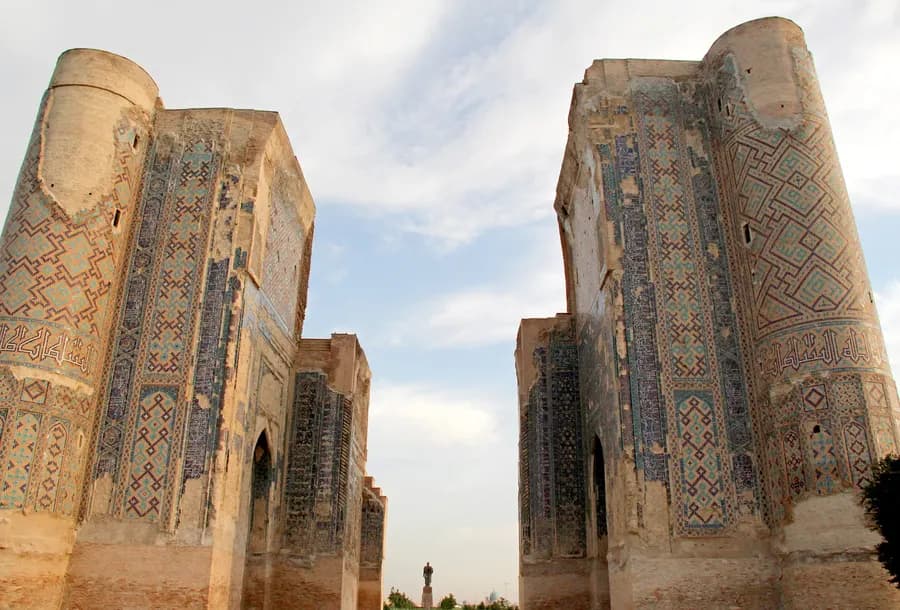
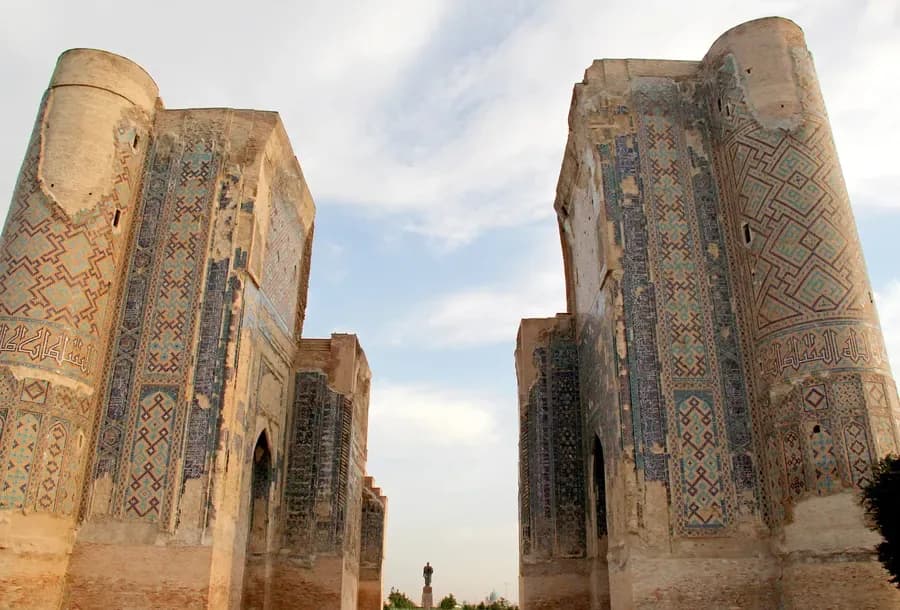
Ak-Saray Palace gives Shakhrisabz its first monument view: surviving portal walls, blue tilework, the open square, and the Timurid story that leads into Dorut Tilovat and Dorus-Saodat.
View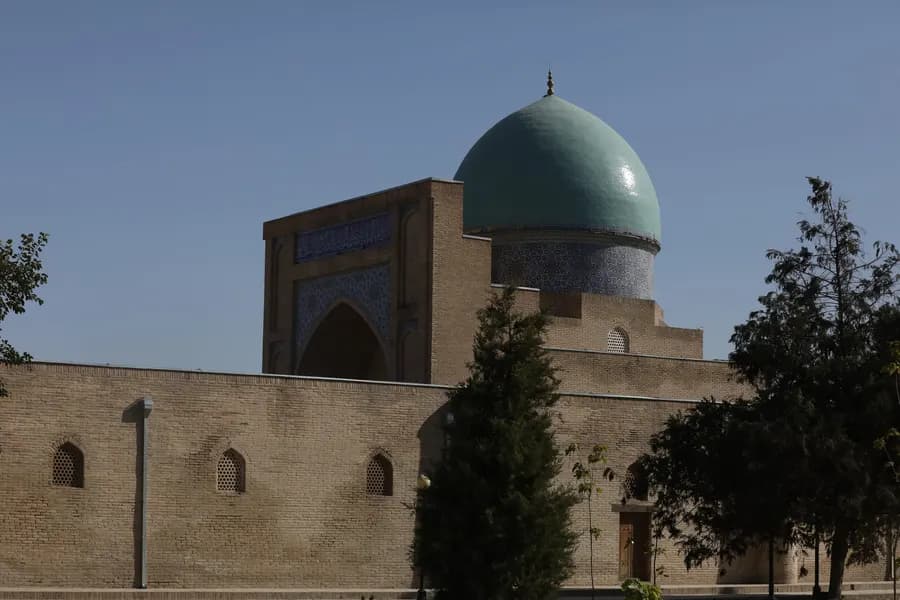
Dorut Tilovat carries the Shakhrisabz route from Ak-Saray into a religious courtyard ensemble, with mausoleums, Kok Gumbaz nearby, and a visit that needs calm attention.
View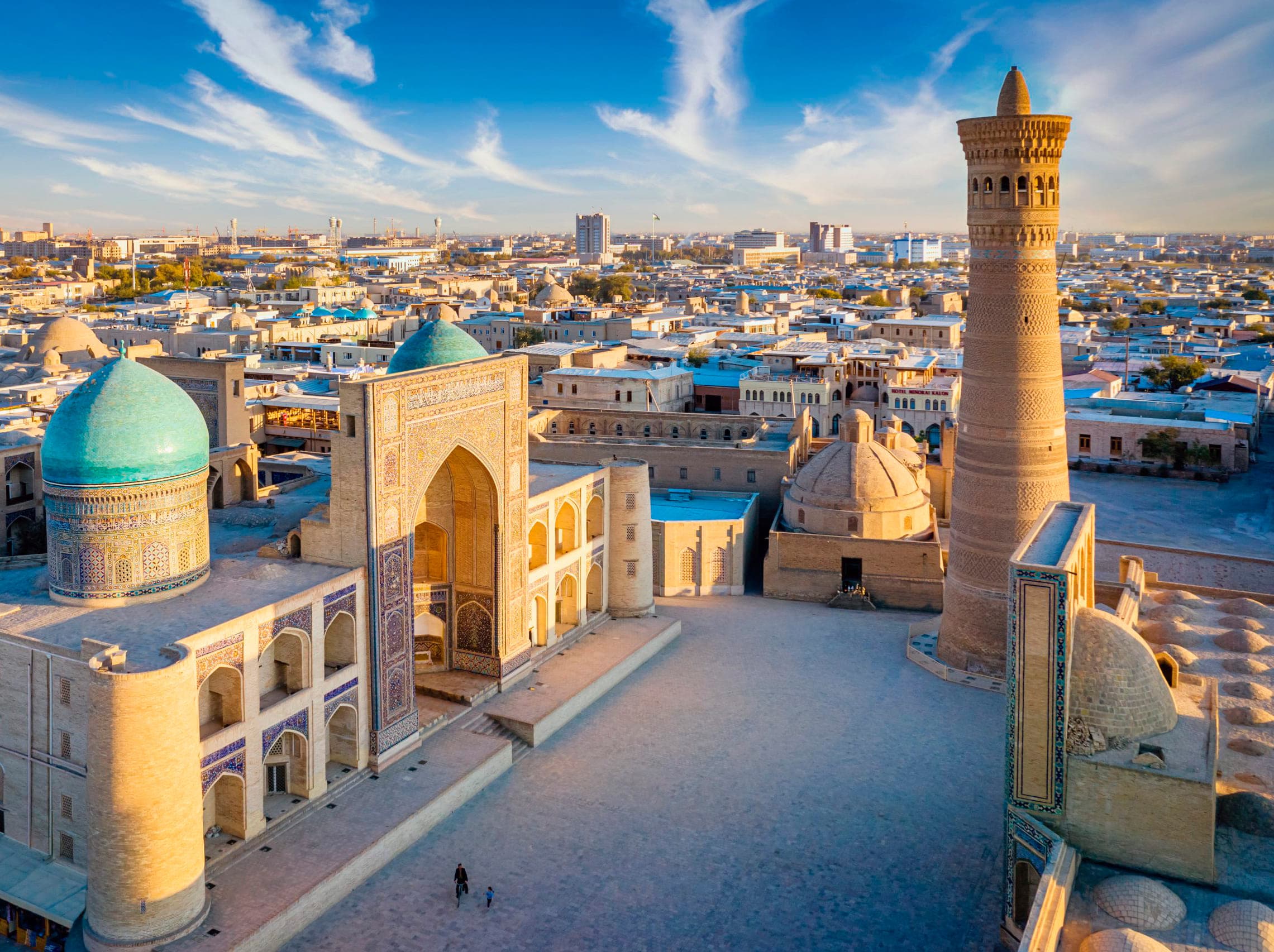
Dorus-Saodat Complex is the Timurid family memorial in Shakhrisabz, tied to Jahangir, Amir Timur's son, with surviving brickwork, a mosque setting, and the nearby crypt.
ViewPlace in detail
Timing, best hours, and how this stop fits neighbouring pins.
a focused half-day with buffer is a practical range for most groups. Leave time for walls, viewpoints, and the walk between courtyards. Place tone: “Ten arches, river air, and the city's trade-route memory”.
Prefer early morning or late afternoon. That usually improves comfort, photos, and how the stop feels in the sequence around qarshi.
Treat it as one clear pin on the map: arrive intentionally, avoid sandwiching it between two rushed monuments, and keep the next move short enough that the group still has energy.
On request
We help agencies place this stop with realistic timing — without rushing the places that matter.