
TourLink
About
After Shakhrisabz, Qarshi brings the route down to a working city: bridge arches over the river, mosque courtyards, old water structures, market voices, tandoor smoke, and evening streets.
Use Qarshi as the region's lived city stop: the bridge and old core first, then market life, food, and the road back to Shakhrisabz or onward toward Kitab.
Start with the bridge and old core before the visit widens toward mosque courtyards, market food, the Sardoba, and the road out of the city.
Agencies and travellers who need Qarshi as a readable stop — strong places, honest pacing, and logistics that hold.
Getting around
Use Qarshi as the region's lived city stop: the bridge and old core first, then market life, food, and the road back to Shakhrisabz or onward toward Kitab.
Walking sequence
Start with the bridge and old core before the visit widens toward mosque courtyards, market food, the Sardoba, and the road out of the city.
Stone arches, river air, passing traffic, and evening light give Qarshi a physical anchor after the taller monument language of Shakhrisabz.
Regional links
Shakhrisabz gives the route its Timurid scale, Kitab keeps the foothills close, and Qarshi adds the city between them.
What to see
Qarshi's city shape starts with the old bridge, Odina Mosque and Madrasah, Kok-Gumbaz in Qarshi, the Sardoba, Abu Ubayda, and market life. Together they show the city as more than a transfer between Shakhrisabz and the wider south.
Karshi Bridge makes Qarshi immediately legible: ten brick arches over the Kashkadarya River, a 16th-century crossing tied to Abdullah Khan II, and the old trade-road memory that still shapes the city's sense of movement.
Open place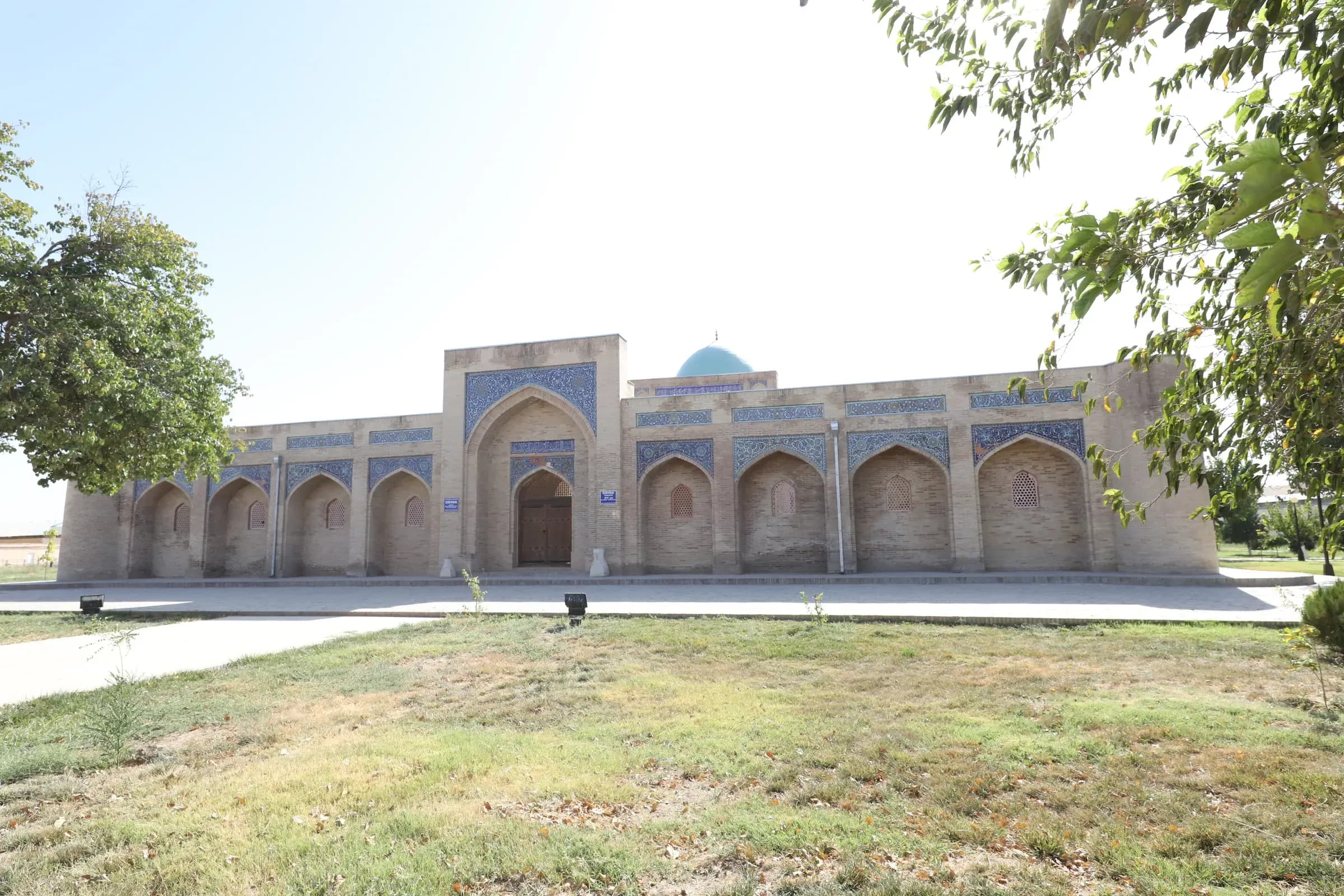
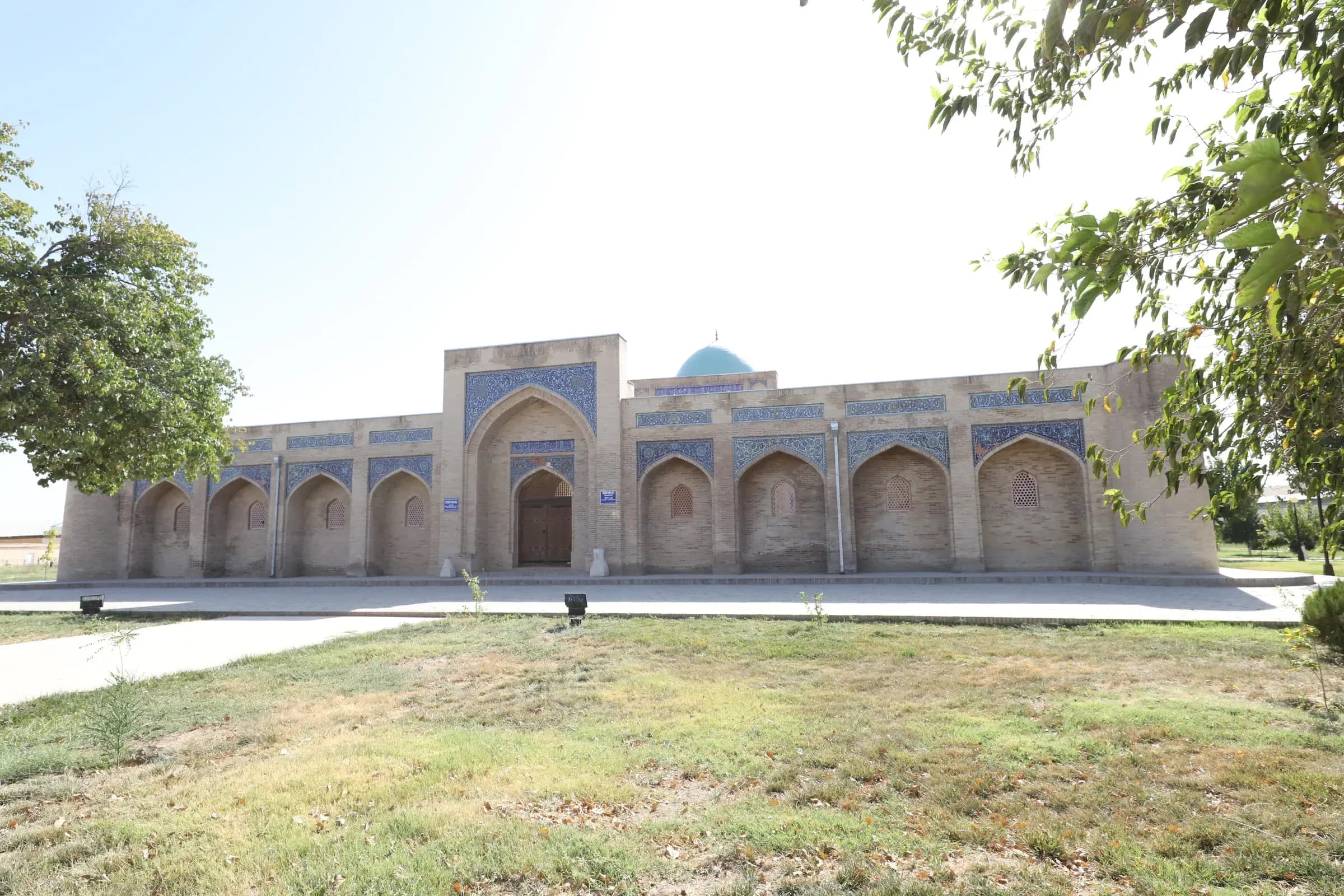
Odina Mosque and Madrasah is Qarshi's quieter old-city stop: a mosque-madrasah setting associated with Amir Temur, women's learning and prayer, and today's Memorial Museum of Repression Victims.
Open place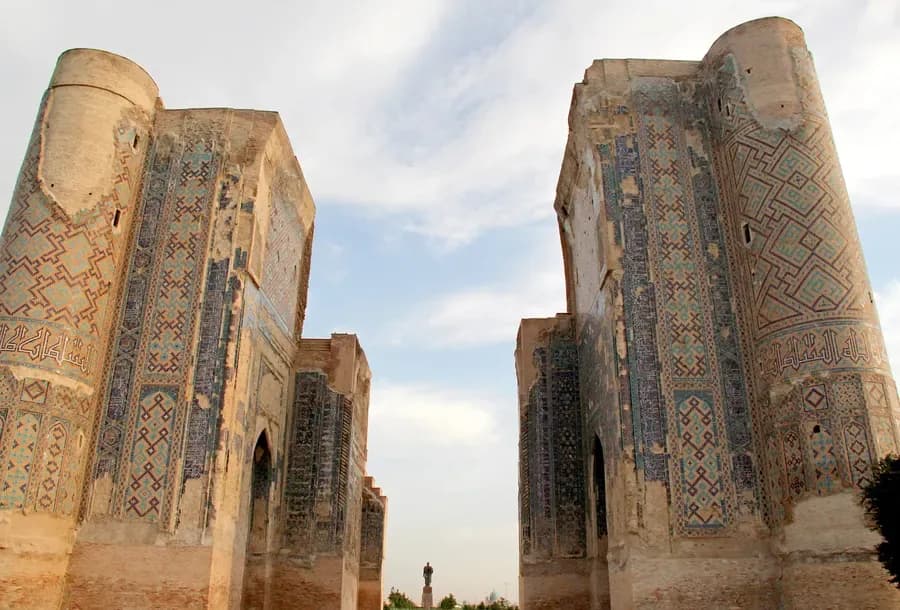
Kok-Gumbaz is Qarshi's own blue-domed mosque, associated with the old Namazgoh setting and the late 16th-century city. It belongs after the bridge or Odina, when the visit moves from river arches and museum shade toward a mosque that still needs a respectful pace.
Open place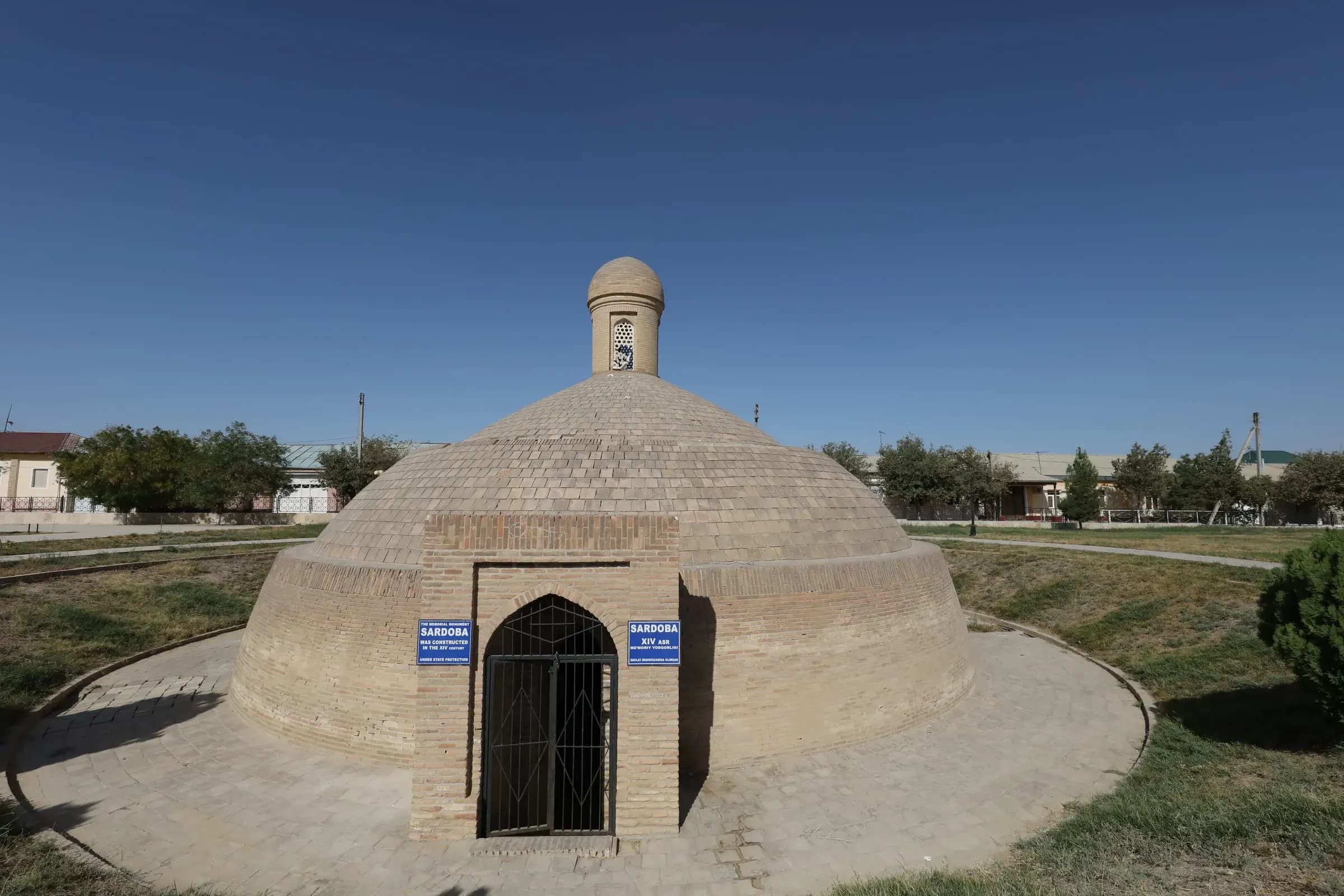
Sardoba is Qarshi's quiet water monument: a 14th-century domed reservoir built to collect rainwater in a dry city. When local access allows, the brick chamber, cooler air, and small echo make the old problem of storing water easy to feel.
Open place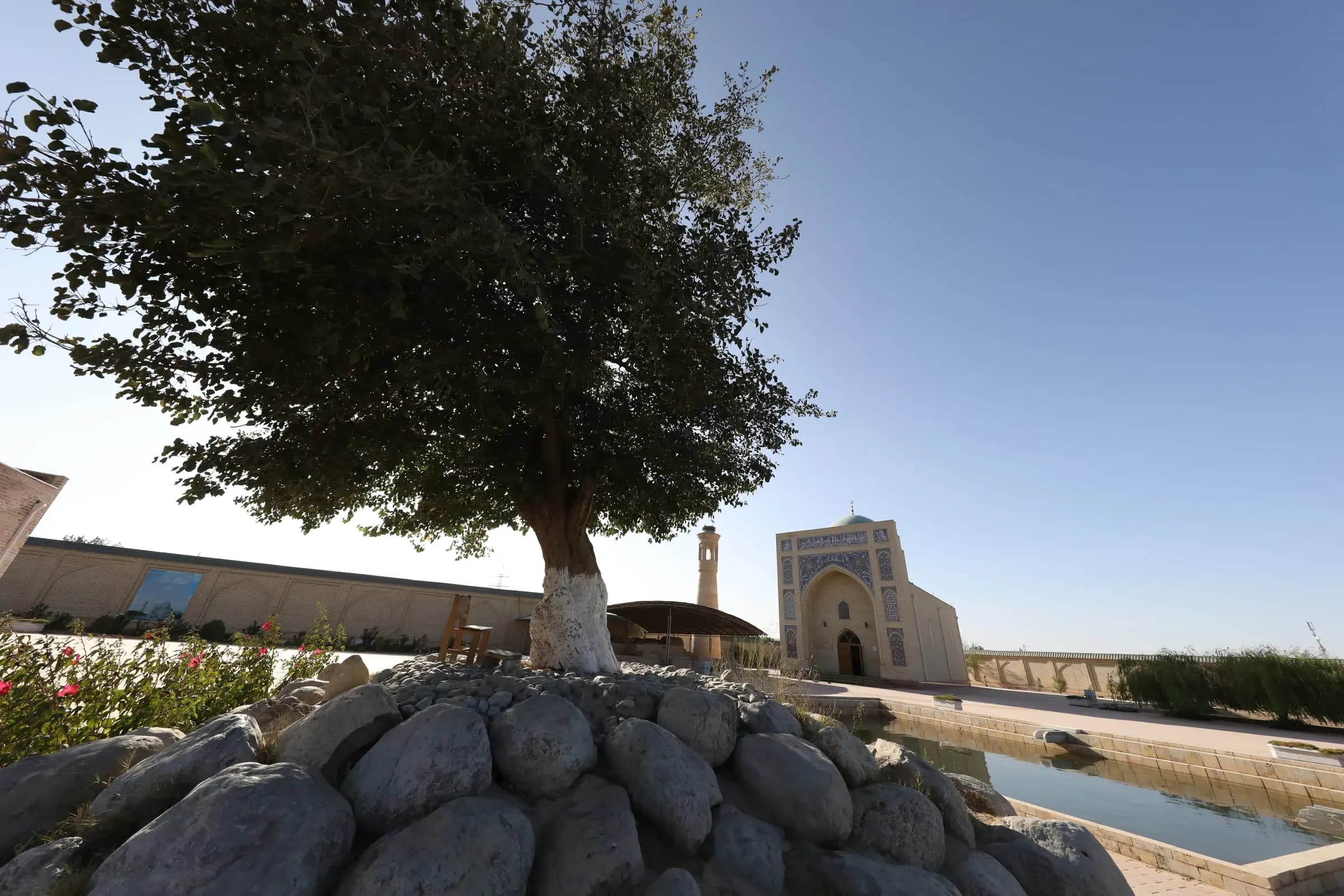
Abu Ubayda ibn al-Jarrah Memorial Complex is Qarshi's most delicate pilgrimage stop: a symbolic memorial near the city, where carved gates, a blue dome, courtyard water, and quiet footsteps set a slower, more respectful pace.
Open place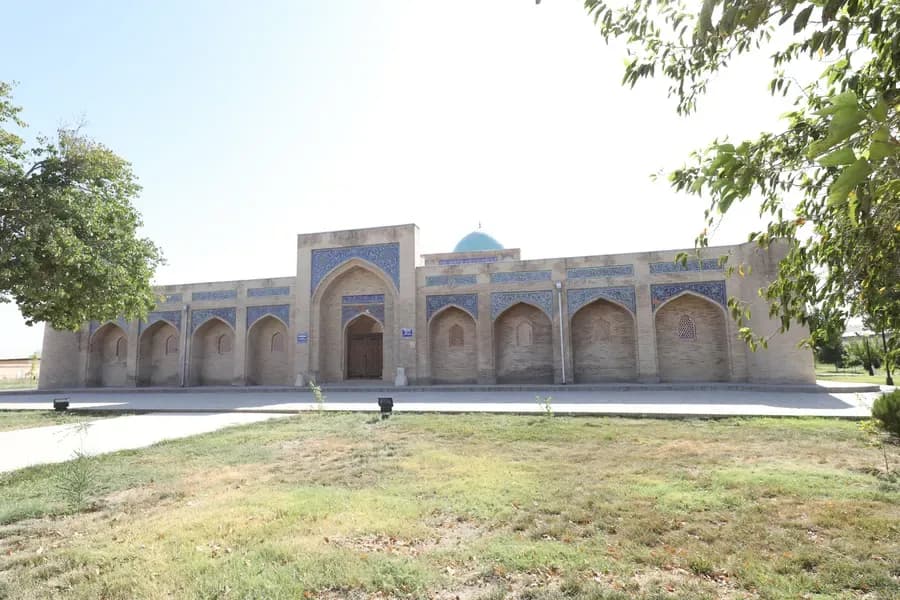
Kilichboy Madrasah brings Qarshi's old madrasah cluster down to a quieter scale. Its 1914 brick walls, former study rooms, courtyard, and drainage detail reward close looking between the city's larger mosque, water, and bridge stops.
Open place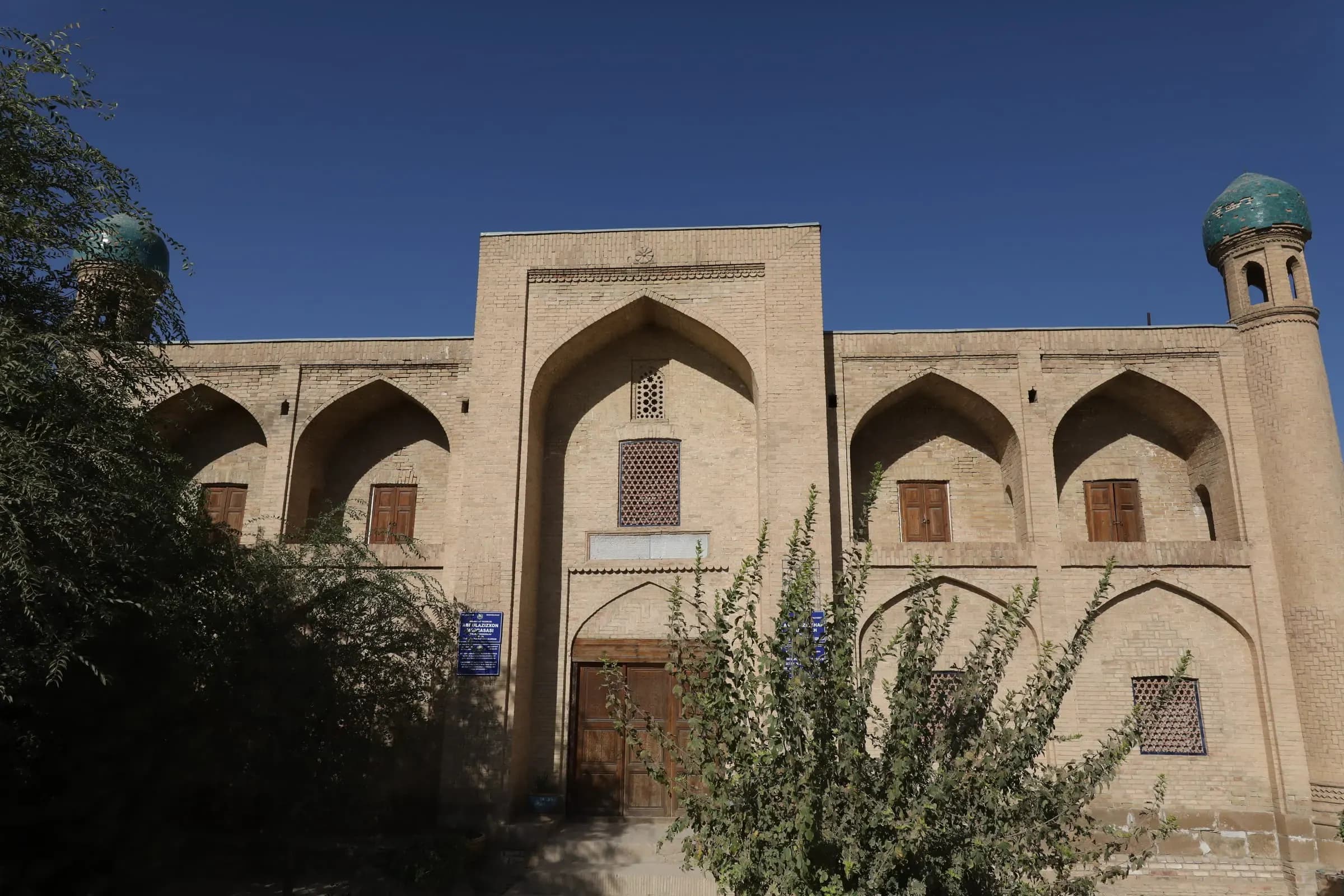
Khoja Abdulazizkhan Madrasah belongs close to Qarshi's central group of madrasahs, mosques, and water architecture. Its value is not scale alone: the stop lets you place a 1909 study building beside Kilichboy, Odina, Sardoba, and Kok-Gumbaz, then understand how the same building
Open place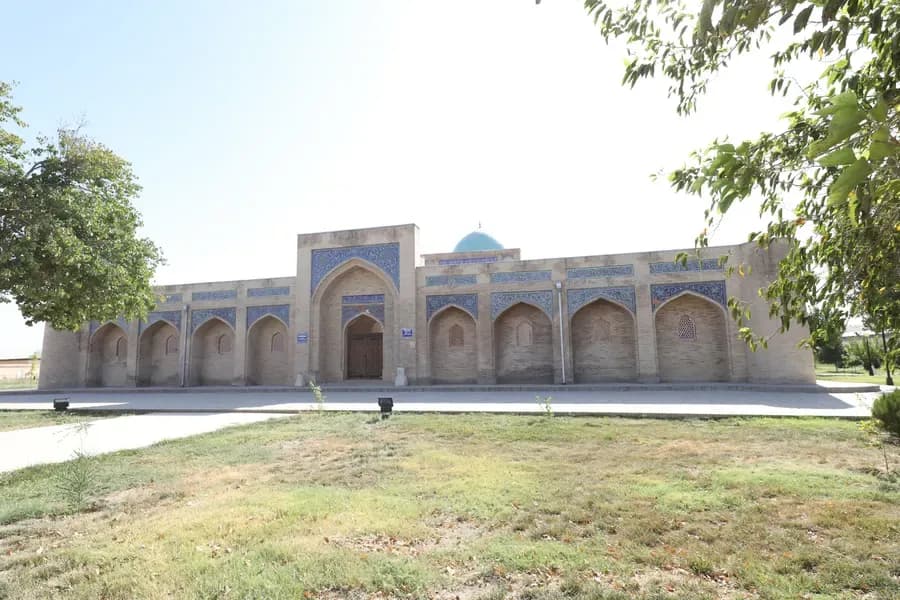
Bekmir Madrasah brings a quieter scale to Qarshi's old-city walk. After Kilichboy and Abdulazizkhan, its 1911 courtyard, small cells, and women's study memory show how education once lived in the spaces between the city's larger landmarks.
Open place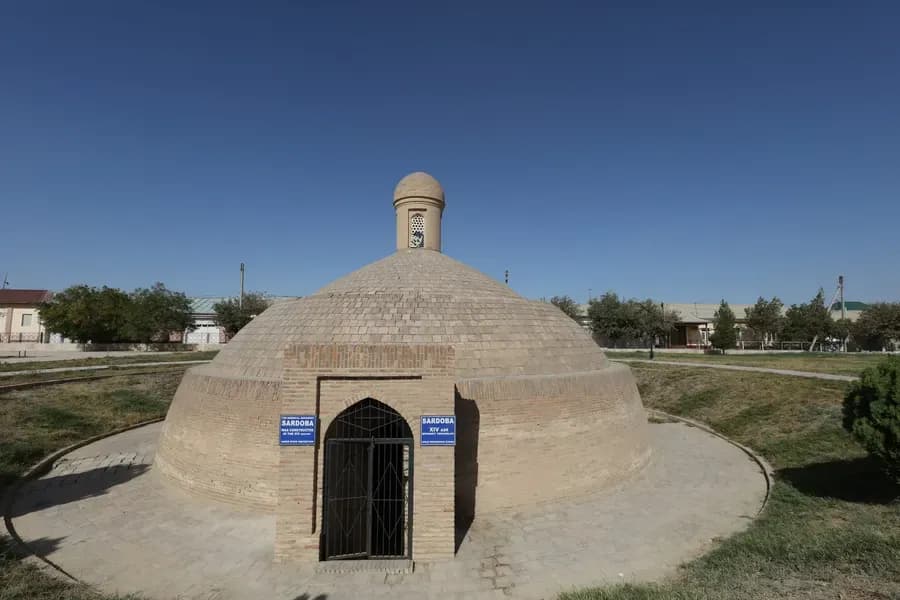
Karshi Baths bring Qarshi's old-city walk from bridge, mosque, and madrasah into water and heat. The story is modest but specific: a medieval bathhouse dated to the 16th century, remembered for a heating system that could hold warmth from one small stove.
Open place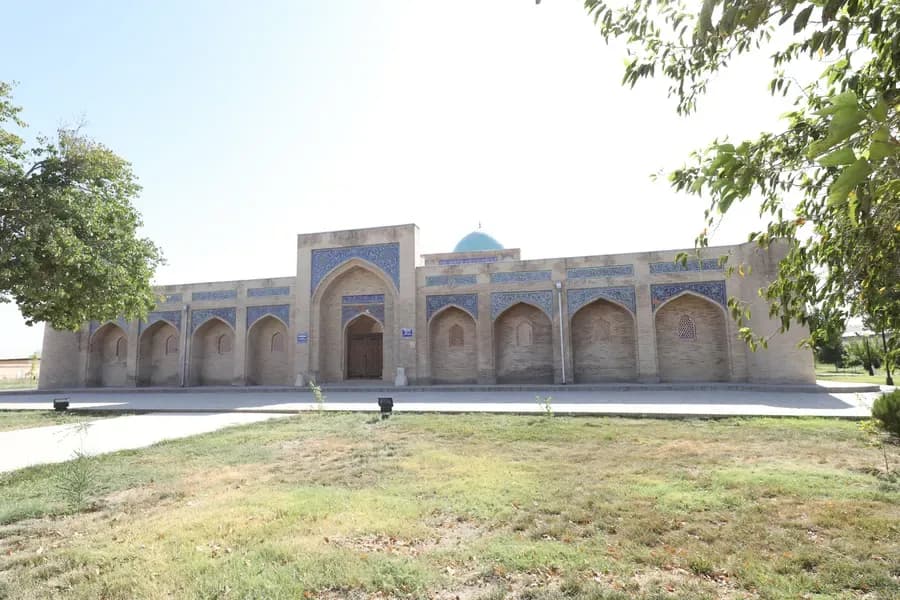
The State Museum of History and Culture gives Qarshi a quieter indoor stop after the bridge, mosques, Sardoba, and madrasahs. In glass cases and photographs, Kashkadarya becomes archaeology, coins, manuscripts, craft objects, and the memory of a collection that once operated insi
Open place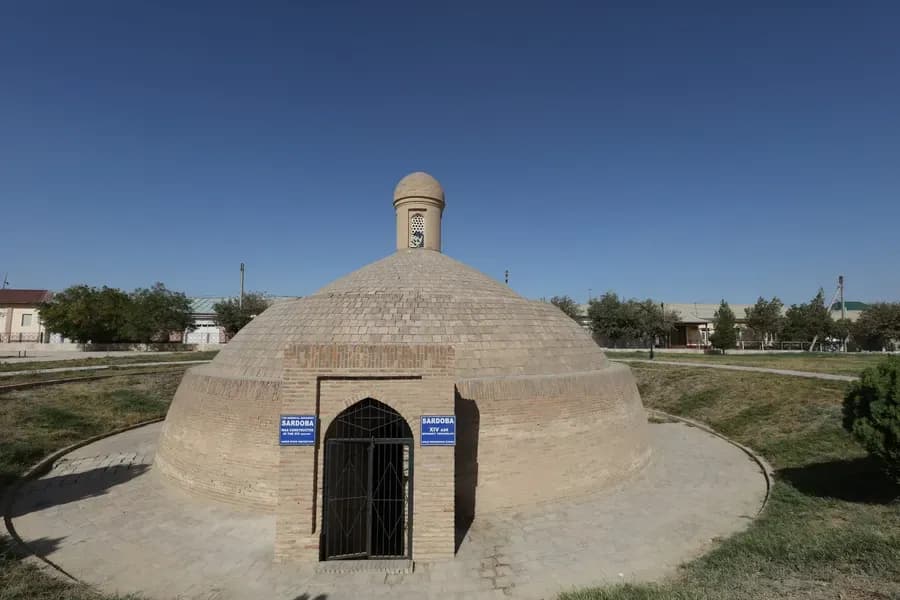
Northwest of Qarshi, Yerkurgan / Erkurgan opens a deeper chapter of Kashkadarya: ancient Nakhshab, earthen walls, settlement traces, craft quarters, and temple or memorial structures known through archaeology. We treat it as a special-interest stop until the exact access, route a
Open placeCity moments
These cards keep Qarshi close to what travelers actually notice: bridge shade, mosque courtyards, market food, cool water structures, and quieter pilgrimage corners.
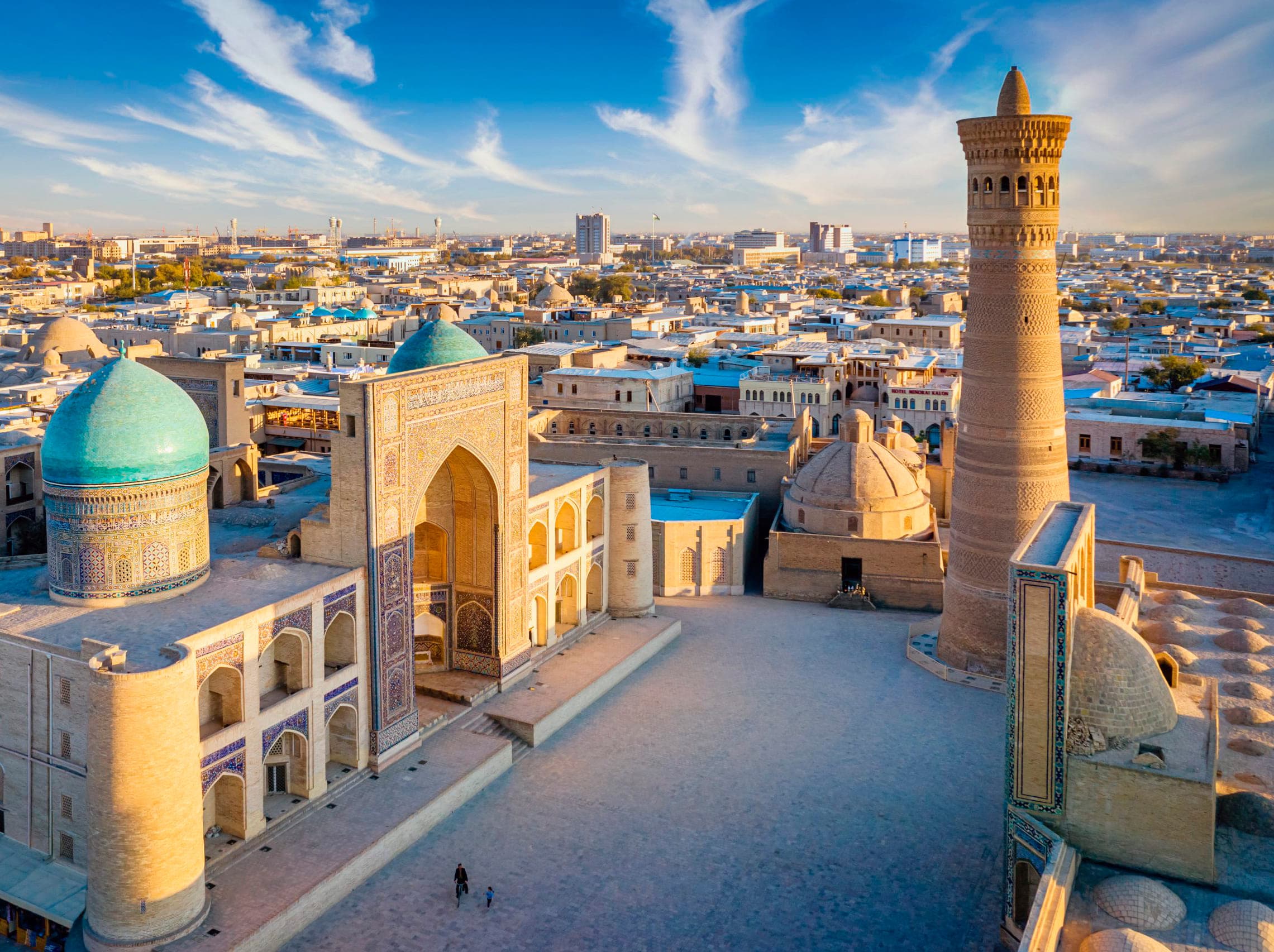
Walk the bridge in softer light, when stone arches, river air, and passing voices give Qarshi its clearest first city image.
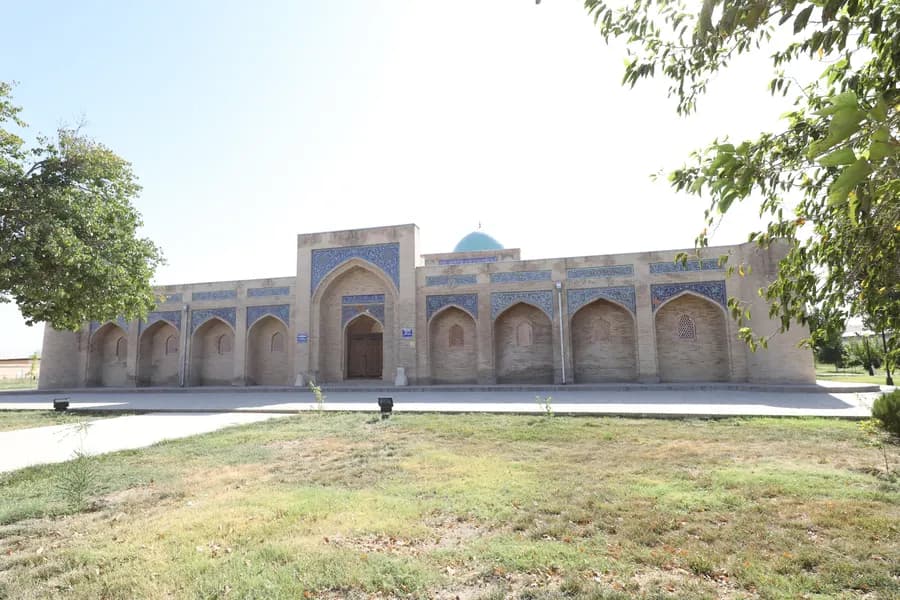
Near the bazaar, Odina adds blue dome color, museum quiet, and the memory of learning and prayer to the old-city walk.
In Qarshi, this Kok-Gumbaz gives the old city a clear mosque image through blue dome color, brick weight, and a quieter stop.
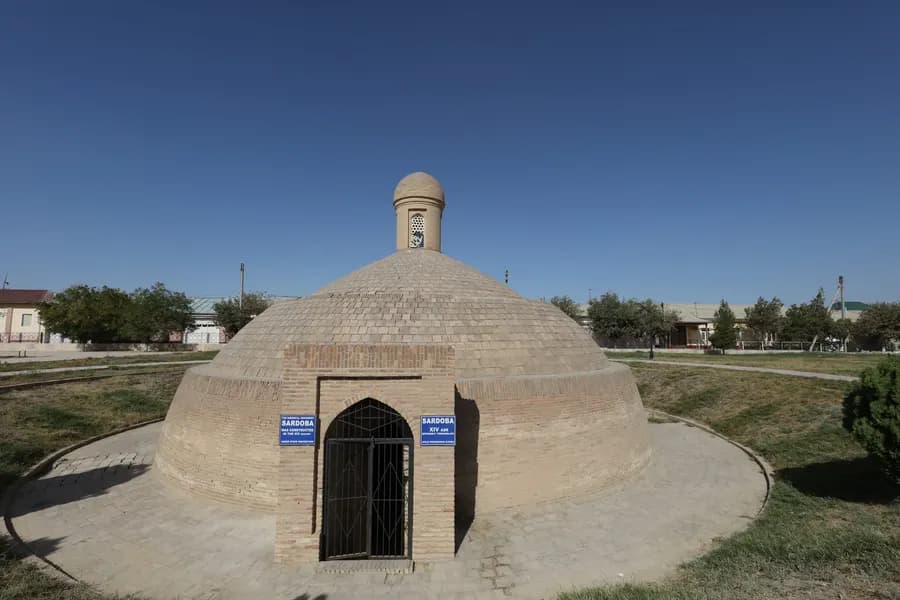
Under the brick dome, the old reservoir turns Qarshi's dry-climate story into shade, stored rainwater, and cooler air you can feel.
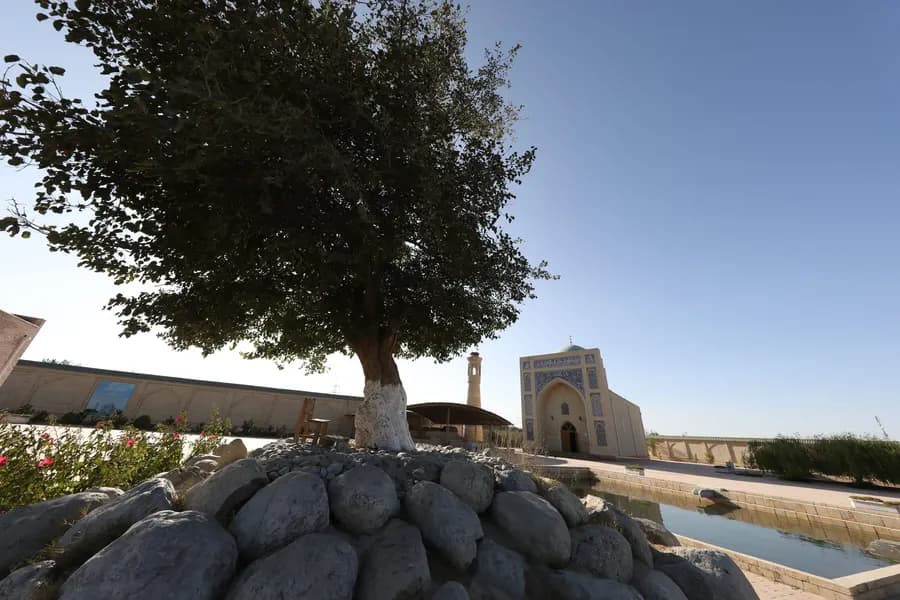
At the city's quieter edge, gate shadow, pool water, and courtyard steps introduce Qarshi's pilgrimage side without miracle claims.
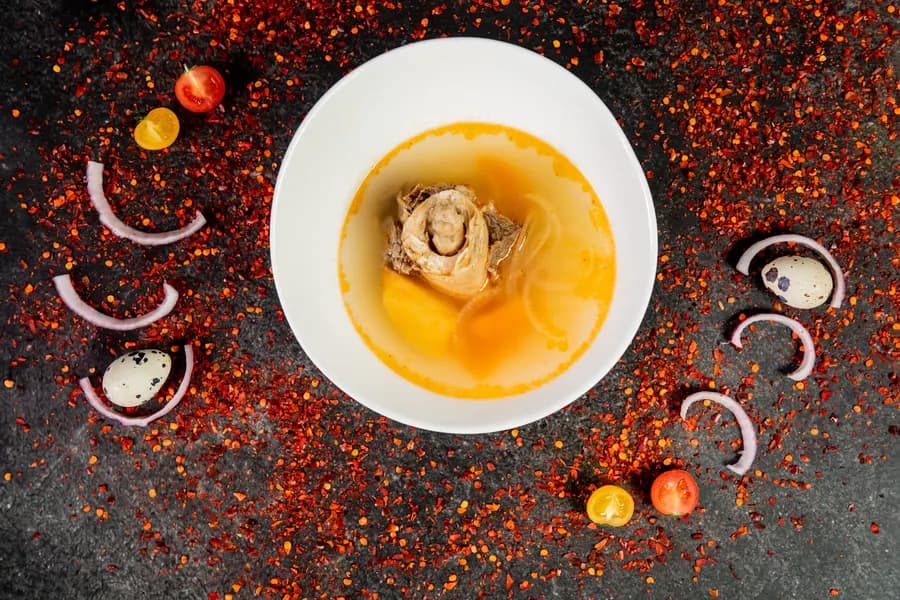
Bread smoke, fruit color, taxis, and evening errands show why Qarshi is more than a transfer between Shakhrisabz and Kitab.
Before you go
Qarshi works best when it is not asked to compete with Shakhrisabz. Let it do a different job: slow the route into a regional city of bridge views, mosque courtyards, food stops, water heritage, and evening streets.
Start with the bridge and the old water structures. They explain Qarshi as a city shaped by road, river, shade, and stored water, not only by monuments.
Qarshi is where the Kashkadarya route becomes a city, not only a heritage corridor.
Bread smoke, fruit color, taxis, and evening errands give Qarshi its human scale. This is the part of the city that helps the Kashkadarya route feel lived-in.
Qarshi sits best beside Shakhrisabz and Kitab: Shakhrisabz gives the Timurid scale, Kitab keeps the foothills near, and Qarshi adds the working city between them.
Qarshi works best with a bridge view, a market or food stop, and a slower evening before returning to Shakhrisabz, Kitab, or the wider Kashkadarya road.
Before you go City role
Kashkadarya's supporting city stop for bridge views, old-core monuments, market life, and regional roads.
Main places
Karshi Bridge, Odina, Kok-Gumbaz in Qarshi, Sardoba, Abu Ubayda, and market/food stops.
Best time
Softer morning and evening hours help with the bridge, streets, and market.
Route fit
Works beside Shakhrisabz and Kitab, with wider Kashkadarya extensions only when access and timing are clear.
Route connections
Use Qarshi with Shakhrisabz for the Timurid heritage chapter and with Kitab for the foothill road. Keep wider Kashkadarya extensions separate until access and timing are clear.
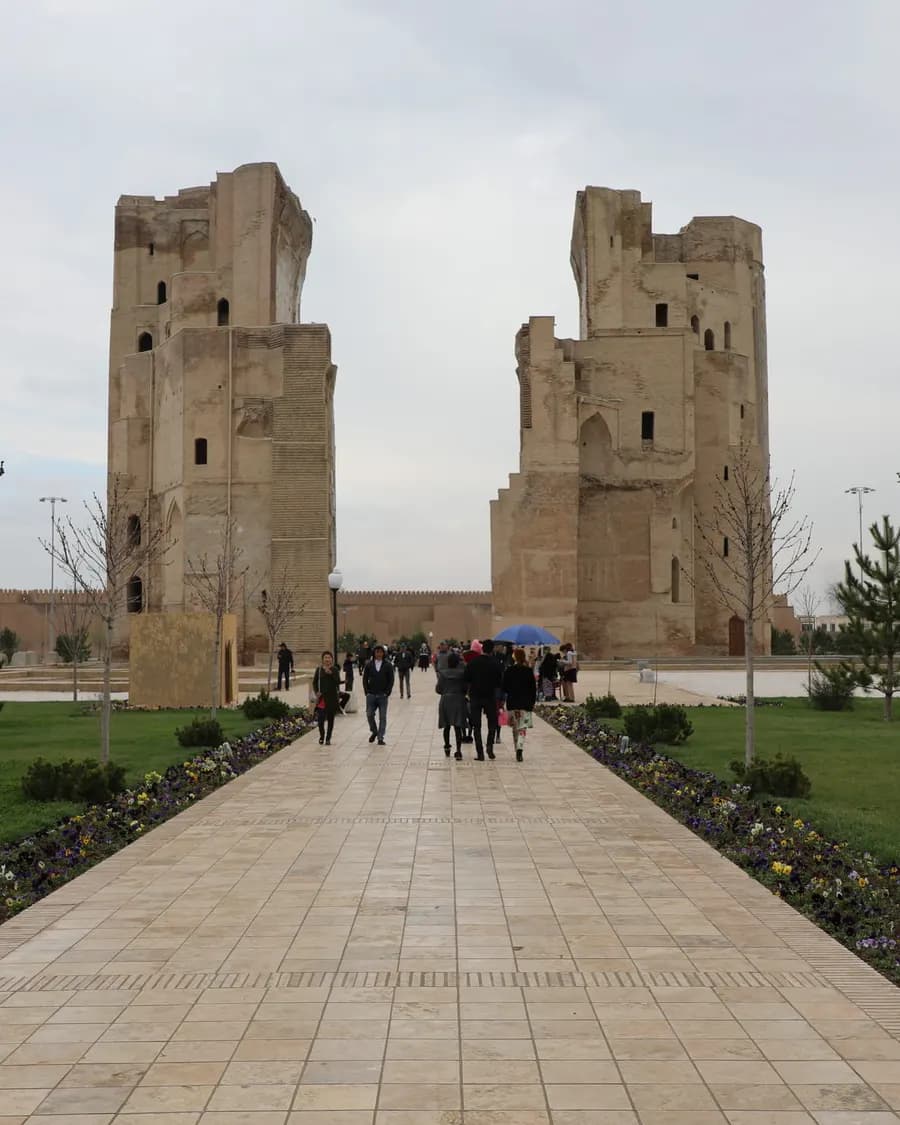
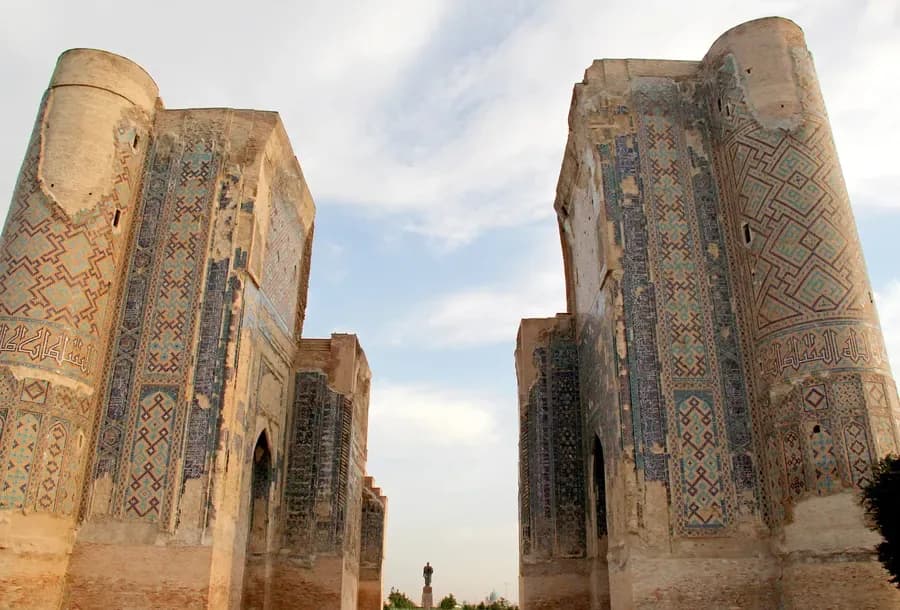
Shakhrisabz adds a southern Timurid chapter to Uzbekistan routes: Ak-Saray, Dorut Tilovat, Kok Gumbaz, Dorus-Saodat, Chorsu, museums, and roads toward Kitab and the foothills.
ViewCity in detail
Walking time, overnight location, and when day trips make sense.
2–3 nights is usually enough when the old core or main anchors get a full walking window. City tone: “Old bridge, mosque shade, and Kashkadarya city life”.
Start with the compact city walk first. Day trips only after the centre has settled — otherwise the stop feels like a transfer with monuments attached.
Stay close enough for an evening return on foot or a short transfer. That keeps tea, dinner, and a second pass through the lanes easy without burning the next morning.
On request
We help agencies set a realistic pace and choose the right next move — without rushing the places that matter.