
TourLink
About
Shakhrisabz changes the journey after Samarkand.
Shakhrisabz is easiest to follow from Ak-Saray into nearby courtyards, memorial spaces, Chorsu, and museum rooms before the road turns toward Qarshi or Kitab.
Ak-Saray gives the opening landmark; Dorut Tilovat, Kok Gumbaz, Dorus-Saodat, Chorsu, and the museums make the city more than a palace stop.
Agencies and travellers who need Shakhrisabz as a readable stop — strong places, honest pacing, and logistics that hold.
Getting around
Shakhrisabz is easiest to follow from Ak-Saray into nearby courtyards, memorial spaces, Chorsu, and museum rooms before the road turns toward Qarshi or Kitab.
City route
Ak-Saray gives the opening landmark; Dorut Tilovat, Kok Gumbaz, Dorus-Saodat, Chorsu, and the museums make the city more than a palace stop.
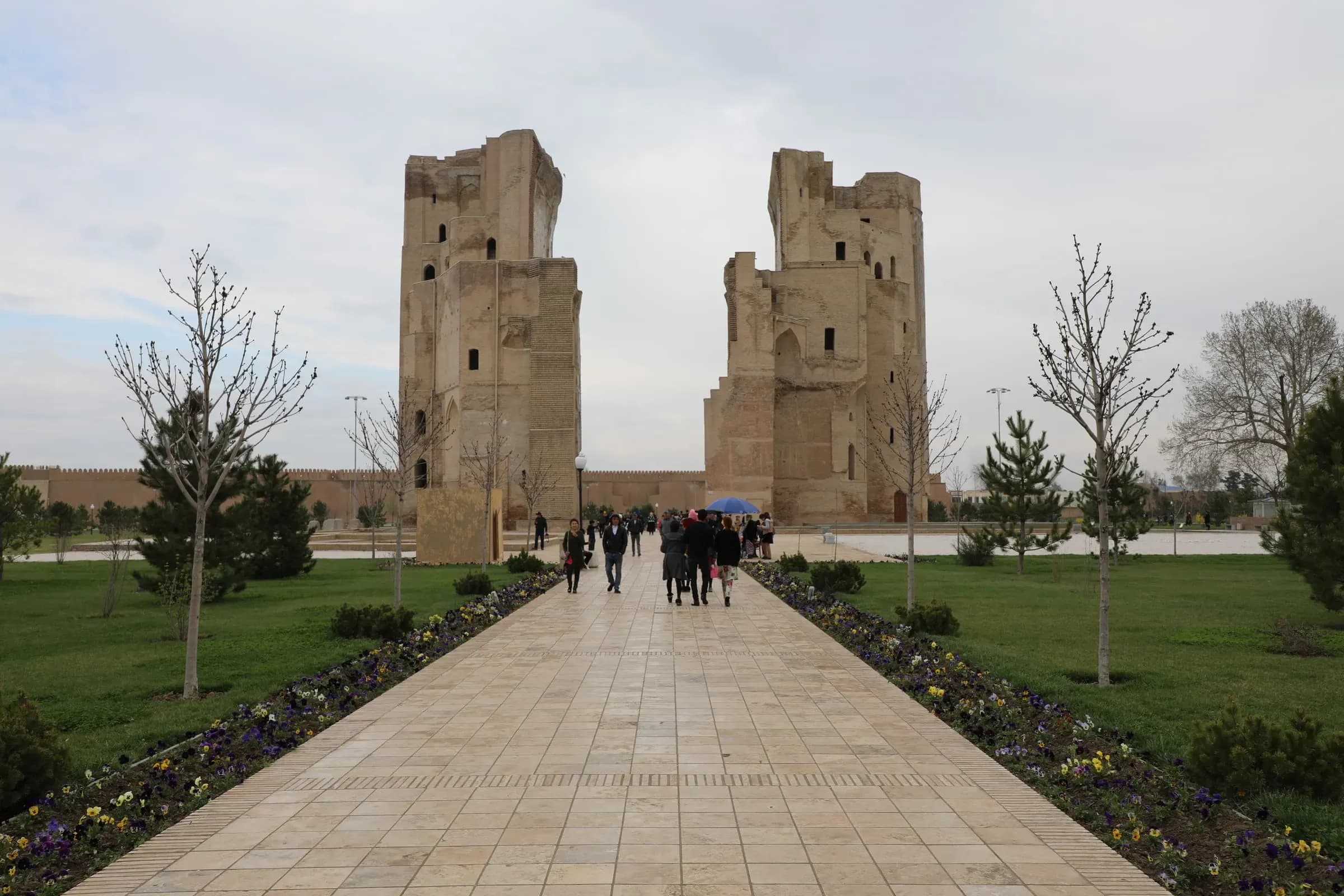
The surviving portal and wall remains make Timur's ambition visible before the route turns to courtyards, memorial spaces, and museum context.
Kashkadarya route
The map keeps Shakhrisabz connected to Qarshi city life and Kitab foothill roads, so the city is not treated only as a detour from Samarkand.
What to see
Start with Ak-Saray, then follow the historic centre through Dorut Tilovat, Kok Gumbaz, Shamsiddin Kulol, Gumbazi Sayyidon, Dorus-Saodat, the Crypt of Amir Temur, Chorsu, and the museum stops. Historic baths and smaller mosque context remain for later local verification.
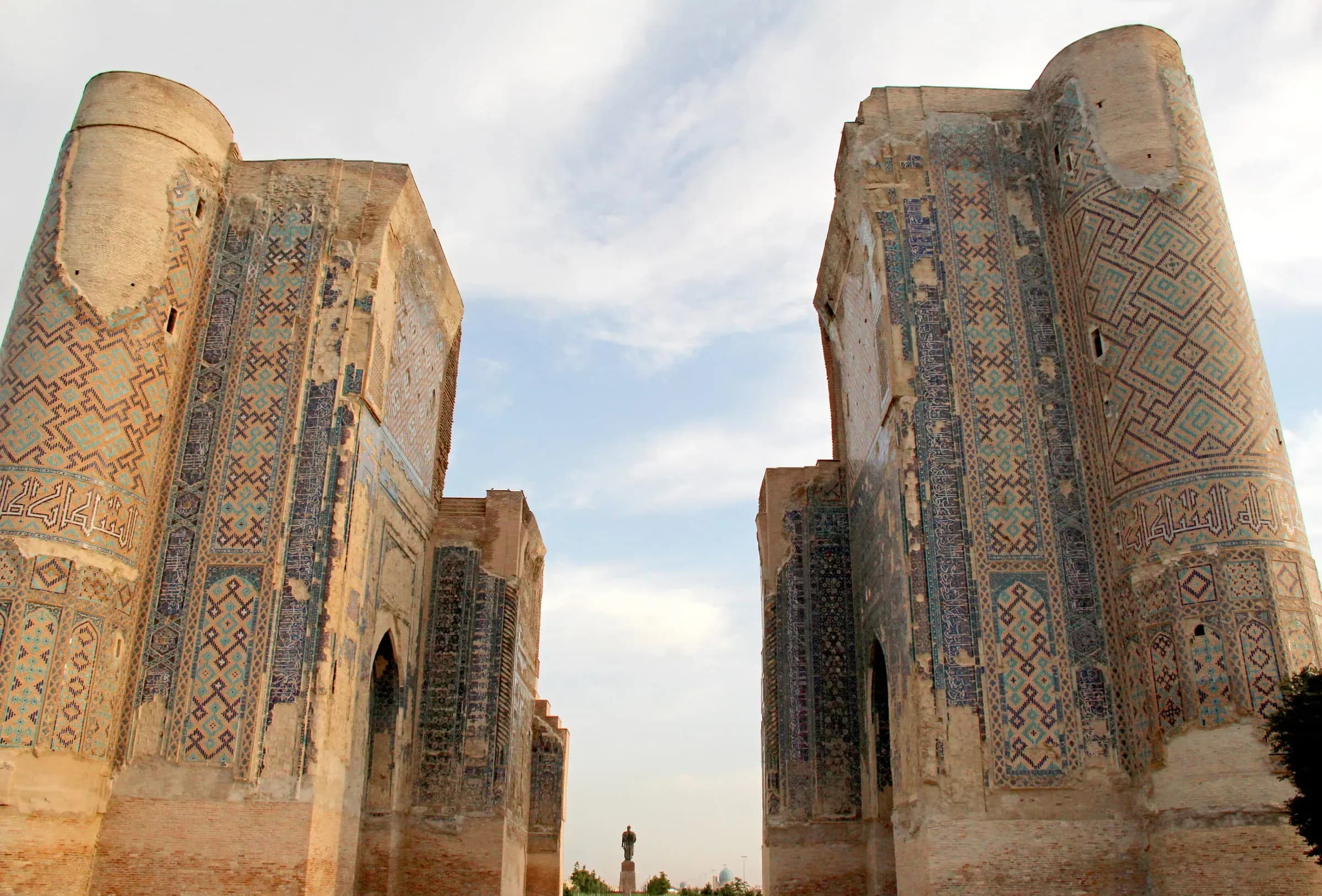
Ak-Saray gives Shakhrisabz its first landmark: two surviving palace walls, blue tile and inscription traces, and an open square where the lost Timurid palace becomes easier to imagine before the route continues to the city's courtyards and memorial sites.
Open place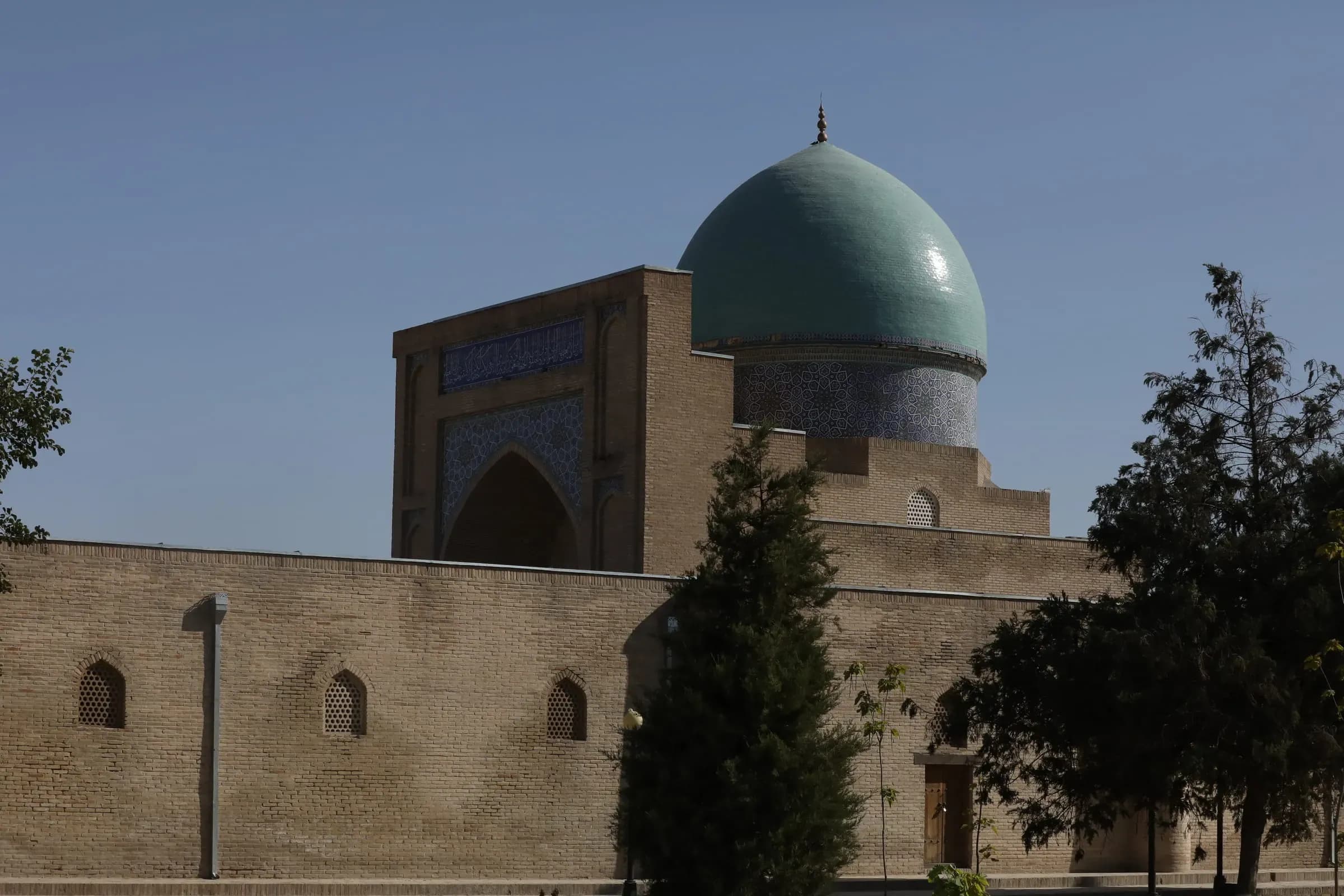
Dorut Tilovat continues Shakhrisabz after Ak-Saray through a religious courtyard setting: mausoleum memory, Kok Gumbaz close by, and a sacred place where the visit needs attention rather than speed.
Open place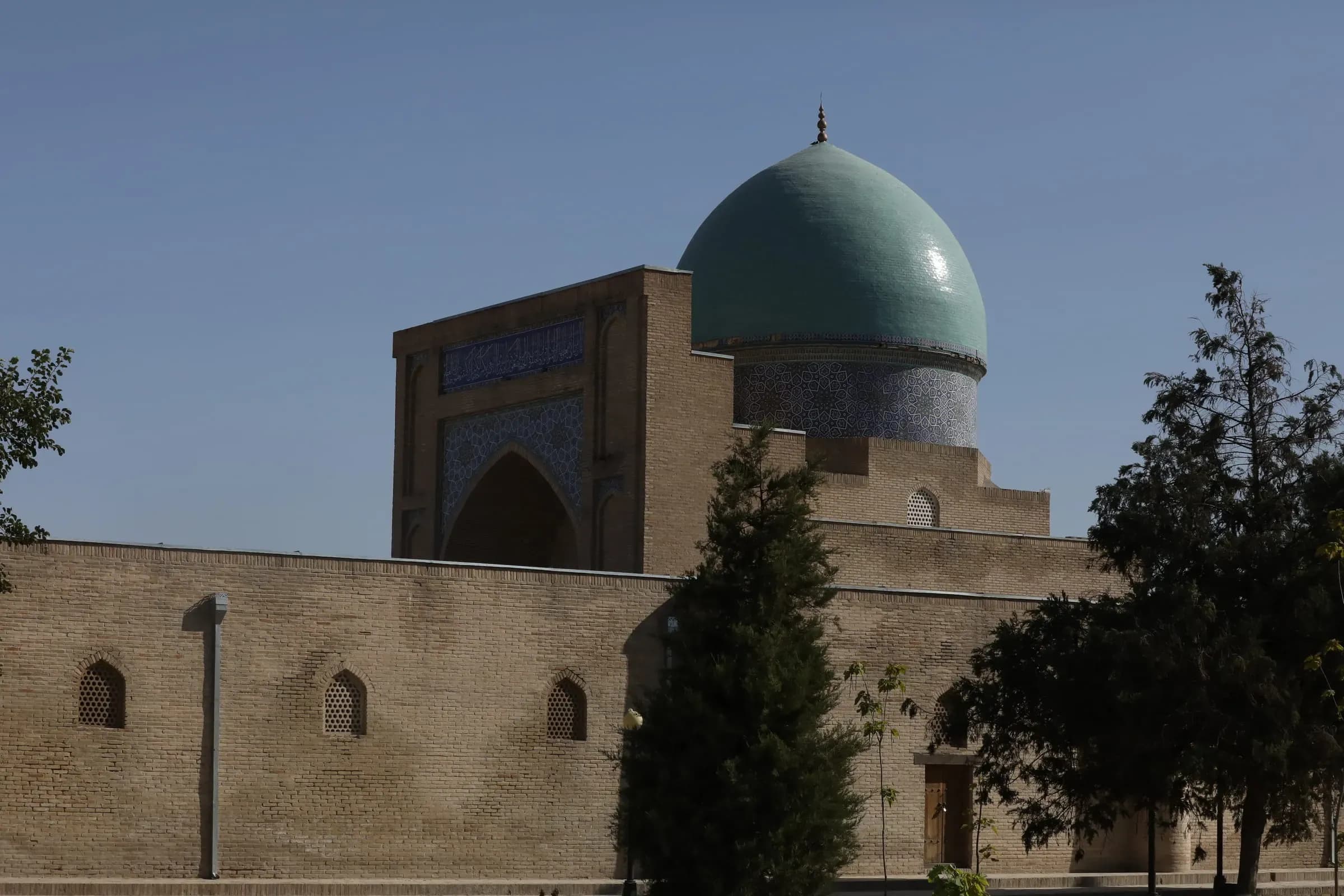
After Ak-Saray, Kok Gumbaz gives the Shakhrisabz route a different kind of landmark: not a palace wall, but a mosque within Dorut Tilovat where the dome, brickwork, inscriptions, and courtyard are close enough to read together.
Open place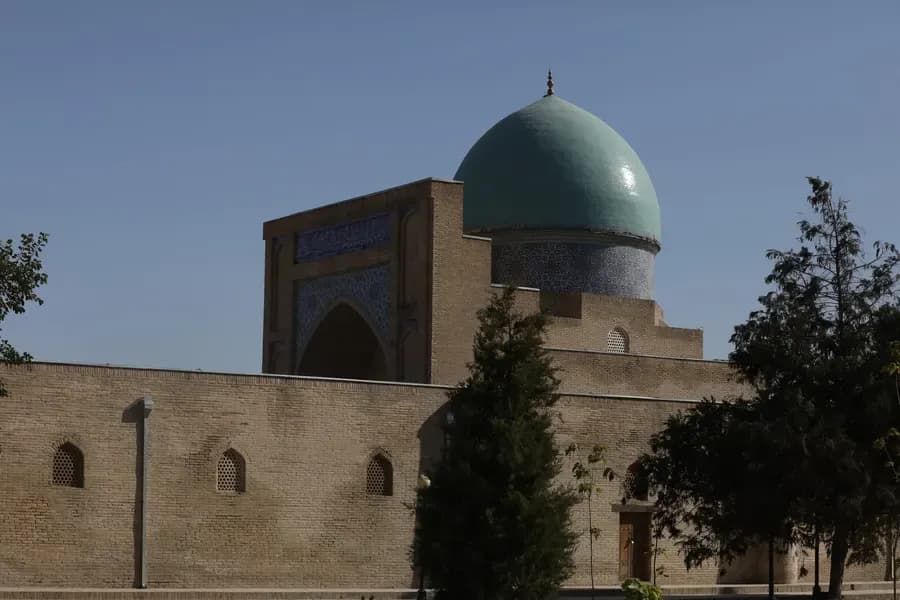
After Kok Gumbaz, Shamsiddin Kulol changes the focus inside Dorut Tilovat: from the blue-domed mosque to the burial of a Sufi teacher, the tombstone story, and the way visitors move through a religious memorial setting.
Open place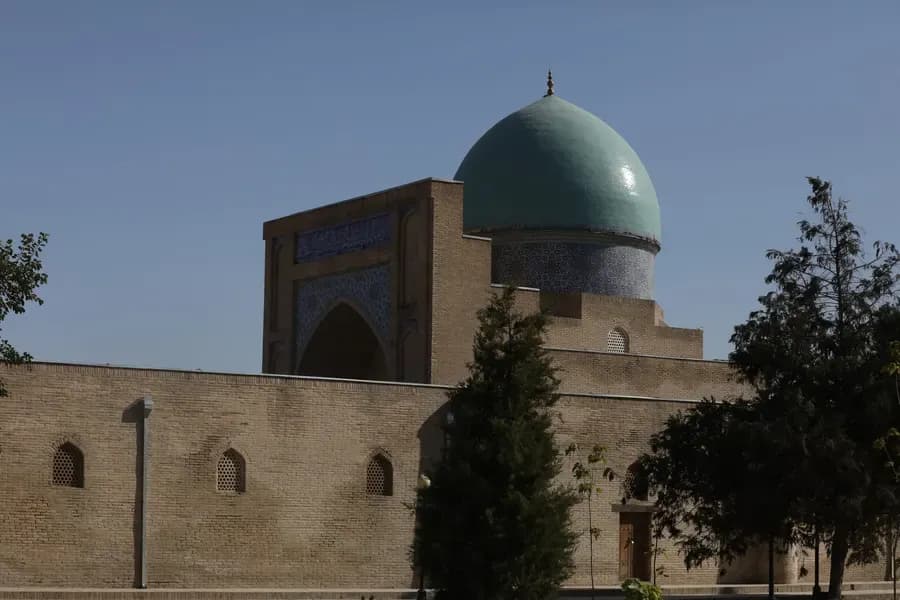
After the blue dome of Kok Gumbaz and the Shamsiddin Kulol memorial, Gumbazi Sayyidon shifts attention to a smaller mausoleum: inscriptions, marble tombstones, painted traces, and the family memory of the Sayyids.
Open place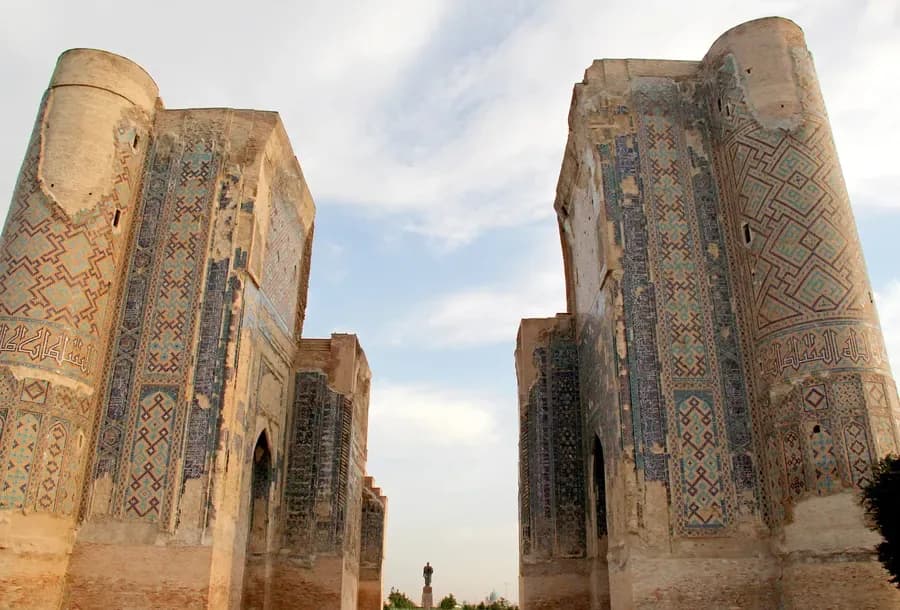
Dorus-Saodat changes the focus after Ak-Saray: Jahangir's mausoleum, surviving brickwork, a mosque setting, and the crypt nearby make family memory concrete.
Open place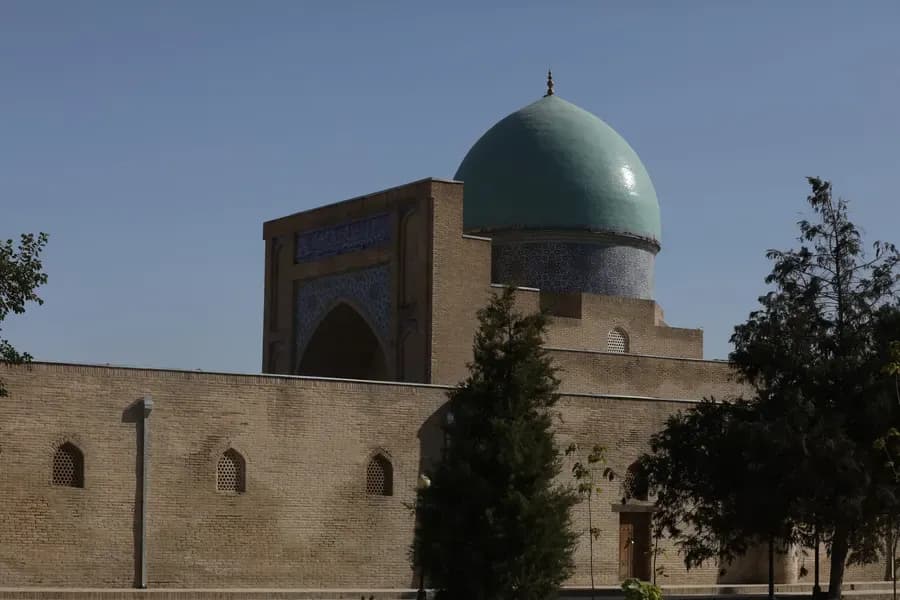
Near Dorus-Saodat, Shakhrisabz narrows from Timurid scale to a single underground chamber. The crypt was prepared for Amir Temur, but he was not buried here; if it is open, the visit is brief, quiet, and strongest when that fact stays plain.
Open place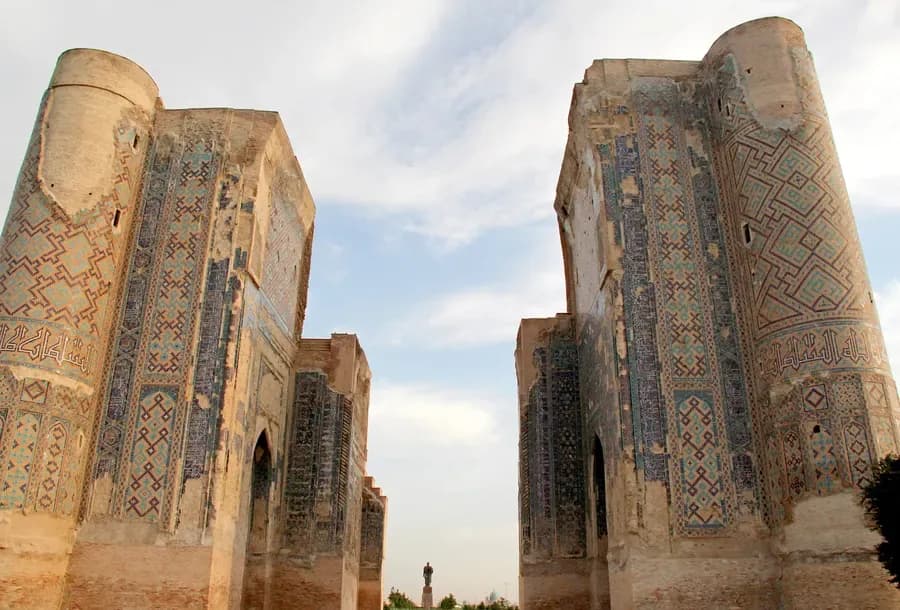
Chorsu brings Shakhrisabz back to the street. UNESCO names the Chor-su bazaar within the historic centre: a covered market at the meeting of old routes, where an octagonal plan, central cupola, brick passages, and passing trade keep the walk from becoming only palaces and memoria
Open place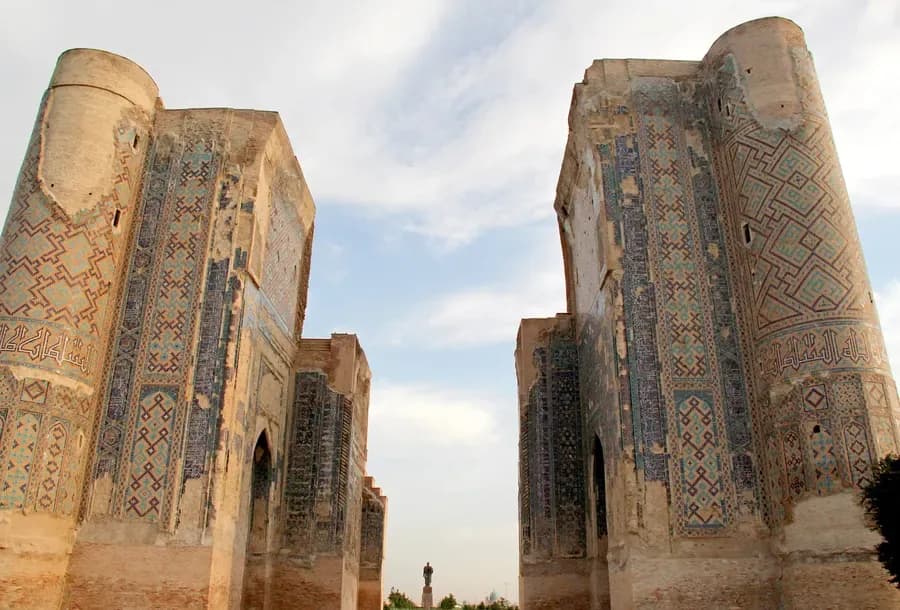
Inside Chubin Madrasah, Amir Temur Museum slows the Shakhrisabz walk down to rooms, cases, courtyard displays, and object detail. After Ak-Saray's scale and the memorial courtyards, the museum helps the city feel close enough to read through carved wood, ceramics, fragments, mode
Open place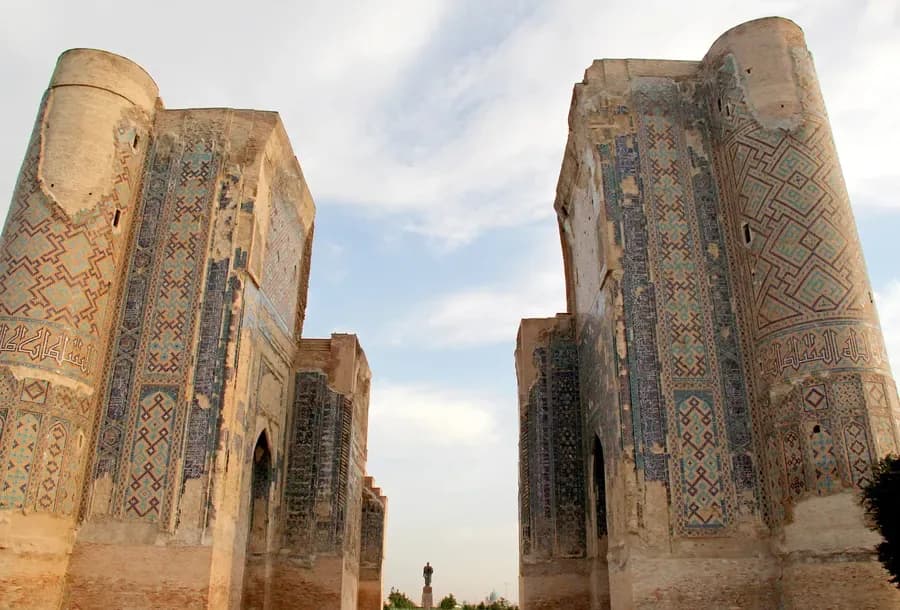
Near the Oq-Saroy area, Maqom Museum gathers archive photographs, documents, musical instruments, and the memory of maqom schools. It gives the Shakhrisabz route a calmer room after the monuments, where Timurid architecture is joined by classical music memory and living Uzbek rep
Open placeCity moments
The city comes through in three clear moments: the Ak-Saray approach, the Dorut Tilovat and Kok Gumbaz courtyard setting, and the road that can continue toward Kitab and the foothills.
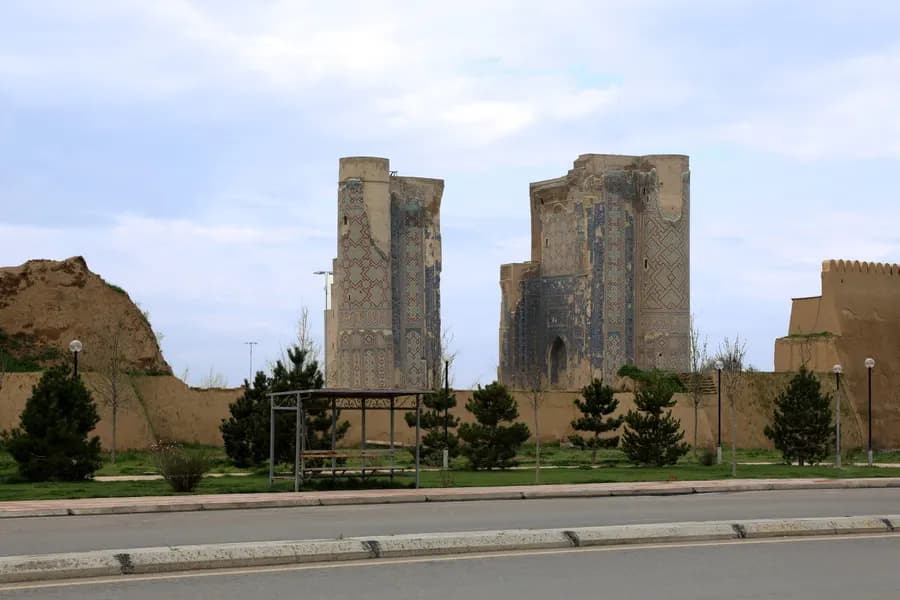
Ak-Saray, shrine ensembles, Chorsu, and museum context make Shakhrisabz the first clear reason to take the Kashkadarya road south from Samarkand.
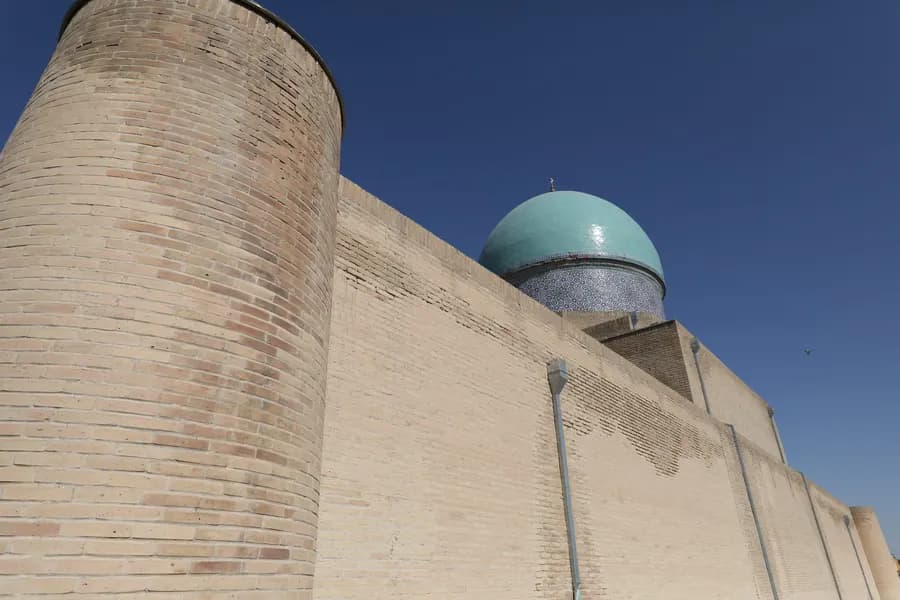
After Ak-Saray, Dorut Tilovat brings the route into Kok Gumbaz, courtyard space, revered names, and the more intimate side of Shakhrisabz's memorial centre.
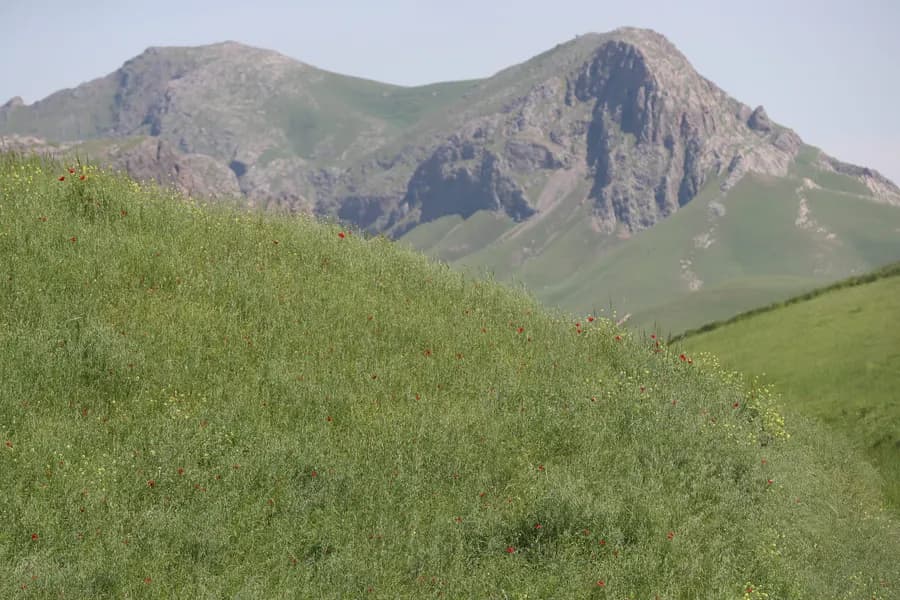
Beyond Shakhrisabz, the route can continue toward Kitab, Gissarak, Sarchashma, mountain villages, and the Gissar edge when road conditions and access are clear.
Before you go
Shakhrisabz needs more than a quick palace stop. Ak-Saray starts the visit, but the city becomes clearer through nearby courtyards, memorial places, Chorsu, museum collections, and the choice of where the Kashkadarya route goes next.
Ak-Saray gives the route its first orientation: not just a palace ruin, but the reason Shakhrisabz has to be read as Timur's southern city.
Shakhrisabz begins with Ak-Saray; the city comes into focus through courtyards, market passages, museums, and the road after it.
The next stops sit closer together: Kok Gumbaz, Shamsiddin Kulol, Gumbazi Sayyidon, and the courtyard setting around them.
Chorsu and the museums can keep the walk in the historic centre; add Kitab, Gissarak, Sarchashma, or Qarshi only when route timing and access are clear.
Start at Ak-Saray, then let the route pass through Dorut Tilovat, Dorus-Saodat, Chorsu, and at least one museum or foothill continuation when timing and access are clear.
Before you go Route role
Heritage city south of Samarkand and the first major stop in Kashkadarya.
Main places
Ak-Saray, Dorut Tilovat, Kok Gumbaz, Dorus-Saodat, Chorsu, Amir Temur Museum, and Maqom Museum.
Season and pace
Spring and autumn are easier for walking the open monument areas; in hotter months, museum time or lunch helps break up the outdoor route.
Continue toward
The route can return to Samarkand, continue south to Qarshi, or turn east toward Kitab, Gissarak, and Sarchashma when conditions are clear.
Next along the route
Qarshi adds southern city life and food; Kitab opens the foothill route toward Gissarak, Sarchashma, science, shrines, and mountain villages.
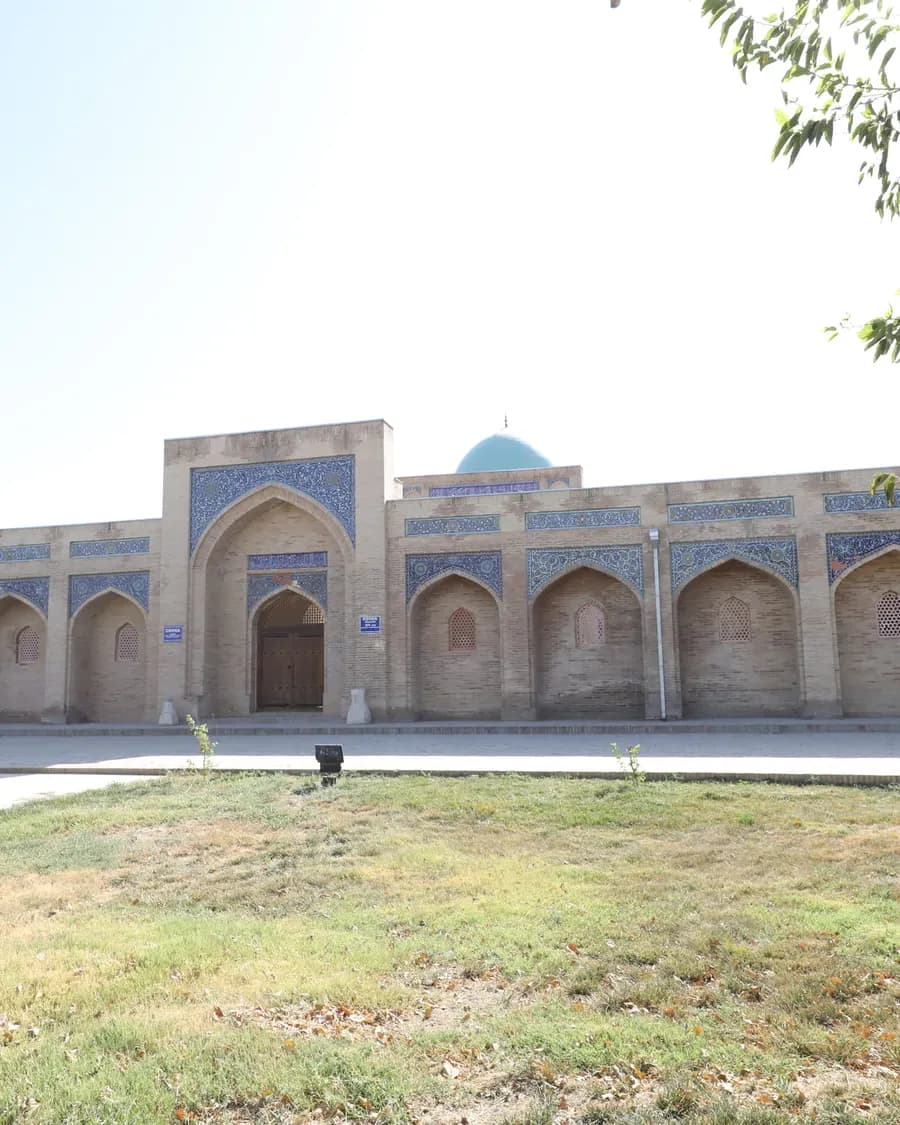
Qarshi gives Kashkadarya a working city stop after Shakhrisabz: old bridge arches, mosque courtyards, water heritage, market food, and roads toward Kitab.
ViewCity in detail
Walking time, overnight location, and when day trips make sense.
one focused city day plus overnight is usually enough when the old core or main anchors get a full walking window. City tone: “Ak-Saray, Timurid courtyards, and the foothill road”.
Start with the compact city walk first. Day trips only after the centre has settled — otherwise the stop feels like a transfer with monuments attached.
Stay close enough for an evening return on foot or a short transfer. That keeps tea, dinner, and a second pass through the lanes easy without burning the next morning.
On request
We help agencies set a realistic pace and choose the right next move — without rushing the places that matter.