
TourLink
About
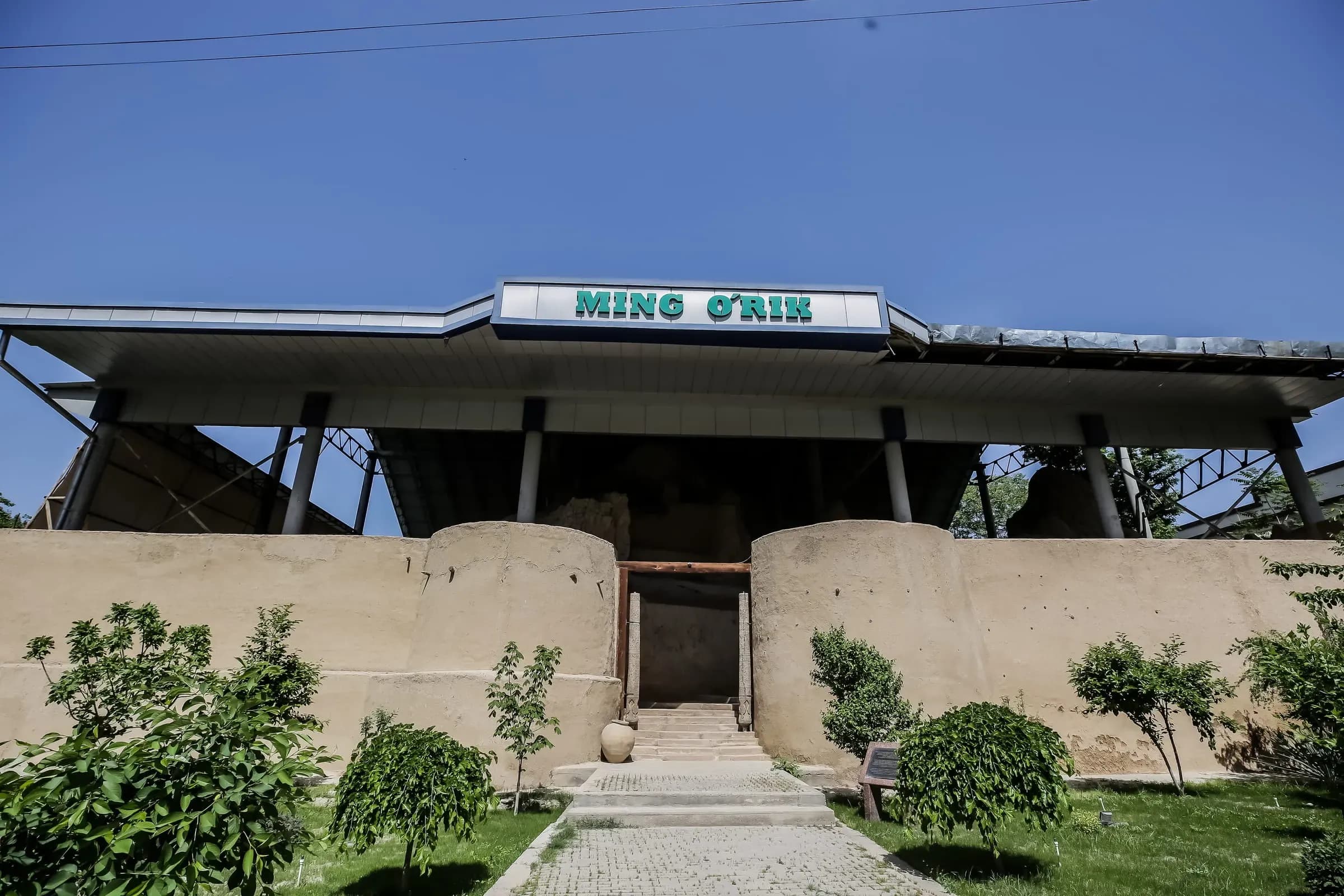
Ming Urik is modest at first sight: an urban entrance, a roofed excavation, clay walls, pottery and reconstructed domestic corners.
Many first Tashkent impressions are modern: broad avenues, Soviet-era facades, metro halls and museums.
Keep this stop clear on the map and in the day plan — Protected clay walls and ancient Tashkent near the center.
Agencies and travellers who need Ming Urik Settlement as a readable stop — honest timing and a clear place on the route.
On the map
One clear point for Ming Urik Settlement — Protected clay walls and ancient Tashkent near the center.
Place
The map pin marks this attraction so the stop stays readable in the day plan.
Why this place
Many first Tashkent impressions are modern: broad avenues, Soviet-era facades, metro halls and museums. Ming Urik brings the scale down to clay, roofed walls and fragments that need explanation. It is not a grand monument; it is the place where the guide can show how the capital's story reaches back to fortified Chach and early urban life under today's streets. «At Ming Urik, Tashkent feels older than the avenues around it.»
What you'll see
Look for the evidence at close range: roofed clay walls, excavation edges and reconstructed domestic details that make the early settlement easier to imagine.
How to visit
Ming Urik rewards patience. Confirm current entrance, hours and museum access before arrival, then let the guide translate the fragments before you move on to the central museums or metro.
What to add nearby
Amir Temur Square, the Temurids Museum, the History Museum and the metro keep Ming Urik in a clear central frame: state history, city movement and the older timeline beneath the modern capital.
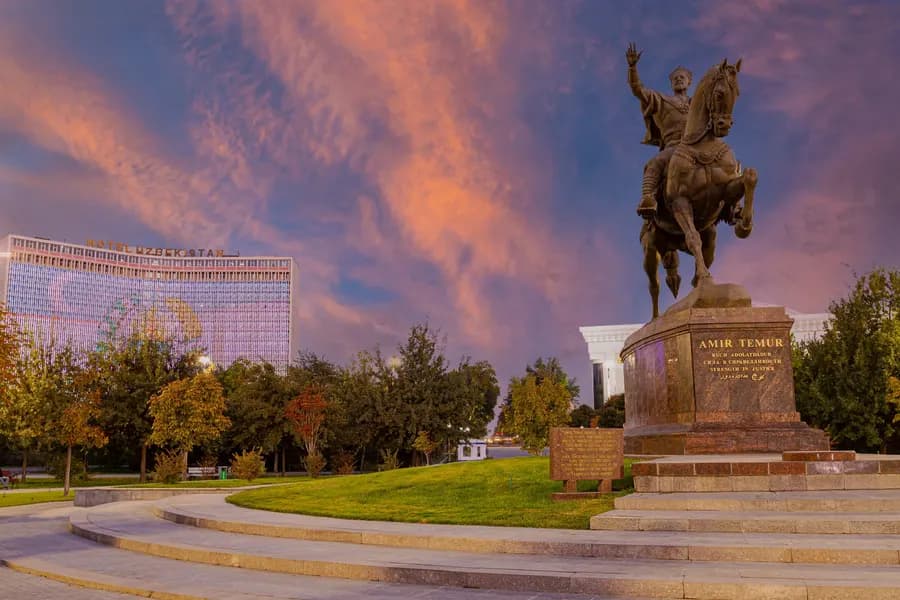
Amir Temur Square is a short central Tashkent marker: the bronze equestrian monument, radial garden paths, nearby metro, and the Temurids Museum help you see where the route can go next.
View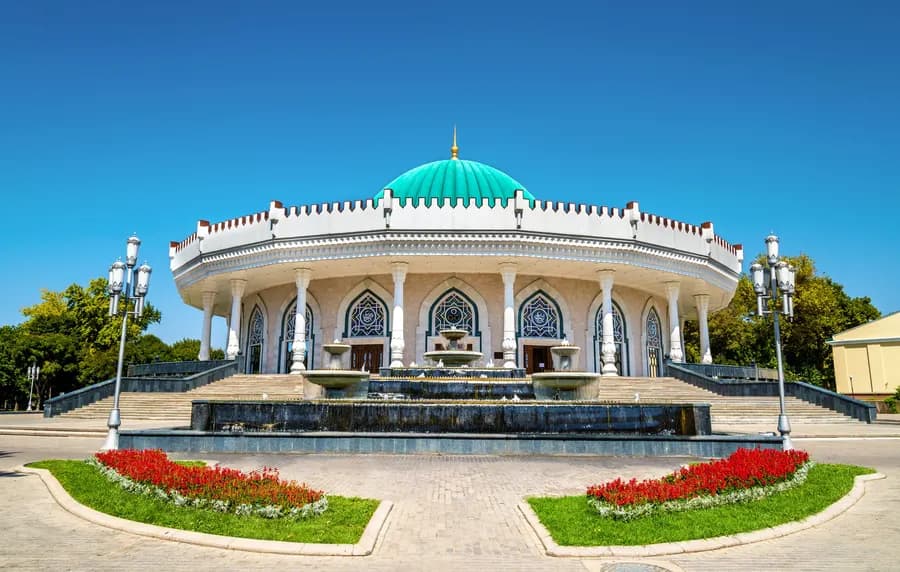
Beside Amir Temur Square, this turquoise-domed museum gives Tashkent a focused Timurid stop: painted halls, a crystal chandelier, models, miniatures, and context before Samarkand or Shakhrisabz.
View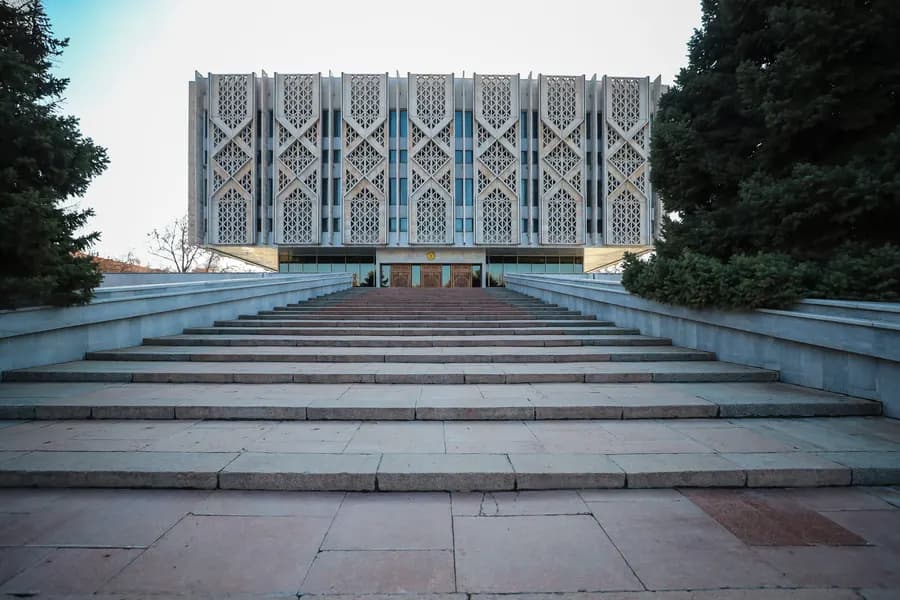
Founded in 1876, this central Tashkent museum brings the country's history into one modernist landmark, from archaeology and coins to manuscripts and ethnography, with entry dependent on the current repair status.
View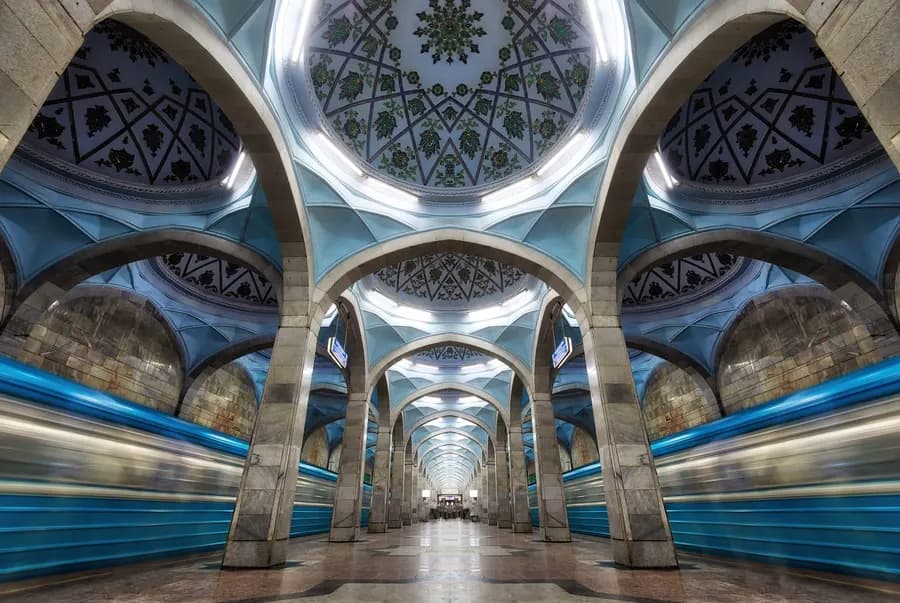
Tashkent Metro turns a cross-city ride into architecture: Kosmonavtlar, blue halls, marble, chandeliers, mosaics, and the daily movement of the capital.
ViewPlace in detail
Timing, best hours, and how this stop fits neighbouring pins.
45–90 minutes is a practical range for most groups. Leave time for walls, viewpoints, and the walk between courtyards. Place tone: “Protected clay walls and ancient Tashkent near the center”.
Prefer before the midday heat. That usually improves comfort, photos, and how the stop feels in the sequence around tashkent.
Treat it as one clear pin on the map: arrive intentionally, avoid sandwiching it between two rushed monuments, and keep the next move short enough that the group still has energy.
On request
We help agencies place this stop with realistic timing — without rushing the places that matter.