
TourLink
About
Near Chorsu, Suzuk-Ota slows the old-city route down.
Chorsu gives old Tashkent its sound: bread sellers, market calls, fabric, spice and movement.
Keep this stop clear on the map and in the day plan — Pilgrimage memory and craft life near Chorsu.
Agencies and travellers who need Suzuk-Ota Complex as a readable stop — honest timing and a clear place on the route.
On the map
One clear point for Suzuk-Ota Complex — Pilgrimage memory and craft life near Chorsu.
Place
The map pin marks this attraction so the stop stays readable in the day plan.
Why this place
Chorsu gives old Tashkent its sound: bread sellers, market calls, fabric, spice and movement. Suzuk-Ota changes the scale. The stop is calmer, more residential and more tied to memory. It helps you see the old city not only through monuments, but through a mahalla where religious teaching and craft skill have long belonged side by side. «At Suzuk-Ota, old Tashkent feels close to daily hands: prayer, memory, craft and a mahalla that still has a human scale.»
What you'll see
The strongest viewing order is simple: first the mosque and mausoleum, then the restored mahalla setting, then the craft story that explains why Suzuk-Ota belongs in an old-city route.
How to visit
Suzuk-Ota is religious, memorial and residential in feeling. Keep the visit calm: check current access, dress modestly, and let the craft story support the stop rather than overpower the mosque and mausoleum.
What to add with Suzuk-Ota
Chorsu, Kukeldash, Khast Imam and Sheikhantaur keep Suzuk-Ota in the right setting: market life, madrasah scale, religious ensemble and memorial quiet around the old-city route.
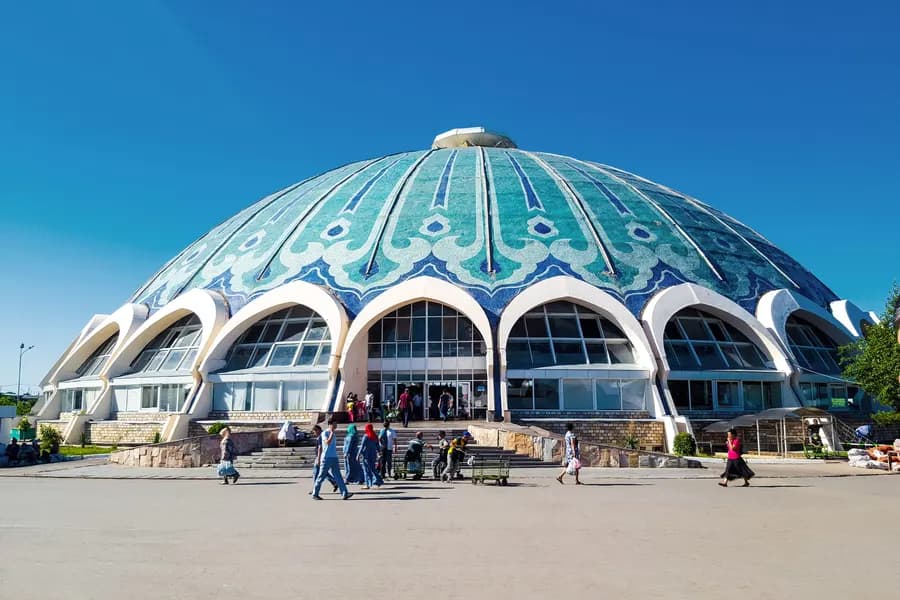
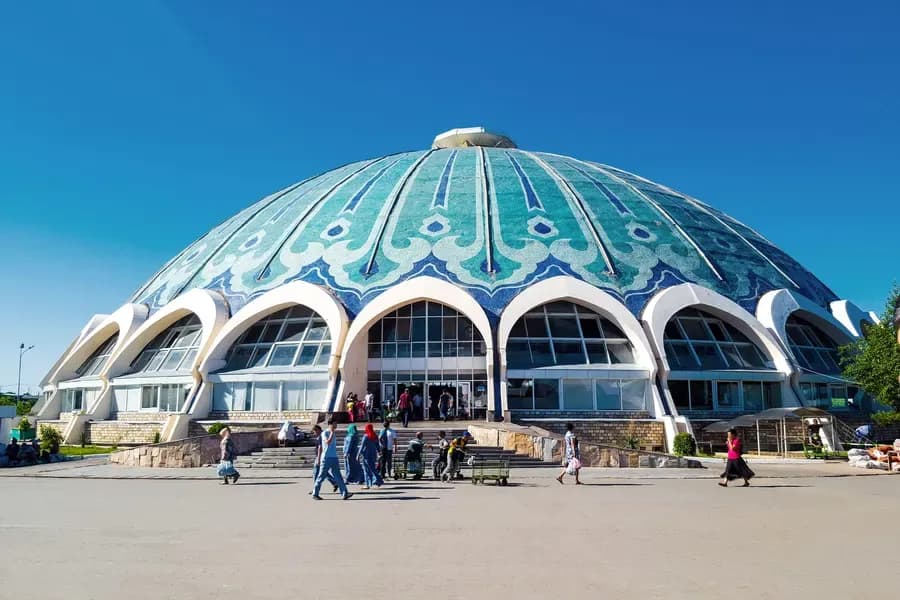
Chorsu is Tashkent's market morning in full motion: a turquoise dome, bread steam, dairy counters, dried fruit, spices, hot food, and an old-city walk toward Kukeldash and Khast Imam.
View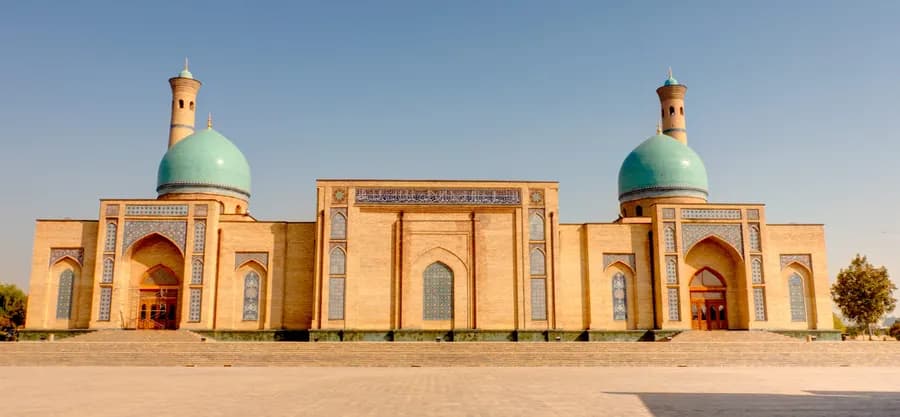
An old-city religious ensemble with courtyards, madrasahs, the Muyi Muborak Library, and the Uthman Quran story.
View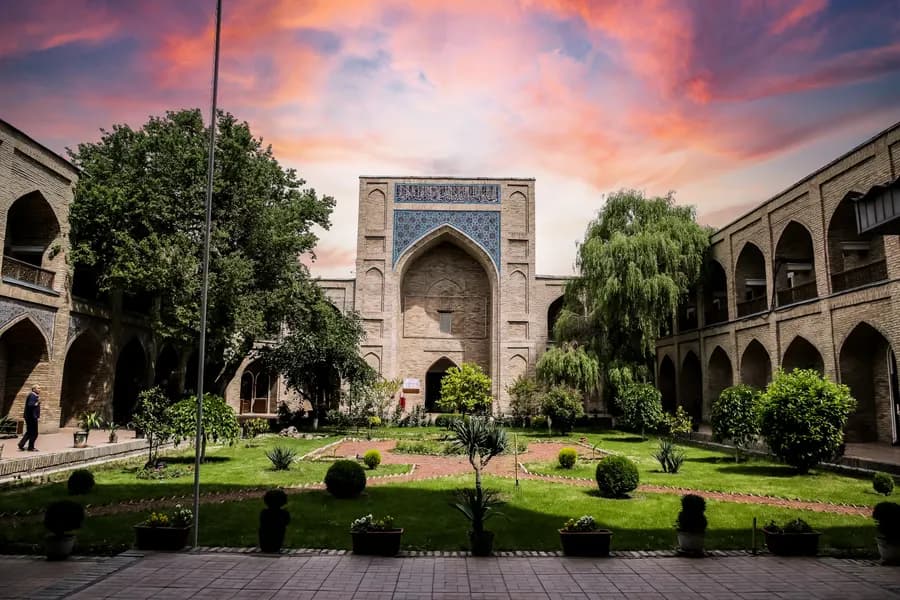
Kukeldash Madrasah anchors the walk beside Chorsu with a 16th-century portal, a quiet courtyard, tiled detail, and a functioning religious setting to approach with care.
View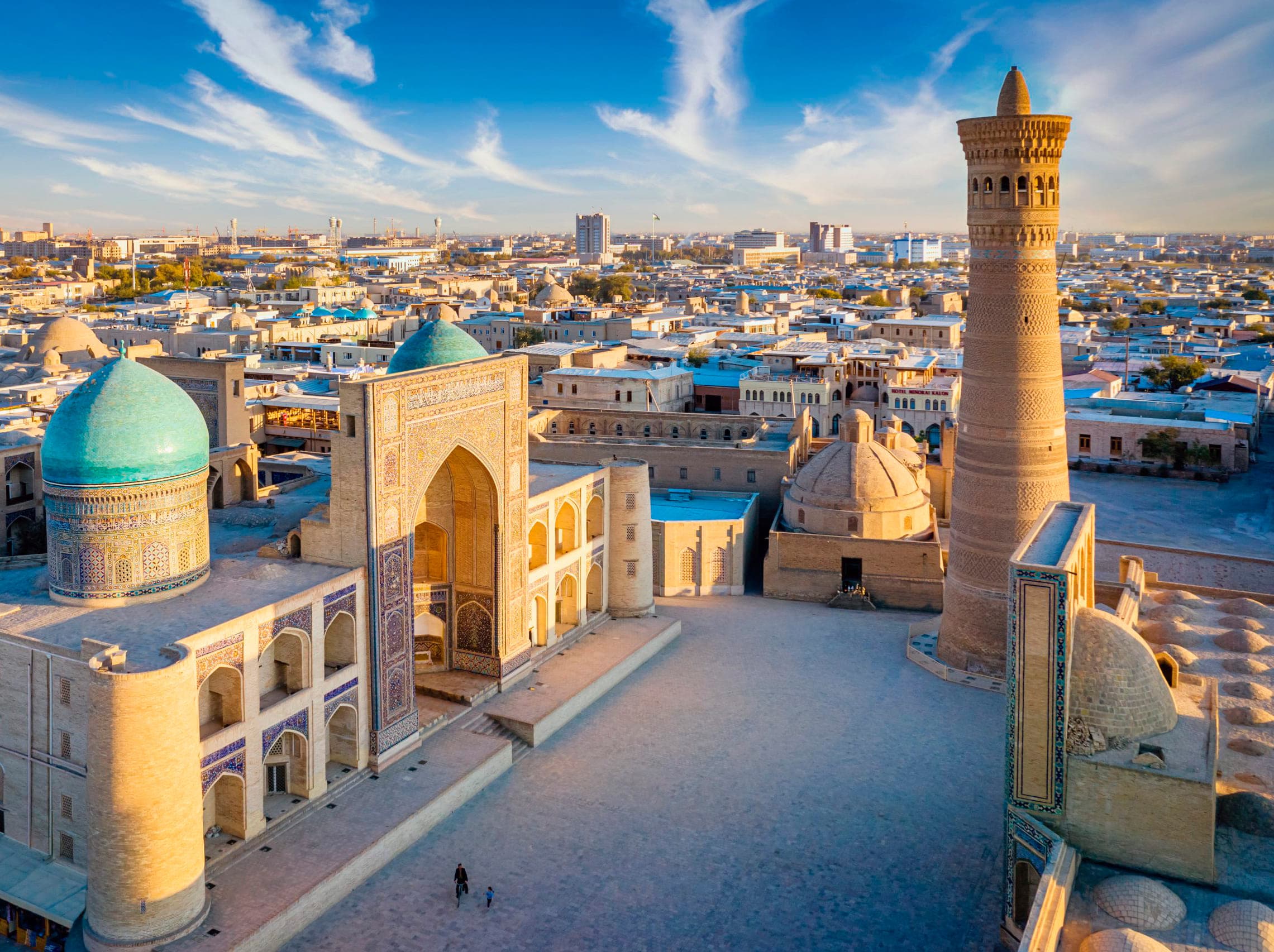
Sheikhantaur Ensemble brings together three preserved mausoleums, Sufi memory and a calmer old-city stop near Chorsu, Kukeldash and Khast Imam.
ViewPlace in detail
Timing, best hours, and how this stop fits neighbouring pins.
45–90 minutes is a practical range for most groups. Keep the stop readable: one clear arrival, one clear exit. Place tone: “Pilgrimage memory and craft life near Chorsu”.
Prefer before the midday heat. That usually improves comfort, photos, and how the stop feels in the sequence around tashkent.
Treat it as one clear pin on the map: arrive intentionally, avoid sandwiching it between two rushed monuments, and keep the next move short enough that the group still has energy.
On request
We help agencies place this stop with realistic timing — without rushing the places that matter.