
TourLink
A merchant house, carved wood, and Bukhara in the early 20th century
About
Fayzulla Khodjaev House-Museum shows another side of Bukhara: a merchant family house with courtyards, painted rooms, carved wood, porcelain, clothing, and the public story of Fayzulla Khodjaev.
After the minarets, domes, and citadel walls, the route enters rooms.
Keep this stop clear on the map and in the day plan — A merchant house, carved wood, and Bukhara in the early 20th century.
Agencies and travellers who need Fayzulla Khodjaev House-Museum as a readable stop — honest timing and a clear place on the route.
On the map
One clear point for Fayzulla Khodjaev House-Museum — A merchant house, carved wood, and Bukhara in the early 20th century.
Place
The map pin marks this attraction so the stop stays readable in the day plan.
Why this place
After the minarets, domes, and citadel walls, the route enters rooms. Painted ceilings, carved timber, household objects, and family biography make old Bukhara more than a sequence of public monuments. «Old Bukhara also lives in rooms, objects, and family stories.»
What you will see
Start with courtyards and painted rooms, then look at the objects that connect the house to merchant life: clothing, tableware, instruments, and kitchen displays.
How to visit
The visit works best when the rooms stay connected to the people who used them: how the house was arranged, what the objects say about domestic life, and how Fayzulla Khodjaev's biography connects the house decoration with early-20th-century history.
What to add nearby
Nearby, Lyabi-Hauz keeps the social center of old Bukhara, Magoki-Attori adds the older mosque portal, the Trading Domes keep the craft and bazaar walk moving, and the Ark brings the route back to city power and museum rooms.
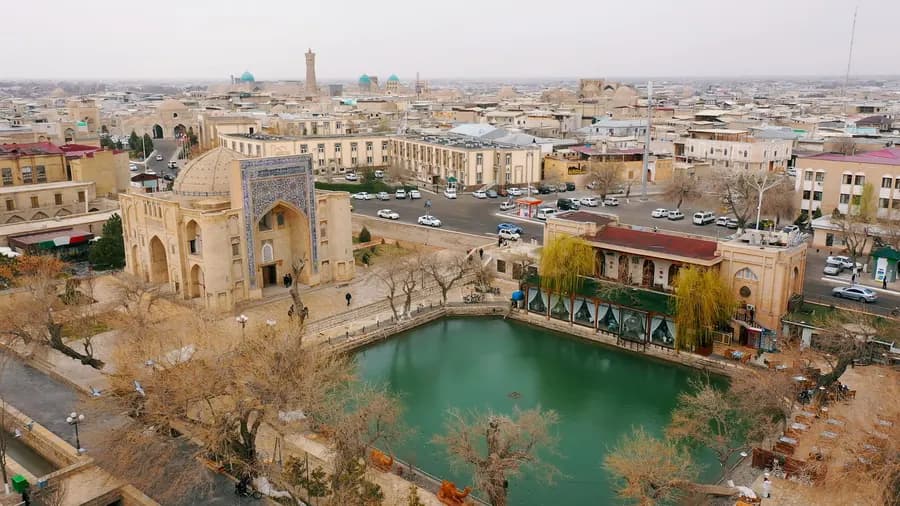
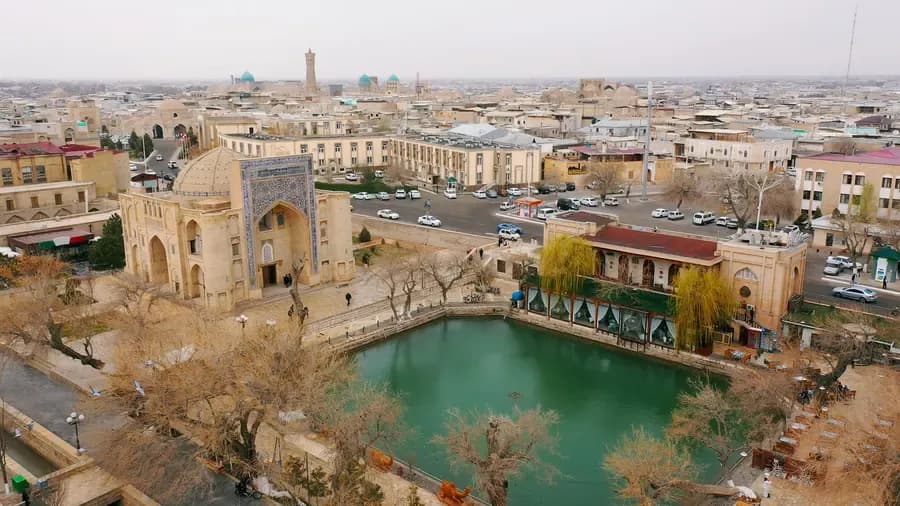
Water, tea, madrasahs, trees, and nearby lanes make Lyabi-Hauz the calm center of a Bukhara walk.
View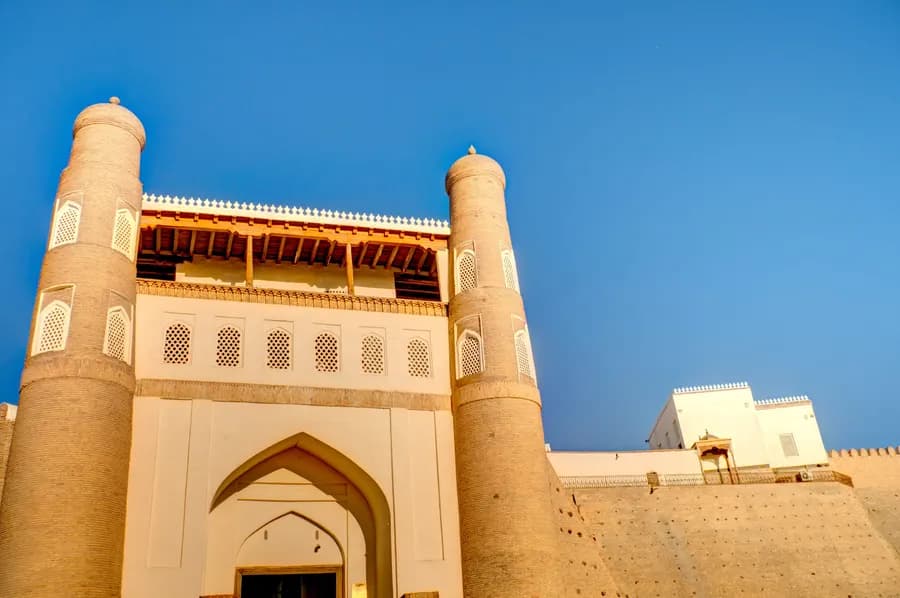
Fortress walls, museum rooms, a raised entrance, and Bolo-Hauz nearby show Bukhara's ruling side at the edge of the old city.
View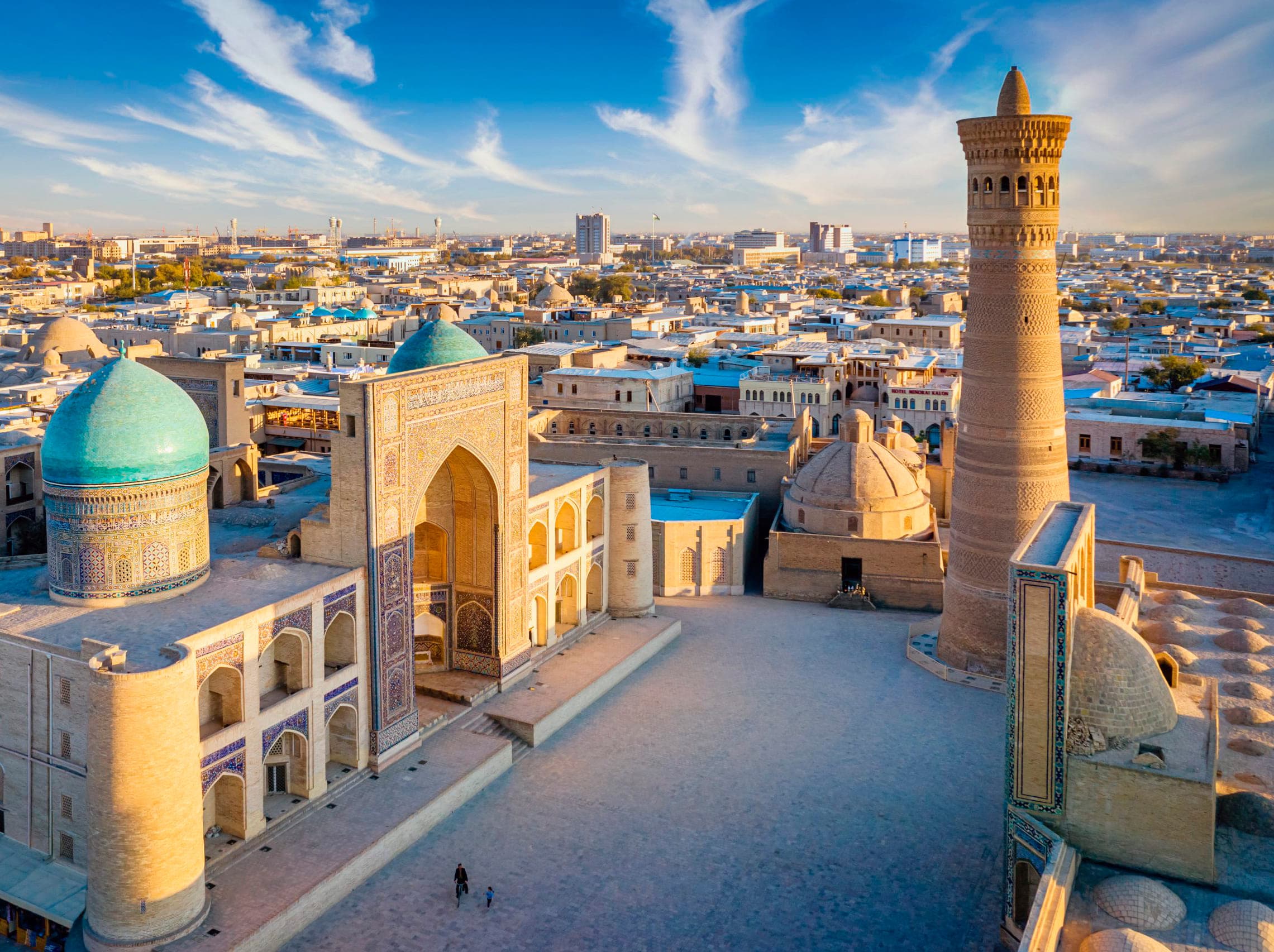
A compact mosque near Lyabi-Hauz, with a lower portal, carved brick, blue detail, and the old bazaar context around it.
ViewCovered brick passages, shops, textiles, copperwork, and bargaining keep the old city tied to Bukhara's trading life.
ViewPlace in detail
Timing, best hours, and how this stop fits neighbouring pins.
1–2 hours is a practical range for most groups. Plan ticket timing and indoor pacing. Place tone: “A merchant house, carved wood, and Bukhara in the early 20th century”.
Prefer when the light is soft and queues are lighter. That usually improves comfort, photos, and how the stop feels in the sequence around bukhara.
Treat it as one clear pin on the map: arrive intentionally, avoid sandwiching it between two rushed monuments, and keep the next move short enough that the group still has energy.
On request
We help agencies place this stop with realistic timing — without rushing the places that matter.