TourLink
About
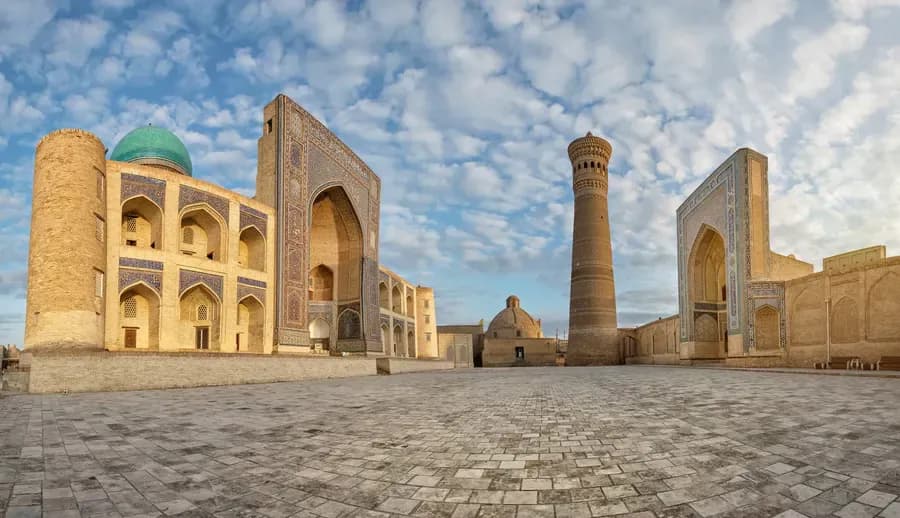
For travelers, Bukhara region starts in the old city: Lyabi-Hauz, the trading domes, Poi-Kalyan, and the Ark sit close enough for a first day on foot.
The old city makes distances feel short, but Bukhara region is broader than the first walk. Poi-Kalyan, the Ark, and Lyabi-Hauz belong in one old-city route; craft, palace, ziyorat sites, archaeology, nature, Kagan rail arrival, or the road west work better as a deliberate next choice.
Keep the old city as its own walk, then choose the continuation that fits the route: craft, palace, ziyorat, archaeology, museum context, nature, rail arrival through Kagan, or the road west.
Agencies and travellers who need Bukhara as a readable stop — strong places, honest pacing, and logistics that hold.
Getting around
The old city makes distances feel short, but Bukhara region is broader than the first walk. Poi-Kalyan, the Ark, and Lyabi-Hauz belong in one old-city route; craft, palace, ziyorat sites, archaeology, nature, Kagan rail arrival, or the road west work better as a deliberate next choice.
Route choice
Keep the old city as its own walk, then choose the continuation that fits the route: craft, palace, ziyorat, archaeology, museum context, nature, rail arrival through Kagan, or the road west.
A hotel near the historic center keeps the first walk simple and makes returns for tea, lunch, or an evening pass through the lanes easier.
Route cities
The map holds the old-city core first — Lyabi-Hauz, Poi-Kalyan, the Ark — then Gijduvan and outer stops that turn Bukhara into a regional day or the road west to Khiva.
Region character
The strongest Bukhara route lets the old center settle first, then uses craft, palace, pilgrimage, archaeology, nature, and rail-gateway stops to show why the region is larger than the city walls. «Bukhara region is clearer when the old city becomes the starting point, not a substitute for the whole route.»
Where to start
Start with Bukhara's old city. Gijduvan adds ceramics, family workshops, and the first pir on the Seven Pirs road; Vabkent, Romitan-area ziyorat, Kagan, and other outer points make the route wider than one city.
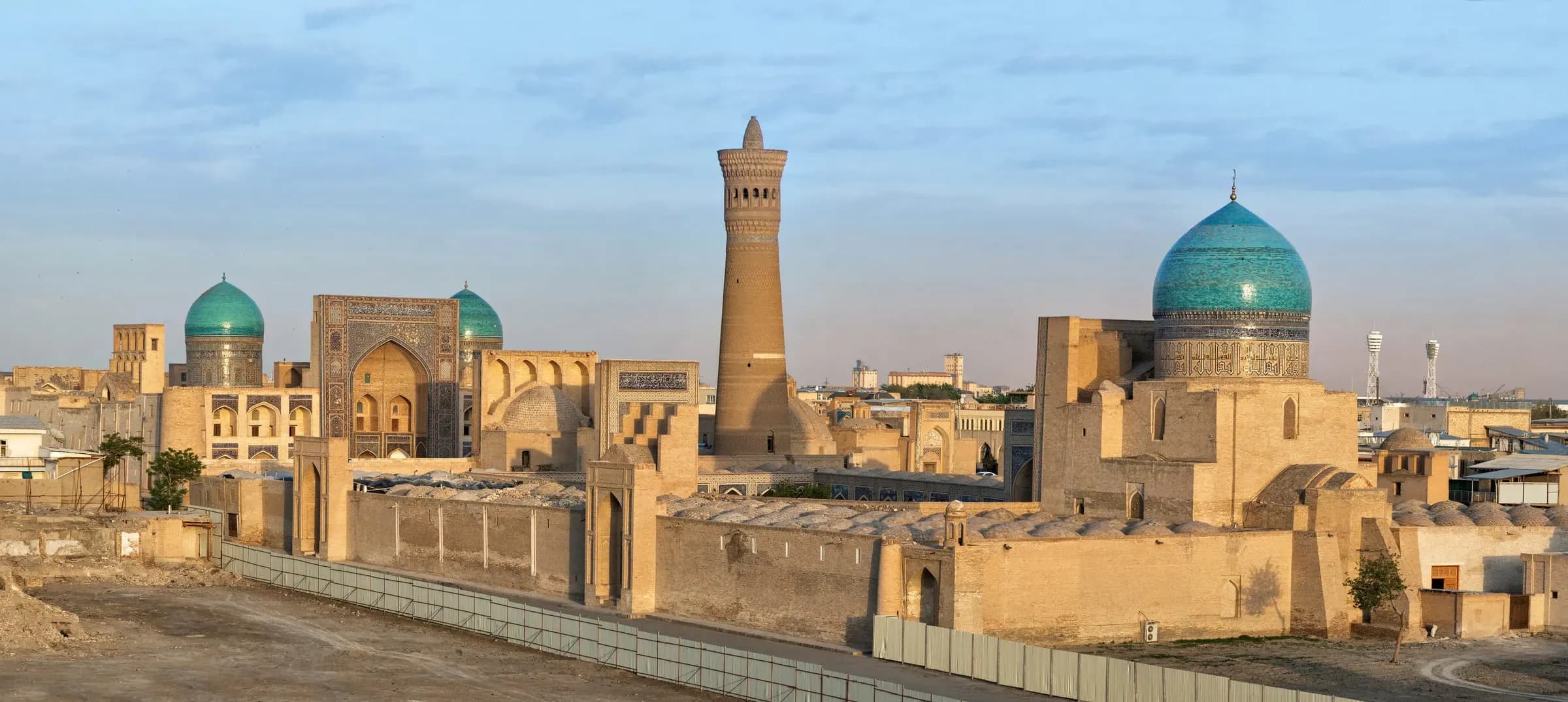
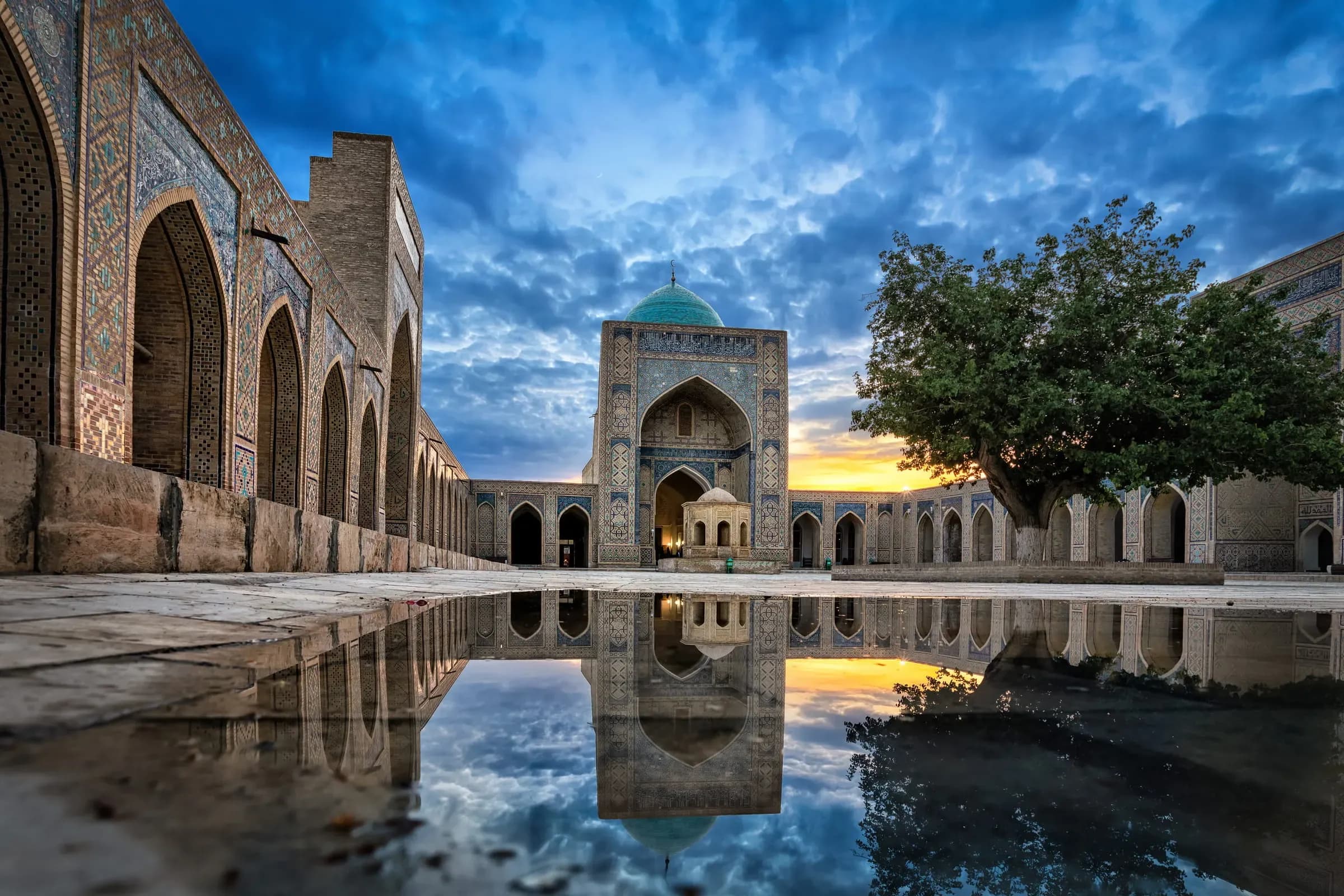
Bukhara does not open from one square. The old center comes together through short transitions: a shaded trading dome, a carved doorway, tea beside Lyabi-Hauz, then the sudden vertical line of Kalyan Minaret above the lanes.
Open place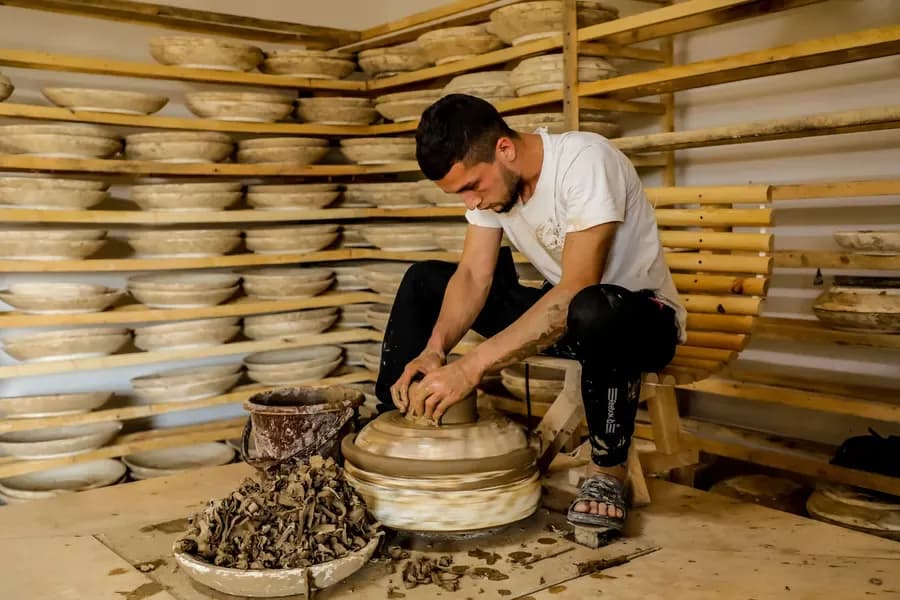
On the road from Bukhara, Gijduvan shifts the day from old-city monuments to clay, pattern, and the hands that make them. The visit centers on ceramics, with Abdulkhalik Gijduvani added when the route also follows the Seven Pirs story.
Open placeWhat to see
Poi-Kalyan, the Ark, and Lyabi-Hauz shape the first old-city walk. The Samanid Mausoleum, Chashma-Ayub, Bolo-Hauz, Magoki-Attori, Chor Minor, madrasahs, trading domes, museum houses, and the museum-preserve deepen the city day; Sitorai Mokhi-Khosa, Bahauddin Naqshband, Chor-Bakr, Gijduvan, Vabkent, Varakhsha, Paikend, and Jeyran carry the route beyond the compact center.
At this compact 10th-century tomb, Bukhara's early Islamic architecture comes through in the brickwork, the balanced cube-and-dome form, and the calm park setting around it.
Open place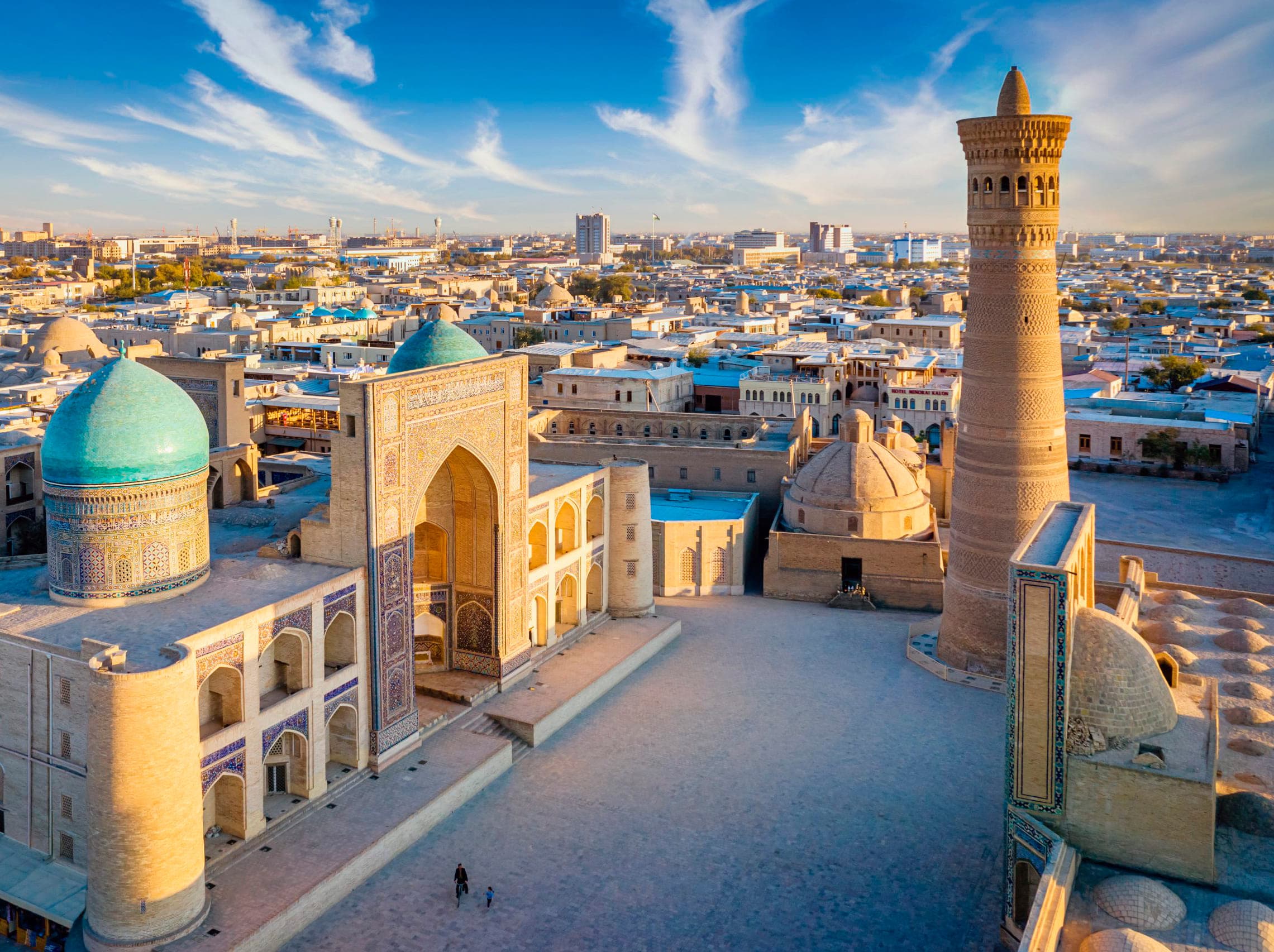
This is the Gijduvan stop where the day moves from craft to pilgrimage memory: a memorial courtyard, the mausoleum, and the start of the Seven Pirs route before the road turns back toward Bukhara.
Open place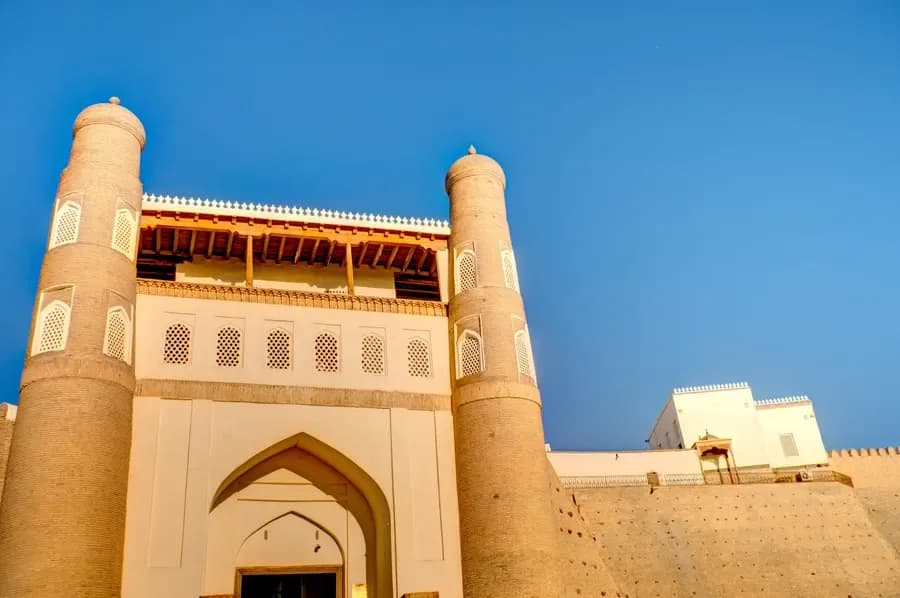
Bukhara State Art-Architectural Museum-Preserve is a museum system, not a single monument. The Ark gives it the clearest public address; the branches continue the story through palace rooms, a merchant house, fine-art galleries, documents, coins, textiles, books, and objects from
Open place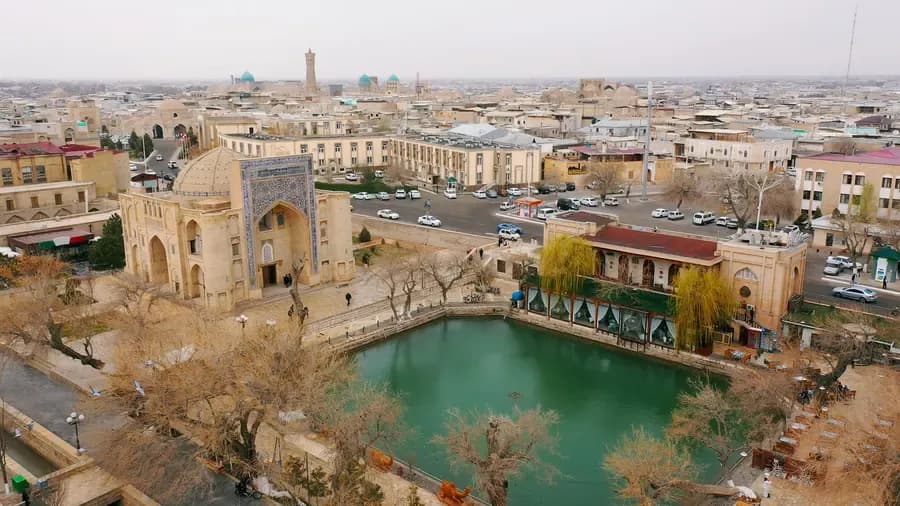
Fayzulla Khodjaev House-Museum shows another side of Bukhara: a merchant family house with courtyards, painted rooms, carved wood, porcelain, clothing, and the public story of Fayzulla Khodjaev.
Open place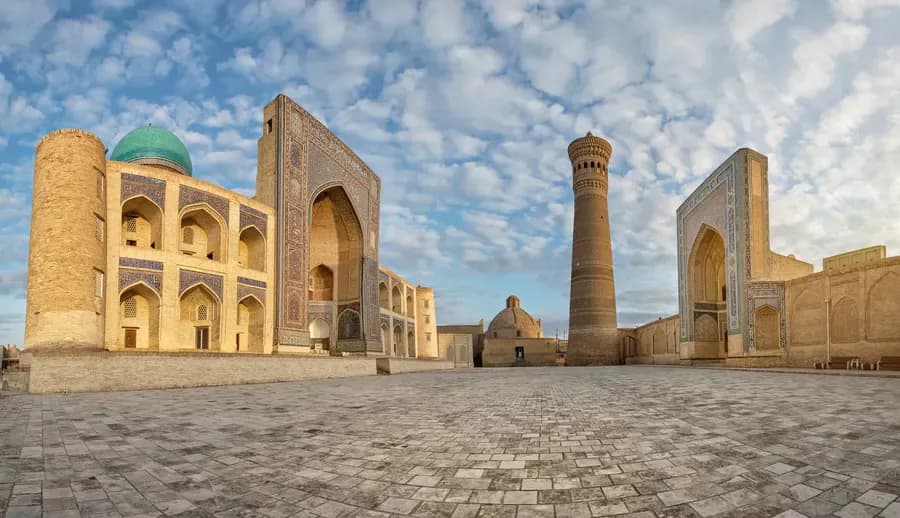
Abdulaziz Khan Madrasah stands opposite Ulugbek Madrasah, so the two monuments are best seen together. One belongs to the Timurid tradition of learning; the other shows 17th-century Bukhara through a painted portal, carved detail, and the lived street beside the trading domes.
Open place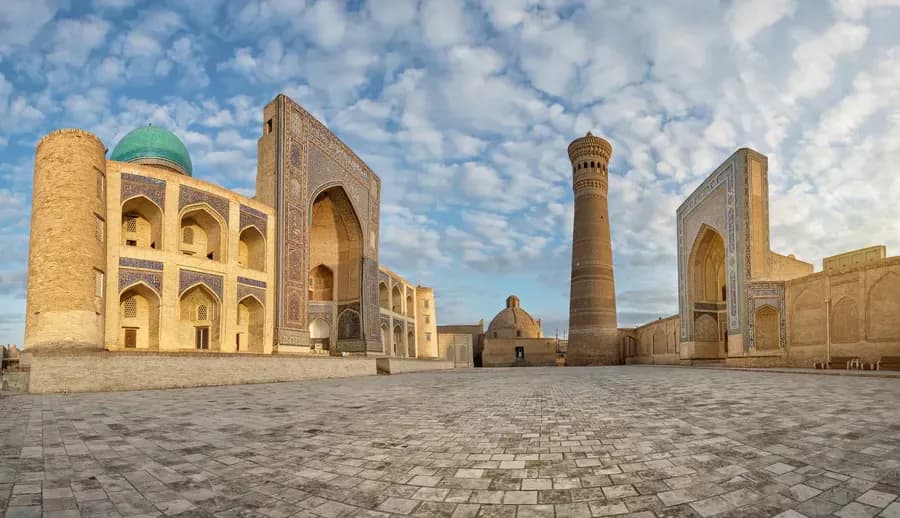
In Bukhara, Ulugbek Madrasah slows the old-city walk after the trading domes. The courtyard, portal, surviving tilework, and Mirzo Ulugbek's name bring the route from bazaar movement toward the city's history of study.
Open placeRoute shapes
Bukhara can be the calm midpoint between Samarkand and Khiva when the route starts with the old city and chooses one or two continuations by meaning: Gijduvan, Vabkent, Seven Pirs, palace, necropolis, archaeology, nature, or the road to Khorezm.
Region in detail
Pace, season, and how this region connects to the next stop.
2–3 days usually works if you keep one strong core and treat outer stops as deliberate choices. The region brief is “Old city, craft towns, and the road to Khiva”.
Use neighbouring cities as clean handovers: arrive with a calm first night, leave after one completed chapter, and avoid stacking two long transfers on the same day.
Heat, altitude, road condition, and opening hours change the product more than the brochure list. Build the region around what stays comfortable for the group that week.
On request
We help agencies set a realistic pace and choose the right extensions — without rushing the places that matter.