
TourLink
About
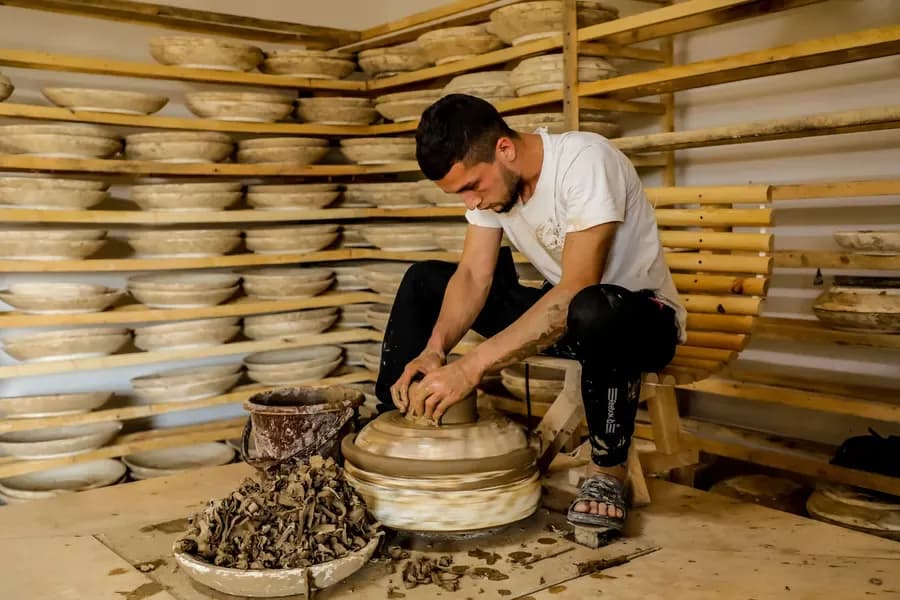
On the road from Bukhara, Gijduvan shifts the day from old-city monuments to clay, pattern, and the hands that make them.
Gijduvan is close enough for a half-day outing from Bukhara. The route feels clearer when the road, the workshop, the ceramic school, and Abdulkhalik Gijduvani are not squeezed into a single quick stop.
The main theme here is ceramics: the wheel, shelves, painted bowls, and the people who keep the Gijduvan school visible near Bukhara. The memorial complex belongs when the day also follows the Seven Pirs road.
Agencies and travellers who need Gijduvan as a readable stop — strong places, honest pacing, and logistics that hold.
How the visit fits
Gijduvan is close enough for a half-day outing from Bukhara. The route feels clearer when the road, the workshop, the ceramic school, and Abdulkhalik Gijduvani are not squeezed into a single quick stop.
Route order
The main theme here is ceramics: the wheel, shelves, painted bowls, and the people who keep the Gijduvan school visible near Bukhara. The memorial complex belongs when the day also follows the Seven Pirs road.
Gijduvan sits roughly 45 kilometers from Bukhara. After the old city, the short drive brings the day toward workshops, local streets, and a calmer return to the route.
On the map
The map keeps Gijduvan as its own town stop: ceramics in the center of the visit, with Abdulkhalik Gijduvani nearby for the Seven Pirs road.
What to see
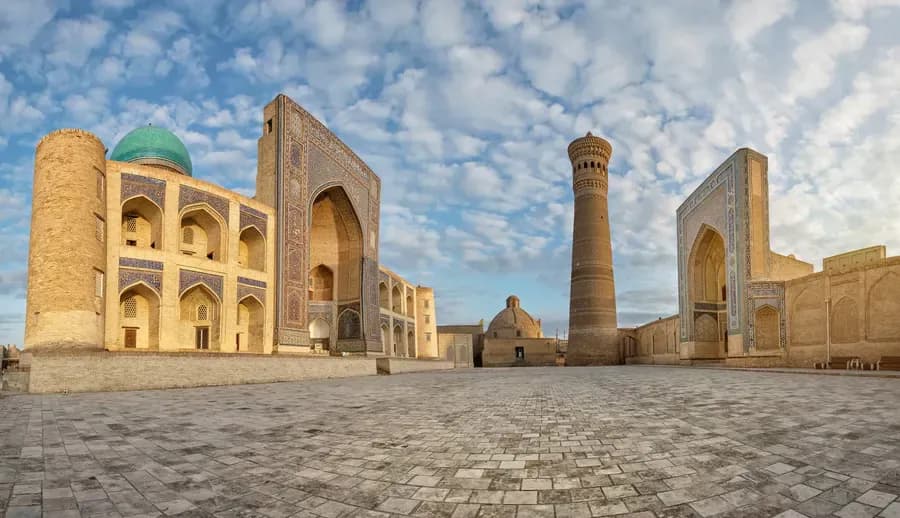
The ceramics museum and craft center show Gijduvan's craft identity; Abdulkhalik Gijduvani Memorial Complex connects the town with the beginning of the Seven Pirs road.
On the road from Bukhara, the museum turns Gijduvan ceramics from a finished souvenir into a process: family rooms, a working wheel when available, shelves of painted bowls, and people who keep the local school active.
Open place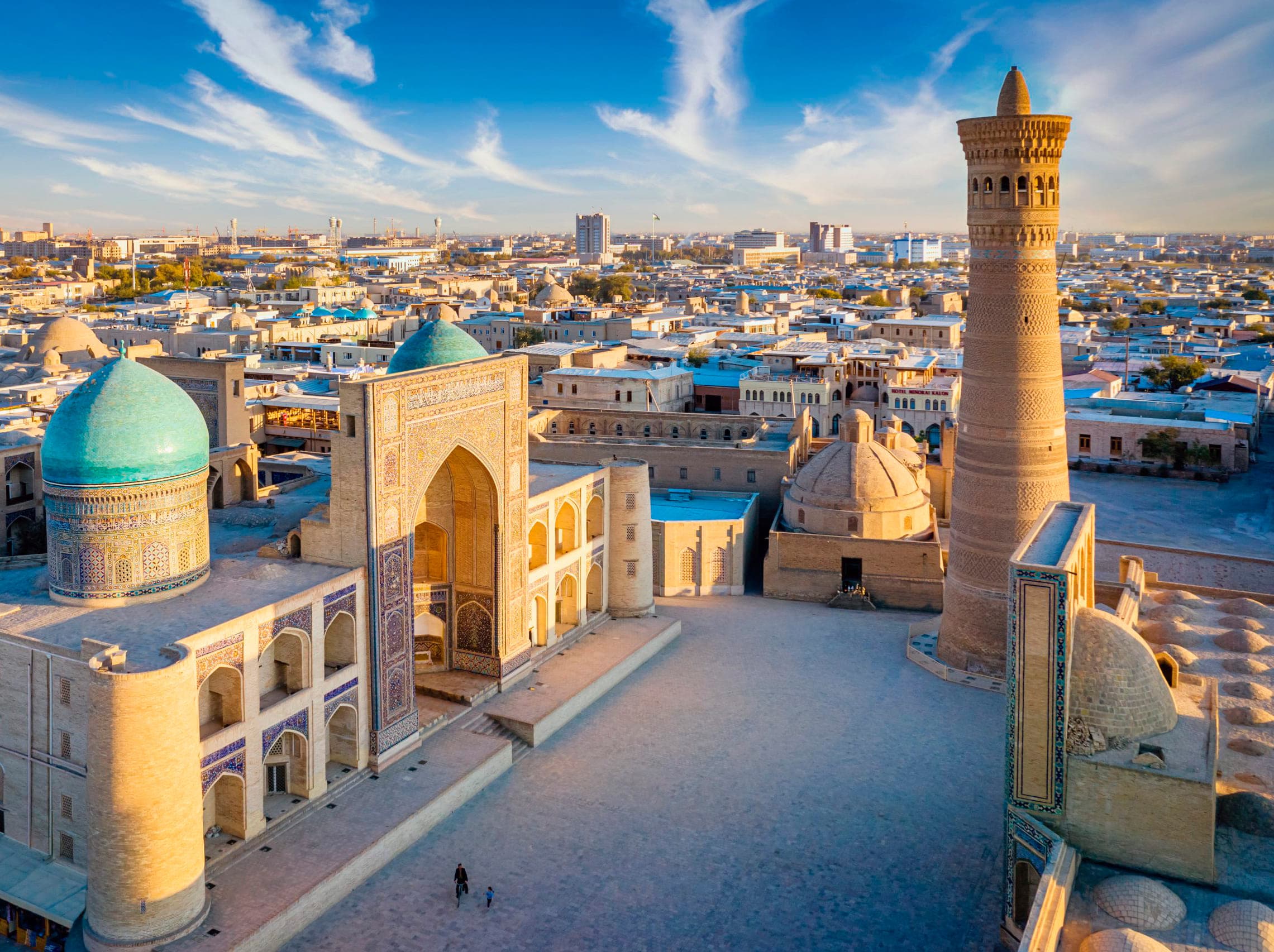
This is the Gijduvan stop where the day moves from craft to pilgrimage memory: a memorial courtyard, the mausoleum, and the start of the Seven Pirs route before the road turns back toward Bukhara.
Open placeWorkshop and courtyard
The moments that belong here are small and local: a wheel turning, a brush line, a shelf of bowls, tea after the workshop, and the quieter courtyard of Abdulkhalik Gijduvani.
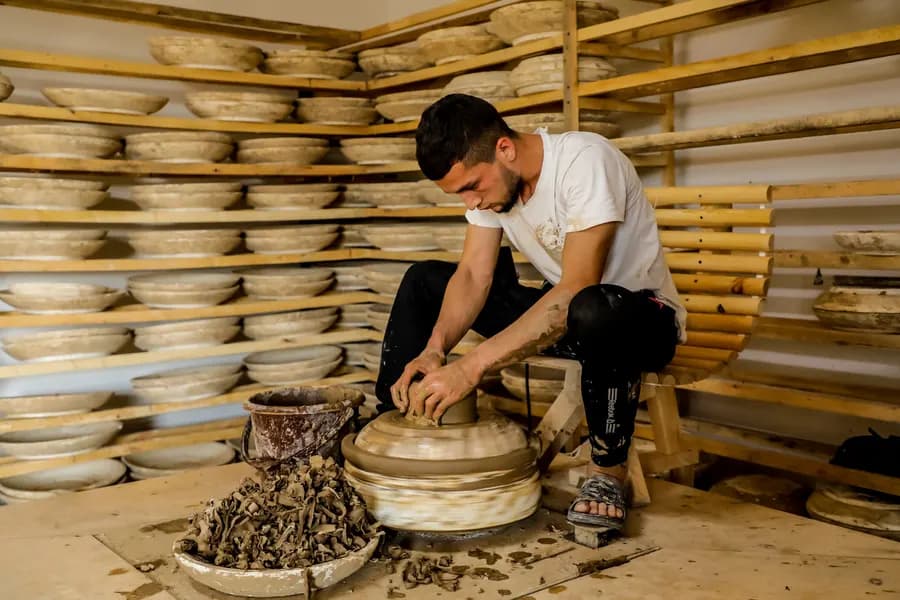
Clay rises on the wheel, glaze settles into the pattern, and the workshop shows Gijduvan ceramics in the making.
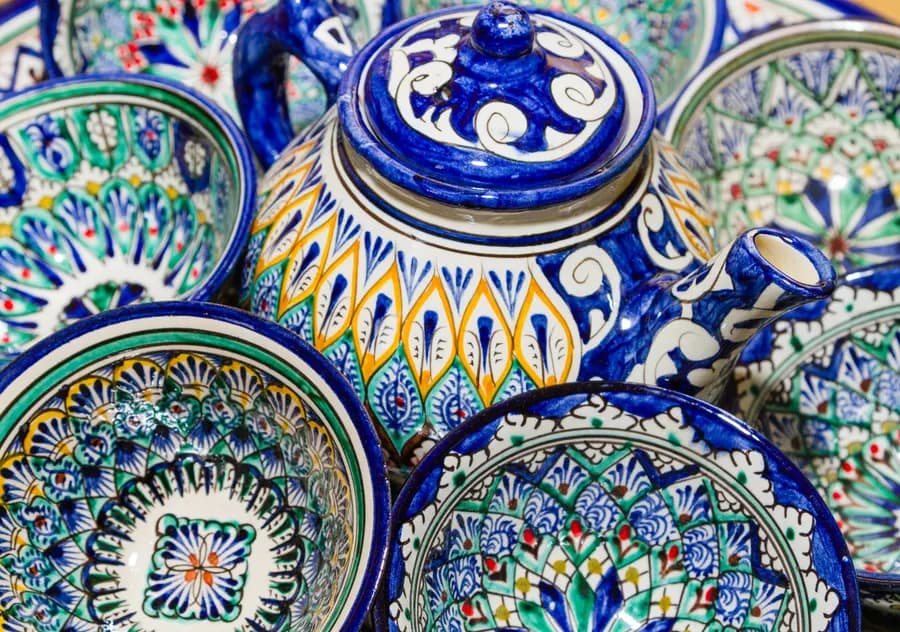
Brush lines, glaze, and shelves of unfired bowls show how the Gijduvan pattern takes shape before the kiln.
A quiet courtyard, low voices, and Abdulkhalik Gijduvani's memory give Gijduvan a first-pir stop before the Seven Pirs road continues.
Craft rhythm
The town is close to Bukhara, yet the visit works better with a clear order: ceramics first, then the memorial complex if the route follows the Seven Pirs road.
Ceramics are the first reason to stop here: wheel, brush, shelf, bowl, and the family workshop behind them.
Gijduvan is clearest when the traveler sees clay on the wheel become a painted bowl.
Add Gijduvan after Bukhara's main places when the route needs time for a workshop, ceramics, and the people keeping the craft active.
Before leaving Bukhara, check whether the workshop is open, whether a demonstration is possible, and whether the route should include time for lunch or time with the makers.
Come for the process: clay at the wheel, a brush line, a finished bowl in the hand, and a quieter stop with Abdulkhalik Gijduvani when the Seven Pirs road is part of the day.
At a glance Where to start
From Bukhara city, usually by road as a half-day outing.
Main reason
Ceramics, the Narzullaev workshop setting, and painted bowls.
Time needed
Half day from Bukhara; longer if the memorial stop is included.
Season and tempo
Morning or cooler late afternoon, especially in warm months.
Back to Bukhara
Most routes return to Bukhara after Gijduvan, keeping the overnight stay, dinner, and next morning in the old city.
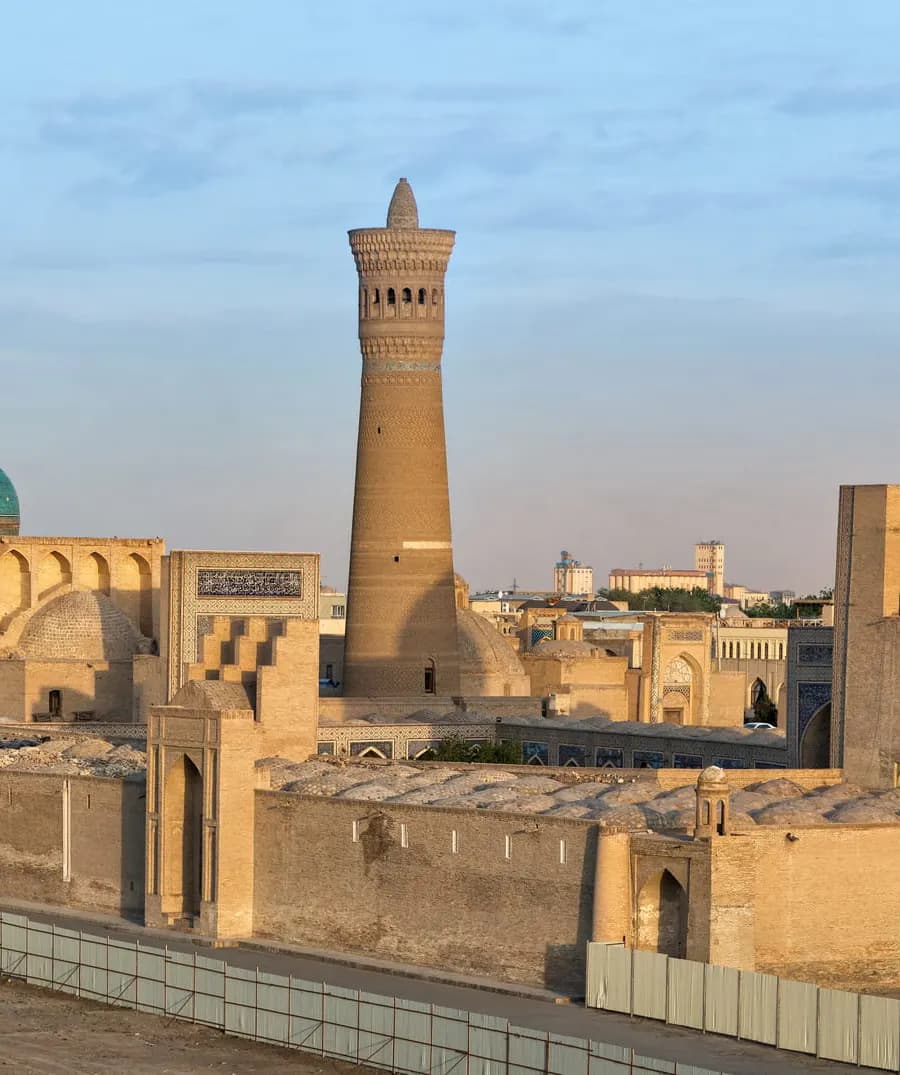
Bukhara comes together on foot: Poi-Kalyan, the Ark, Lyabi-Hauz, trading domes, courtyards, craft lanes, and nearby continuations.
ViewCity in detail
Walking time, overnight location, and when day trips make sense.
2–3 nights is usually enough when the old core or main anchors get a full walking window. City tone: “Ceramics, workshop rooms, and the Seven Pirs road”.
Start with the compact city walk first. Day trips only after the centre has settled — otherwise the stop feels like a transfer with monuments attached.
Stay close enough for an evening return on foot or a short transfer. That keeps tea, dinner, and a second pass through the lanes easy without burning the next morning.
On request
We help agencies set a realistic pace and choose the right next move — without rushing the places that matter.