
TourLink
About
Bukhara does not open from one square.
Bukhara feels compact when the hotel sits near the old city, but heat, shade, courtyards, and outer craft or pilgrimage stops still shape the day.
Lyabi-Hauz, Poi-Kalyan, the Ark, and the trading lanes can shape one old-city walk. Outer stops feel better after the city has had time to slow down.
Agencies and travellers who need Bukhara as a readable stop — strong places, honest pacing, and logistics that hold.
Getting around
Bukhara feels compact when the hotel sits near the old city, but heat, shade, courtyards, and outer craft or pilgrimage stops still shape the day.
Route rhythm
Lyabi-Hauz, Poi-Kalyan, the Ark, and the trading lanes can shape one old-city walk. Outer stops feel better after the city has had time to slow down.
A hotel close to the historic centre keeps shade, water, courtyards, and evening returns within reach instead of turning the day into transfers.
Old-city anchors
The map keeps the old-city places close before the day continues toward craft, palace, or pilgrimage context outside the center.
What to see
Poi-Kalyan, the Ark, and Lyabi-Hauz give the city three different entries: the minaret's height, citadel memory, and water with shaded tea tables. The walk then opens through the Samanid Mausoleum, Chashma-Ayub, Bolo-Hauz, Magoki-Attori, Chor Minor, madrasahs, trading domes, Fayzulla Khodjaev House-Museum, and the museum-preserve. With more time, Sitorai Mokhi-Khosa, Bahauddin Naqshband, and Chor-Bakr carry the day beyond the compact center.
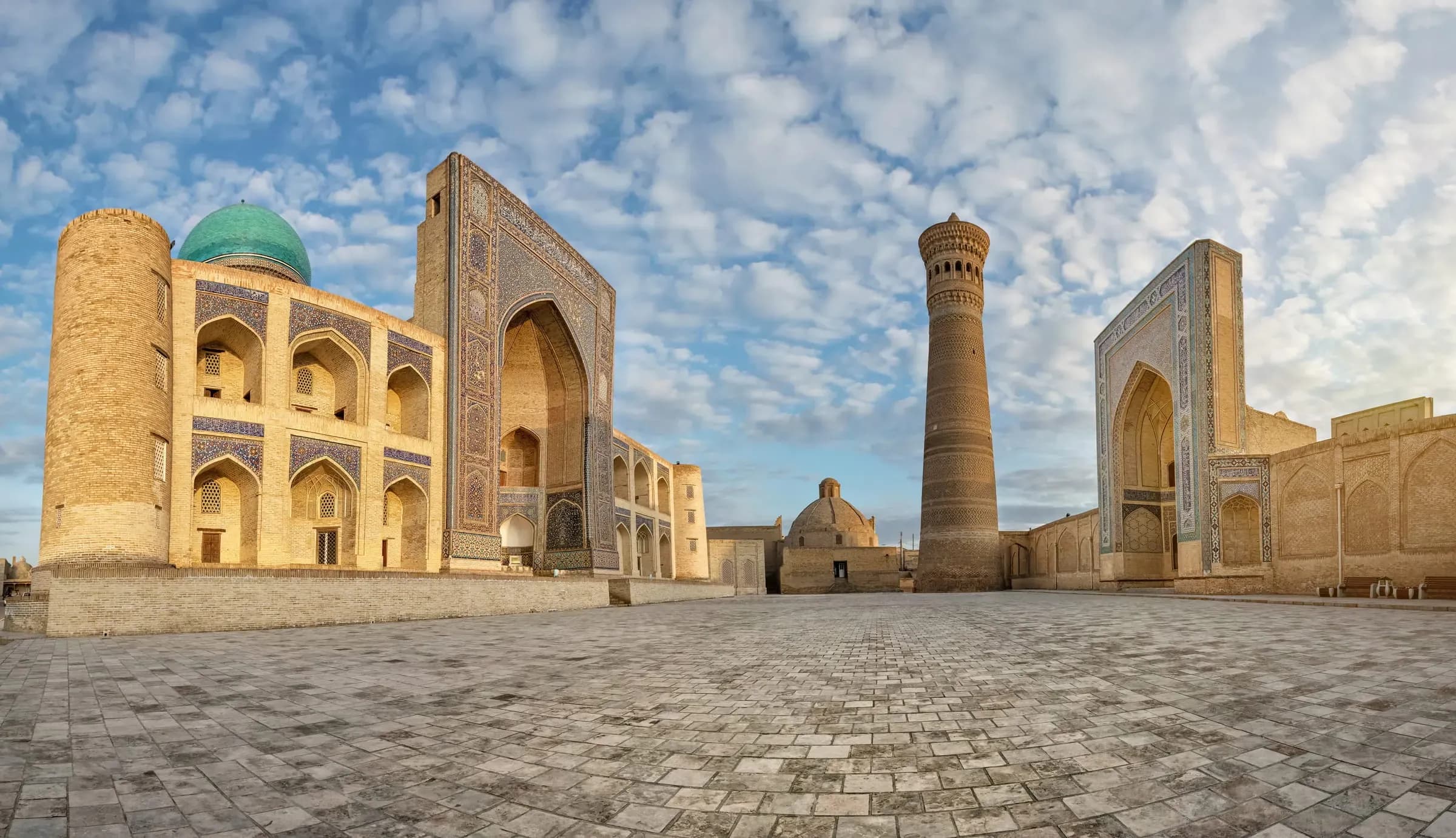
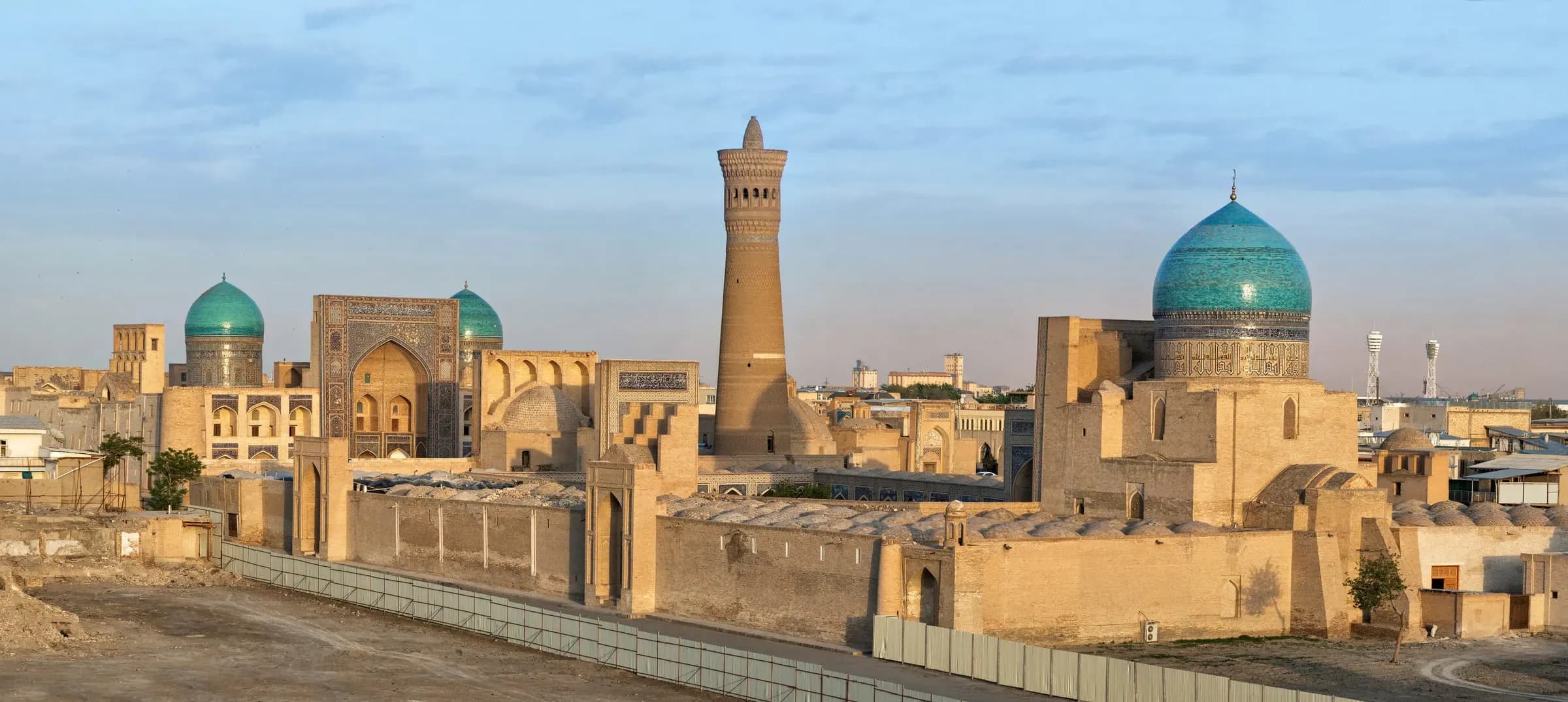
Poi-Kalyan changes Bukhara's scale at once: the Kalyan minaret rises above warm brick, Kalyan Mosque, and Miri-Arab Madrasah, while the old-city lanes stay close enough for the day to remain on foot.
Open place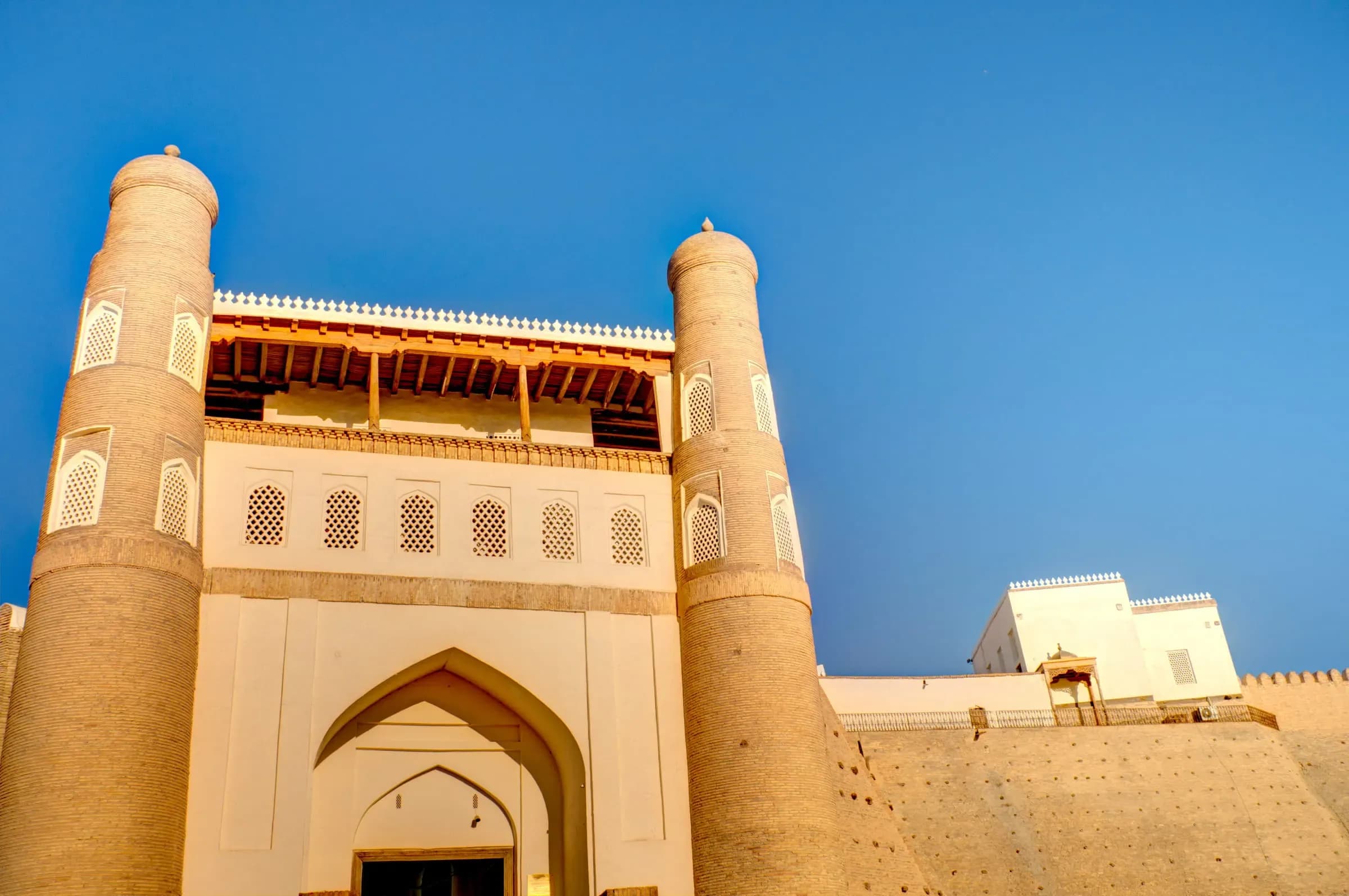
The Ark gives the Bukhara day a different kind of stop: massive walls, a raised entrance, interior rooms, and a clear look back toward the lanes you have just walked.
Open place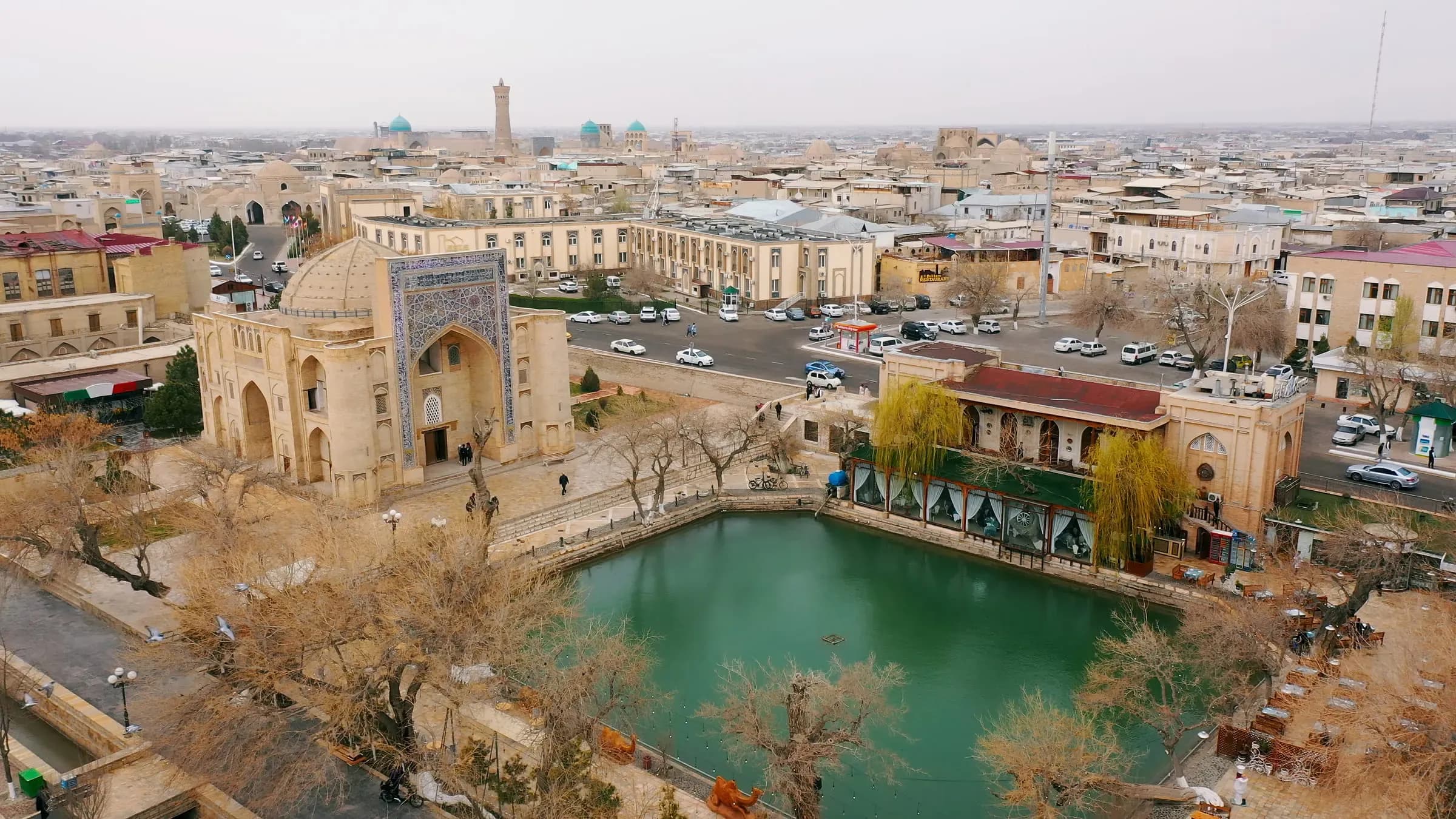
At Lyabi-Hauz, the old-city walk opens around the hauz: trees and tea tables by the water, Nadir Divan-Begi Madrasah and Khanaka, Kukeldash Madrasah nearby, and lanes leading back toward the trading passages.
Open place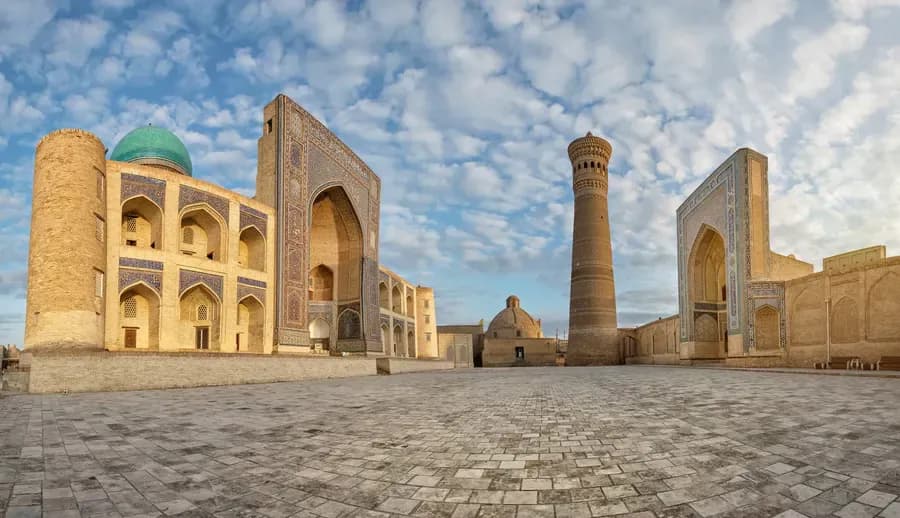
At this compact 10th-century tomb, Bukhara's early Islamic architecture comes through in the brickwork, the balanced cube-and-dome form, and the calm park setting around it.
Open place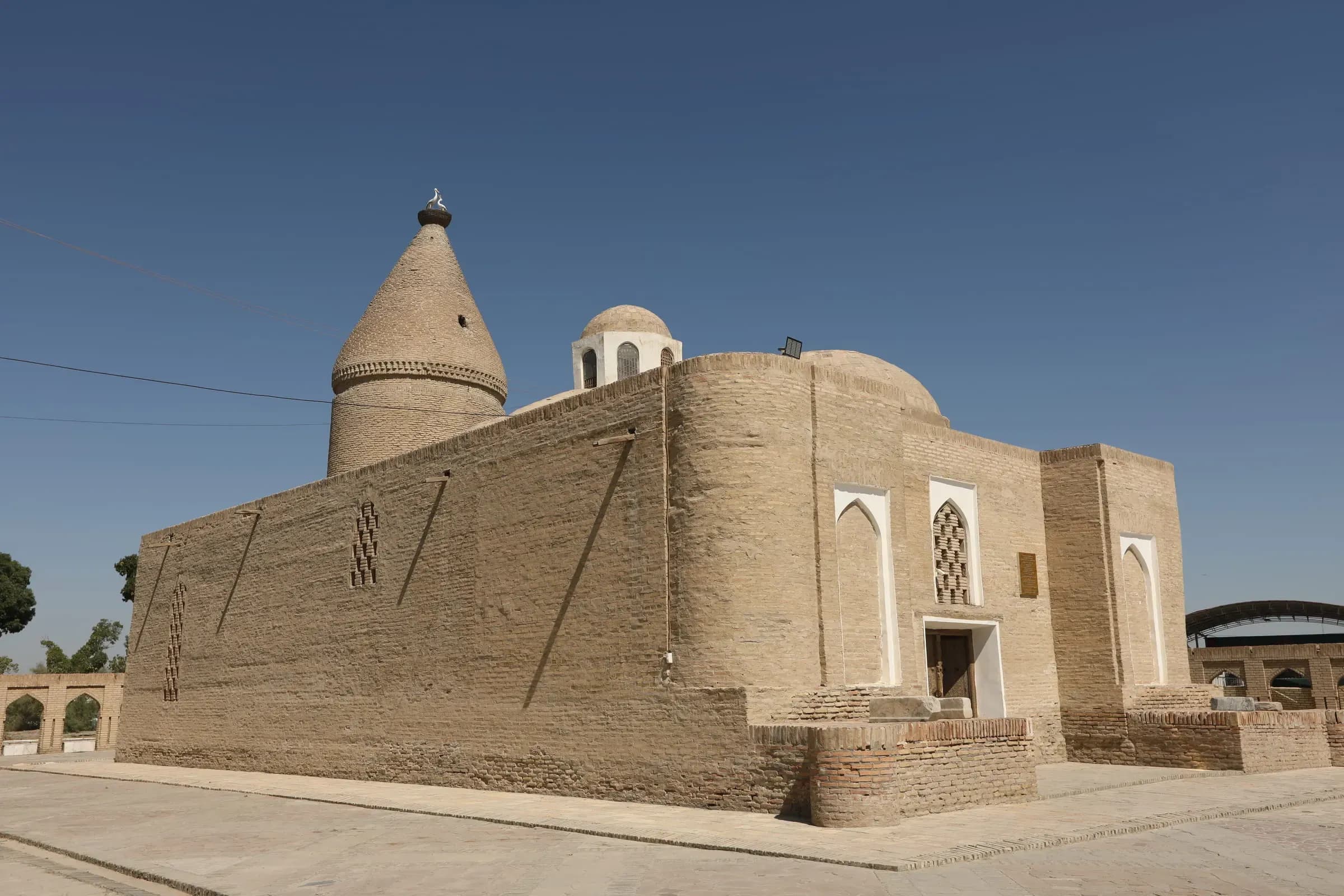
Near the Samanid Mausoleum, Chashma-Ayub shows another side of Bukhara: a spring associated with Job, a low shrine, trees, and a conical dome away from the larger ensembles.
Open place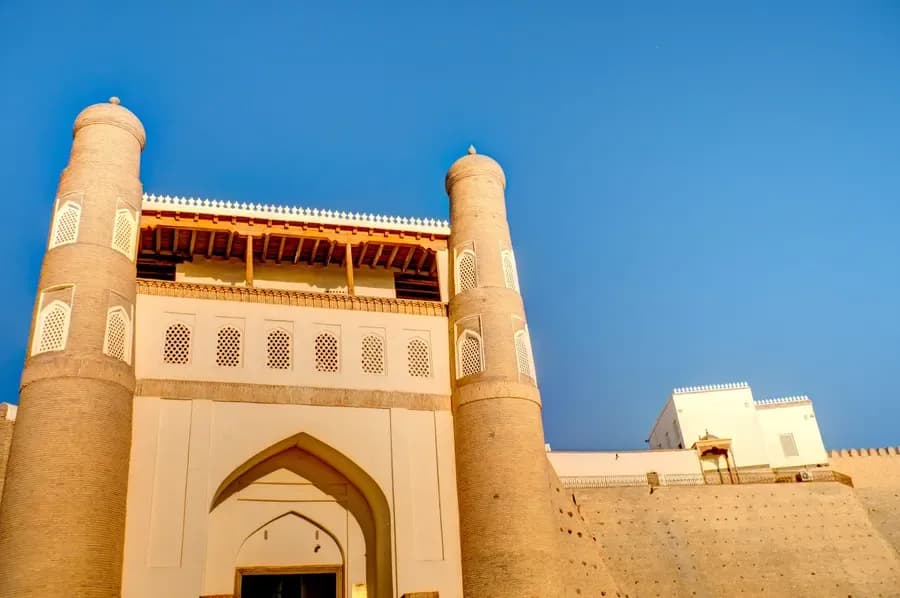
At Bolo-Hauz, the Ark is close, but the first detail is the hauz, the historic water basin in front of the mosque. Around it, the carved wooden iwan, mosque porch, and old Registan edge make a short, calm stop between the citadel and the western side of the old-city route.
Open place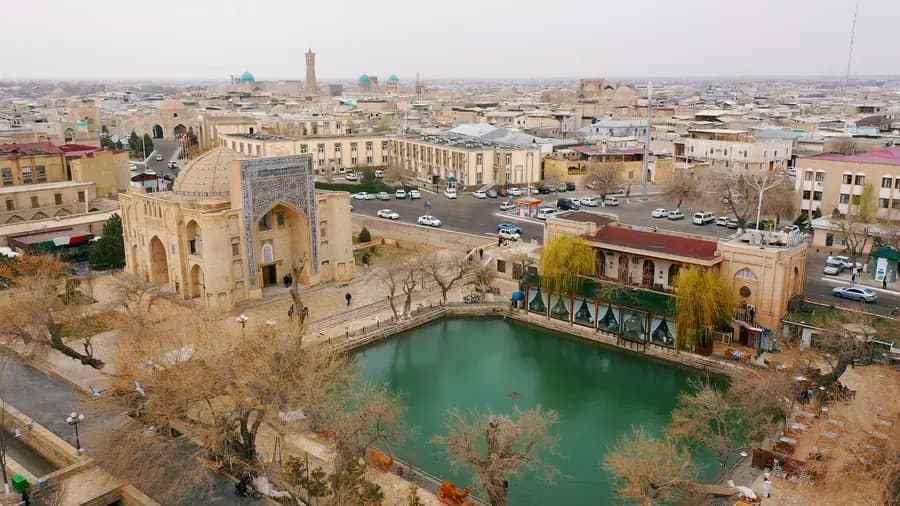
Magoki-Attori is a small but memorable pause near Lyabi-Hauz: an early mosque site where a carved lower portal, blue ornament, and the old Attoron bazaar story bring Bukhara's past closer to the walking route.
Open place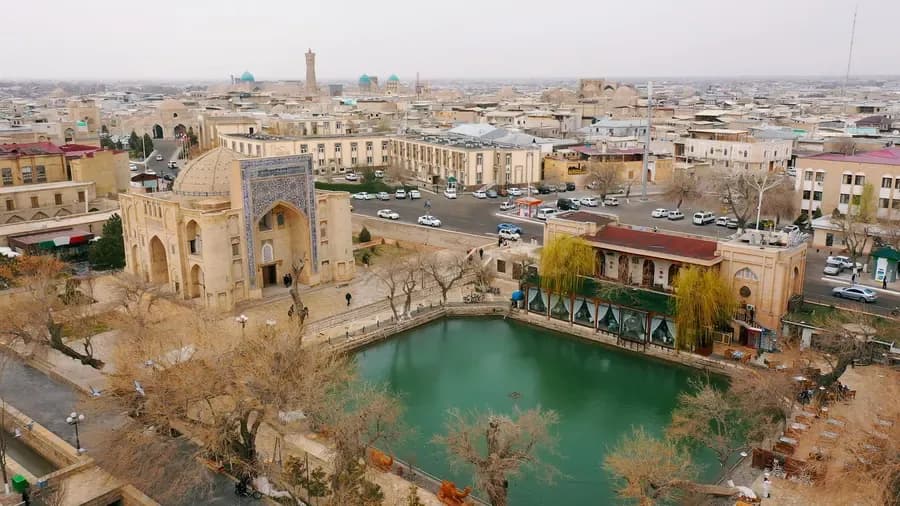
At Chor Minor, Bukhara shifts from big ensembles to a neighborhood lane. Four blue-domed towers rise above a compact gatehouse, while homes, doors, and everyday movement keep the monument close.
Open place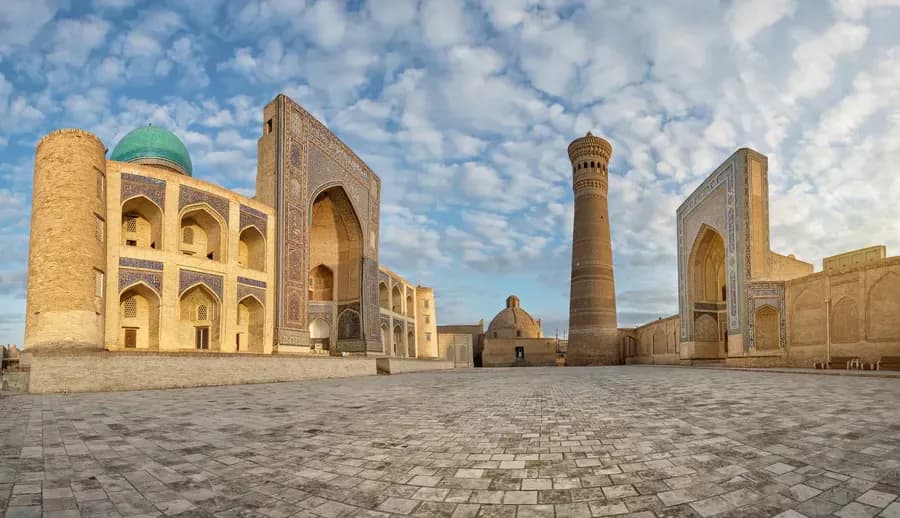
In Bukhara, Ulugbek Madrasah slows the old-city walk after the trading domes. The courtyard, portal, surviving tilework, and Mirzo Ulugbek's name bring the route from bazaar movement toward the city's history of study.
Open place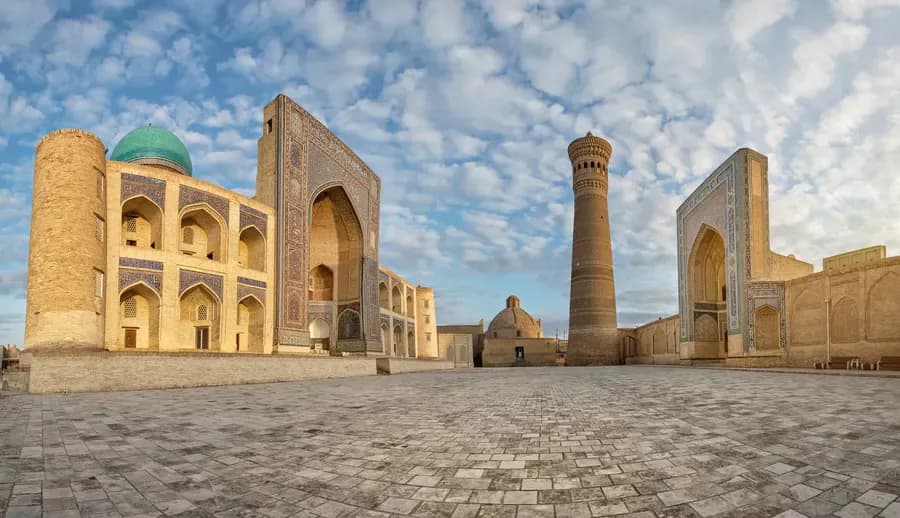
Abdulaziz Khan Madrasah stands opposite Ulugbek Madrasah, so the two monuments are best seen together. One belongs to the Timurid tradition of learning; the other shows 17th-century Bukhara through a painted portal, carved detail, and the lived street beside the trading domes.
Open place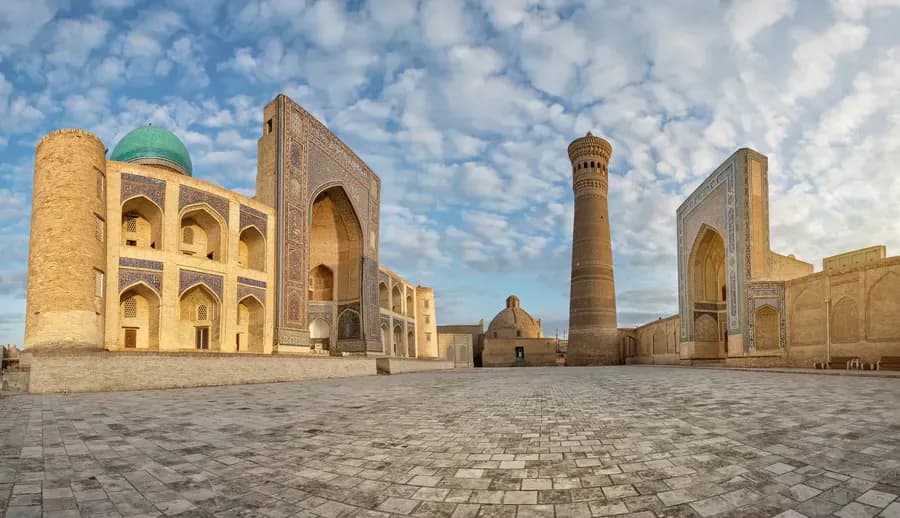
At the Trading Domes, the Bukhara walk passes through covered trade: brick vaults overhead, shopfronts at the sides, textiles, copperwork, ceramics, and bargaining at a slower pace.
Open place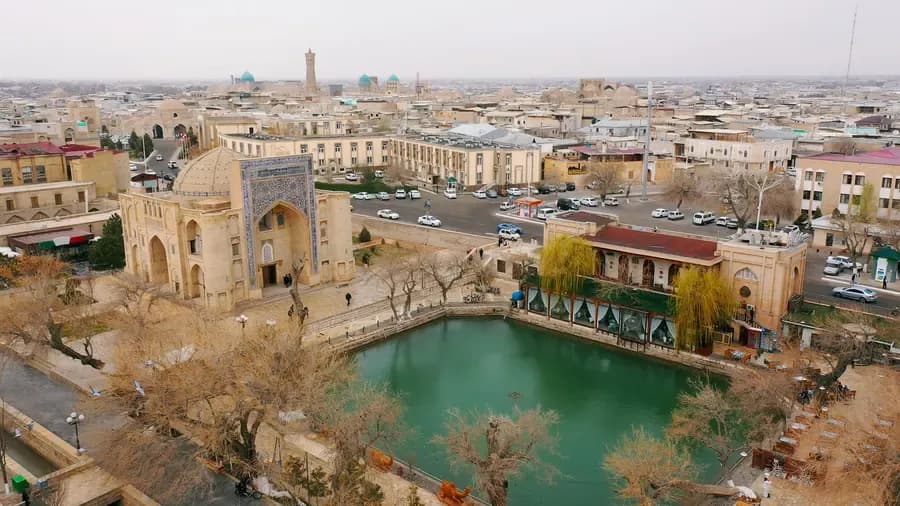
Fayzulla Khodjaev House-Museum shows another side of Bukhara: a merchant family house with courtyards, painted rooms, carved wood, porcelain, clothing, and the public story of Fayzulla Khodjaev.
Open placeCity rhythm
Bukhara's strongest moments are slow and close: tea beside water, brickwork in warm light, textiles under domes, and an evening return when the minaret becomes a marker in the lanes.
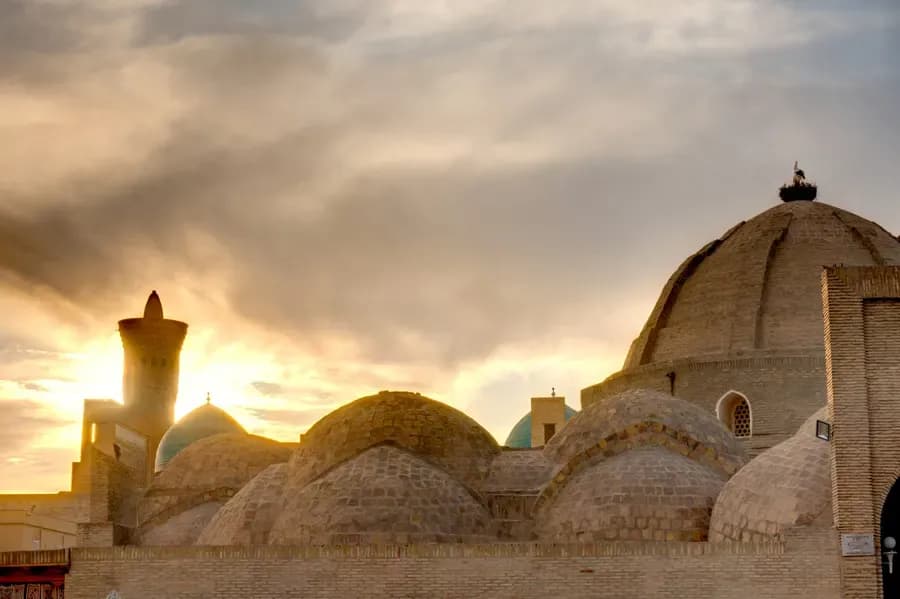
At the morning bazaar, flatbread, dried apricot, and spice sit in the same warm air. A vendor cuts a melon for you to taste, and later the city slows down over tea in a shaded courtyard.
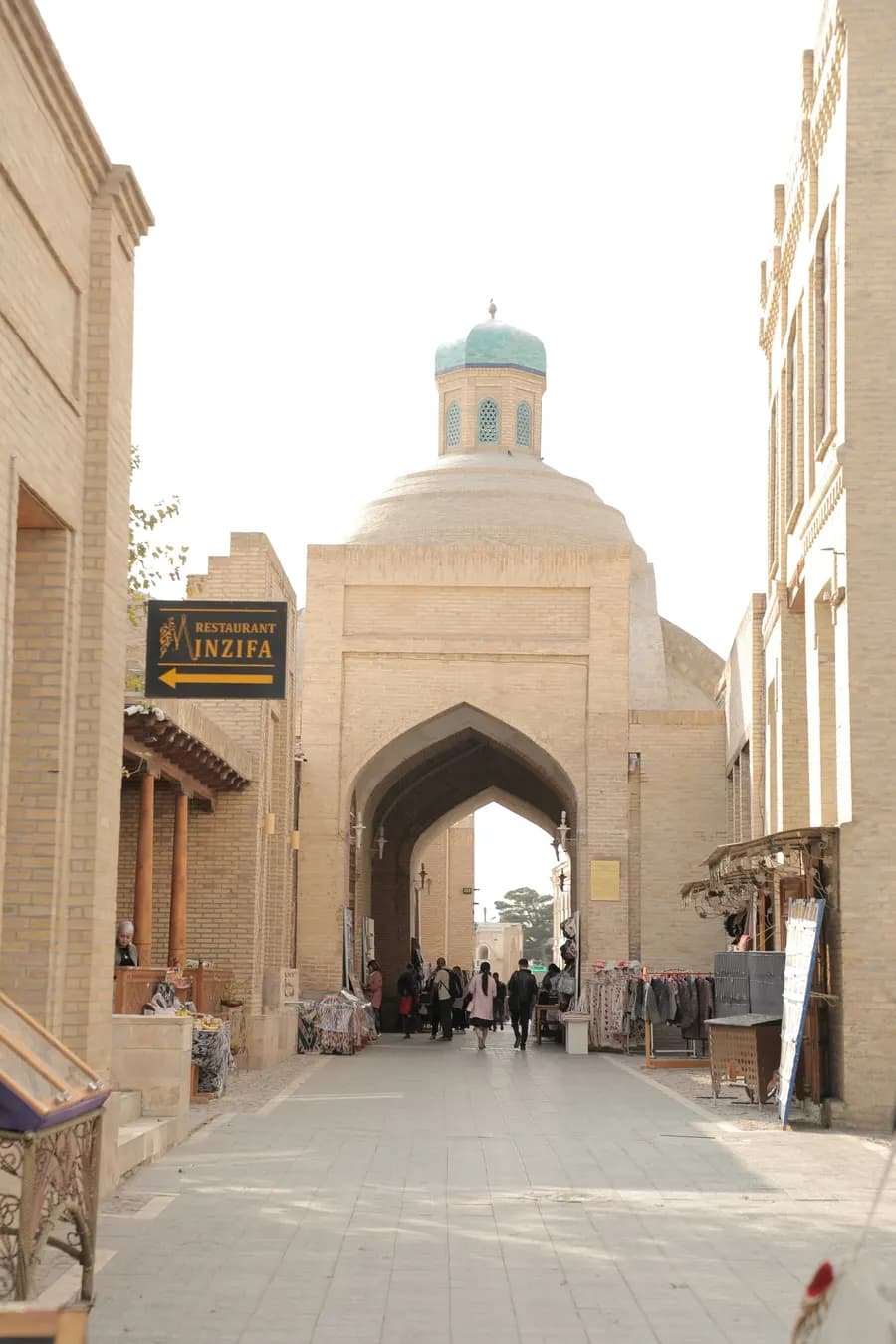
Brick vaults, shopfronts, textiles, copperwork, and ceramics make the route between Lyabi-Hauz and Poi-Kalyan feel like a working part of old Bukhara.
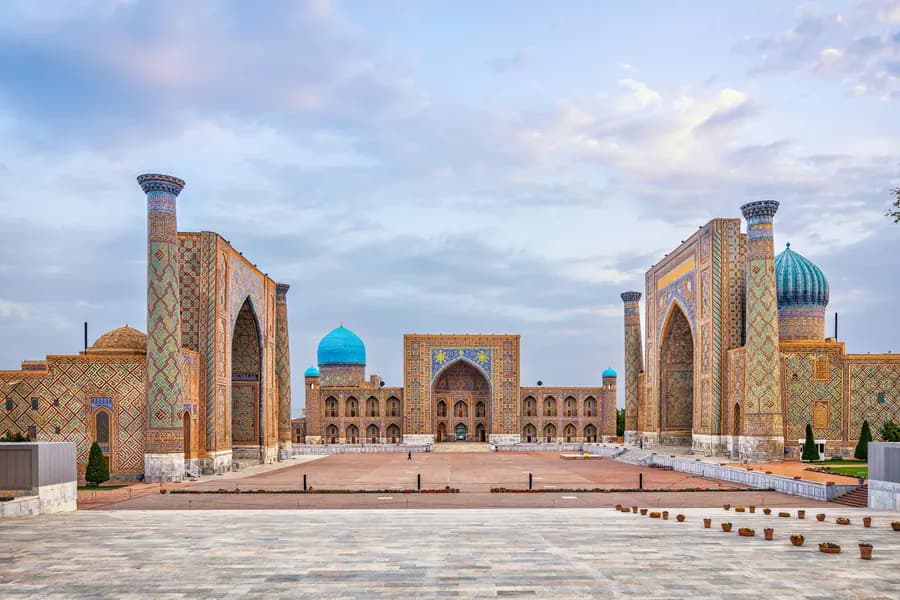
A madrasah, a fortress, and a walled street are more than separate monuments. Together they show where cities traded, ruled, studied, and met, so the route feels like a working place rather than a postcard sequence.
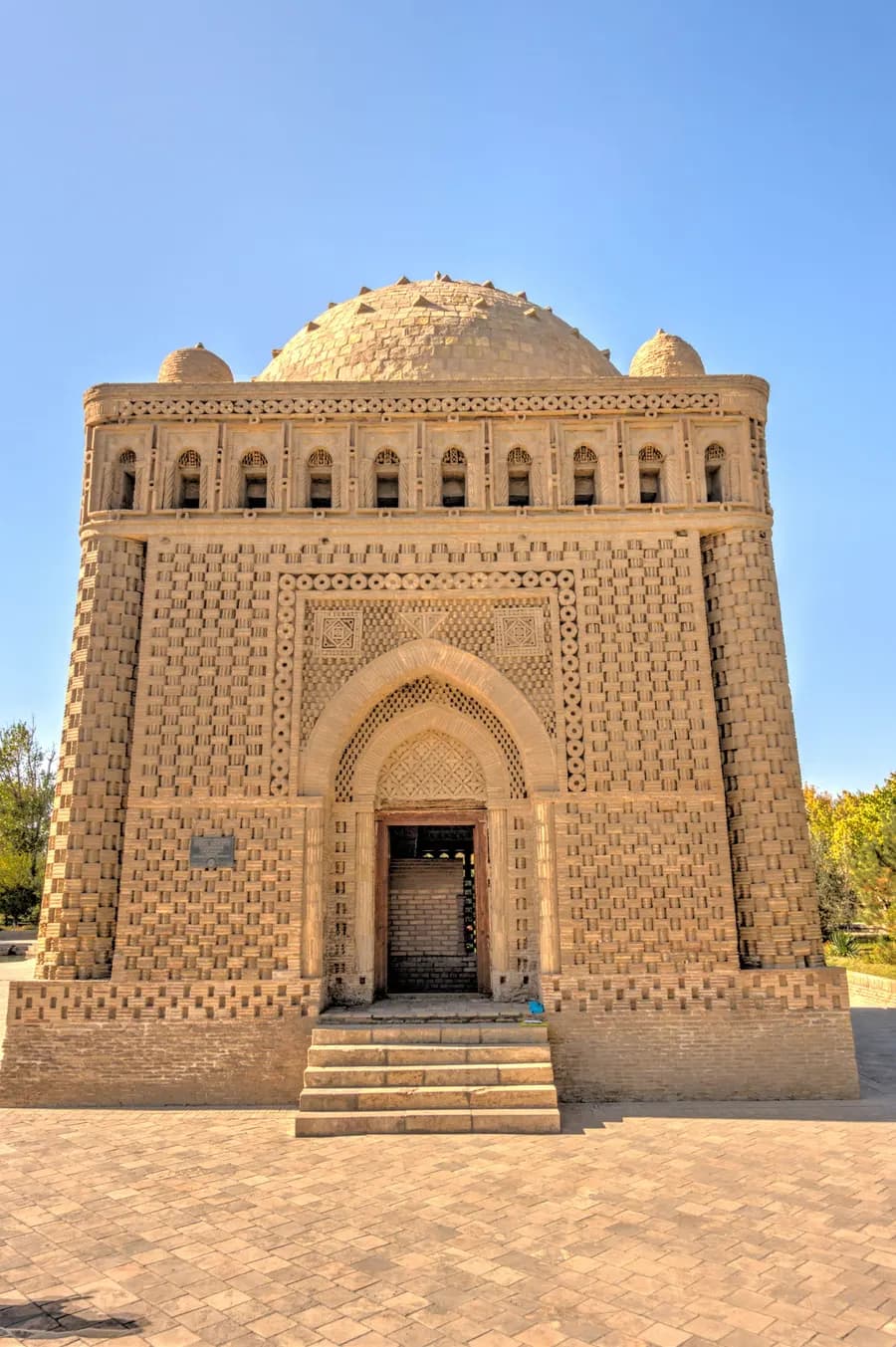
The small Samanid mausoleum brings Bukhara to an earlier scale: carved brick, park shade, and a quiet pause after minarets and fortress walls.
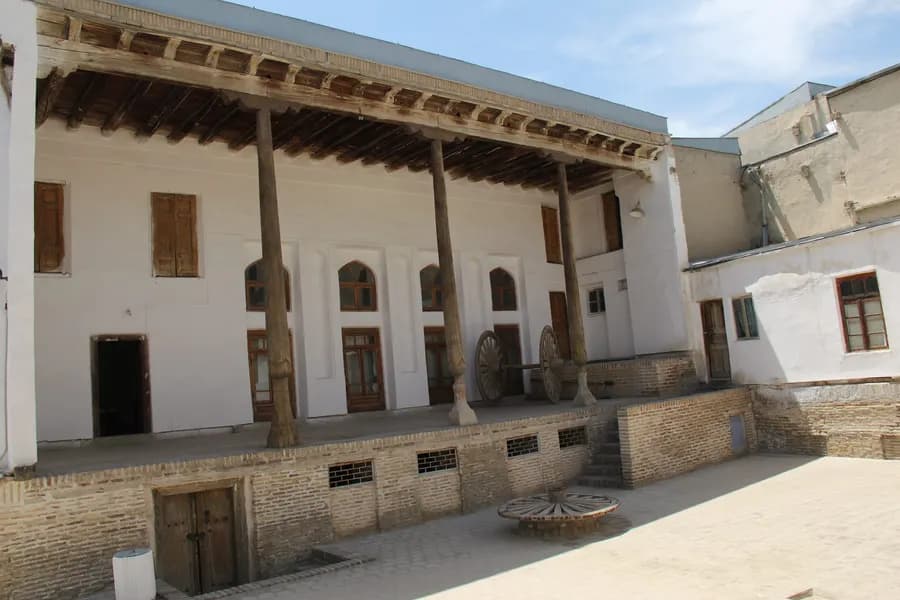
Painted rooms, carved wood, porcelain, clothing, and household displays bring the old-city walk into a merchant house at Fayzulla Khodjaev House-Museum.
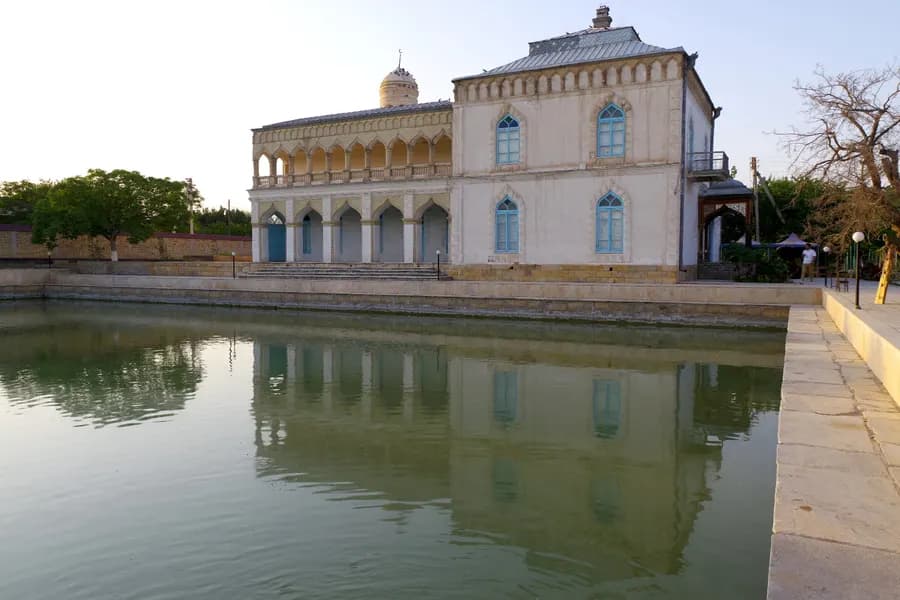
A short drive from the old city brings marble lions, garden paths, mirrored rooms, and applied-art displays into the last emir's summer residence.
Before you go
Bukhara rewards a slower city stay. The old centre is walkable, but the memory comes from pauses: shade, carved wood, brick pattern, water, tea, and the guide's thread between power, trade, and daily life.
Staying inside or near the historic centre lets the day move between monuments, tea, lunch, shade, and evening light without repeated long transfers.
Bukhara is most memorable when the old city remains close enough to revisit.
The old city is strongest on foot, but not as a forced march. Short pauses help the carved doors, brickwork, and domes become distinct.
Craft, palace, and pilgrimage stops outside the center work best as measured continuations when the itinerary has enough space.
The first walk feels best on foot. The city grows richer when the day returns to shade and water instead of racing from one outer stop to another.
Before you go Where to stay
Old-city hotels or nearby streets keep walks, shade, and evening returns simple.
Main magnet
Poi-Kalyan, the Ark, Lyabi-Hauz, trading domes, courtyards, and craft lanes.
Best rhythm
Spring and autumn are easiest; summer works with early walks, shaded pauses, and later evenings.
Route role
Classic midpoint between Samarkand and Khiva, with craft and pilgrimage extensions when time allows.
Tour programs
Bukhara belongs in almost every classic Uzbekistan itinerary, but nights matter: one night shows the main places; two or three give the old city room to breathe.
Route connections
Bukhara usually sits between Samarkand and Khiva: one side brings monumental scale, the other narrows the journey into the walled city of Khorezm.
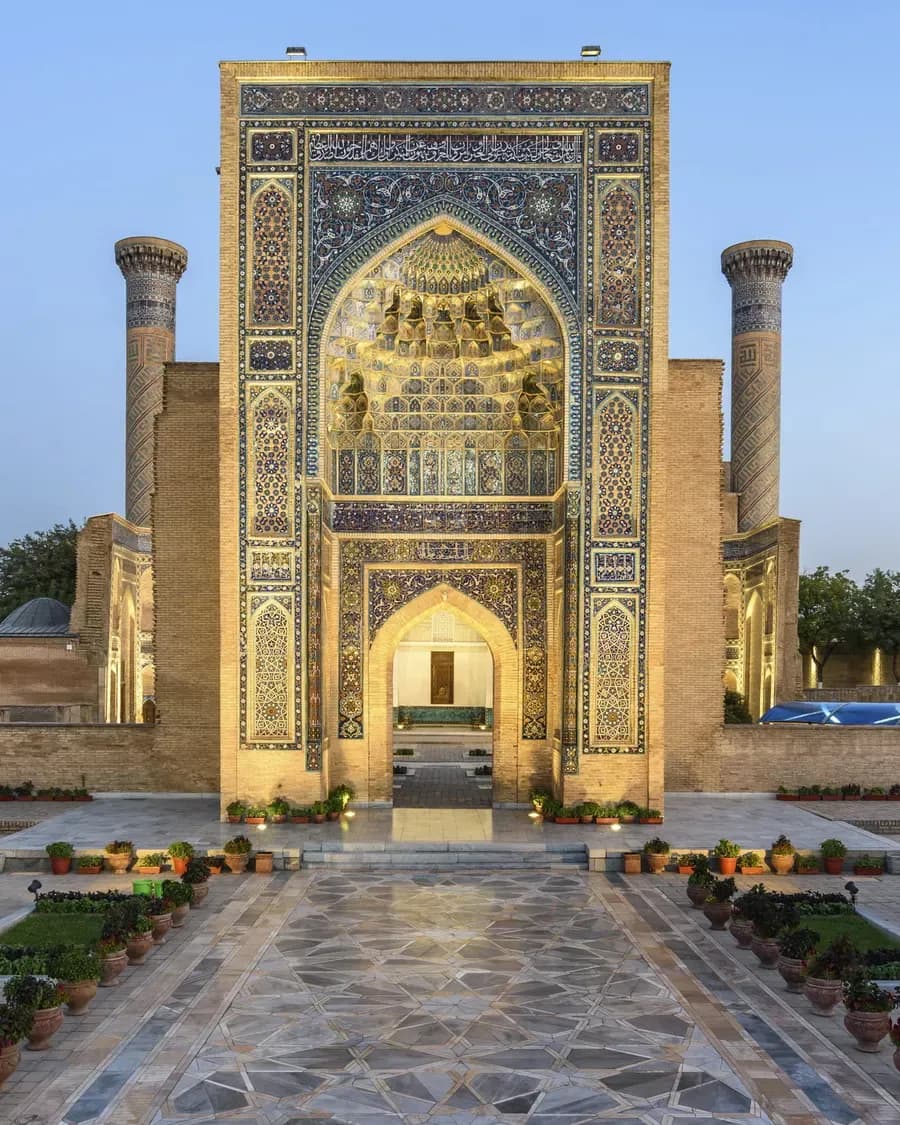
Samarkand brings the route to monumental scale: Registan, Shah-i-Zinda, Bibi-Khanym, Gur-e-Amir, Siab Bazaar, Afrosiab, and Ulugh Beg Observatory.
View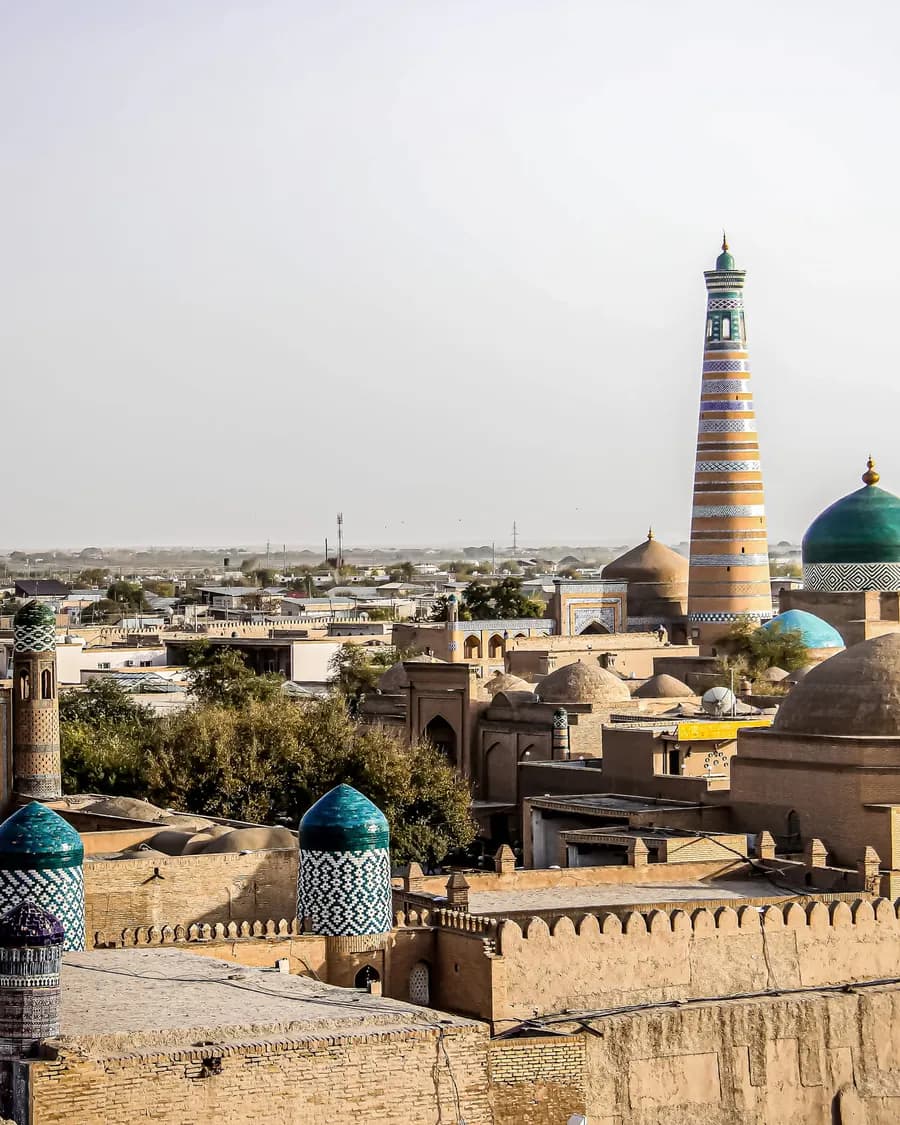
Khiva holds the western edge of the classic route: Itchan Kala, Kalta Minor, Juma Mosque, palace courtyards, workshops, and the roads that continue through Khorezm.
ViewCity in detail
Walking time, overnight location, and when day trips make sense.
1–2 nights is usually enough when the old core or main anchors get a full walking window. City tone: “Old-city shade, courtyards, and a walkable Silk Road rhythm”.
Start with the compact city walk first. Day trips only after the centre has settled — otherwise the stop feels like a transfer with monuments attached.
Stay close enough for an evening return on foot or a short transfer. That keeps tea, dinner, and a second pass through the lanes easy without burning the next morning.
On request
We help agencies set a realistic pace and choose the right next move — without rushing the places that matter.