
TourLink
About
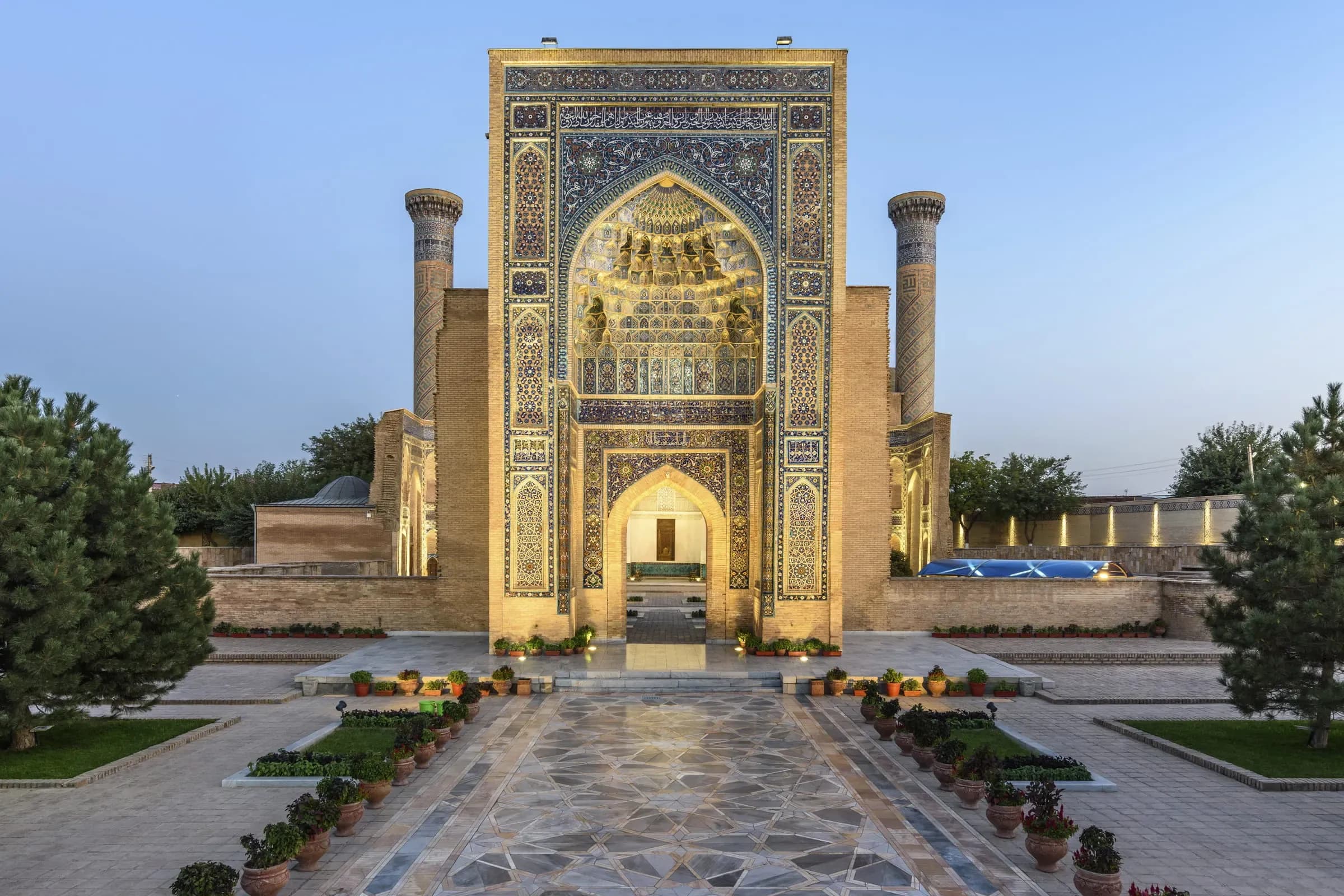
Registan may be the first image travelers carry of Uzbekistan, but Samarkand is wider than one square.
A Samarkand day is easier to keep unhurried when it starts with arrival, then moves through Registan, Shah-i-Zinda, Gur-e-Amir, Bibi-Khanym, Siab Bazaar, and one chosen continuation before the next train.
The station or airport should feel like a calm start. A measured arrival leaves room for check-in, the first look at the domes, and the choice of how the route continues west.
Agencies and travellers who need Samarkand as a readable stop — strong places, honest pacing, and logistics that hold.
Getting around
A Samarkand day is easier to keep unhurried when it starts with arrival, then moves through Registan, Shah-i-Zinda, Gur-e-Amir, Bibi-Khanym, Siab Bazaar, and one chosen continuation before the next train.
Route rhythm
The station or airport should feel like a calm start. A measured arrival leaves room for check-in, the first look at the domes, and the choice of how the route continues west.
Afrosiyob brings many travelers from Tashkent; a calm first transfer leaves room to settle in and see the blue domes without rushing.
Main places
The map shows the main places close together, but the city becomes clearer when Registan and the old-city side leave room for one continuation: Gur-e-Amir, Afrasiab, Ulugh Beg's observatory, a small old-city stop, or the craft road.
What to see
Registan, Shah-i-Zinda, and Bibi-Khanym give the first three city places. The wider route also depends on Gur-e-Amir, Siab Bazaar, Afrasiab, Ulugh Beg's observatory, and smaller old-city stops when timing allows.
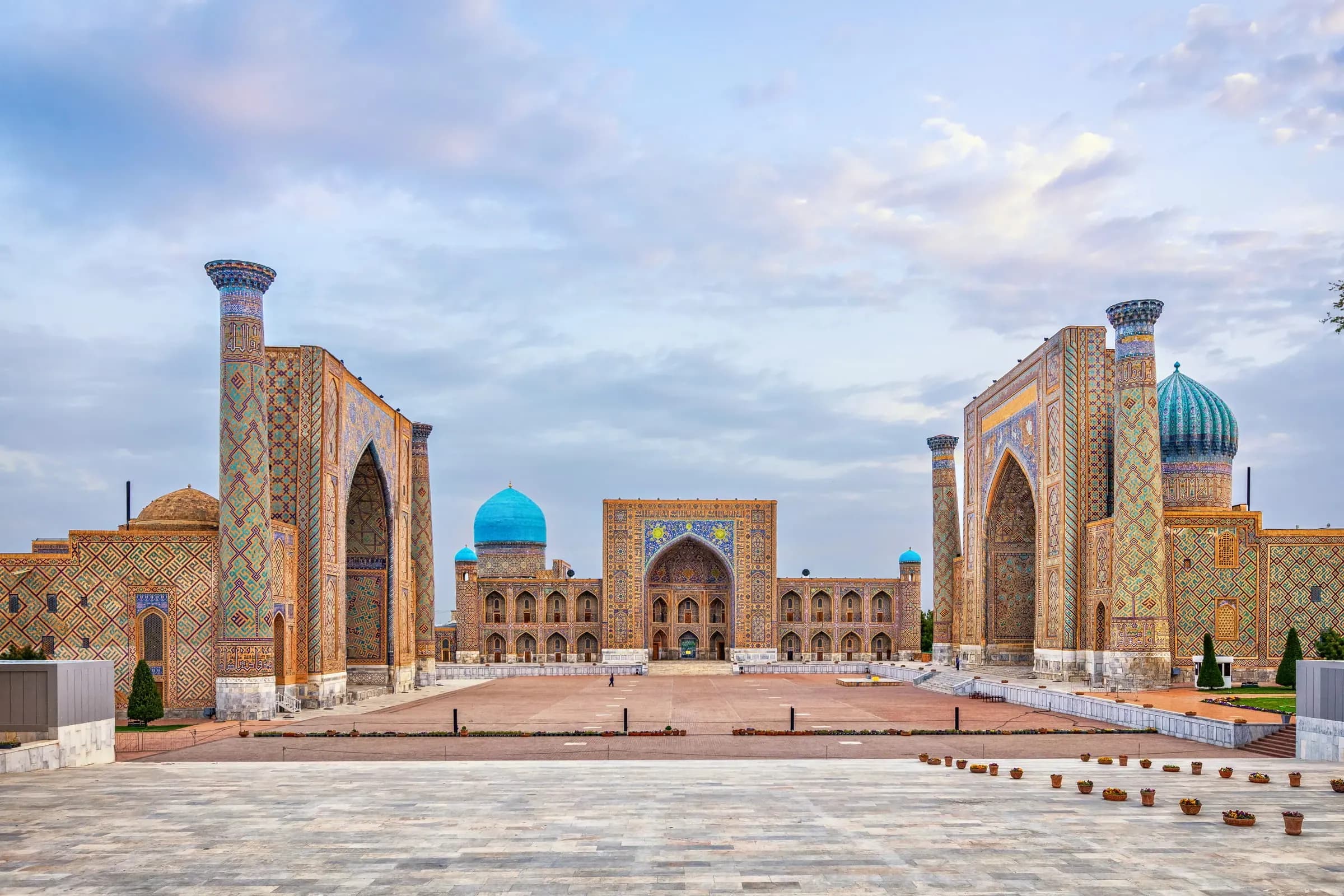
Registan is Samarkand at full scale: Ulugh Beg, Sher-Dor, and Tilya-Kori madrasahs facing one open square. The place is easiest to understand when the first view has time, then the details begin to separate: mosaic, calligraphy, courtyards, and doorways.
Open place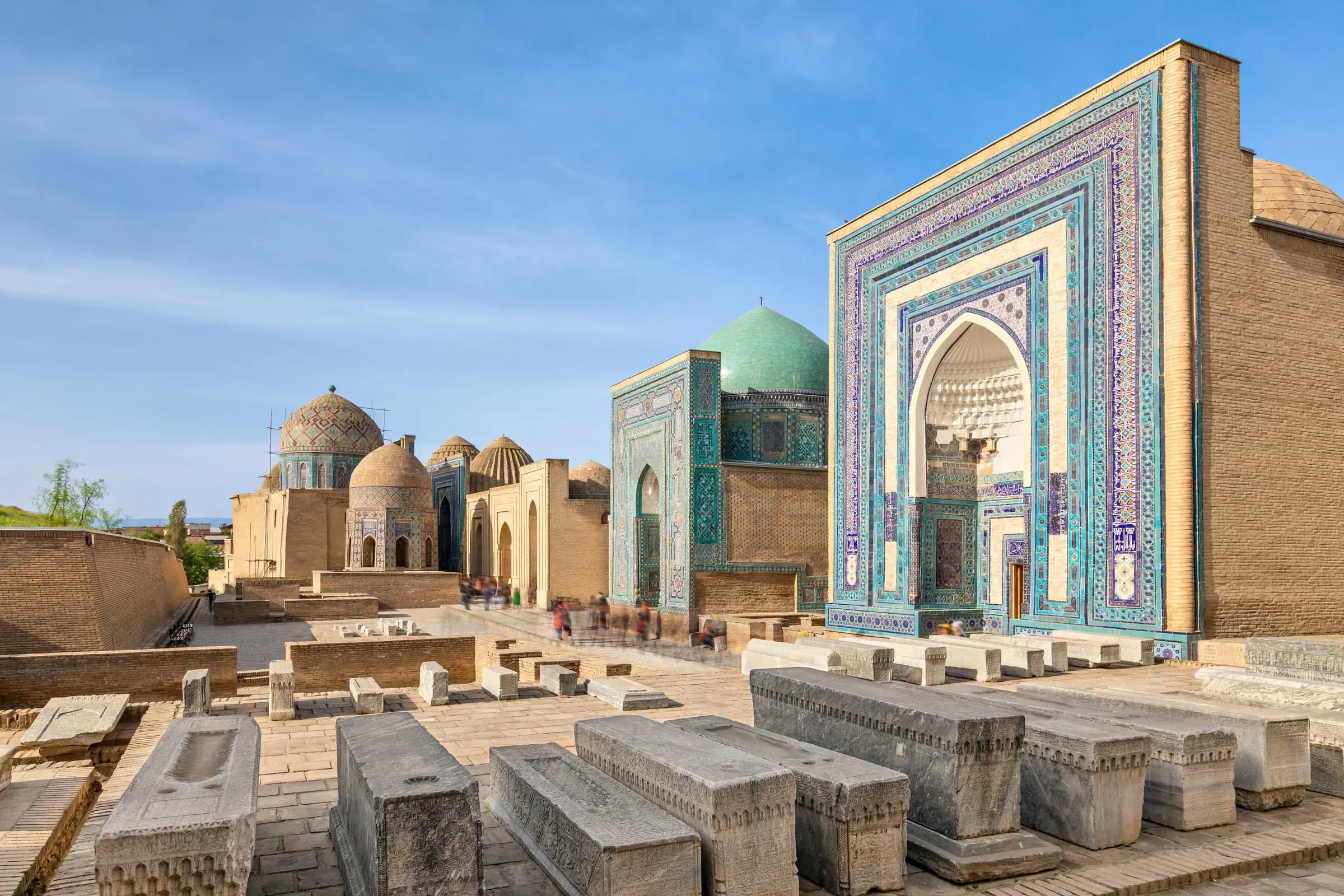
Shah-i-Zinda brings Samarkand close: a narrow ascent of mausoleums, blue mosaic almost within reach, and a sacred center tied to Qusam ibn Abbas. The place is understood step by step, not through one facade.
Open place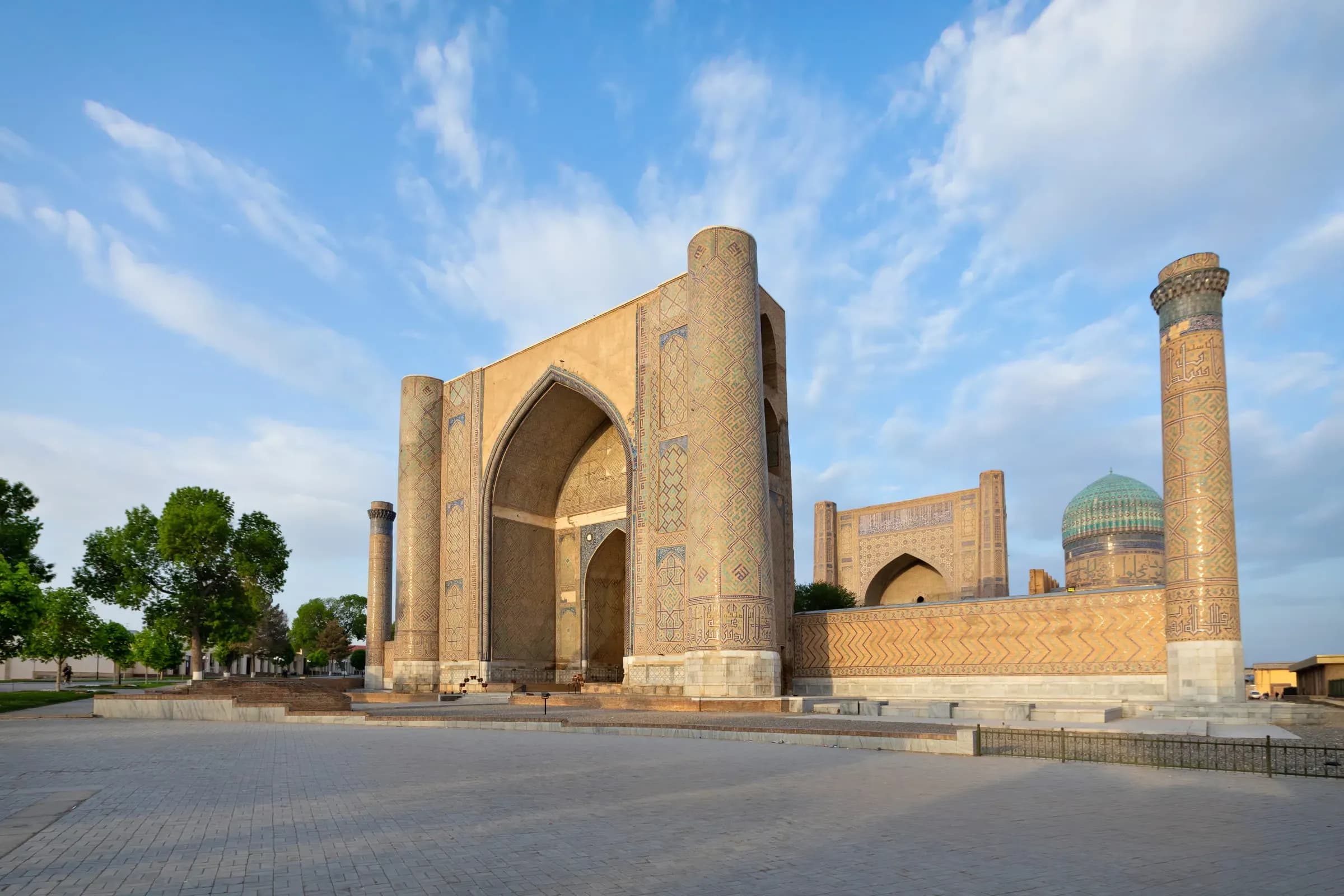
Bibi-Khanym stands at the edge of monument and bazaar: a great portal, brick, blue ornament, and Siab Bazaar a few steps away. The place is easier to understand with the old-city life around it, not as a monument apart.
Open placeCity rhythm
Part of the city opens away from the largest facades: bread near Siab Bazaar, blue ceramic up close, craft hands in Konigil, and a quiet return after Registan empties.
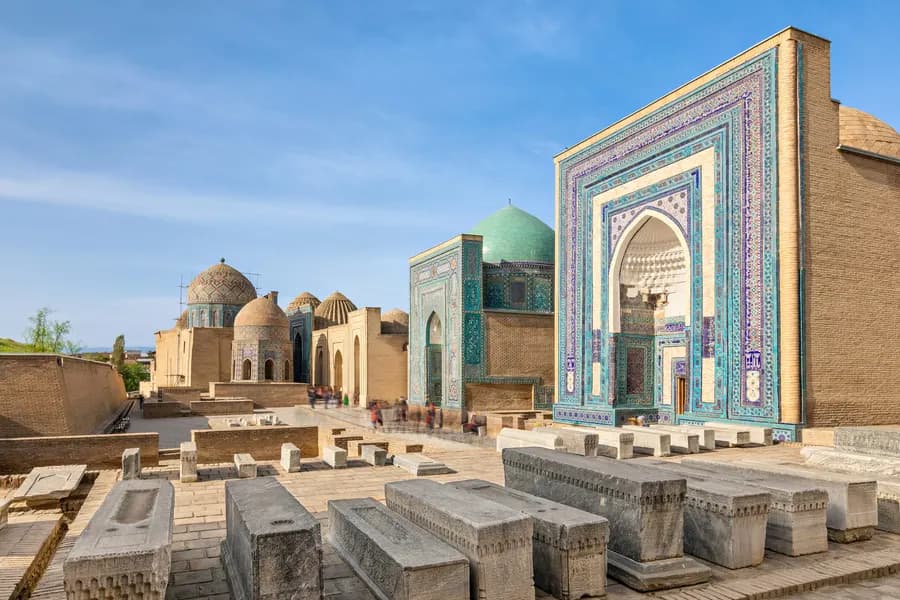
Shah-i-Zinda asks for slower steps, and Bibi-Khanym keeps sacred scale beside the market. The city feels different when prayer, memory, and daily movement stay in the same frame.
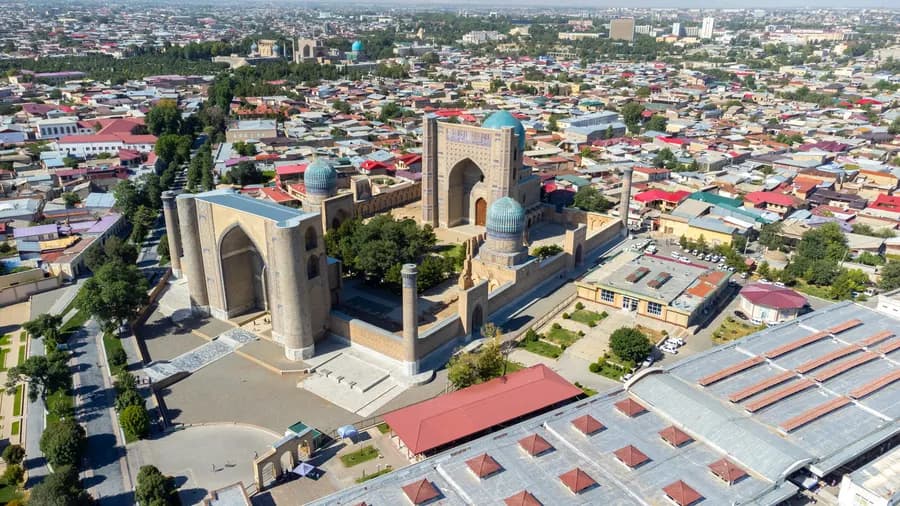
Near Siab Bazaar, Samarkand stops being only monuments: bread steam, fruit color, a tea pause, and courtyard shade bring the old city close enough to sit with it for a while.
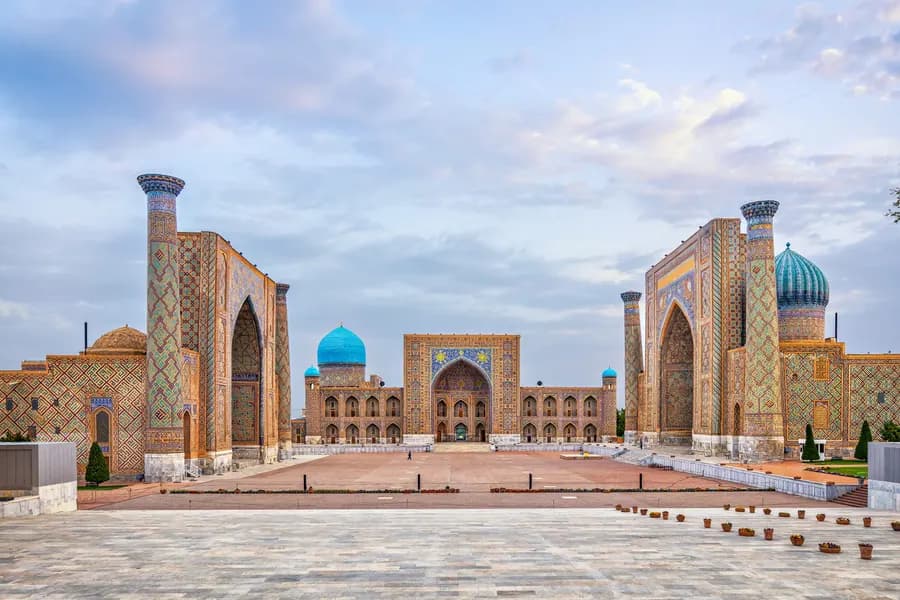
Registan, Shah-i-Zinda, and Bibi-Khanym are not separate postcard stops. Together they show how Samarkand moves from open square to close mosaic, mosque wall, bazaar sound, and old-city life.
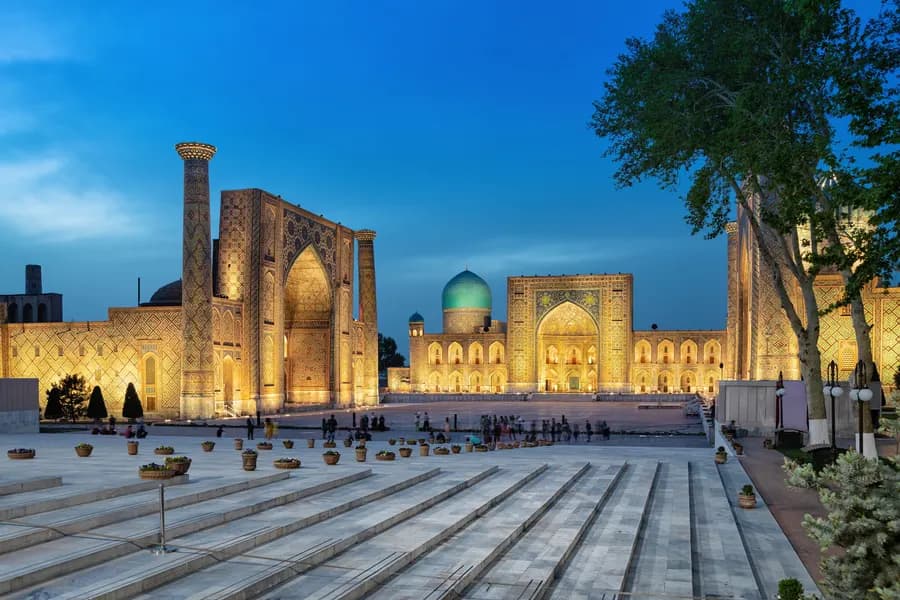
After the square, Samarkand needs a slower return: quieter streets, the last color on tile, and enough space to let Shah-i-Zinda or the bazaar remain separate in memory, not folded into one list.
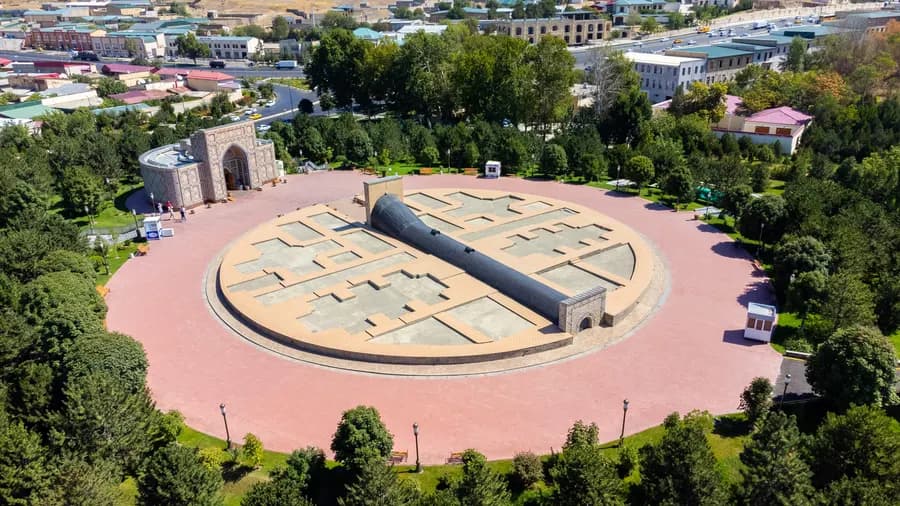
Afrasiab and Ulugh Beg's observatory move the city beyond the postcard view. The route turns toward ancient ground, maps, fragments, and a scientific memory that changes how you read the domes.
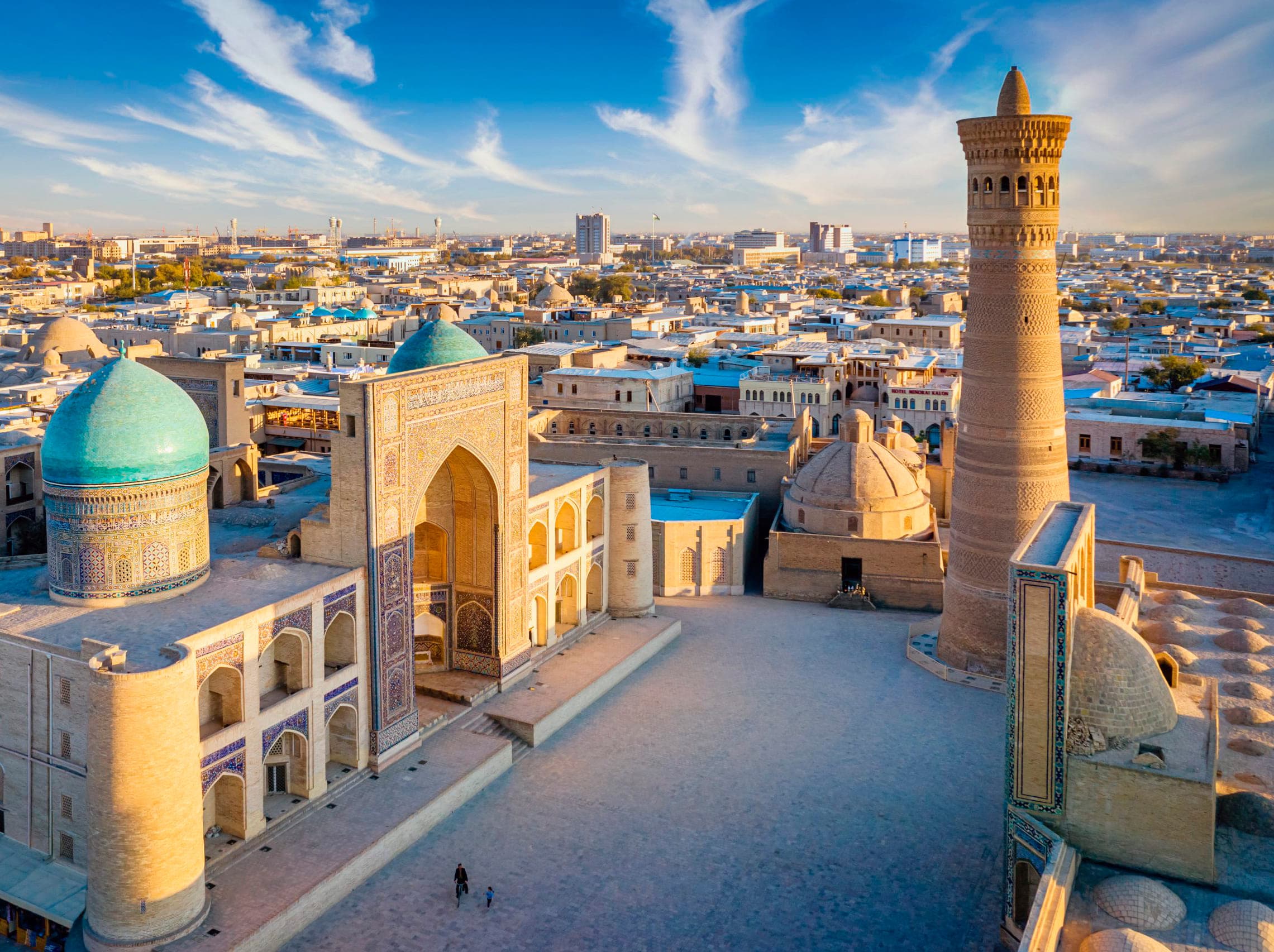
Outside the monumental core, Konigil slows the day to water channels, paper fibre, bread, and hands at work. You understand Samarkand not only through blue tile, but through a craft rhythm that still belongs to the region.
Before you go
Samarkand is easy to enter, and just as easy to turn into a list. The day feels clearer with simple pauses: market sound, station rhythm, one archaeological or scientific stop, and a pause after the open square.
The train station or airport sets the first city impression. A calm transfer and a little room before the first visit keep the domes from feeling rushed.
Samarkand stays whole when Registan leaves room for mausoleums, archaeology, the bazaar, and the road onward.
Registan, Shah-i-Zinda, Bibi-Khanym, and Gur-e-Amir are close enough for short transfers, but each needs a different pace. Afrasiab and Ulugh Beg's observatory add older history and scientific context when the route has room.
Siab Bazaar, Chorsu Gallery, old-city lanes, and small craft pauses give the day voices, bread, and street movement before the journey turns west toward Bukhara and Khiva.
One calm morning or evening gives the square, tilework, mausoleum, bazaar, one calmer stop, and onward train enough room to belong together.
Before you go Stay rhythm
Two nights give Registan, Shah-i-Zinda, Bibi-Khanym, Gur-e-Amir, the bazaar, and one archaeology or observatory stop enough room.
Main place
Registan is the first major place, but the city becomes clearer with Shah-i-Zinda, Gur-e-Amir, and the old-city side.
Best rhythm
Spring and autumn are easiest; summer needs early starts, cooler pauses, and evening returns.
Route role
Rail link between Tashkent and Bukhara, with Khiva as the wider westward continuation.
Route programs
Samarkand belongs in most Uzbekistan routes, but the number of hours changes the experience: a rushed stop shows monuments; a calmer stay adds Gur-e-Amir, Afrasiab or the observatory, market sound, and pauses.
Route connections
After Samarkand, the journey usually turns west to Bukhara and Khiva, where the scale tightens from open squares to old-city walls and courtyard rhythm.
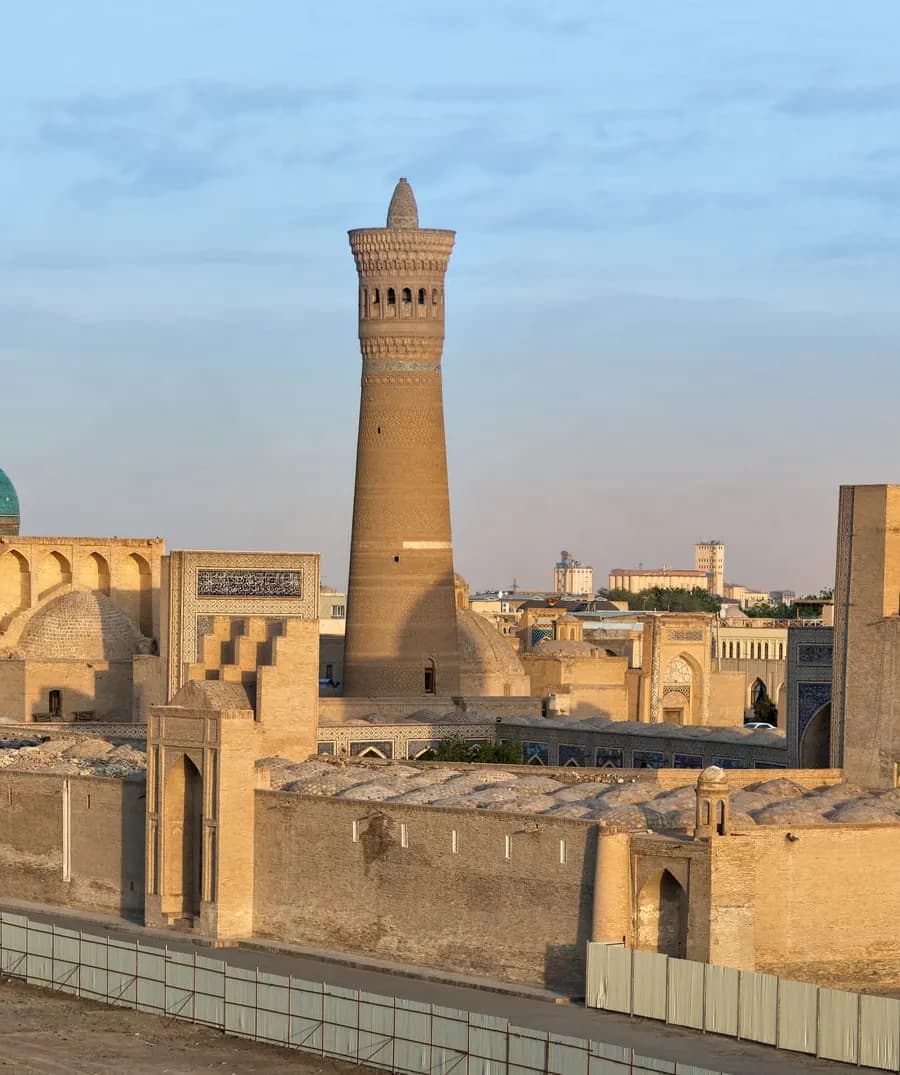
Bukhara comes together on foot: Poi-Kalyan, the Ark, Lyabi-Hauz, trading domes, courtyards, craft lanes, and nearby continuations.
View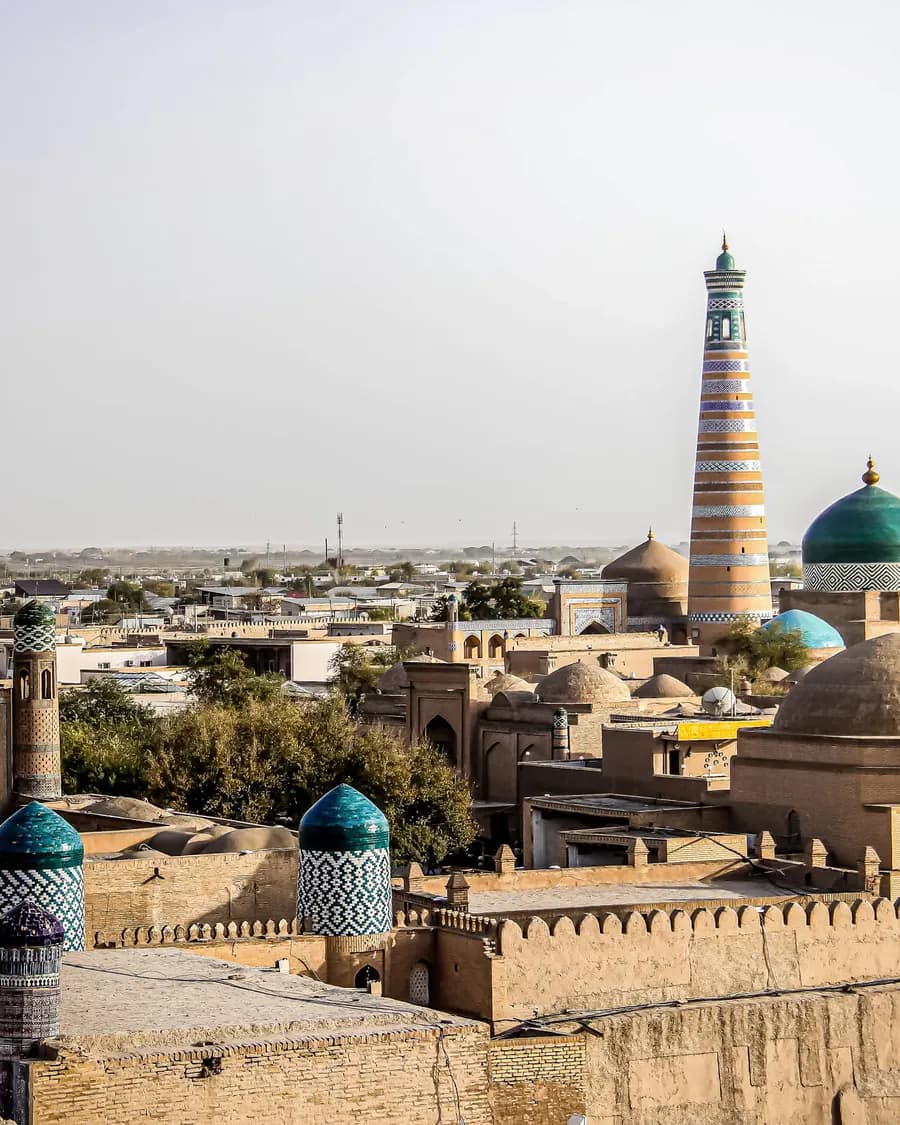
Khiva holds the western edge of the classic route: Itchan Kala, Kalta Minor, Juma Mosque, palace courtyards, workshops, and the roads that continue through Khorezm.
ViewCity in detail
Walking time, overnight location, and when day trips make sense.
one focused city day plus overnight is usually enough when the old core or main anchors get a full walking window. City tone: “Blue tile, rail rhythm, and old-city life”.
Start with the compact city walk first. Day trips only after the centre has settled — otherwise the stop feels like a transfer with monuments attached.
Stay close enough for an evening return on foot or a short transfer. That keeps tea, dinner, and a second pass through the lanes easy without burning the next morning.
On request
We help agencies set a realistic pace and choose the right next move — without rushing the places that matter.