
TourLink
About
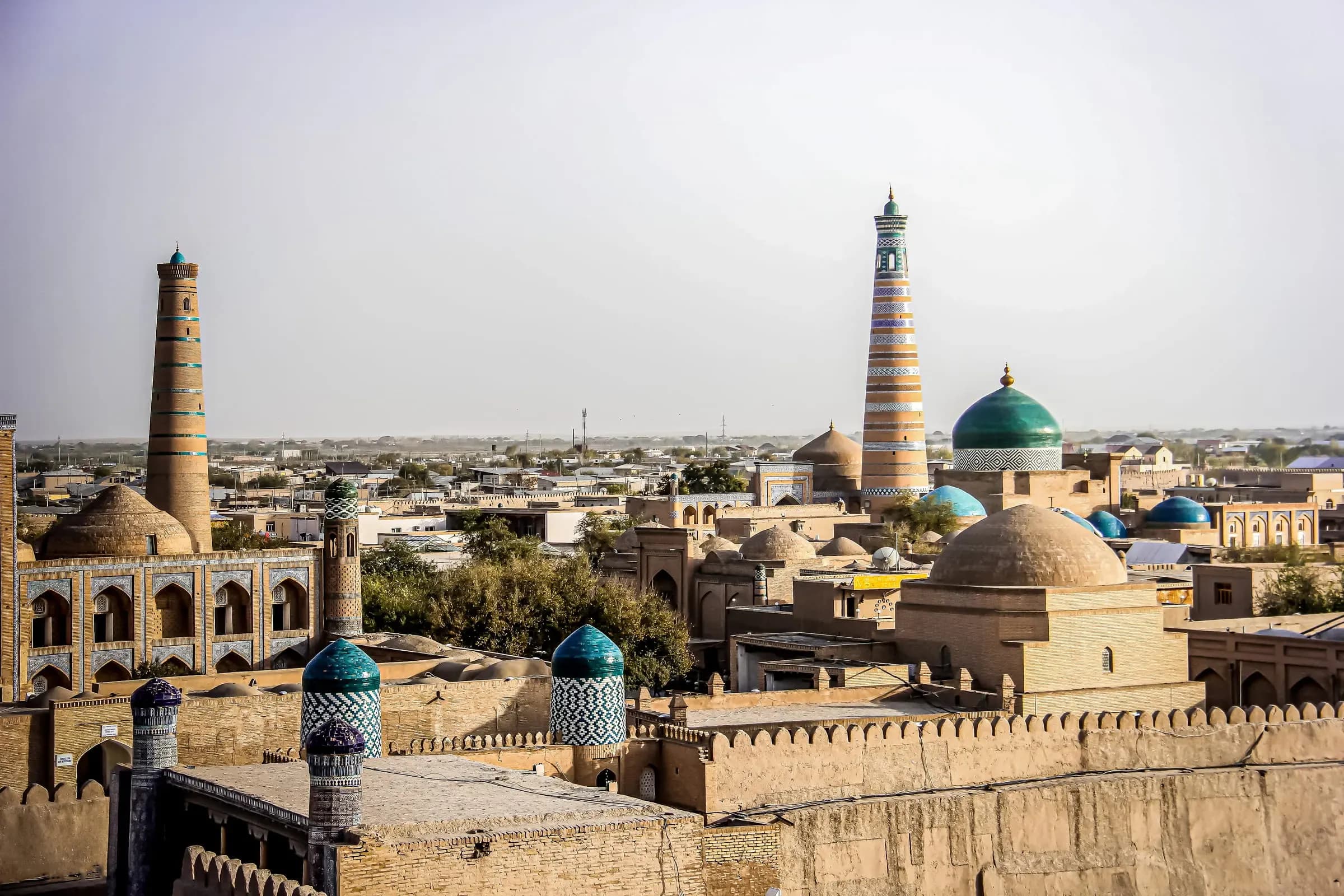
Khiva works best when you return inside the walls during the day: first the gates and Kalta Minor, then Juma Mosque, palace courtyards, carved doors, workshops, and a meal in the old town before the route decides whether to stay in the city or continue across Khorezm.
In Khiva, the day is less about counting stops and more about order: a first walk inside Itchan Kala, time for interiors and craft, then a clear decision to stay with the walled city or leave for Khorezm beyond it.
Keep the first route inside the walls: gates, Kalta Minor, Juma Mosque, shopfronts, and carved doors give Khiva its shape before palace rooms, museums, and roads beyond the city enter the day.
Agencies and travellers who need Khiva as a readable stop — strong places, honest pacing, and logistics that hold.
Getting around
In Khiva, the day is less about counting stops and more about order: a first walk inside Itchan Kala, time for interiors and craft, then a clear decision to stay with the walled city or leave for Khorezm beyond it.
Start of the day
Keep the first route inside the walls: gates, Kalta Minor, Juma Mosque, shopfronts, and carved doors give Khiva its shape before palace rooms, museums, and roads beyond the city enter the day.
Start at an Itchan Kala gate: walls, narrow lanes, shopfronts, and the first view of Kalta Minor set the scale before the larger monuments take over.
Main city points
The map makes Khiva look compact, but the day changes with the choice: palace rooms inside the walls, Nurullabay and Dishan-Kala nearby, or a separate road toward the desert fortresses.
What to see
Itchan Kala, Kalta Minor, and Juma Mosque give Khiva its first image. When the day has room, add Kunya-Ark, Tash Khauli, Islam Khoja, Pahlavon Mahmud, Nurullabay, or Dishan-Kala without turning the walk into a checklist.
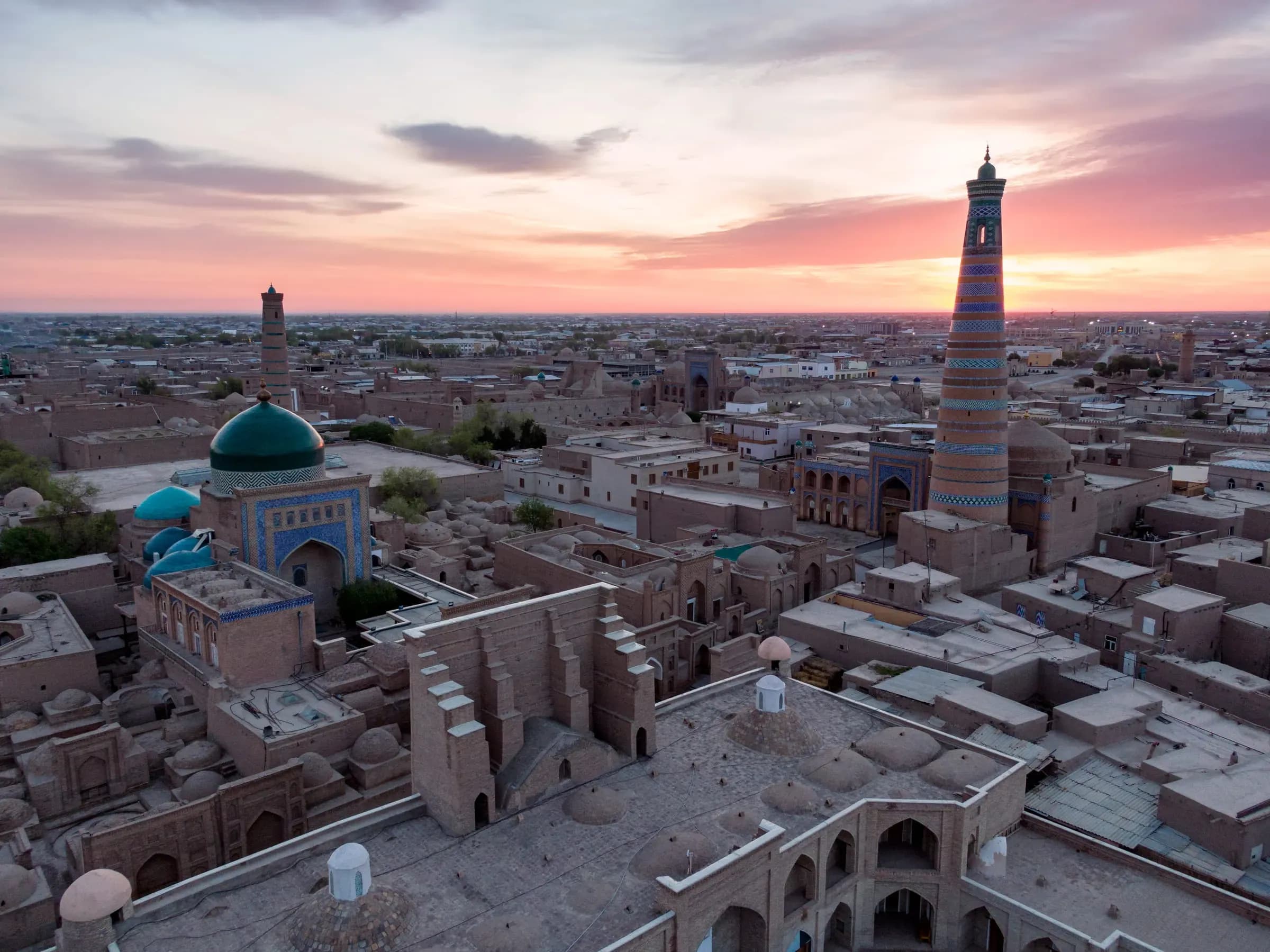
Itchan Kala is where Khiva becomes a walking city: gates, clay lanes, Kalta Minor, Juma Mosque, courtyards, workshops, and museum rooms stay inside one set of walls.
Open place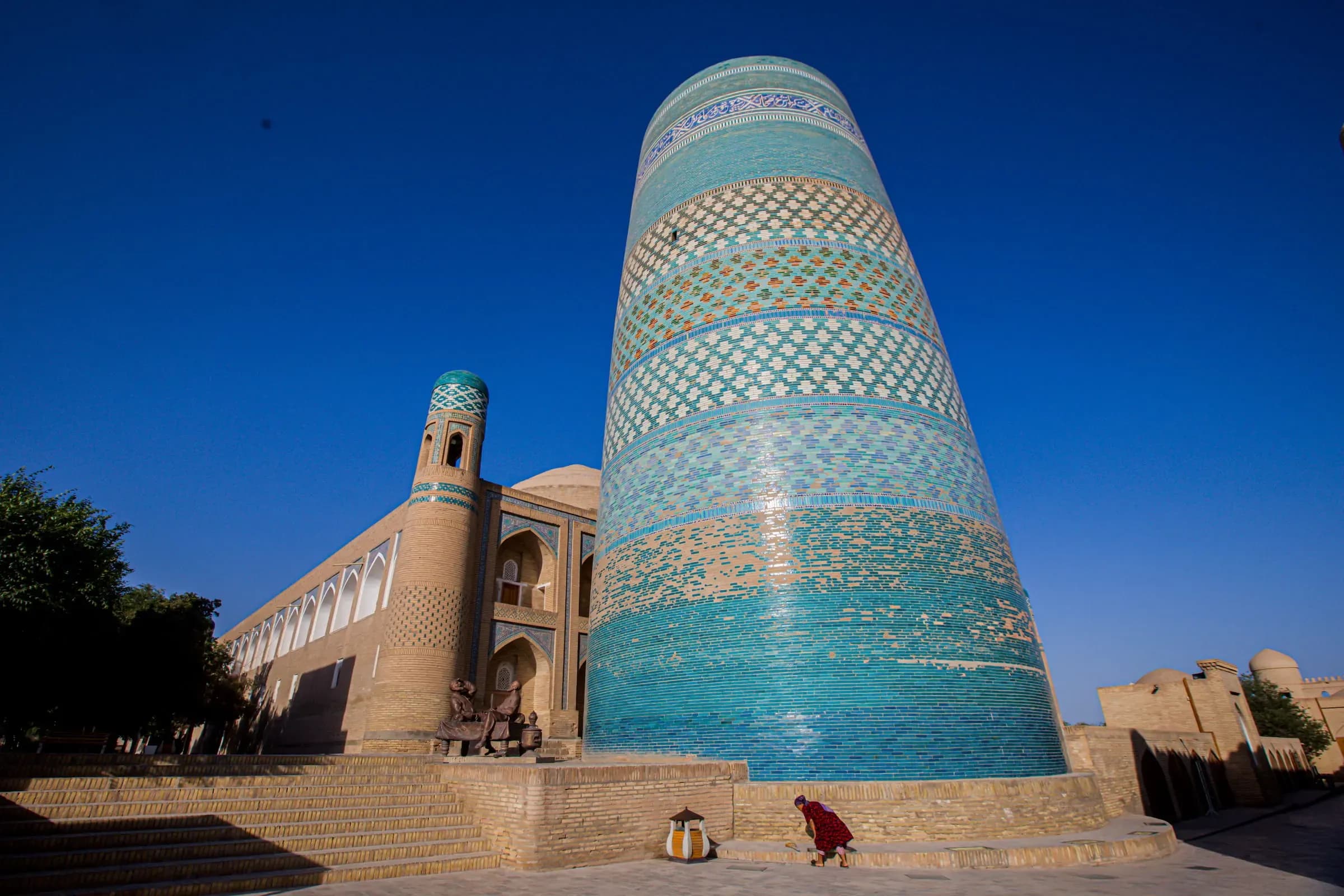
Kalta Minor gives Khiva a color you recognize before you know the streets: a wide unfinished minaret beside Muhammad Amin Khan Madrasah, close to the lanes where the Itchan Kala walk begins.
Open place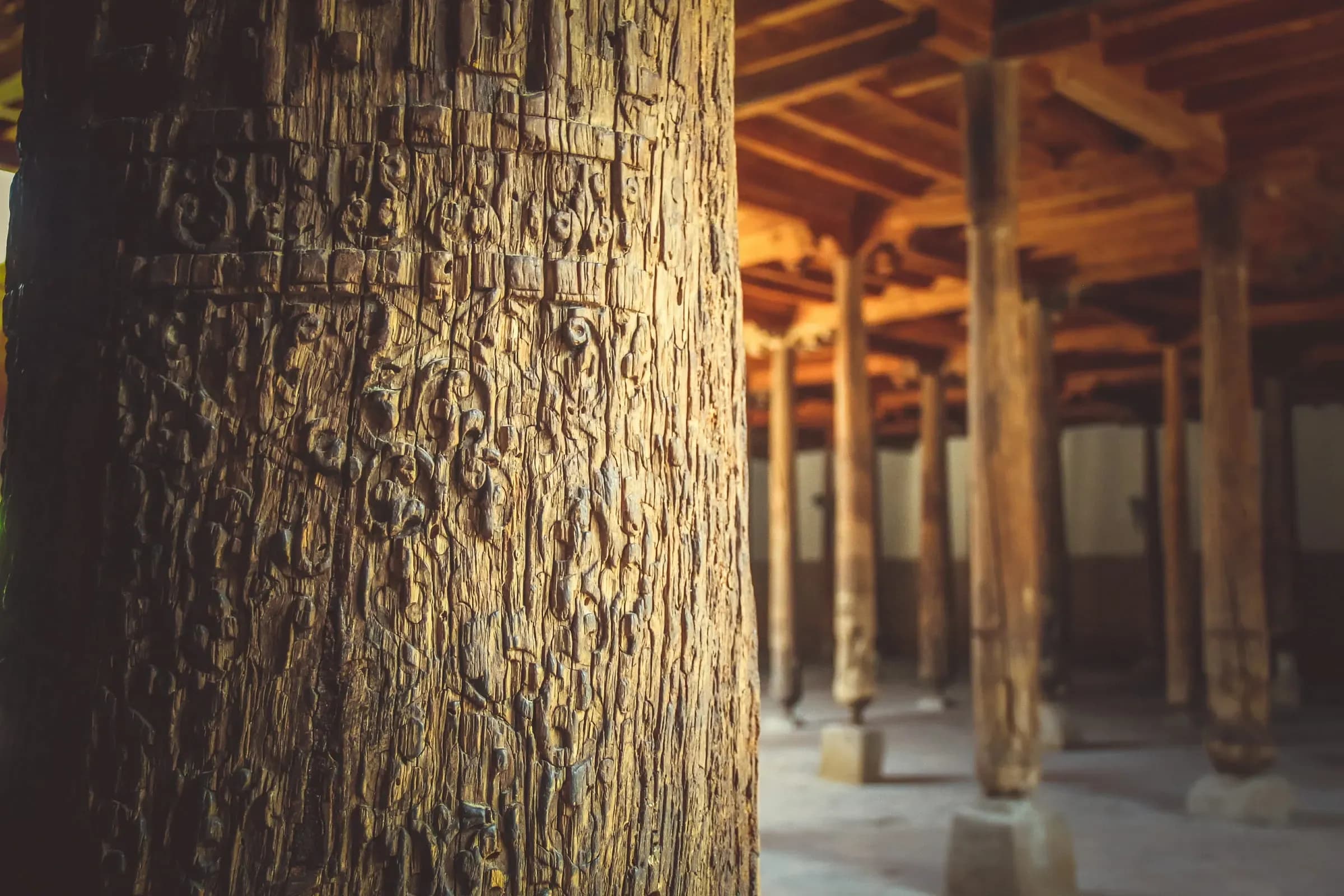
Juma Mosque changes the Khiva walk after the open streets of Itchan Kala: a low covered hall of wooden columns, close to Kalta Minor and the central route.
Open placeIn the city
Khiva is not only its main monuments: a workshop sound behind a door, tea after the walk, carved wood, a palace room, and the decision to leave the walls make the city feel less like a museum.
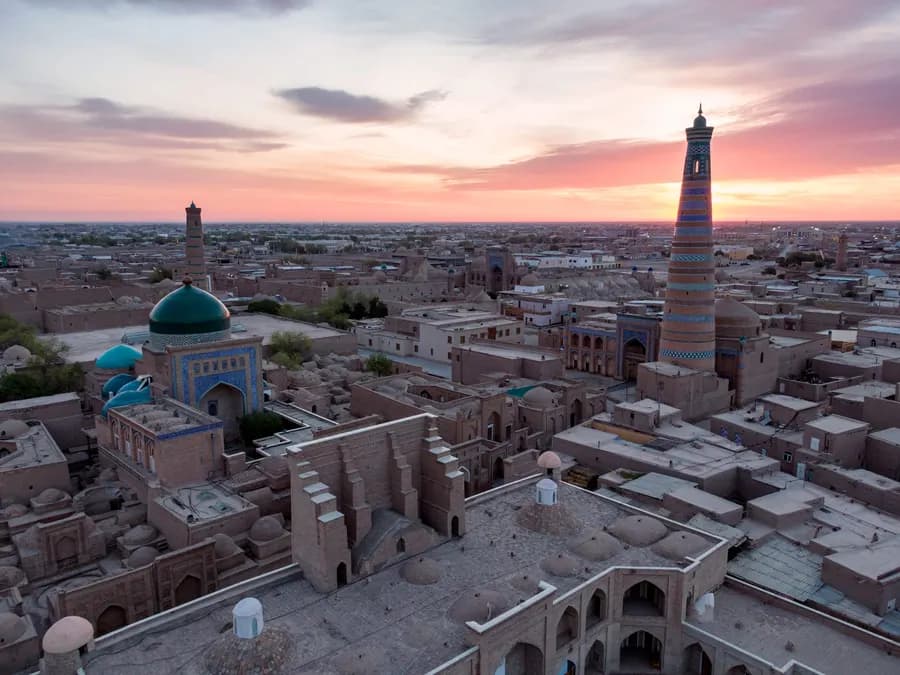
Gates, Kalta Minor, Juma Mosque, and the short lanes fit together better when you return inside Itchan Kala at least twice in the day.
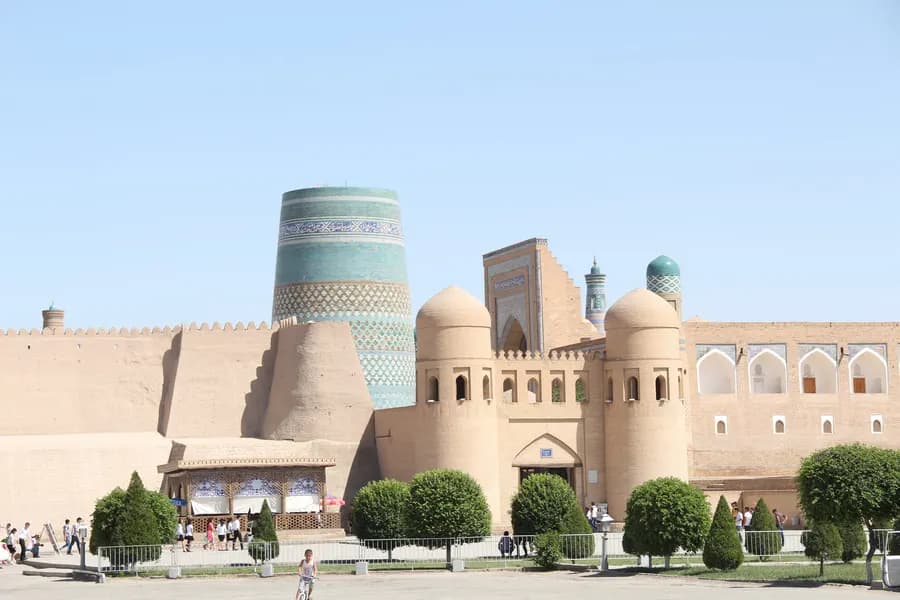
Gates, shopfronts, doorways, and narrow passages show Khiva as a living town inside the walls, not only a museum area.
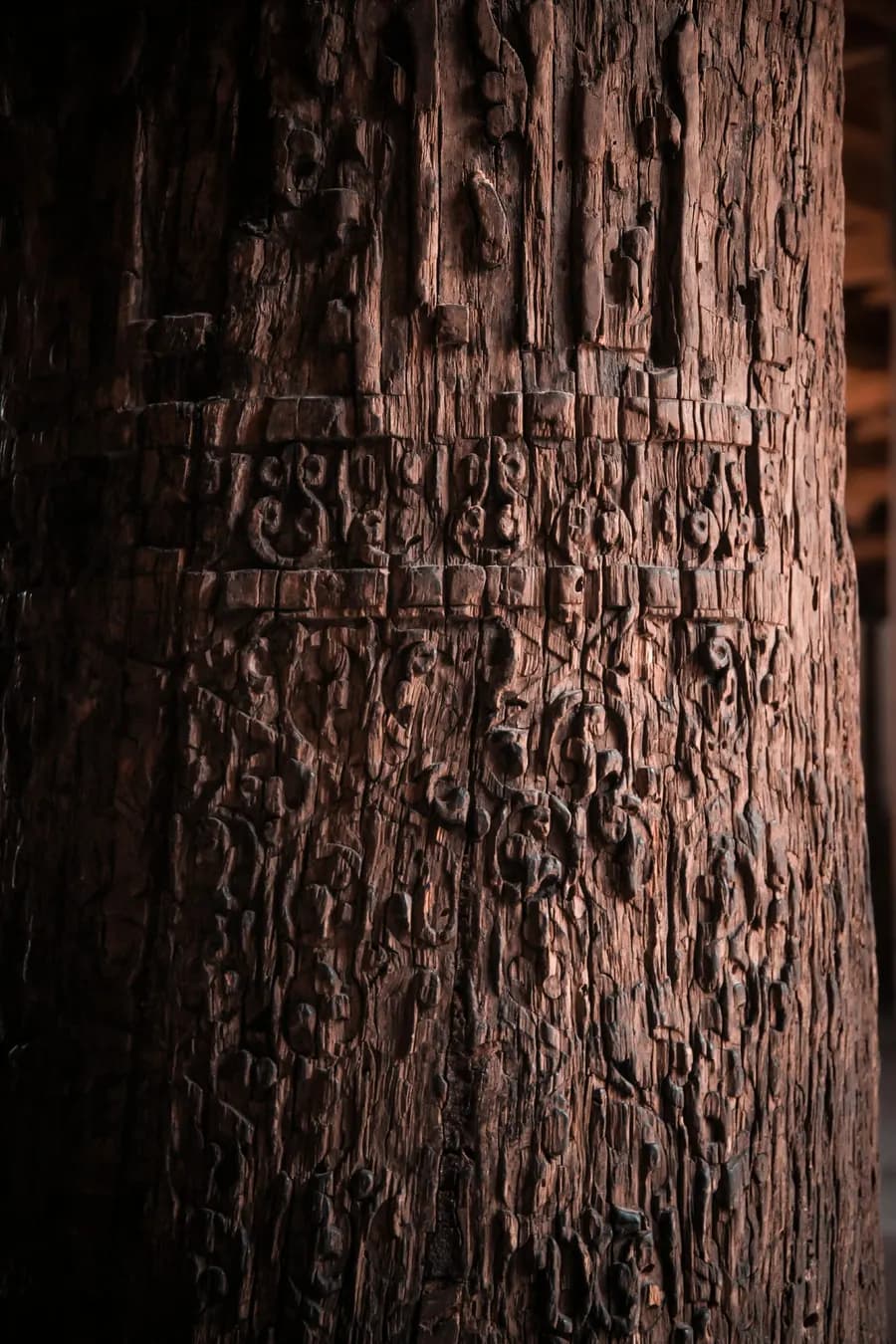
Carved doors, courtyard entrances, and the sound of tools behind the main streets bring working craft back into the Khiva walk.
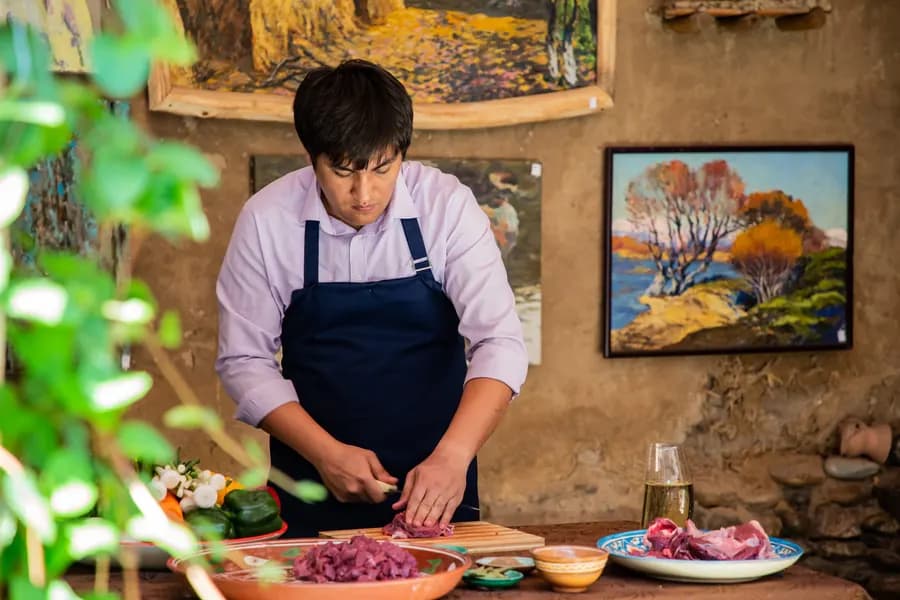
Tea, shivit oshi, and an unhurried meal matter as much as the monuments here; without that pause, the day turns too quickly into a museum route.
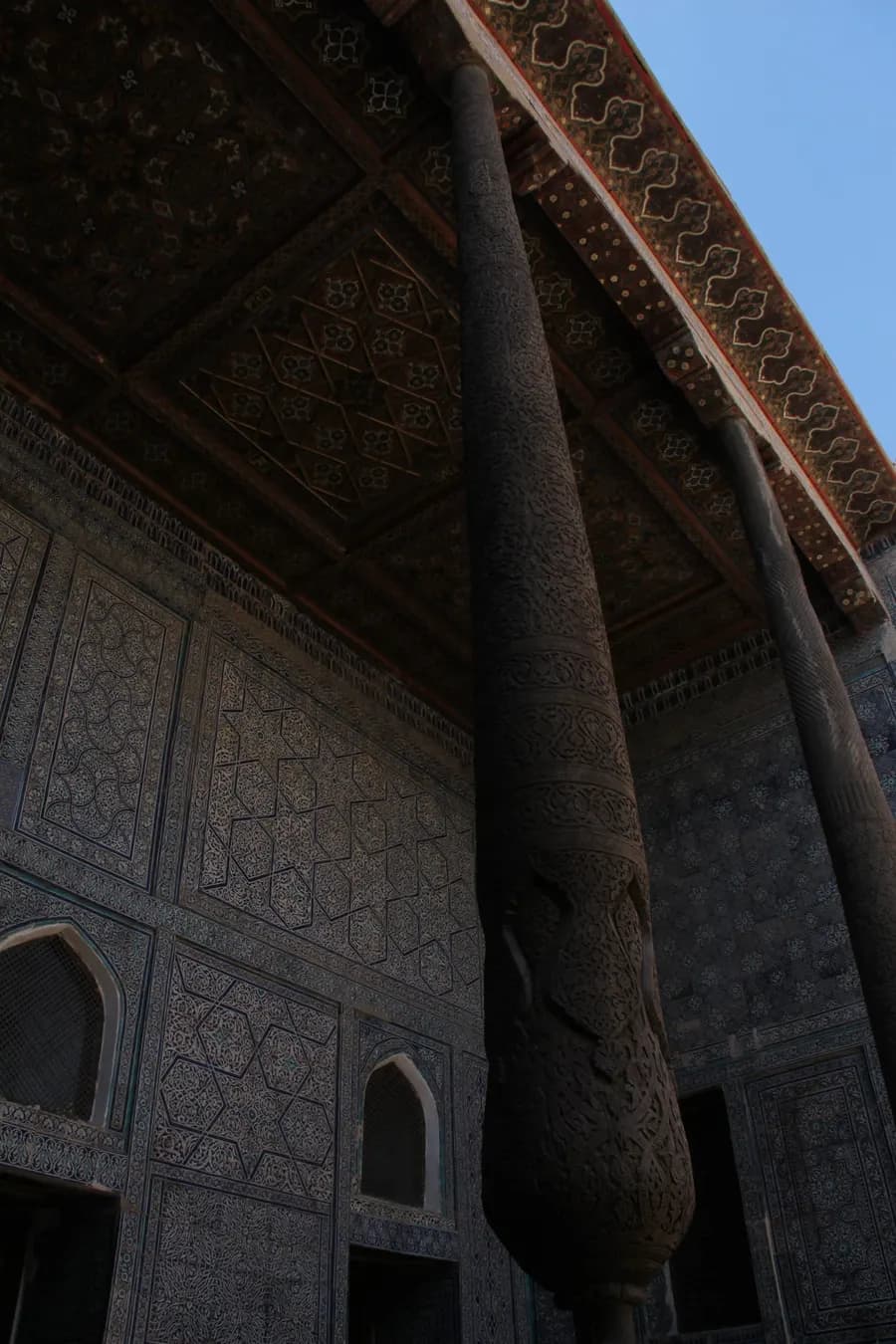
Palace courtyards, mausoleums, and museum rooms need their own time; this is where Khiva moves from the street into court, family, and museum memory.
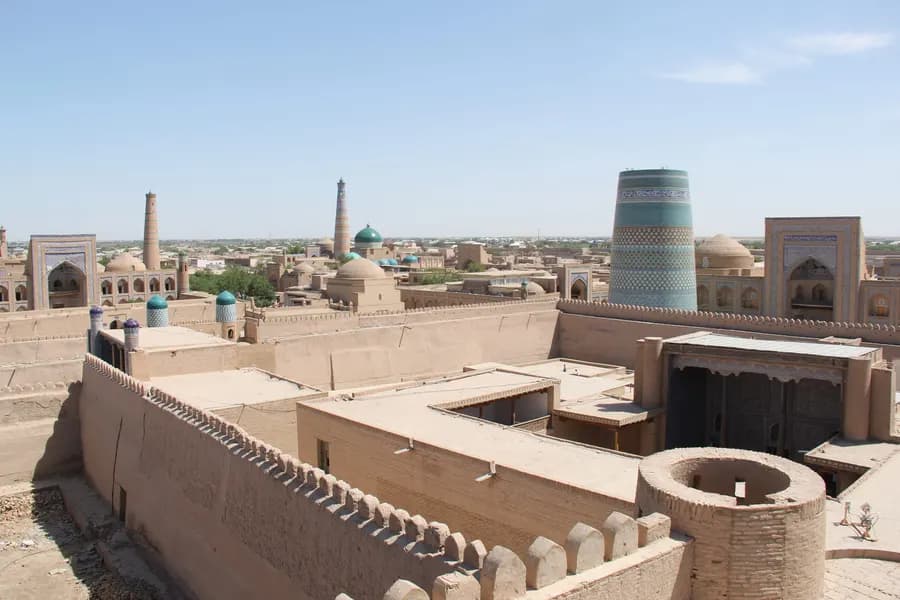
After the walled city, the route either returns through Urgench or continues toward Nurullabay, Dishan-Kala, desert fortresses, Nukus, and the Aral Sea.
Before you go
Itchan Kala is compact, so it is easy to move too quickly. Separate the day before it starts: first walk, interiors, food, craft, and only then the choice of whether to leave the walls.
Khiva reads better when you can come back into Itchan Kala after a rest or a meal. One fast circuit makes the city feel too flat.
Khiva is small on the map, but the day inside the walls fills quickly.
Kunya-Ark, Tash Khauli, Islam Khoja, Pahlavon Mahmud, Muhammad Amin Khan Madrasah, and the museum-reserve should not be the leftover part of the walk.
Nurullabay, Dishan-Kala, and the desert fortresses work better as a separate continuation of Khiva, not an add-on to an already full day inside the walls.
Plan Khiva as a city you return to during the day: first the walls and main landmarks, then food, craft details, interiors, and only after that the road beyond the city.
Before you go Where to stay
Inside Itchan Kala or near the walls, so morning, daytime, and evening returns do not need extra transfers.
First circuit
Gates, Kalta Minor, Juma Mosque, shopfront lanes, and carved doors.
Season and pace
Spring and autumn are easiest; in summer, start early, keep the hottest hours for rest or interiors, and return later in the day.
What comes next
Return through Urgench, or continue toward Nurullabay, Dishan-Kala, the fortresses, Nukus, and the Aral Sea.
Where next
Most routes return through Urgench toward Bukhara and Samarkand. Longer journeys can use Khiva as the start of a road toward desert fortresses, Nukus, and the Aral Sea.
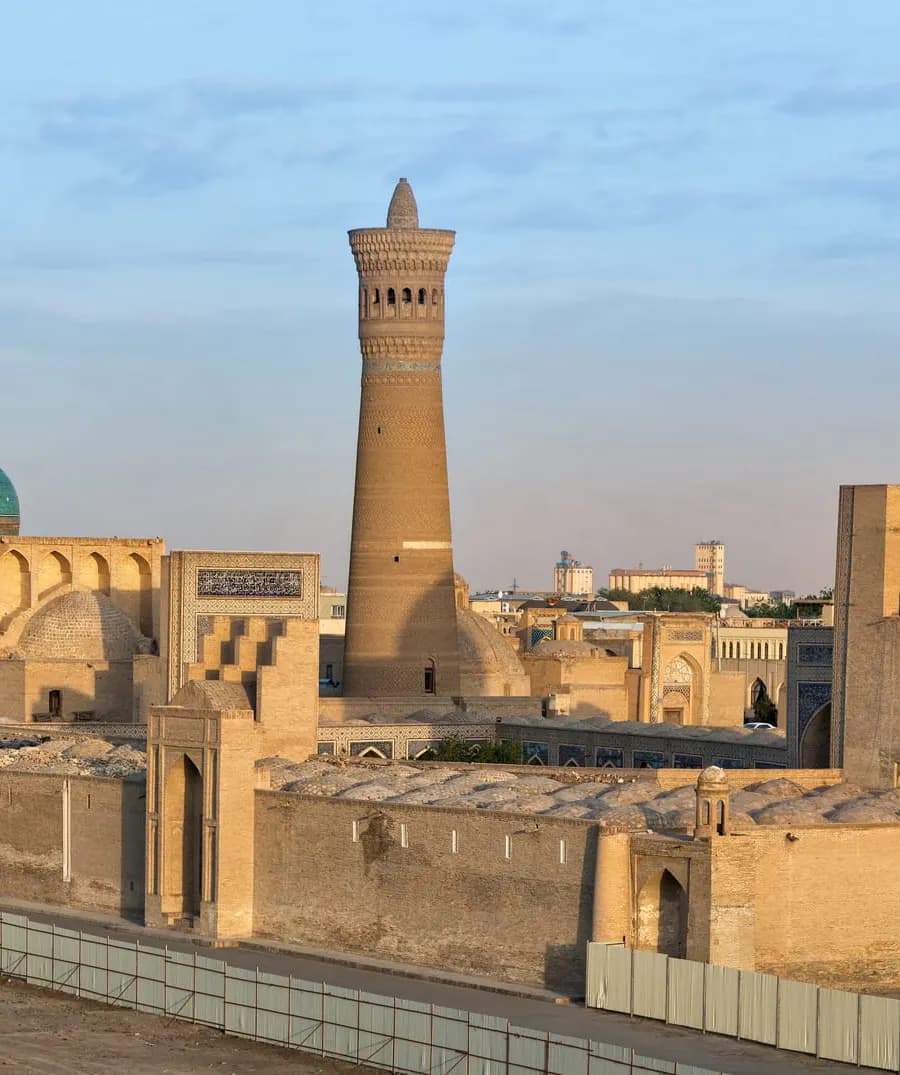
Bukhara comes together on foot: Poi-Kalyan, the Ark, Lyabi-Hauz, trading domes, courtyards, craft lanes, and nearby continuations.
View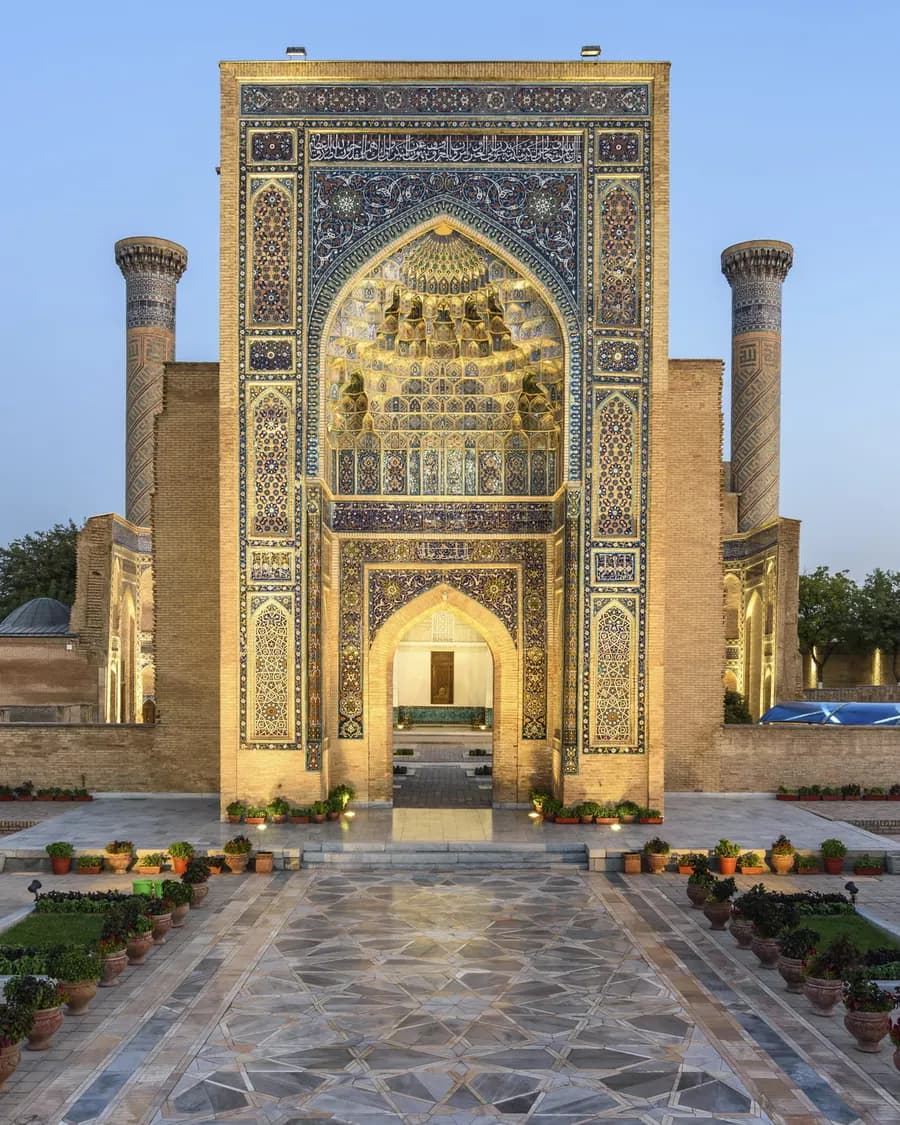
Samarkand brings the route to monumental scale: Registan, Shah-i-Zinda, Bibi-Khanym, Gur-e-Amir, Siab Bazaar, Afrosiab, and Ulugh Beg Observatory.
ViewCity in detail
Walking time, overnight location, and when day trips make sense.
2–3 nights is usually enough when the old core or main anchors get a full walking window. City tone: “A walled city at the western edge of the route”.
Start with the compact city walk first. Day trips only after the centre has settled — otherwise the stop feels like a transfer with monuments attached.
Stay close enough for an evening return on foot or a short transfer. That keeps tea, dinner, and a second pass through the lanes easy without burning the next morning.
On request
We help agencies set a realistic pace and choose the right next move — without rushing the places that matter.