
TourLink
About
Tersak gives a Samarkand journey a slower Urgut-side village stop.
The marker gives approximate village orientation, while the actual arrival side follows the chosen family table, path, and return route.
The route comes together when Samarkand opens the day, Urgut changes the air, Tersak brings the village meal, and the return stays calm.
Agencies and travellers who need Tersak as a readable stop — strong places, honest pacing, and logistics that hold.
Route map
The marker gives approximate village orientation, while the actual arrival side follows the chosen family table, path, and return route.
How the route comes together
The route comes together when Samarkand opens the day, Urgut changes the air, Tersak brings the village meal, and the return stays calm.
Let Samarkand open the day before the route turns toward Urgut air.
Map orientation
The marker gives village-area orientation, not a fixed doorway or activity address.
What shapes the village day
These Tersak stops show the village in three parts: the Urgut road, the home table, and one light outdoor continuation.
The Urgut road is the first reason Tersak feels different from Samarkand. The road leaves the city scale, the air opens, and the village gives the visit a calmer pace.
Open placeThe family table is where Tersak becomes more than a mountain view. Bread, dairy, local food, and conversation slow the route and give the village stop a human centre.
Open placeTersak’s outdoor side is strongest at a modest scale: a field edge, a short mountain walk, or horses when the day and season make the movement feel natural.
Open placeVillage moments
The moments stay small and specific: arrival, bread, dairy, customs, a short path, and a clear road back.
Let the road out of Samarkand change the pace before the village table begins.
Bread, dairy, local dishes, and conversation give the village stop its human centre.
Small food traditions feel strongest when they stay close to the family table.
Customs come through people, food, and daily rhythm rather than staged explanation.
A modest path or field edge is enough after the road and table have shaped the village stop.
A calm road back keeps the mountain village stop part of the Samarkand route.
Before you go
Tersak is not a quick add-on to a monument day. It needs a calm road, a real home table, and enough time to return without rushing.
Tersak needs enough time for the move from Samarkand to feel like a change of air, not a rushed side turn.
Tersak is strongest when the Urgut road ends at a real table and the mountain air stays unhurried.
Food, bread, dairy, and customs are the human centre of the village stop.
A short path, field edge, or horse moment is enough after the road and the family table have already shaped the visit.
Choose Tersak when you want the Samarkand route to breathe through a village table, mountain air, and a gentle return.
Good to know Status
Official tourism village in Urgut District.
Main draw
Family tables, village food, flatbread and dairy traditions, customs, mountain air, and short outdoor moments.
Route role
A fuller mountain-side village stop from Samarkand, not a quick extra stop.
Season and pace
Best with enough time for the Urgut road, the family table, a modest walk, and an easy return.
Nearby Samarkand mountain stops
Omonqoton, Oqsoy, and Samarkand are separate choices; pair them with Tersak only when the road pace stays calm.
Omonqoton is an Urgut District tourism mahalla where spring water, cooler mountain air, family stays, and the Qoratepa road create a gentle break from Samarkand.
ViewOqsoy turns a Samarkand journey toward Nurobod mountain air, the Hazrati Dovud pilgrimage setting, a family table or stay, short walks, and an unhurried return.
View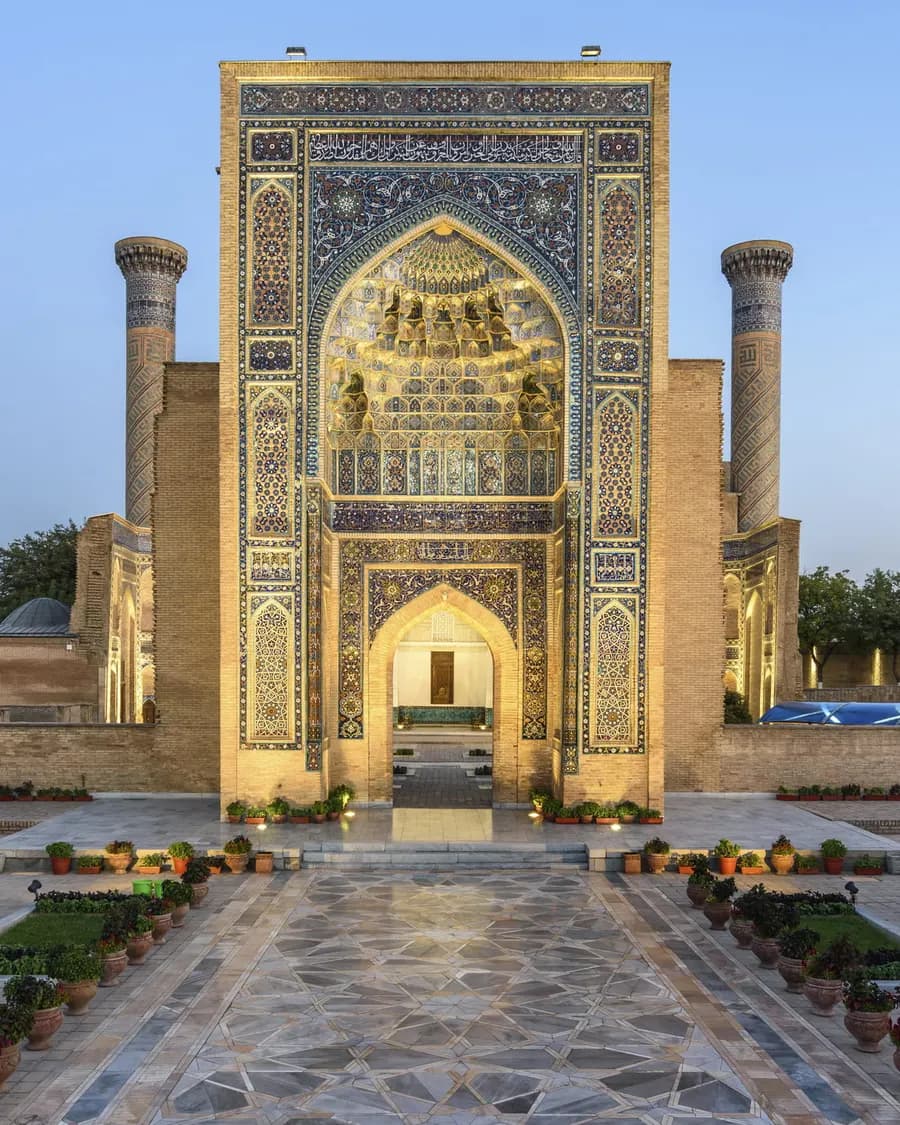
Samarkand brings the route to monumental scale: Registan, Shah-i-Zinda, Bibi-Khanym, Gur-e-Amir, Siab Bazaar, Afrosiab, and Ulugh Beg Observatory.
ViewCity in detail
Walking time, overnight location, and when day trips make sense.
1–2 nights is usually enough when the old core or main anchors get a full walking window. City tone: “An Urgut mountain village for home meals, cooler air, and a slower return”.
Start with the compact city walk first. Day trips only after the centre has settled — otherwise the stop feels like a transfer with monuments attached.
Stay close enough for an evening return on foot or a short transfer. That keeps tea, dinner, and a second pass through the lanes easy without burning the next morning.
On request
We help agencies set a realistic pace and choose the right next move — without rushing the places that matter.