TourLink
Impression · Bukhara
An hour and a half in the fortress from which Bukhara was ruled for two thousand years.
The Ark stands on a hill, and the hill is man-made: beneath it lie the layers of a city that have been piling up since the fifth century. The fortress was rebuilt dozens of times; its last owners, the emirs of Bukhara, lived here until 1920, when the Red Army bombed it from the air. What you see today is roughly a quarter of what once stood.
You go in through the gate with its two towers and up a ramp. The ramp is long on purpose: so that the visitor has time to feel whose presence he is walking towards. At the top there is a corridor, and courtyards off it. A mosque, the stables, the emir's reception rooms.
The throne hall, the Kurinishkhona, is an open courtyard with columns along the walls and a marble throne under a canopy. Ambassadors were received here, and here people were also executed: the emir watched from the throne, the ambassador stood. A guide will show you where each of them stood. The place is small, and that makes the history feel more concrete.
The prison, the zindan, is not inside the Ark but beside it, two hundred metres away. You go there separately, and it is worth it: the pit six metres deep, into which prisoners were lowered through a hatch, has survived. In 1842 two British officers were held in it, and were later executed on the square in front of the Ark. It is one of those stories Bukhara tells reluctantly.
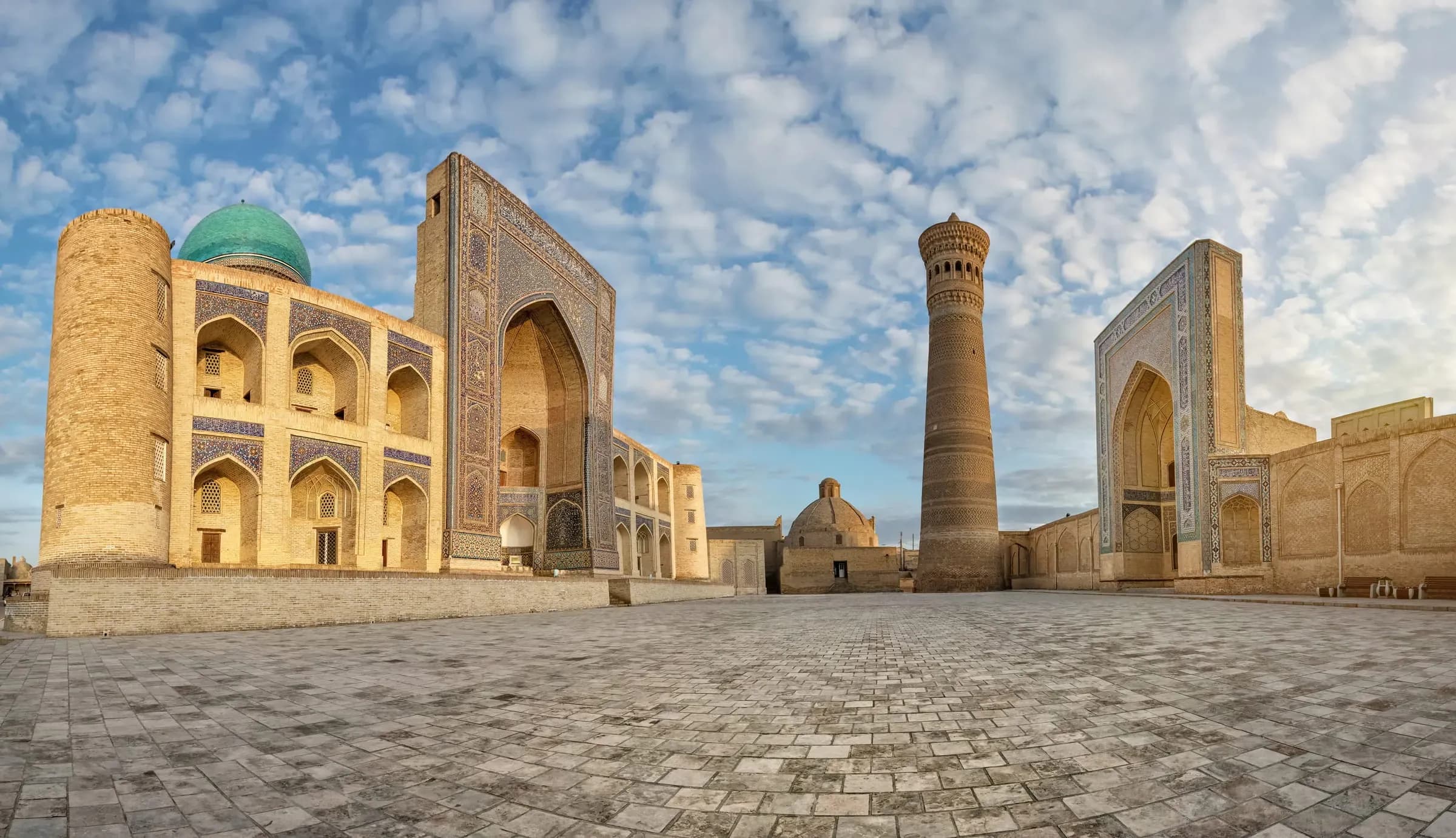
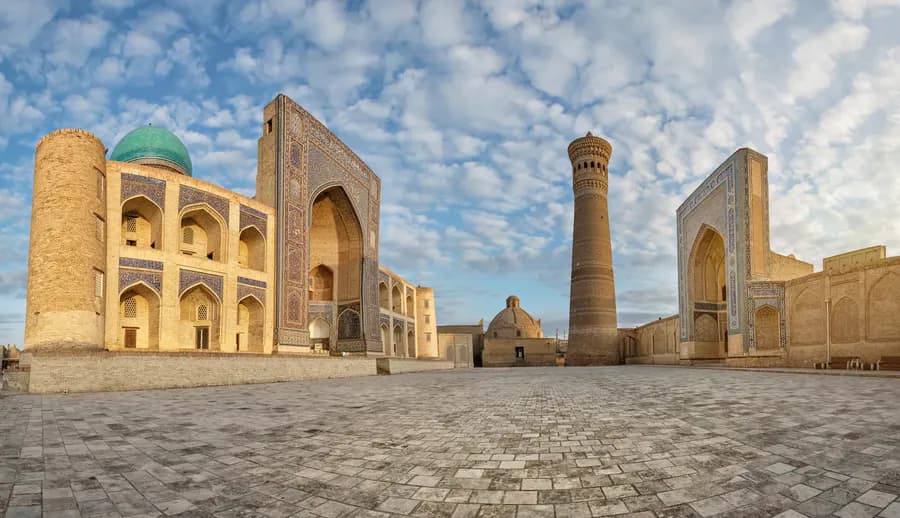
The best thing about the Ark is the wall. From the wall you can see the Bolo Hauz mosque opposite with its twenty carved columns, the domes of the old town, and the Kalyan minaret rising above everything else. In the evening the light runs along the wall and the clay of the fortress turns the colour of bread.
Share
More impressions