TourLink
Impression · Bukhara
Here you do not watch the cooking. Here you chop the carrots.
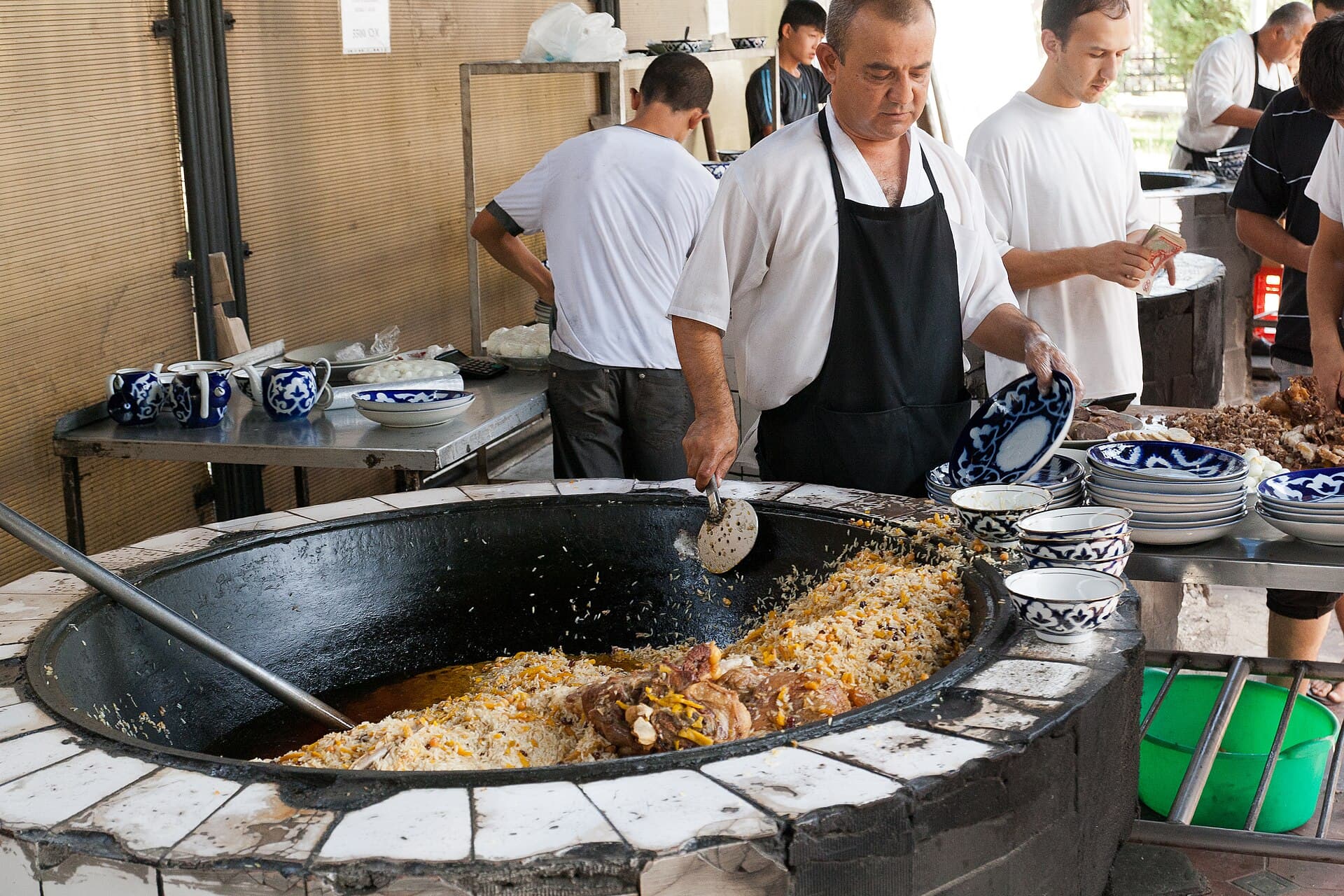
At eleven the kazan is still cold. There is a table in the courtyard, carrots on the table, and that is your job for the next twenty minutes. Batons, not shreds, and not thin: thin ones will cook away to mush. Matluba, the lady of the house, shows you once, then comes back to check.
Plov here is not made for guests but with them. That is the difference from a plov house: there you see a kazan holding a hundred portions and a cook who never turns around. Here the kazan feeds eight, and everything happens within arm's reach.
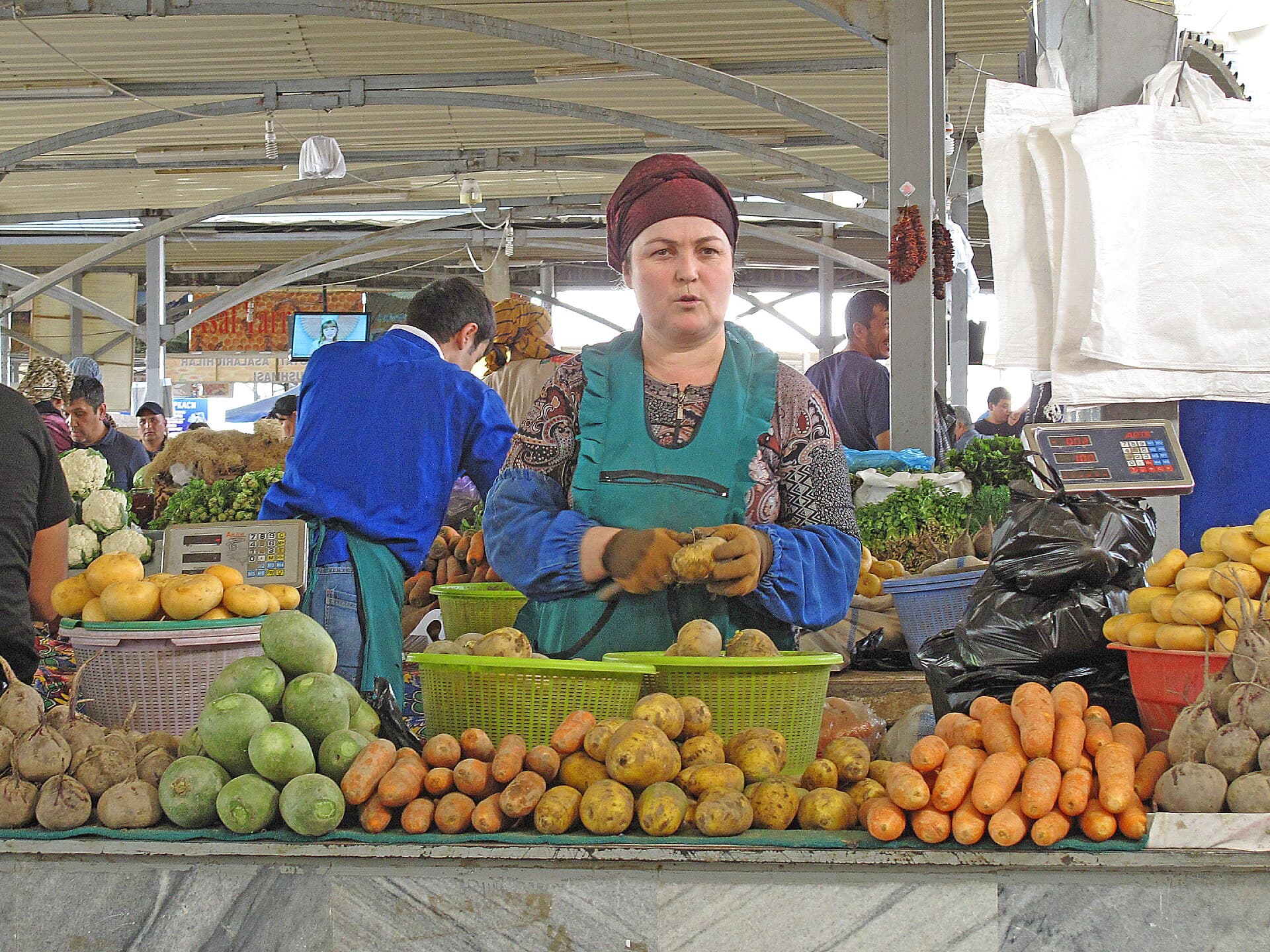
Fat goes into the kazan first. Fat-tail sheep fat, in chunks, rendered until only the cracklings are left, and the cracklings are eaten right there with onion and flatbread, before the plov. Then the meat, then the onion, then your carrots. The lady of the house adds cumin by the pinch, not by the spoon, and you realise there is no recipe here in the usual sense.
While the zirvak simmers, there is talk. How much plov gets cooked for a wedding, who in the family cooks on Thursdays, and why Bukhara plov is not as fatty as the Fergana kind. What they make here is sofi: the meat and carrots are not fried to a crust but stewed together with the rice.
The rice goes in last, in an even layer, and from that moment nobody approaches the kazan. Half an hour under the lid. In that time the table is laid: achichuk of thinly sliced tomatoes with onion, flatbread, tea in a pot with a chipped spout.
The plov comes out on a single dish, set in the middle of the table, and everyone eats with spoons from the edges. For the first few minutes nobody says anything. Then the lady of the house asks how you liked the carrots, and that is the one moment when it is worth lying.
Share
More impressions