
TourLink
About
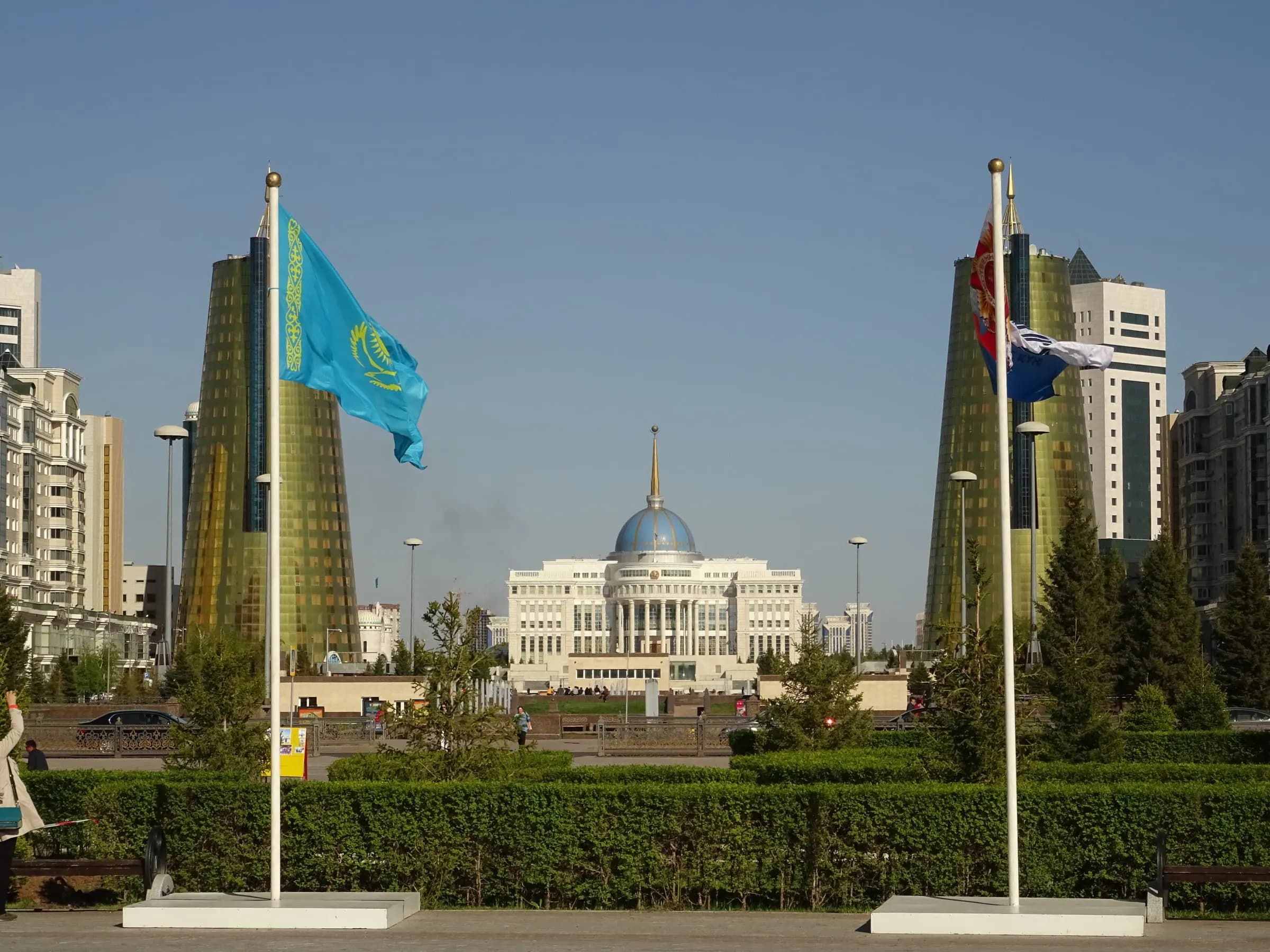
Astana does not try to feel old.
Astana is easiest when the visit follows the Left Bank first, then one indoor anchor and one river or boulevard pause.
Begin around Baiterek and the Left Bank, choose Nur Alem or the National Museum, then let the Ishim River or dinner soften the formal scale.
Agencies and travellers who need Astana as a readable stop — strong places, honest pacing, and logistics that hold.
Getting around
Astana is easiest when the visit follows the Left Bank first, then one indoor anchor and one river or boulevard pause.
City sequence
Begin around Baiterek and the Left Bank, choose Nur Alem or the National Museum, then let the Ishim River or dinner soften the formal scale.
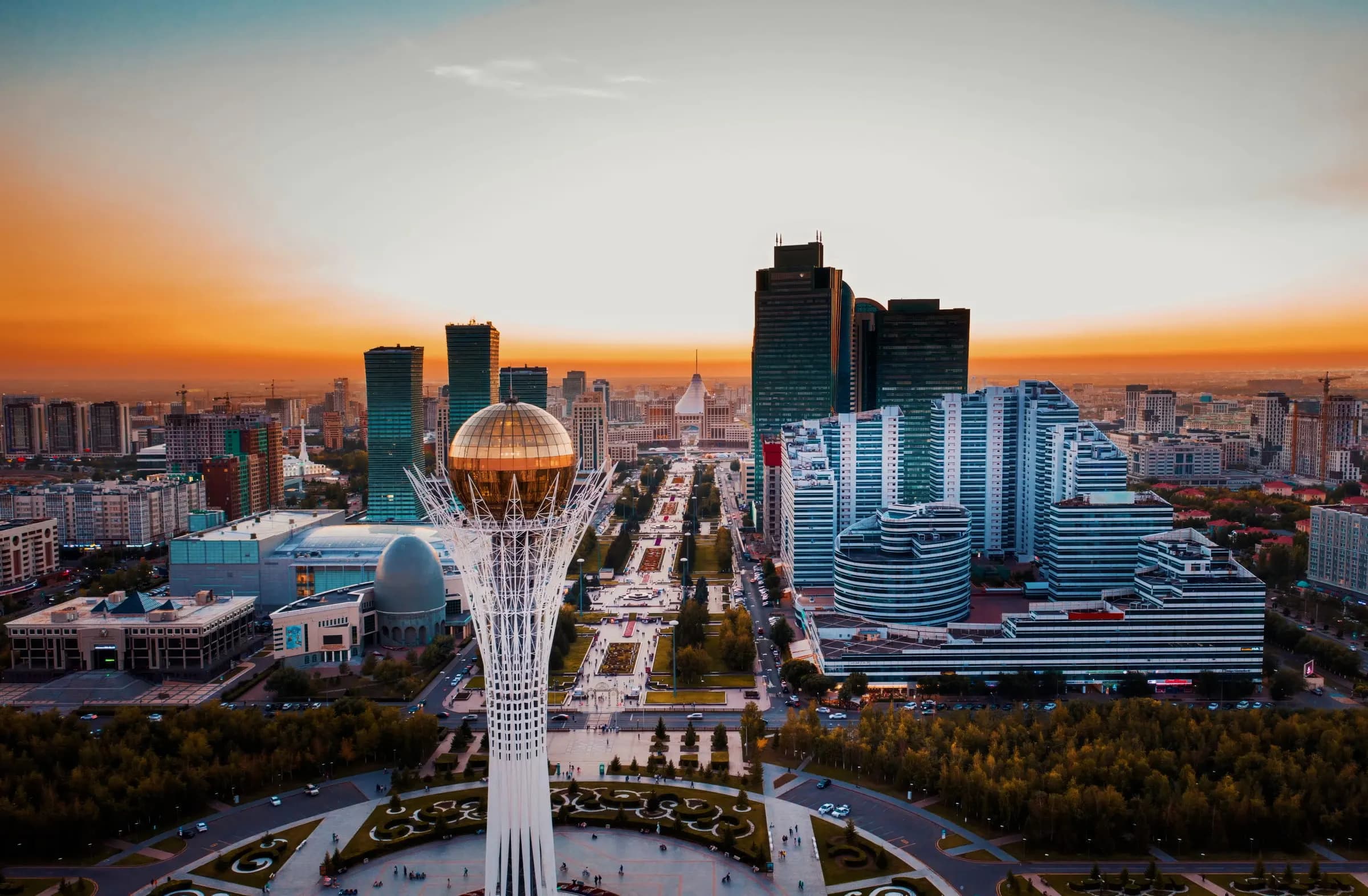
The tower and boulevard give the city its first shape before the day turns to museums or the river.
City map
The map looks spacious, but wind, heat, winter cold, and long blocks can make short transfers useful.
What to see
Baiterek sets the Left Bank in motion, Nur Alem gives the Expo-era future story, and the National Museum adds historical depth before the route turns back to the river.
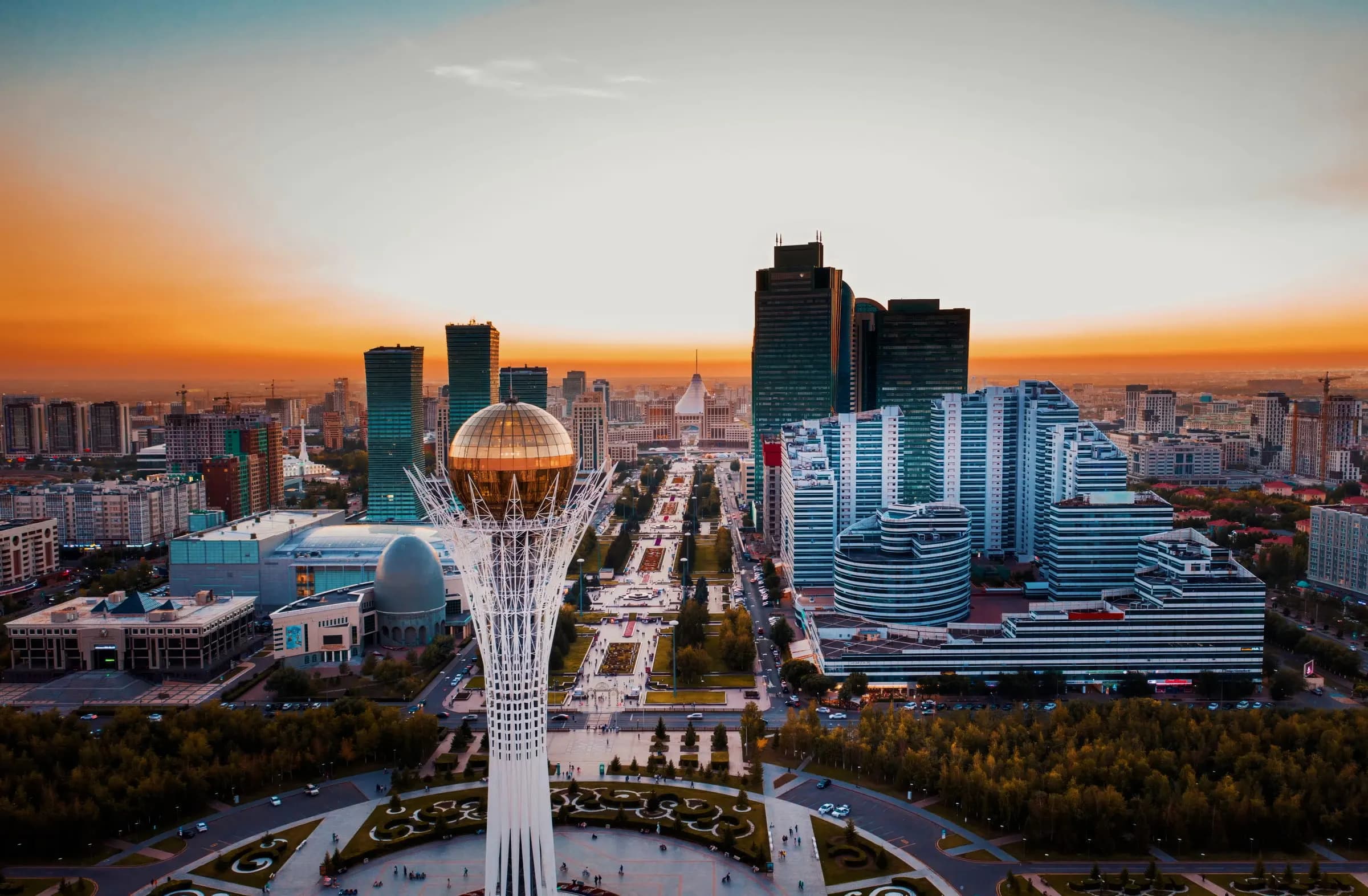
Baiterek rises where Astana's broad boulevard, government quarter, and open steppe sky meet. Start here and the modern capital becomes easier to place: its scale, wind, symmetry, and distance are visible before the museum visits begin.
Open place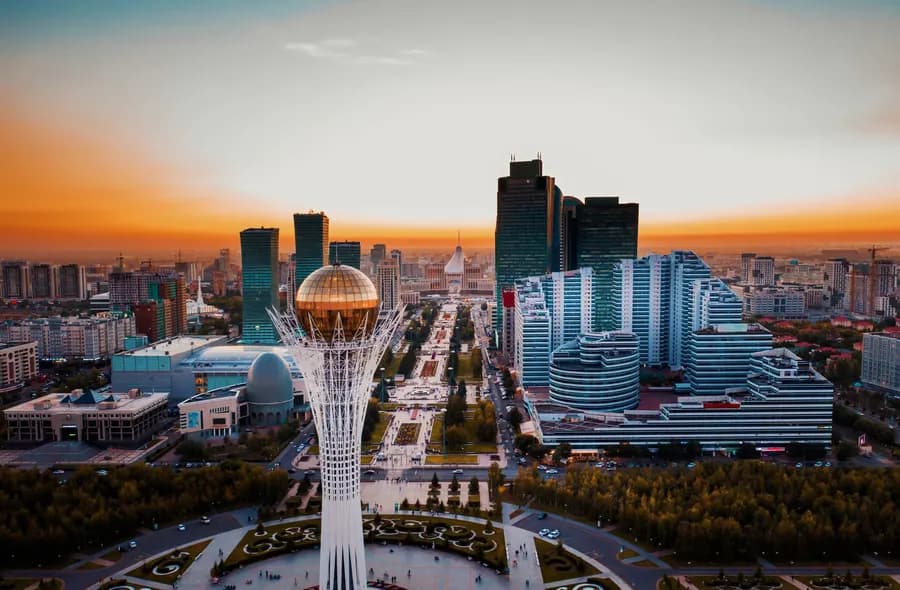
Nur Alem is the sphere that made Astana's Expo district instantly recognizable. Today the building should be read as a transformed landmark: the former Future Energy Museum has closed, and the sphere now points travelers toward Alem.AI, the Museum of Singularity, and the capital'
Open place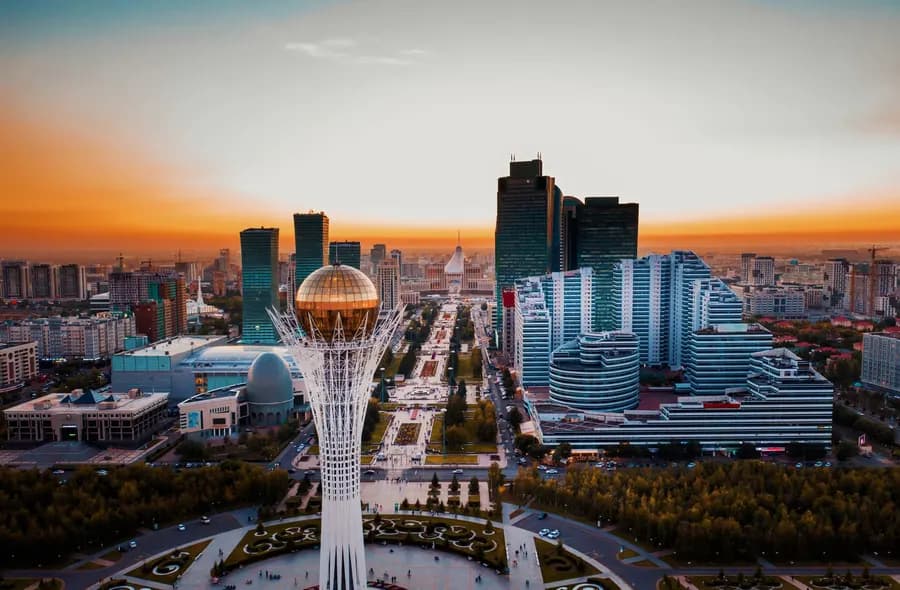
On Tauelsizdik Avenue, the National Museum anchors the cultural side of Astana's Independence Square. The visit moves from ancient and medieval history to the Gold Hall, ethnography, contemporary art, the Hall of Astana, and Independent Kazakhstan, giving the capital's civic scal
Open place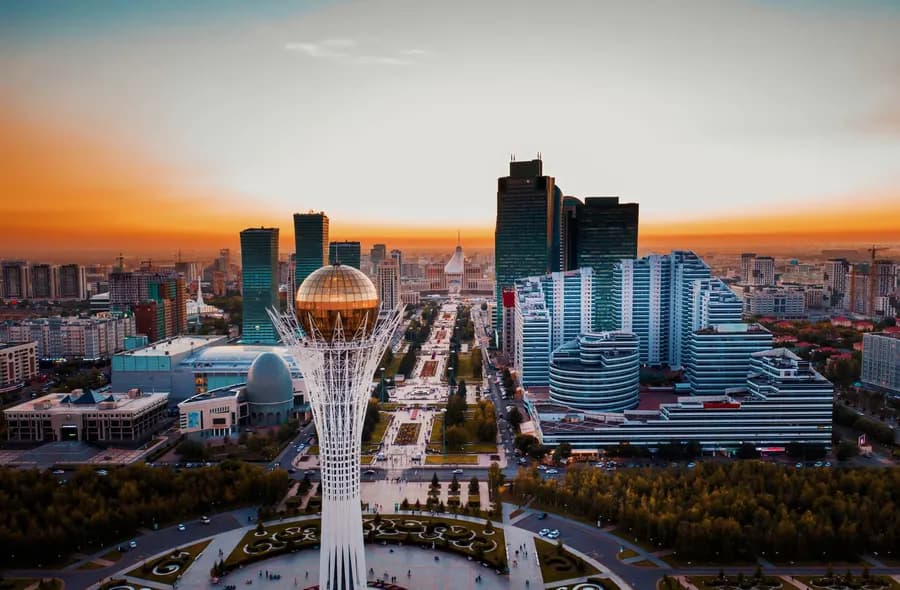
Khan Shatyr is not Astana's quietest stop, and that is why it belongs in the route. The tent roof gives the Left Bank a landmark you recognize from far away; inside, you see the everyday side of the planned capital: coffee stops, families, entertainment, and shelter from wind, co
Open place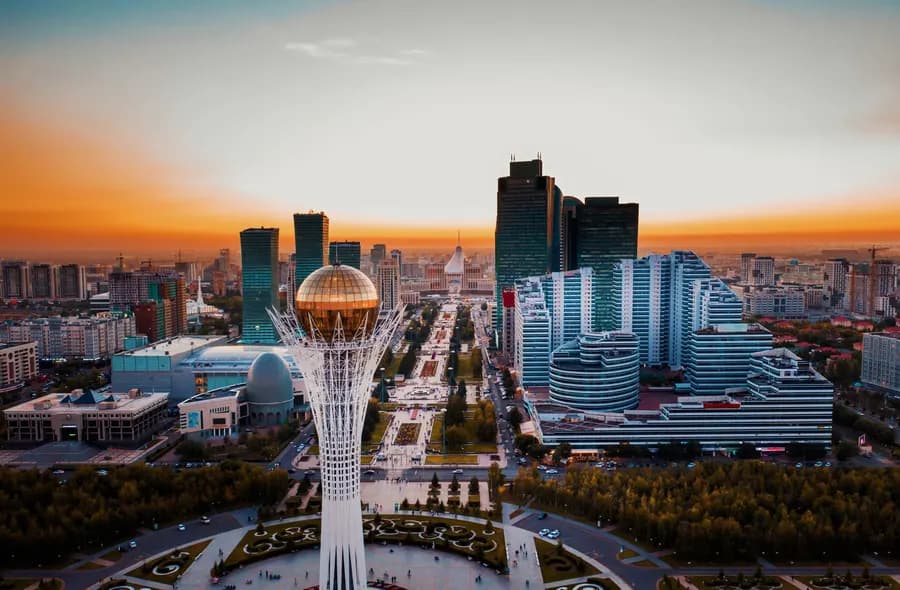
Hazret Sultan Mosque gives Astana's monumental center a quieter register. The white-stone complex opened in 2012 beside Independence Square, with four 77-meter minarets, a 51-meter dome shaped by the shanyrak symbol, and a prayer hall built for daily worship and holiday crowds. A
Open place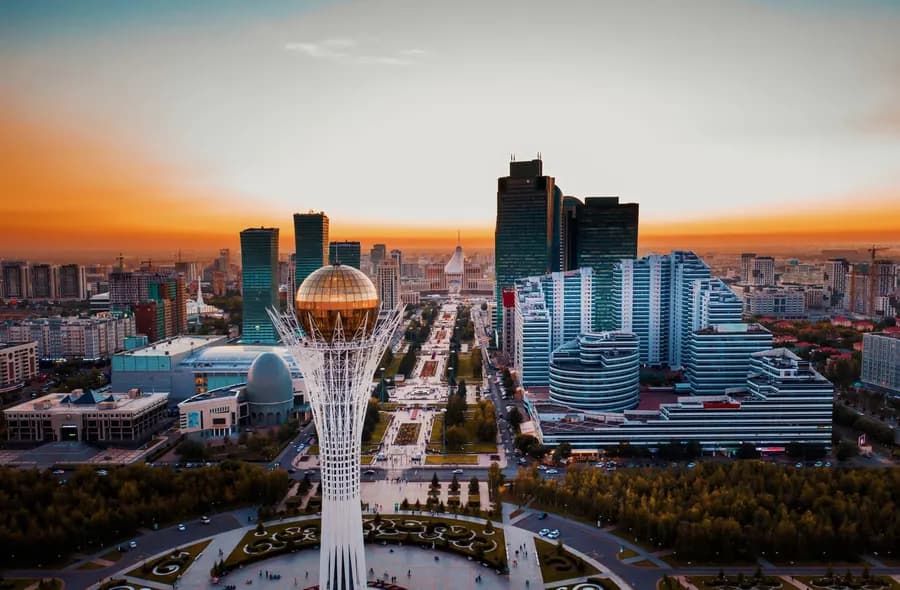
The Palace gives Astana's Independence Square a pyramid you can read from the pavement: stone, glass, and a stained-glass crown over a building made for congresses and performance. Designed by Foster + Partners after the first interfaith Congress in Astana, it belongs naturally w
Open placeCity moments
Astana feels less formal when the visit leaves space for boulevard wind, one museum interior, river light, and an unhurried meal between transfers.
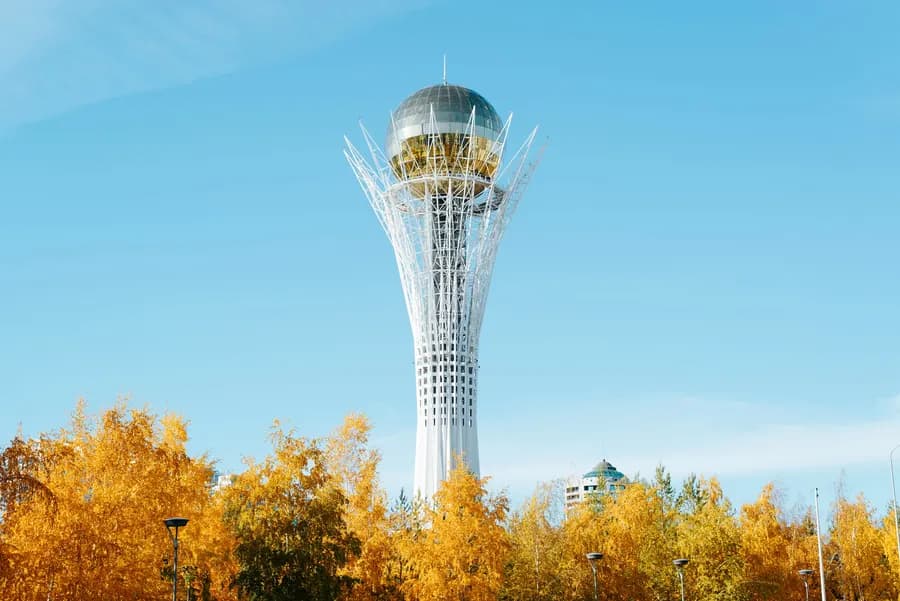
Baiterek gives the planned capital a first line: tower views, open plazas, boulevard wind, and the scale of the Left Bank.
The Expo sphere adds an indoor pause with future-energy displays, new architecture, and the wide space of Astana’s exhibition district.
The National Museum pairs state history with open avenues, helping Astana feel tied to the steppe rather than only to its towers.
Before you go
The capital can feel formal at first. A clear Left Bank sequence, one main indoor stop, and time by the river or over dinner make the city easier to feel, not only to map.
Start with Baiterek and the Left Bank, choose one museum, then end with the Ishim River, a boulevard walk, or dinner rather than stacking more landmarks.
Astana is strongest when its planned capital line is balanced by one slower human stop.
Nur Alem and the National Museum protect the visit from wind, heat, or cold while giving the city a story beyond its architecture.
Burabay and Korgalzhyn belong to a separate plan with road timing, season, and daylight checked before departure.
Come for the modern capital; leave knowing whether the next move is lake forest, bird reserve, business program, or the route back south.
Good to know Stay
Two nights allow one calm city day; add another night if Burabay or Korgalzhyn is part of the route.
Route role
Modern capital, museum stop, business city, and northern steppe anchor.
Season and pace
Late spring to early autumn is easiest. Winter can be rewarding, but wind and cold make indoor sequencing important.
Nearby places
From Astana, the route can turn north to Burabay’s lake forest, out to Korgalzhyn’s wetlands, or south by flight toward Almaty and Shymkent.
Burabay is the lake-and-pine place north of Astana where open steppe gives way to shore paths, granite silhouettes, and a calmer night around Lake Burabay.
ViewKorgalzhyn turns the Astana journey toward Saryarka's protected lakes, reed beds, and migratory birds, with season and reserve access shaping every visit.
View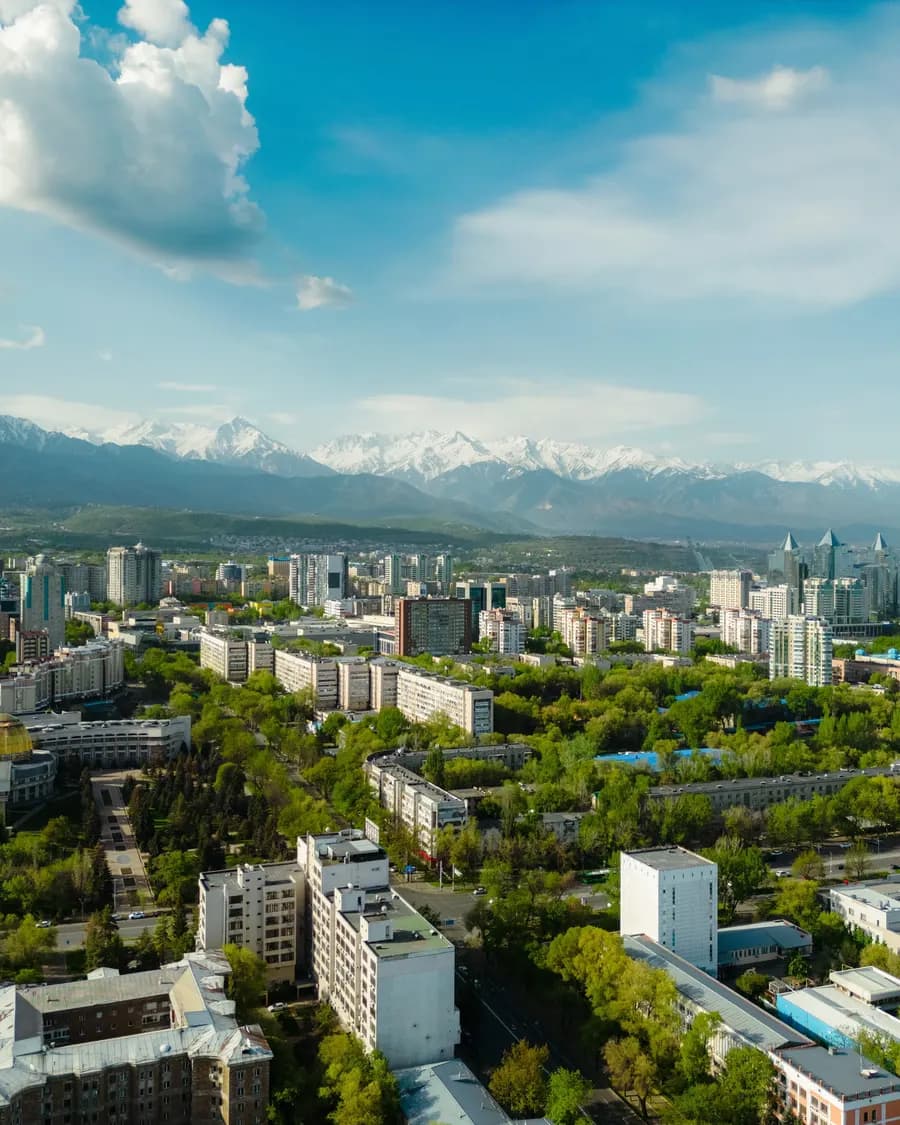
Almaty brings Kazakhstan into the foothills: leafy streets, market time, Kok-Tobe views, Medeu air, Shymbulak lift timing, and wider routes toward canyons, lakes, rock art, and steppe.
ViewShymkent brings southern Kazakhstan down to street level: old-city traces, Central and Upper Bazaar, and road choices toward Turkistan, Otrar, Sayram, and the Western Tian Shan.
ViewCity in detail
Walking time, overnight location, and when day trips make sense.
1–2 nights is usually enough when the old core or main anchors get a full walking window. City tone: “A planned capital with the steppe still close”.
Start with the compact city walk first. Day trips only after the centre has settled — otherwise the stop feels like a transfer with monuments attached.
Stay close enough for an evening return on foot or a short transfer. That keeps tea, dinner, and a second pass through the lanes easy without burning the next morning.
On request
We help agencies set a realistic pace and choose the right next move — without rushing the places that matter.