TourLink
About
Kazakhstan gives Central Asia its continental scale — capitals, foothills, and Silk Road south across real distances.
Astana sets the modern capital tone; Almaty opens mountains and city life; Turkistan and the south hold pilgrimage courtyards and older Silk Road depth. Distances are the product’s grammar: trains, flights and road days must be planned as part of the experience, not as leftovers between hotels.
One strong anchor per leg, honest travel days, and a season that respects steppe heat, mountain weather and long horizons.
Agencies building wider Central Asia programmes, or clients who want capital polish next to mountain and heritage depth.
Route logic
Kazakhstan is too large to treat as one compressed list. The clearest routes start with a main anchor: Almaty and the Tian Shan, Astana and the steppe, or Shymkent and Turkistan on the southern Silk Road.
Route rhythm
Almaty, Astana, Shymkent, and Turkistan each change the journey in a different way. The route feels better when those anchors are paced as distinct chapters rather than squeezed into one long transfer chain.
Almaty brings city rhythm close to Medeu, Shymbulak, Kok-Tobe, foothill roads, and higher mountain choices.
Route anchors
Keep four anchors in view: Almaty, Astana, Shymkent, and Turkistan. Flights, rail options, road conditions, season, and your pace decide how much distance belongs in one journey.
Route ideas
Until published tour programs are ready, we shape Kazakhstan itineraries around distance, season, flights, rail, and the places that deserve a slower stop.
Tourist regions
Kazakhstan is easiest to plan through broad travel regions: Almaty & Northern Tian Shan for the mountain edge, Astana & Akmola Steppe for capital scale, and Turkistan/Shymkent & the Southern Silk Road for southern heritage. Mangystau and East Kazakhstan/Altai remain strong near-term extensions when the route has the right season and distance.
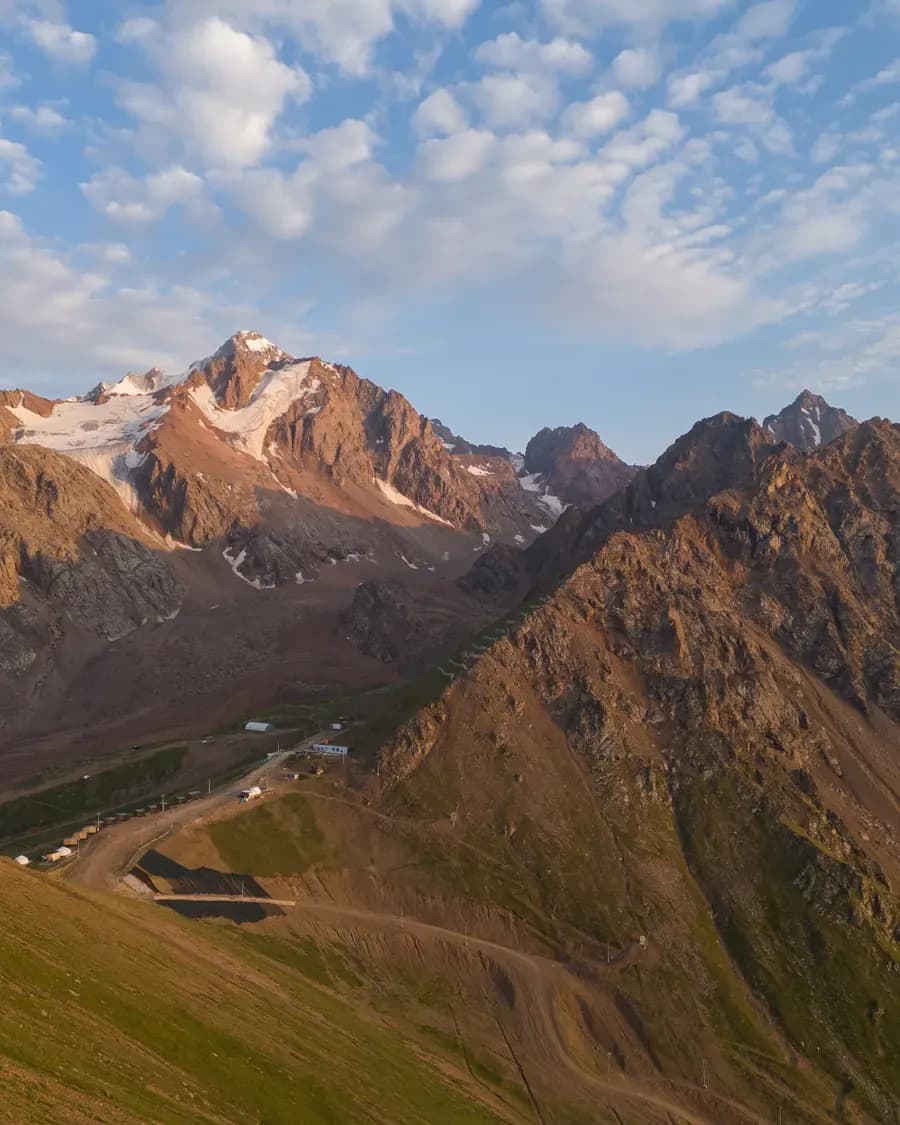
Almaty & Northern Tian Shan brings Kazakhstan close to the mountains: city streets, Medeu, Shymbulak, Kok-Tobe, and roads toward Charyn, Saty, Kolsai, Kaindy, Tamgaly, and Altyn-Emel.
View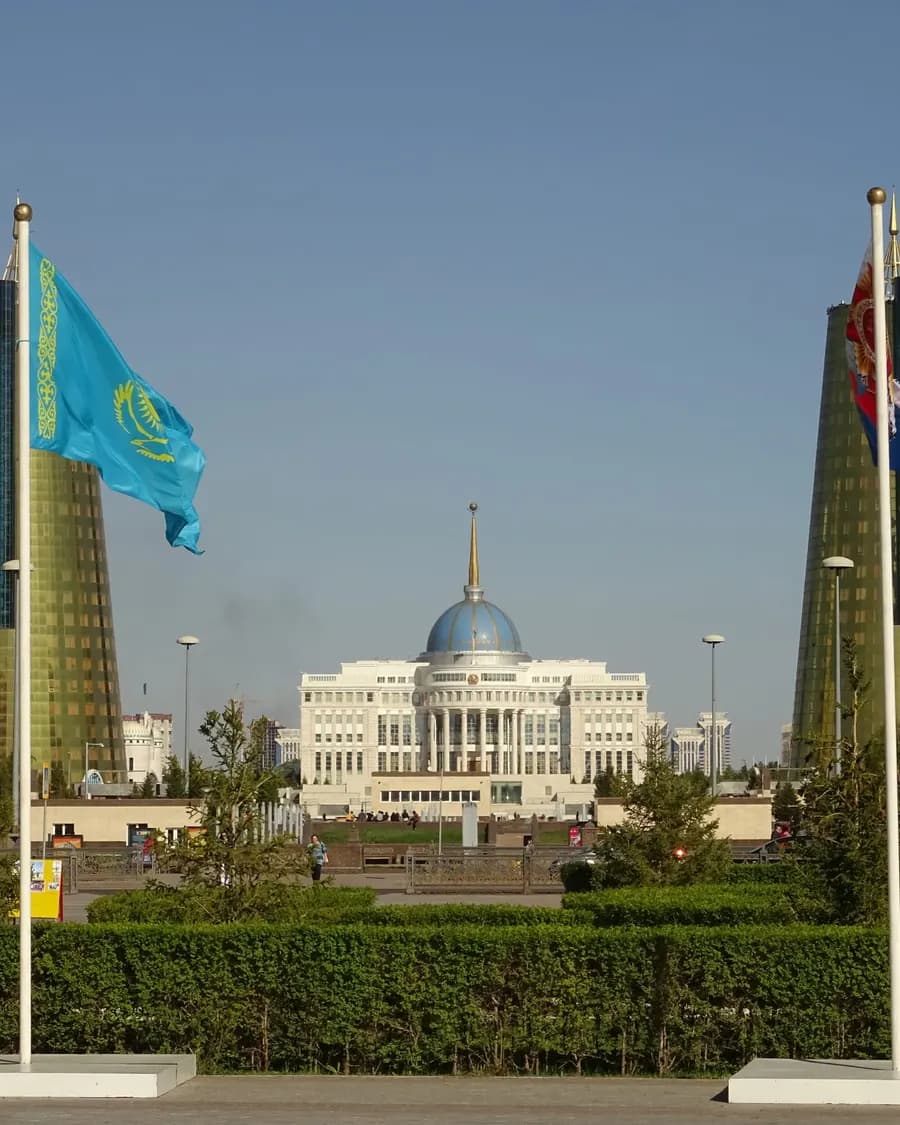
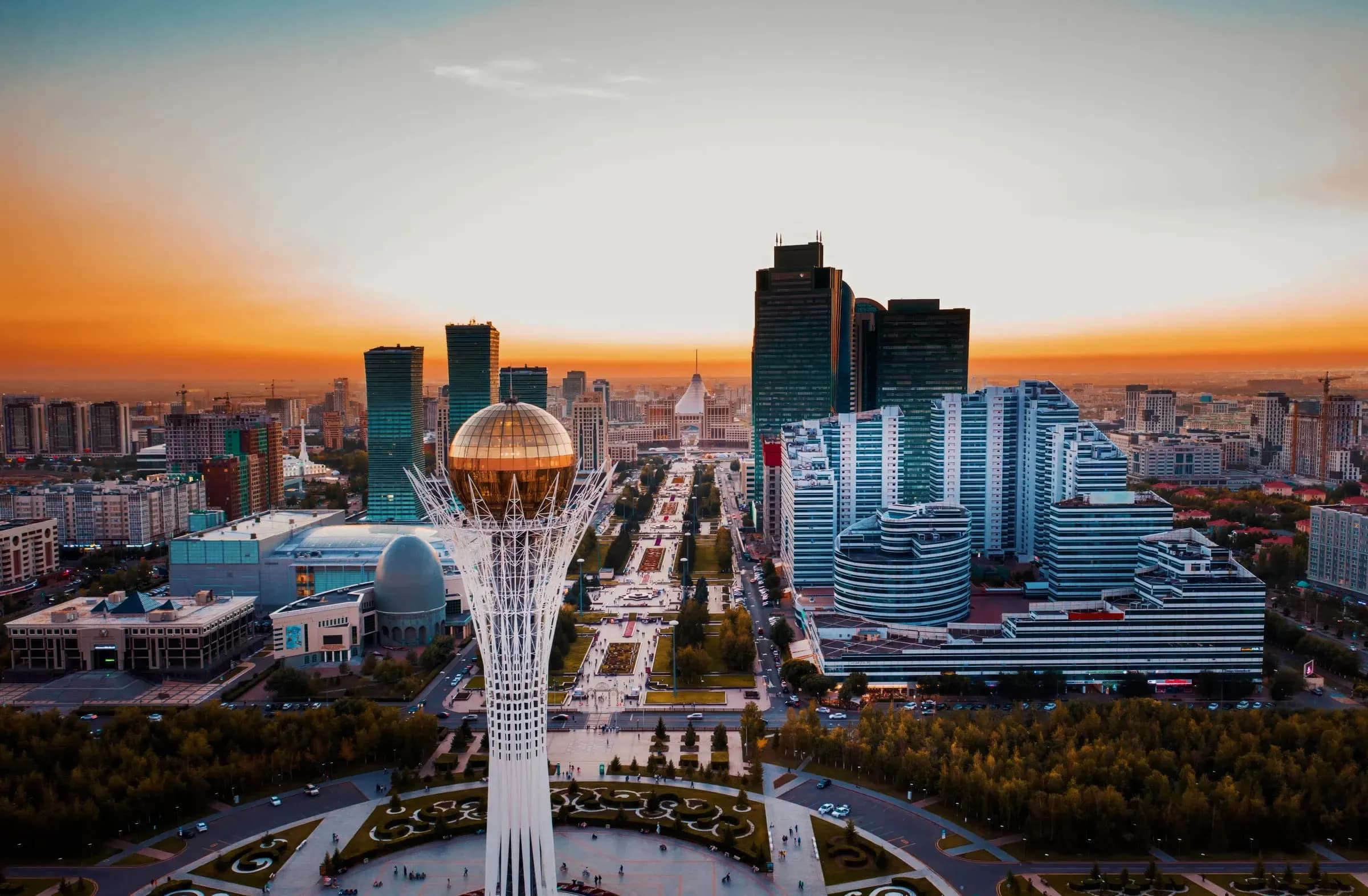
Astana & Akmola Steppe starts in Kazakhstan's modern capital, then opens north toward Burabay lake country and Korgalzhyn's protected wetlands.
View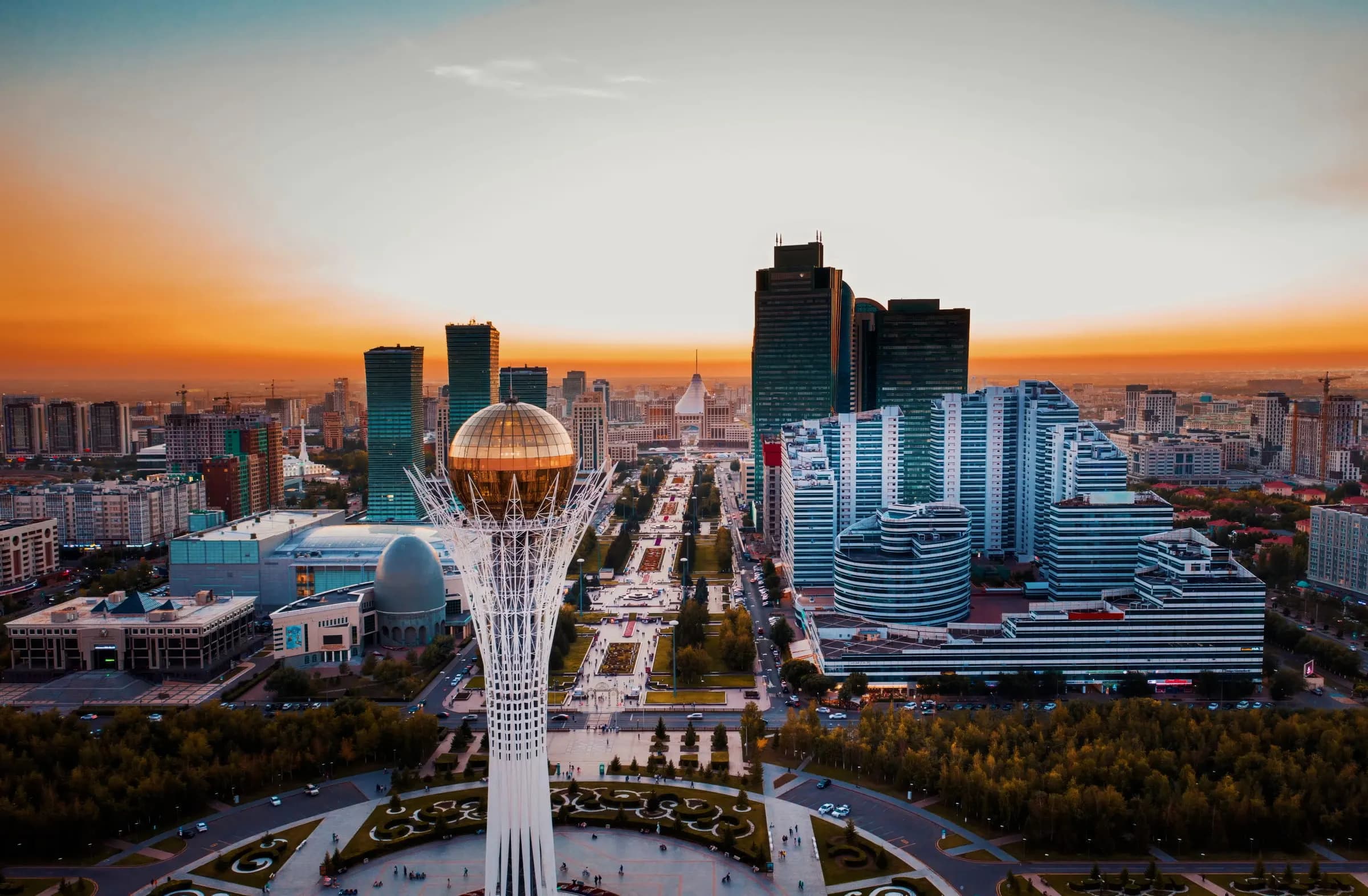
Turkistan and Shymkent open Kazakhstan's southern Silk Road through the Yasawi mausoleum, Azret Sultan, Shymkent markets, Otrar and Sauran archaeology, Sayram memory, and the Western Tian Shan edge.
ViewEast Kazakhstan & Altai leads from Oskemen and Semey toward the Kazakh Altai: Irtysh river cities, Katon-Karagay forests, Ridder, Markakol, and mountain roads shaped by season and access.
ViewMangystau & Caspian West carries Kazakhstan toward the Caspian edge and desert interior: Aktau, Bozzhira, Torysh, Sherkala, Beket-Ata, and long roads that need careful timing.
ViewA measured southern Kazakhstan stop around Talas-side Taraz, the Aisha Bibi and Babaji Khatun mausoleums, Karakhan, Ancient Taraz, and Akyrtas when the road is right.
ViewWhen to go
Heat, snow, mountain access, desert comfort, and city walking all change the best route shape.
March belongs to Nauryz and the slow thaw. April and May are strong for first Kazakhstan routes: Almaty feels alive, Charyn is comfortable, Turkistan is warm, and roads are easier before summer heat.
Summer is strongest when the route respects altitude and distance. Almaty foothills, Kolsai and Kaindy, Burabay, and eastern mountain routes are good choices; the southern steppe and Mangystau need heat-aware planning.
September and October are often the most balanced months: dry air, softer light, cooler roads, and long views across the steppe. November is quieter and better for city-led or business travel.
Winter is clear about its limits: Astana can be severe, and long road routes need caution. Almaty has a different winter logic, with mountains, skating, snow, warm cafes, and compact cultural days.
Planning basics
Visa Check by passport Visa-free rules vary by nationality and stay length. For multi-country journeys, check Kazakhstan entry rules together with the rest of the route.
Money Tenge, cards, cash Cards work well in major cities. Carry cash for markets, small cafes, rural stops, and remote mountain, steppe, or western routes.
Safety Straightforward with planning Cities are generally easy for travelers. Remote nature routes need suitable vehicles, weather checks, realistic timing, and enough margin for distance.
Transport Distance decides the rhythm Flights connect far cities, rail can add a slower rhythm, and tested vehicles matter for canyons, steppe, Mangystau, and mountain roads.
Routes in detail
Use these notes to brief clients on transfers and overnight logic in Kazakhstan.
For a first programme, 8–12 nights usually holds: keep the classic spine readable, then add one extension only if the season and group pace allow it. Use “Steppe scale, mountain cities, and Silk Road south” as the brief for what the country actually sells.
Plan long road or rail legs as part of the product, not leftovers between hotels. Evening or overnight moves, buffer mornings, and one clear anchor per day keep Kazakhstan sellable for agencies.
Split the trip into readable chapters: heritage days, then one nature or foothill pause, then return to the main city line. Clients remember clarity more than packing every highlight into one week.
On request
We shape programmes around real distances, seasons, and the stops that deserve more time.