TourLink
About
Beyond Khiva, Karakalpakstan gives the route a different scale: Nukus brings the Savitsky Museum and regional history, Moynaq brings the Aral Sea story, and Ellikqala leads toward the desert fortresses of ancient Khorezm.
The region is easier to plan from Nukus outward. From there, the route can turn north toward Moynaq and the Aral Sea story, south toward Mizdakhan and Chilpyk, or east toward Ellikqala and the ancient Khorezm fortresses.
Road distances, museum schedules, heat, and remote-site access should be checked before the route is confirmed.
Agencies and travellers who need Karakalpakstan & Aral Sea as a readable stop — strong places, honest pacing, and logistics that hold.
Getting around
The region is easier to plan from Nukus outward. From there, the route can turn north toward Moynaq and the Aral Sea story, south toward Mizdakhan and Chilpyk, or east toward Ellikqala and the ancient Khorezm fortresses.
Distance and access
Road distances, museum schedules, heat, and remote-site access should be checked before the route is confirmed.
Start with Savitsky Museum, the State Museum, Karakalpak objects, archaeology, and city streets before the route opens into longer distances.
Regional anchors
The map keeps the first decisions visible: start in Nukus, continue toward Moynaq and the Aral Sea, or turn toward Ellikqala, Toprak-Kala, Kyzyl-Kala, and Ayaz-Kala.
Region character
Karakalpakstan is where the classic Uzbekistan route leaves the oasis cities and becomes wider, drier, and more remote. Nukus, Moynaq, Mizdakhan, Chilpyk, and Ellikqala explain the west through museums, memory, sacred ground, and ancient Khorezm. «After Khiva, Karakalpakstan becomes its own western route.»
Region anchors
Start with the city that gives context, then choose the Aral Sea road or the fortress route.
Nukus makes western Uzbekistan more than a transfer. Start with the Savitsky Museum and Karakalpak collections, then decide whether the route continues to Moynaq, Chilpyk, Mizdakhan, or the fortresses of ancient Khorezm.
Open place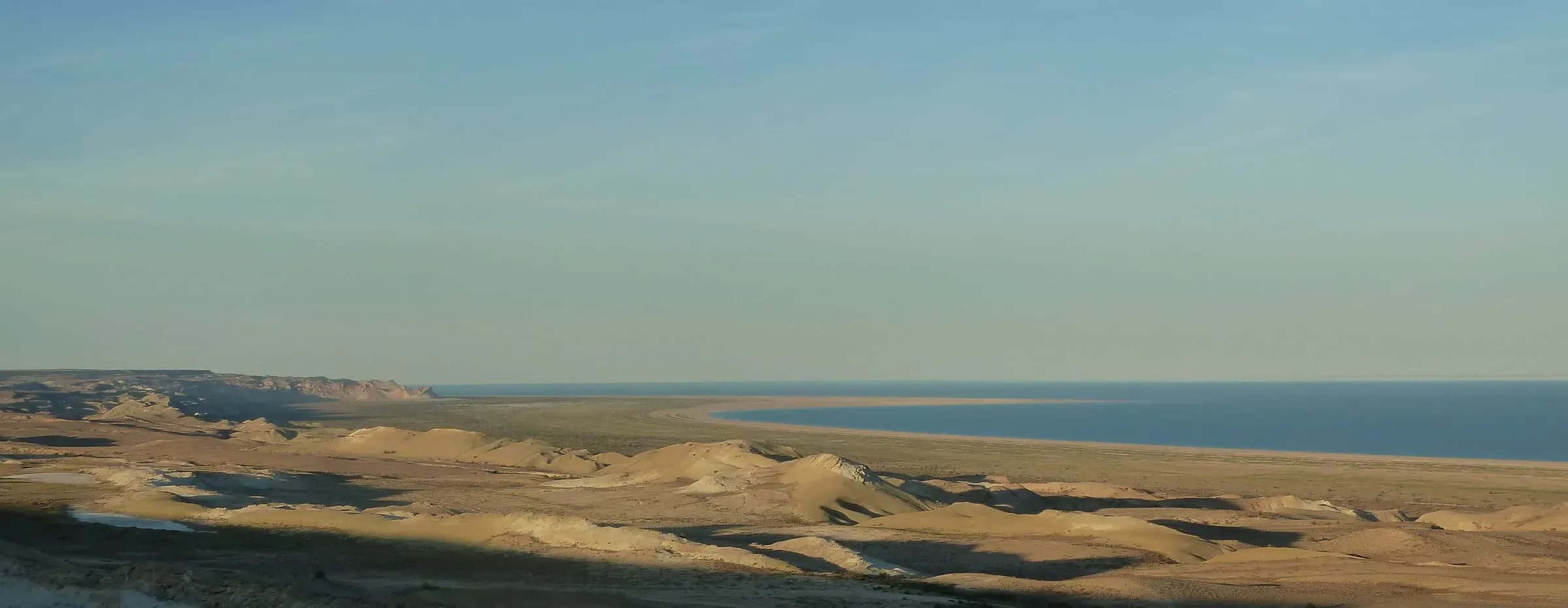
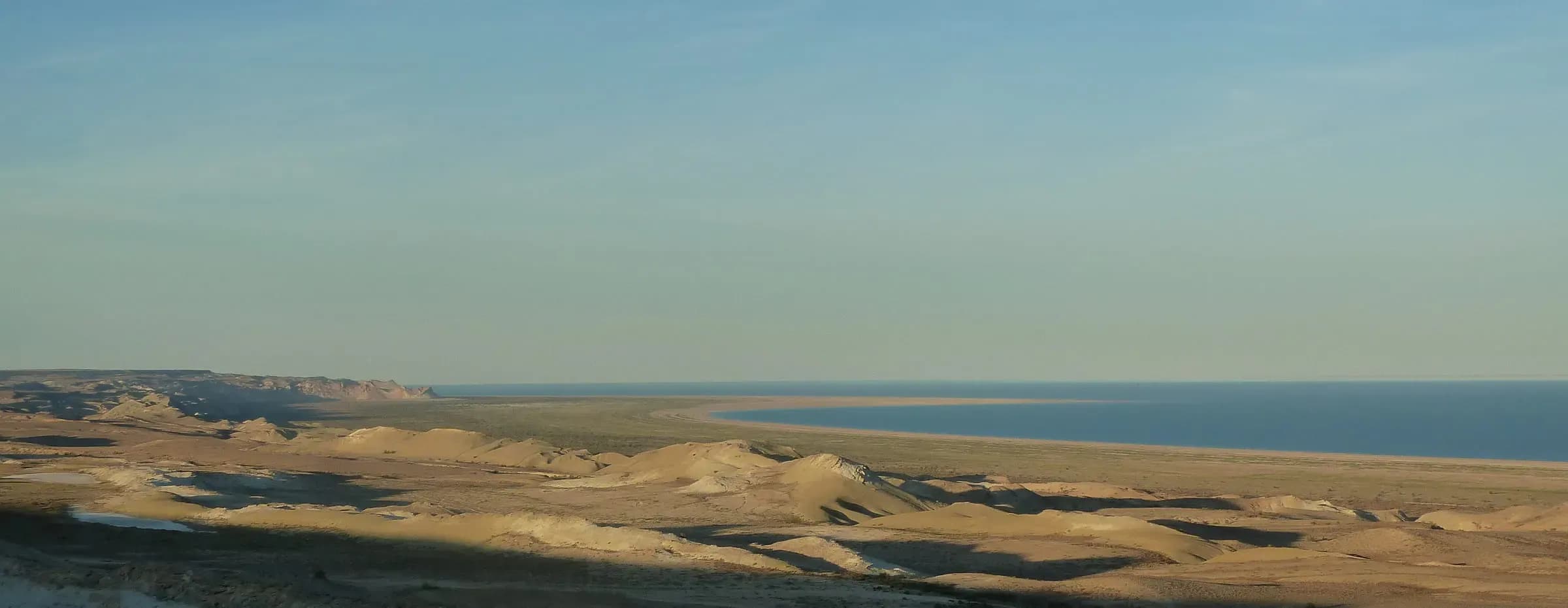
Moynaq works best as a planned Aral Sea chapter from Nukus: a former fishing port, ship graveyard, local museum, dry ground, and the road north all need time to be understood together.
Open place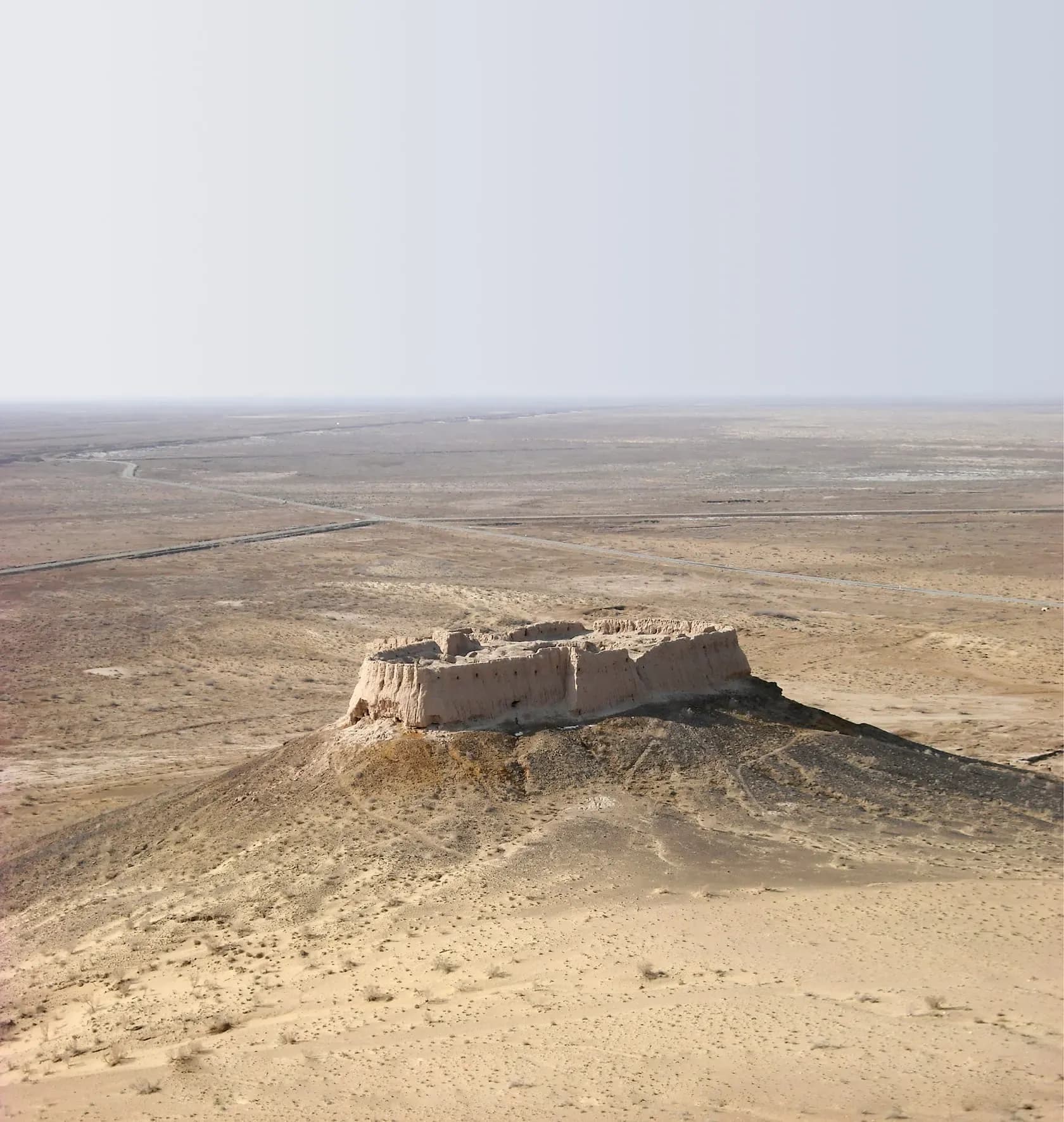
Ellikqala is not a compact town stop. It is a fortress area where the route leaves Nukus, Moynaq, or Khiva for Toprak-Kala, Kyzyl-Kala, and Ayaz-Kala; mud-brick walls, exposed ground, road time, and archaeological context all belong to the same visit.
Open placeWhat to see
These stops explain the west through art, local history, sacred ground, Aral Sea memory, and the desert fortresses of ancient Khorezm.
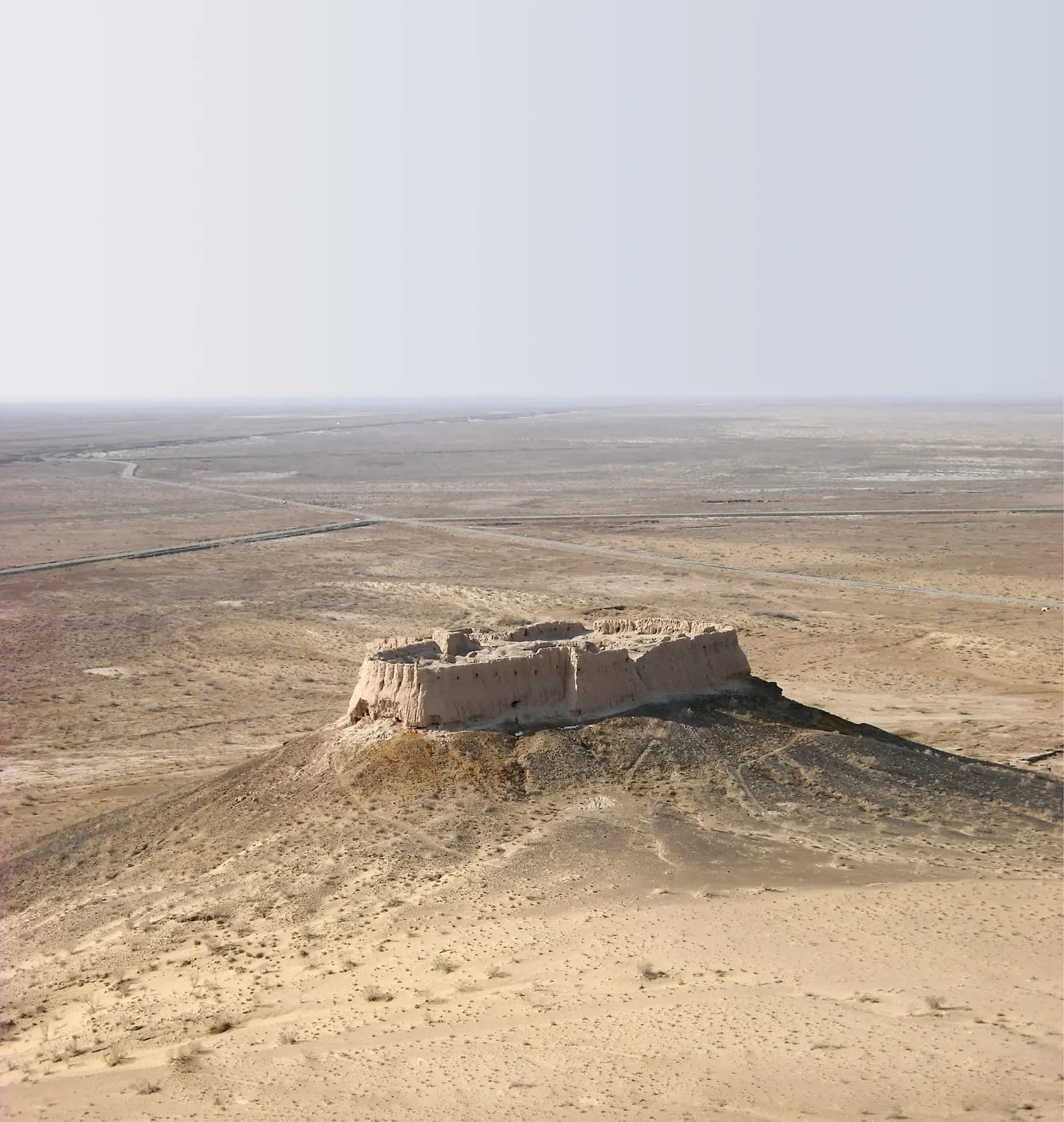
After Toprak-Kala and Kyzyl-Kala, Ayaz-Kala takes the Ellikqala route onto wider desert ground. Its walls sit above the plain, and the three-site complex helps you read ancient Khorezm as a landscape, not only a row of ruins.
Open place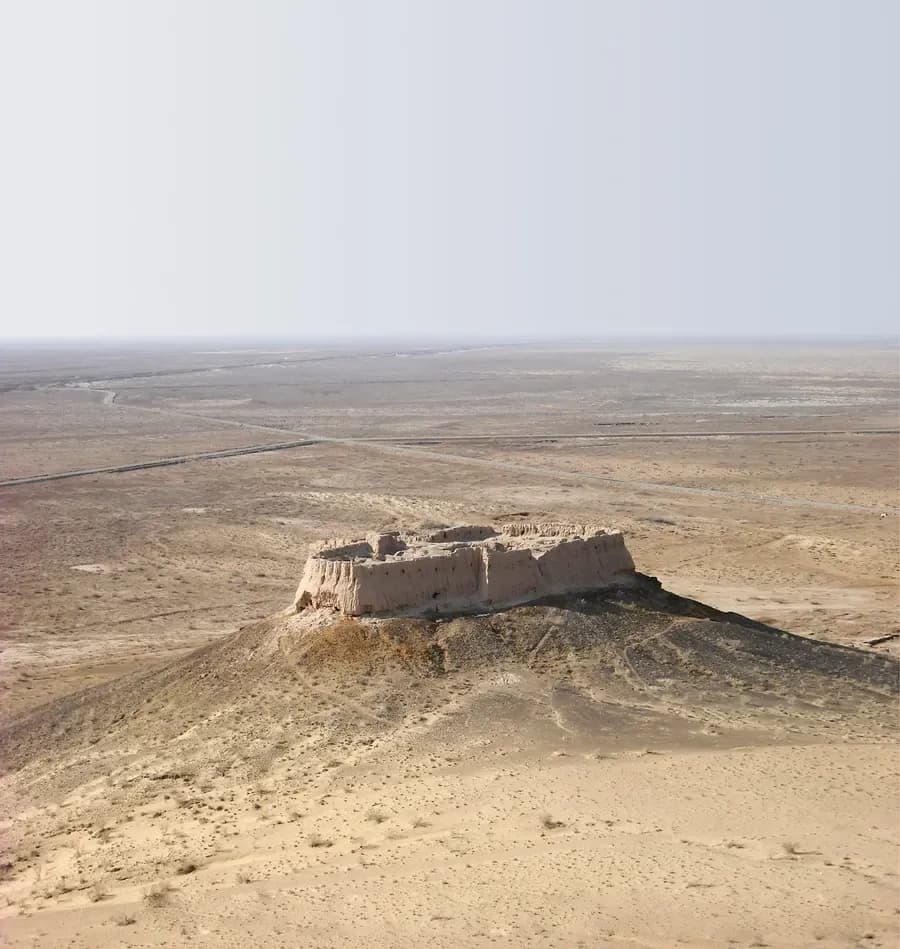
Toprak-Kala is the stop where the Ellikqala fortress route becomes more than walls on the horizon. The raised palace area, room traces, defensive lines, sanctuaries, and excavated finds help the site read as a city where power, worship, work, and daily life once met.
Open place
North of Nukus, Moynaq brings the Aral Sea story down to ground level: rusted fishing vessels, the former port, the town museum, and the long road back all shape the same visit.
Open place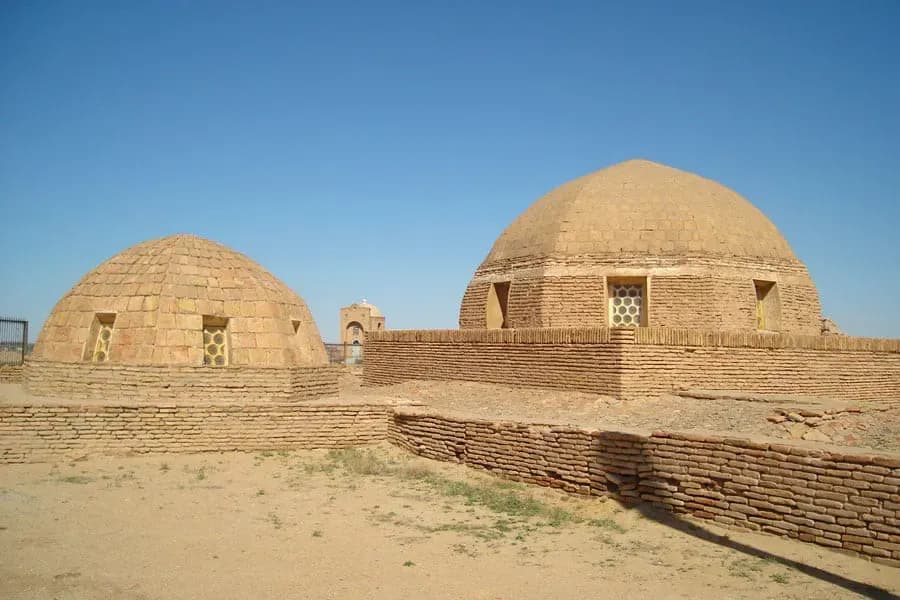
The Savitsky Museum is the reason to pause in Nukus instead of treating the city as a transfer. Inside, Russian avant-garde painting, Karakalpak craft, archaeological material, and Igor Savitsky's collecting story bring the region close before the route continues toward Moynaq, C
Open place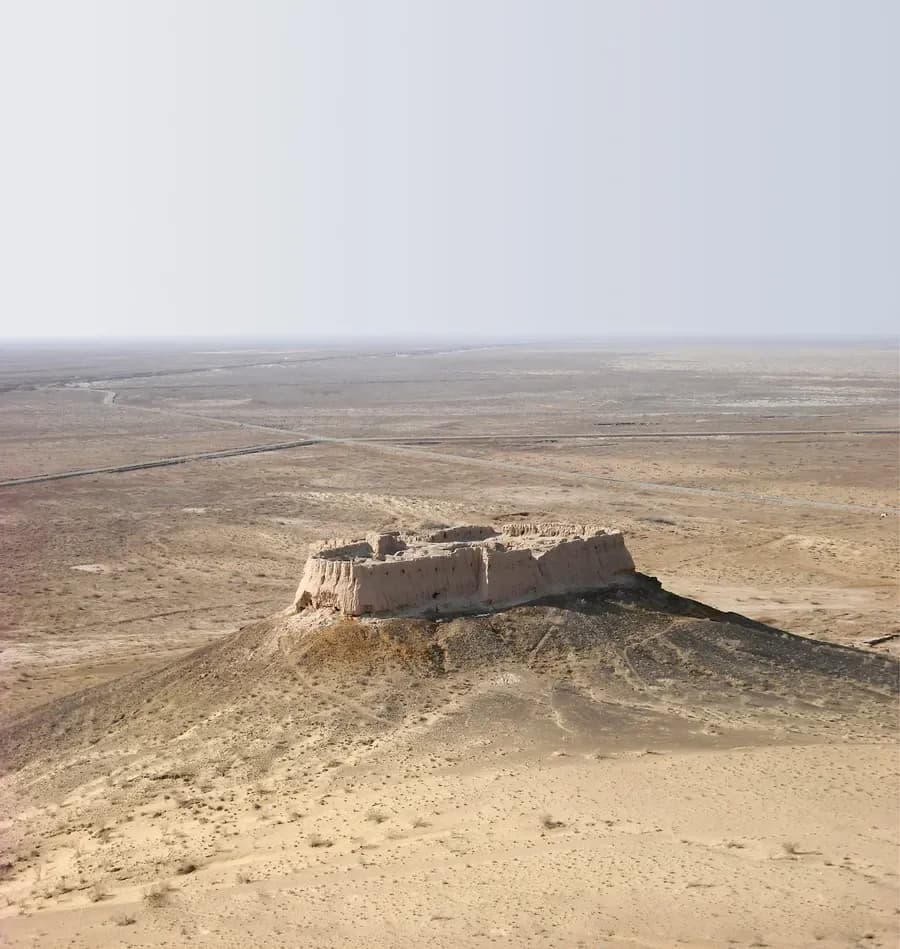
Kyzyl-Kala is the close comparison after Toprak-Kala. Instead of a palace-city plan, the traveler sees a compact red fortress with restored walls, tower lines, arrow-shaped openings, and a sloped approach across the Ellikqala plain.
Open place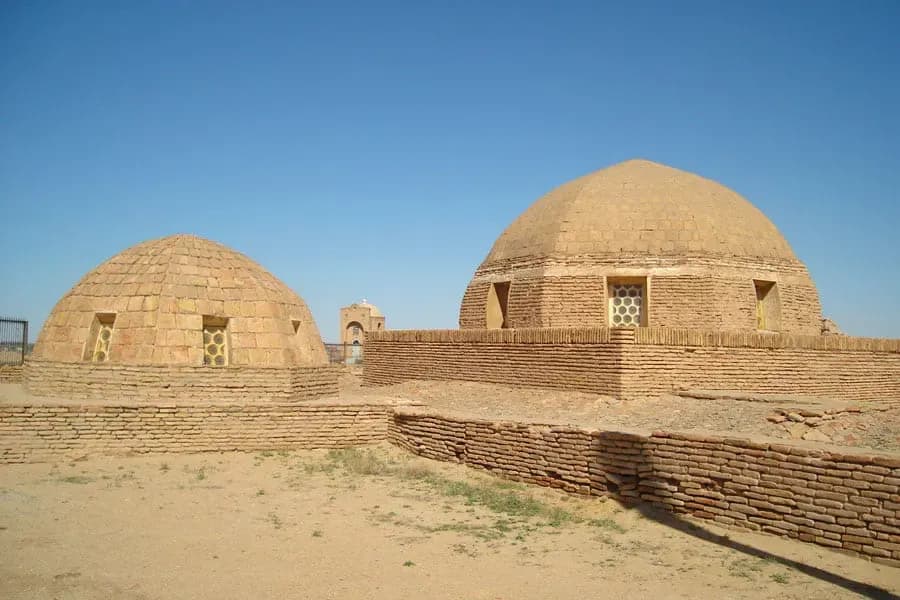
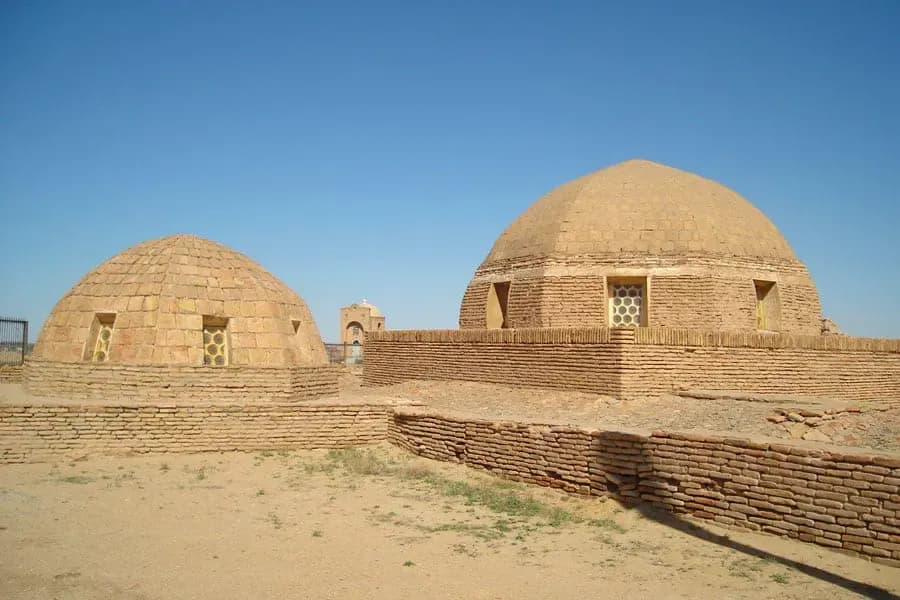
Mizdakhan is not a single monument. It is a walk across hills near Khojeyli, where ancient burials, pilgrimage stories, mausoleum domes, and nearby Gyaur-Kala move the route beyond Nukus museums.
Open placeRegion in detail
Pace, season, and how this region connects to the next stop.
2–3 days usually works if you keep one strong core and treat outer stops as deliberate choices. The region brief is “Nukus museums, Aral memory, and ancient Khorezm fortresses”.
Use neighbouring cities as clean handovers: arrive with a calm first night, leave after one completed chapter, and avoid stacking two long transfers on the same day.
Heat, altitude, road condition, and opening hours change the product more than the brochure list. Build the region around what stays comfortable for the group that week.
On request
We help agencies set a realistic pace and choose the right extensions — without rushing the places that matter.