TourLink
About
Ellikqala is not a compact town stop.
Ellikqala is easier to plan as a sequence: Toprak-Kala for palace-city scale, Kyzyl-Kala for close red-wall comparison, and Ayaz-Kala for higher desert ground.
The core trio can connect with Nukus, Khiva, Urgench, or a longer Karakalpakstan route, but driving time, access, heat, and walking surfaces need to be checked first.
Agencies and travellers who need Ellikqala as a readable stop — strong places, honest pacing, and logistics that hold.
Getting around
Ellikqala is easier to plan as a sequence: Toprak-Kala for palace-city scale, Kyzyl-Kala for close red-wall comparison, and Ayaz-Kala for higher desert ground.
Route order
The core trio can connect with Nukus, Khiva, Urgench, or a longer Karakalpakstan route, but driving time, access, heat, and walking surfaces need to be checked first.
Wall lines and room traces make Ancient Khorezm visible before the route compares the nearby fortress pair.
Western anchors
The map keeps the fortress sequence tied to practical anchors: Nukus for context, Moynaq for the Aral chapter, and the road back toward Khiva or Urgench.
What to see
The core Ellikqala sequence still starts with Toprak-Kala, Kyzyl-Kala, and Ayaz-Kala. The Buston museum adds indoor context when opening, access, and route timing are clear.
Toprak-Kala is the stop where the Ellikqala fortress route becomes more than walls on the horizon. The raised palace area, room traces, defensive lines, sanctuaries, and excavated finds help the site read as a city where power, worship, work, and daily life once met.
Open place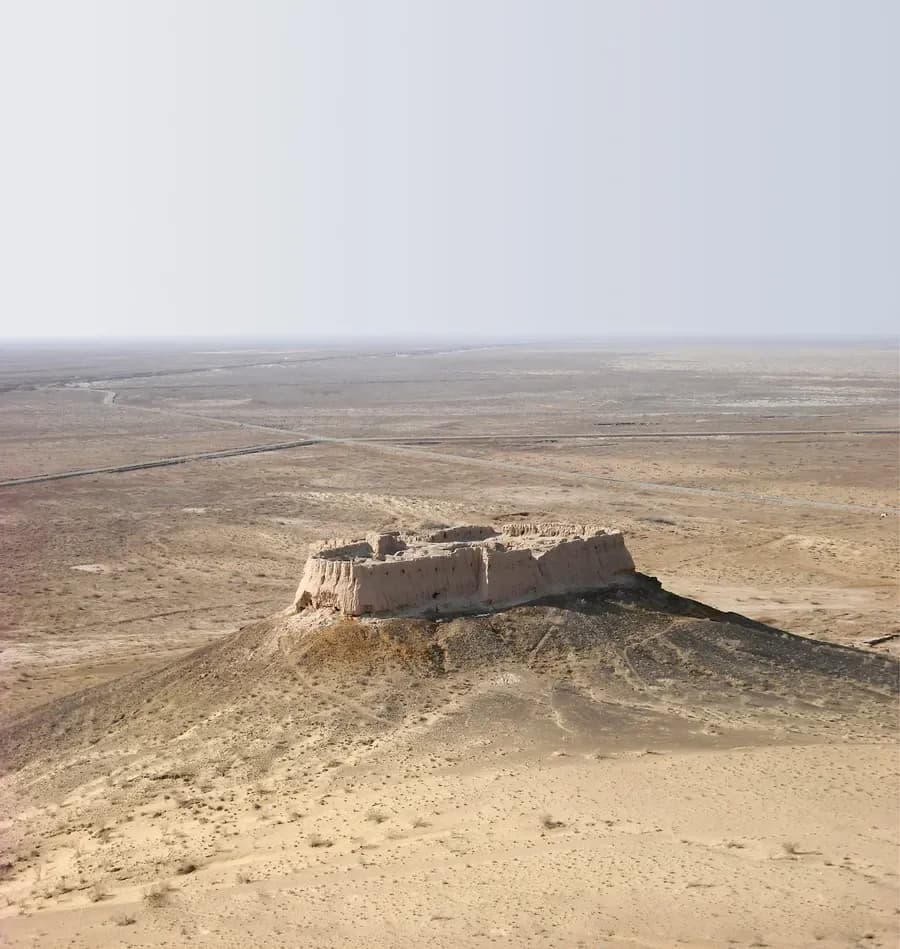
Kyzyl-Kala is the close comparison after Toprak-Kala. Instead of a palace-city plan, the traveler sees a compact red fortress with restored walls, tower lines, arrow-shaped openings, and a sloped approach across the Ellikqala plain.
Open place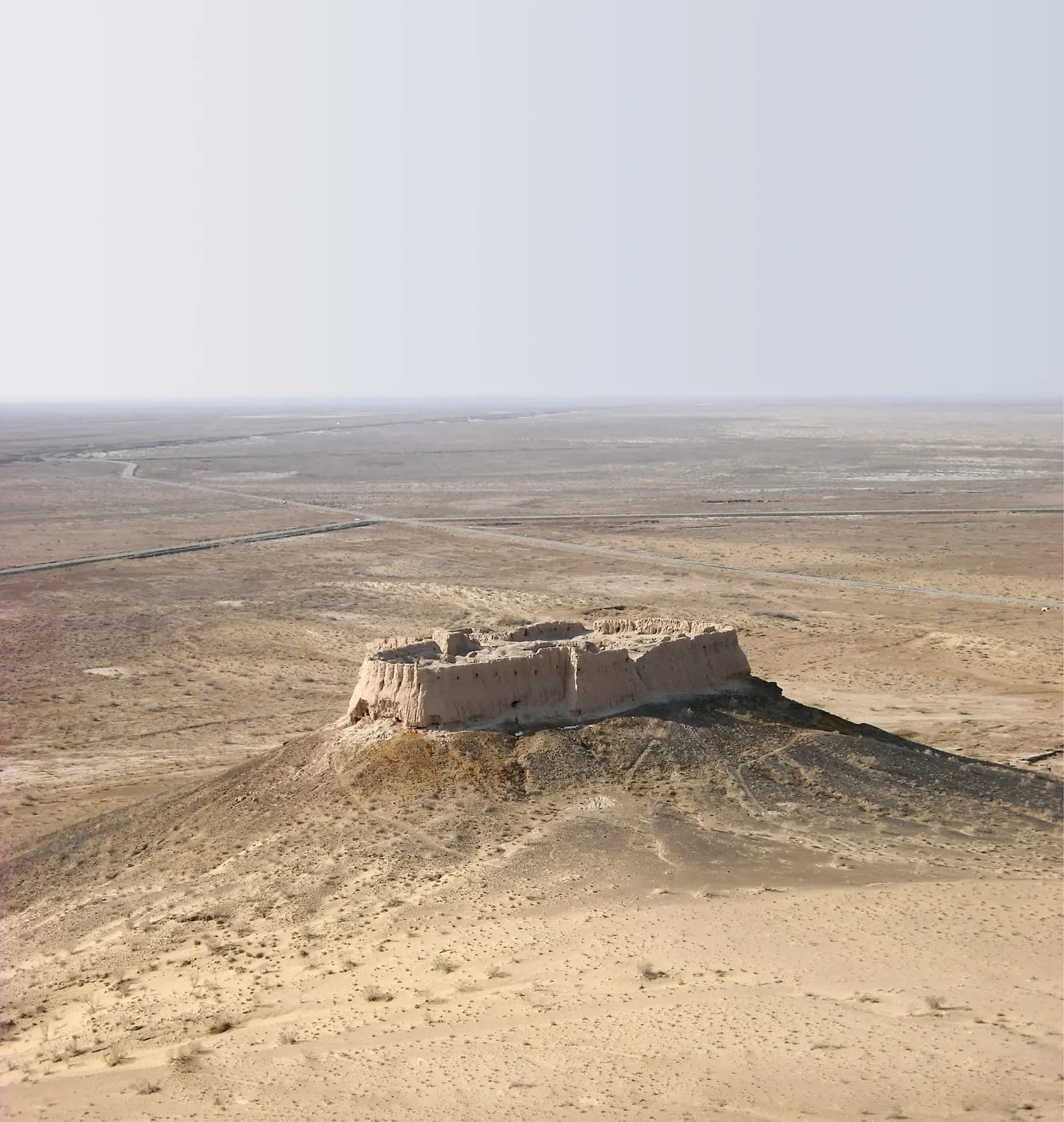
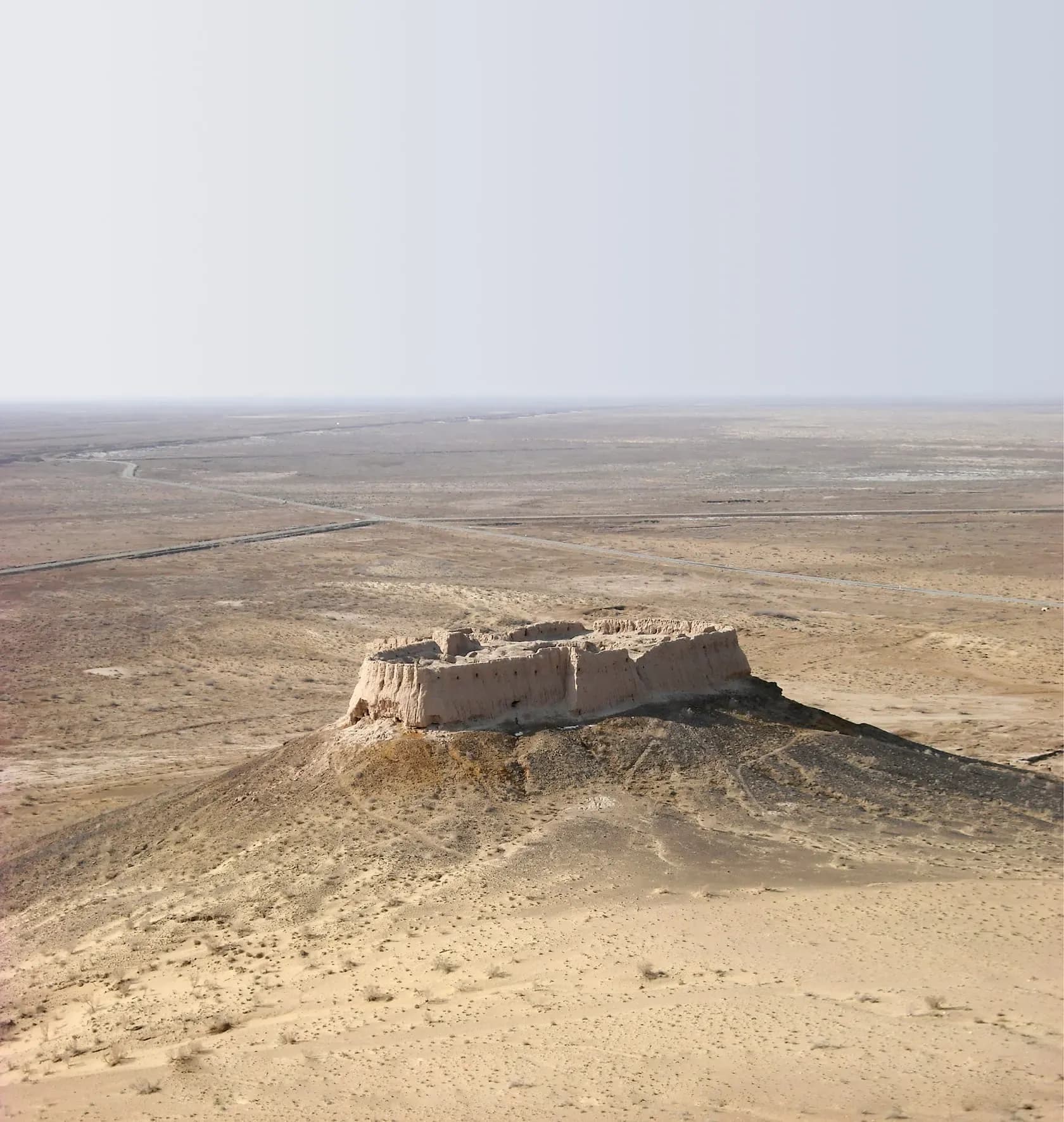
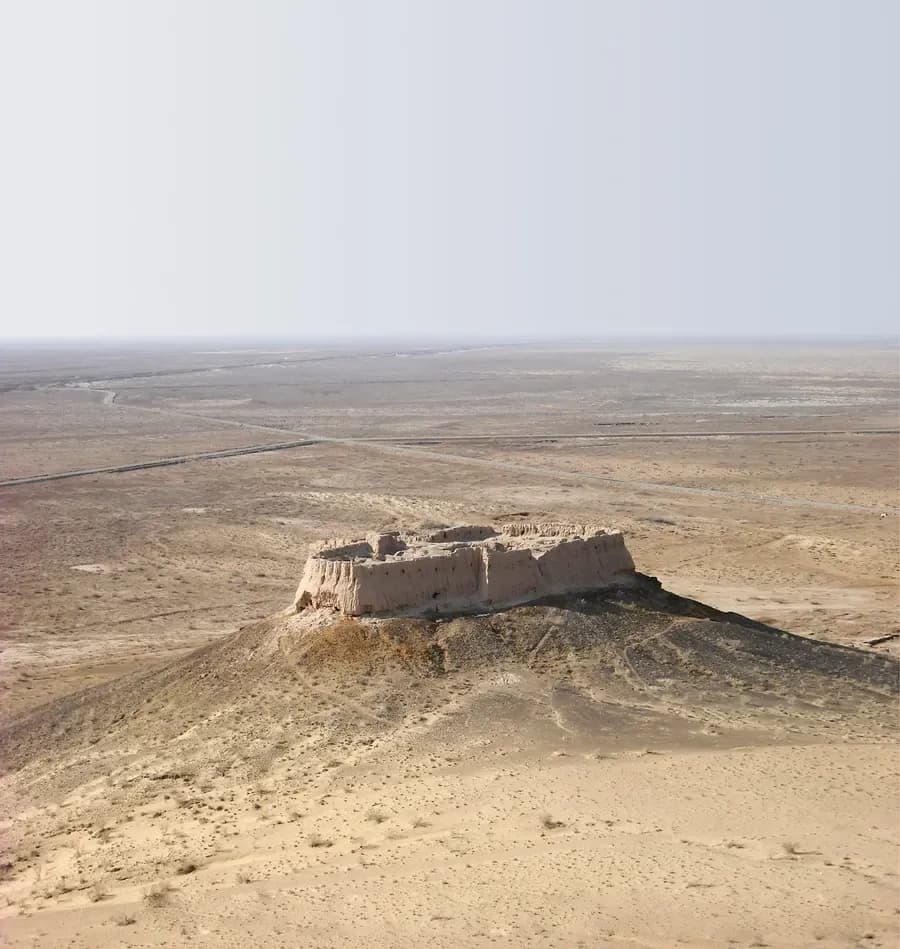
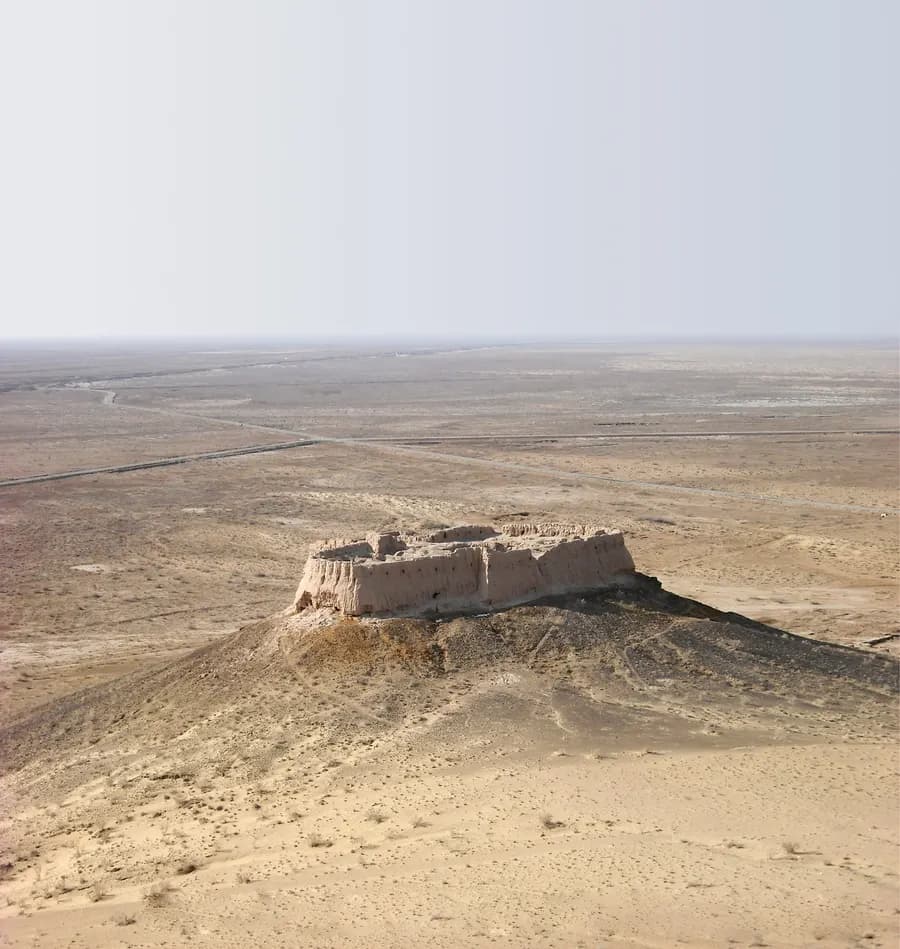
After Toprak-Kala and Kyzyl-Kala, Ayaz-Kala takes the Ellikqala route onto wider desert ground. Its walls sit above the plain, and the three-site complex helps you read ancient Khorezm as a landscape, not only a row of ruins.
Open place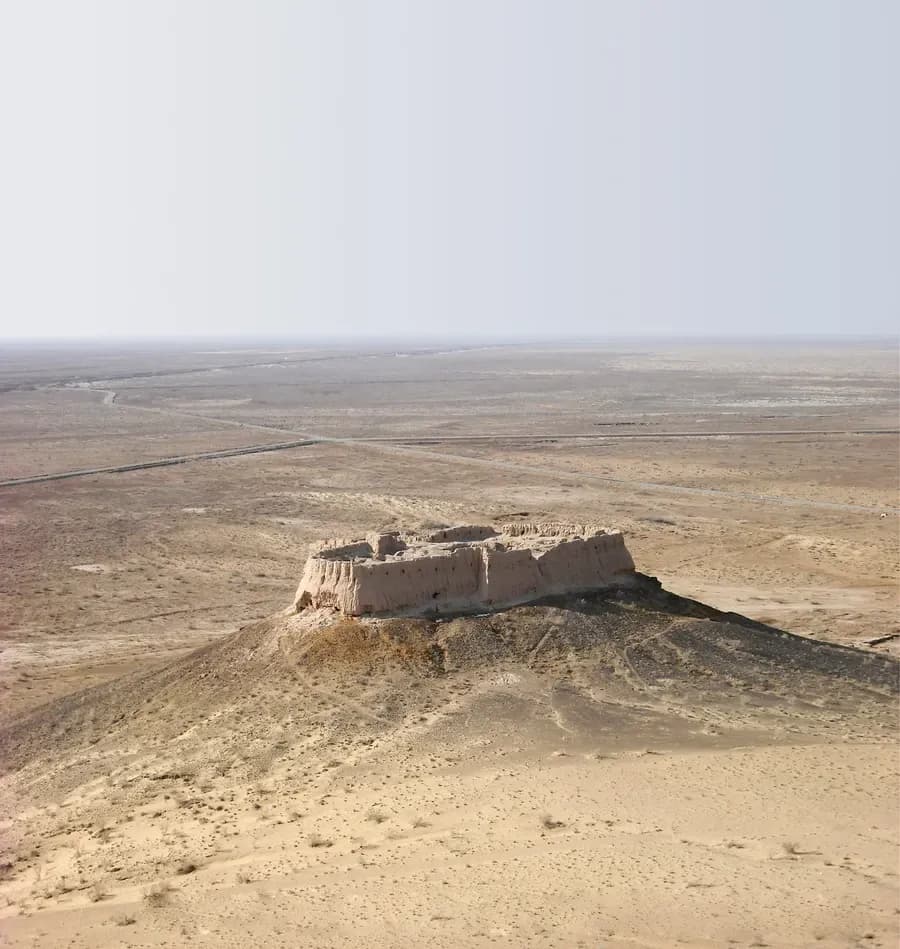
In Buston, the Ellikqala Museum of Archaeology and History brings the fortress route indoors for a quieter reading. Archaeological finds, local history, ethnography, applied arts, and Sergei Pavlovich Tolstov's name help the open ruins outside feel part of a wider Ancient Khorezm
Open placeRoute moments
The route is easier to understand through concrete moments: the core sequence, Toprak-Kala's palace-city plan, Kyzyl-Kala's close comparison, and Ayaz-Kala's higher ground.
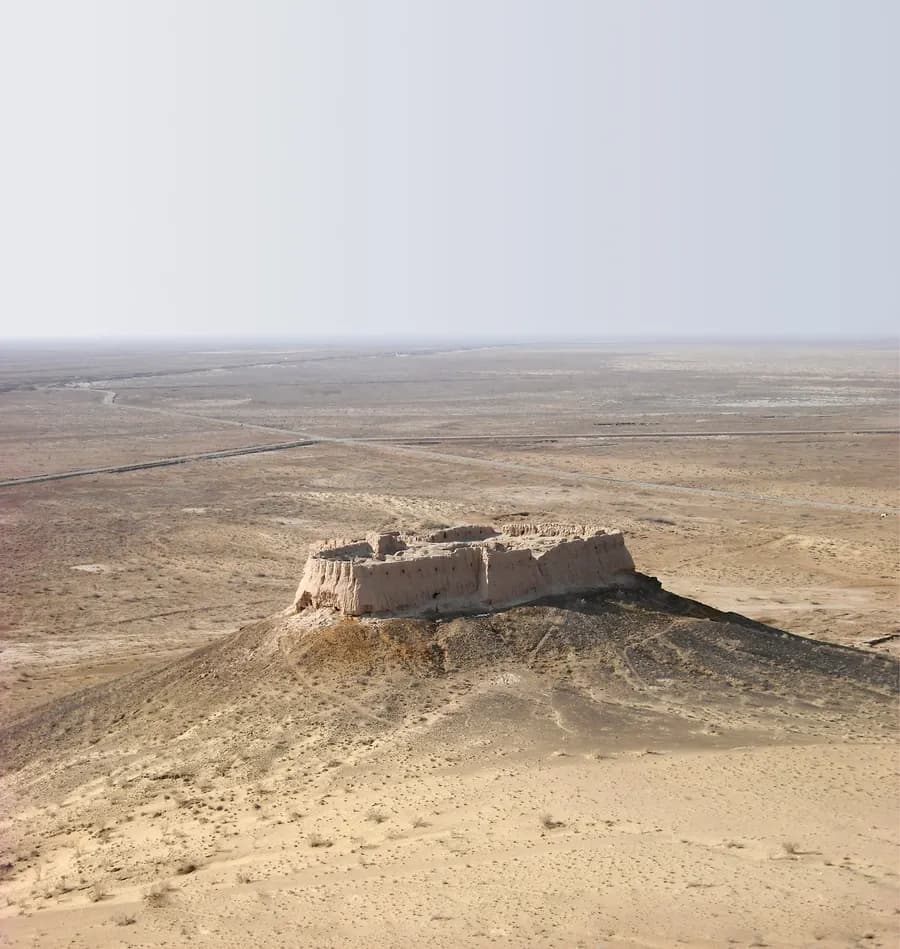
Toprak-Kala, Kyzyl-Kala, and Ayaz-Kala make the route clearer as a sequence: palace-city ruins, close red-wall comparison, and higher desert ground.
At Toprak-Kala, wall lines and room traces explain the former palace-city before the route moves to nearby Kyzyl-Kala.
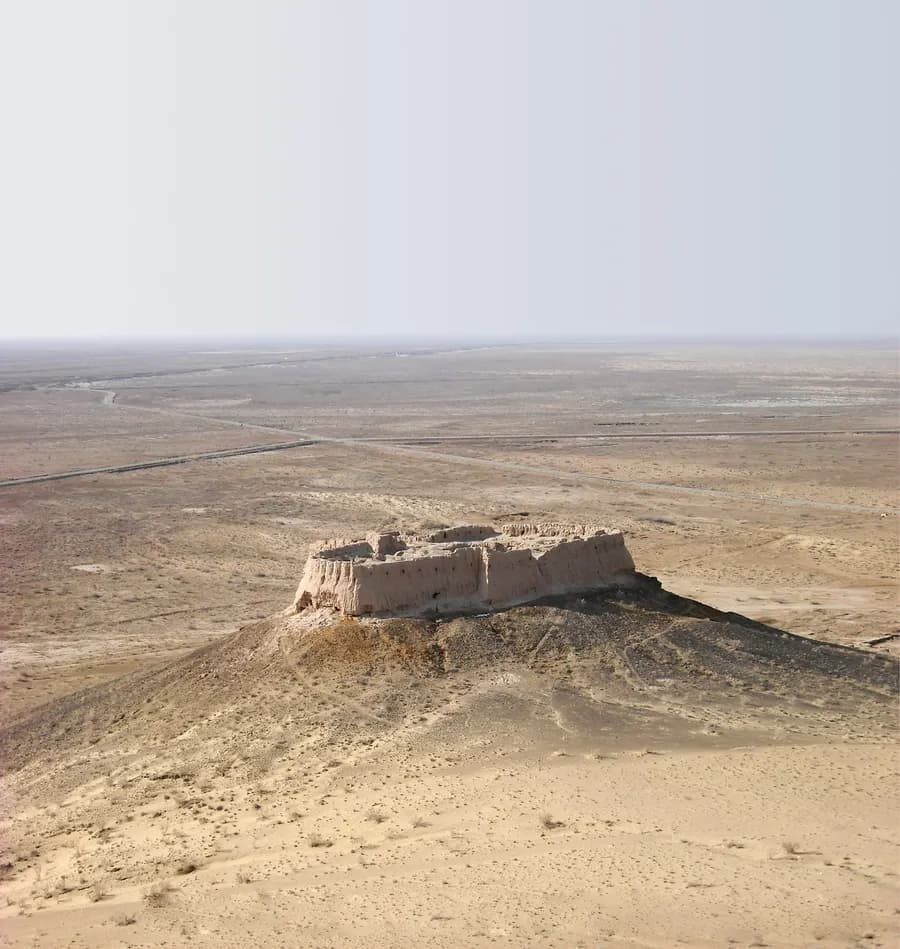
Kyzyl-Kala gives a close comparison after Toprak-Kala: restored red walls, defensive openings, and a compact stop in the same fortress landscape.
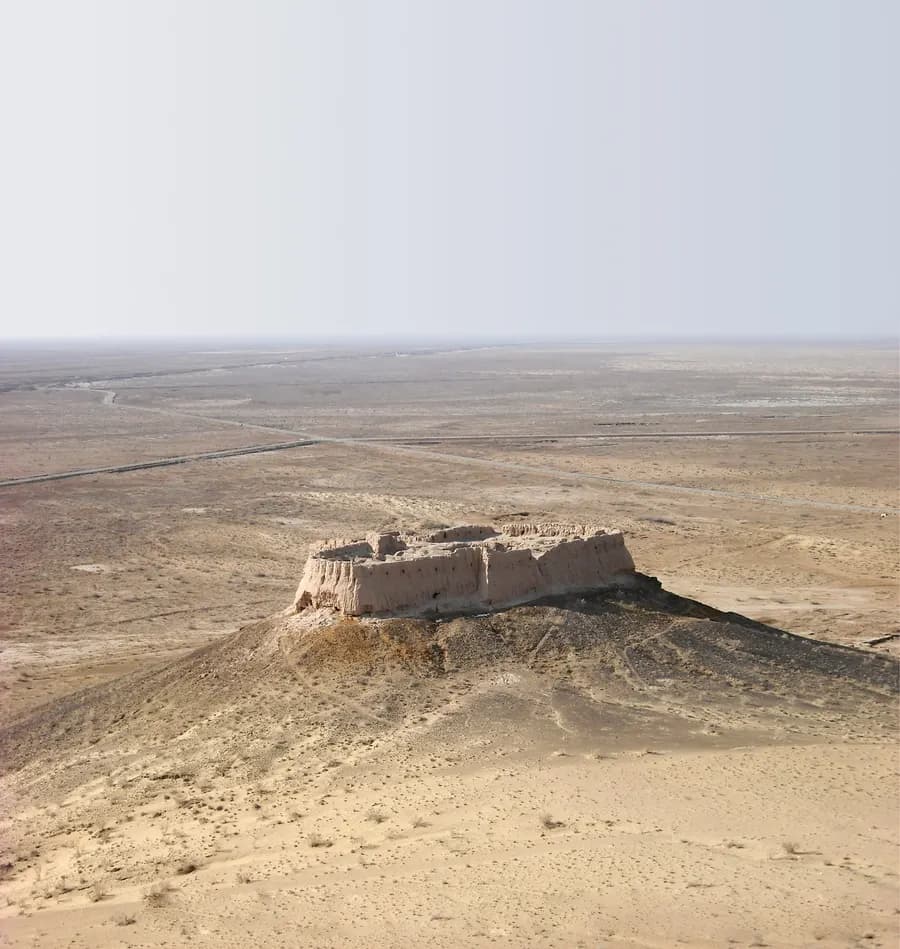
Ayaz-Kala brings the route to higher desert ground, where the fortress group, slopes, and Ayazkol direction need enough time and safe access checks.
Route planning
Ellikqala matters because Ancient Khorezm becomes visible outside museum rooms: mud-brick fortresses, palace-city traces, red walls, high ground, and long distances between stops.
Whether the route starts from Nukus, Khiva, Urgench, or a longer Karakalpakstan plan, the start and return point decide how many fortress stops make sense.
Ellikqala is clearer as a fortress sequence than as a list of every ruin within reach.
Toprak-Kala, Kyzyl-Kala, and Ayaz-Kala each need a different kind of attention. The visit is clearer when you can compare them, instead of letting three walls blur into one stop.
Road surface, walking ground, heat, wind, shade, museum access, and conservation limits should be checked before the final itinerary is confirmed.
Choose Ellikqala when western Uzbekistan needs archaeology in the landscape: the fortress trio, a private vehicle, access checks, and time to move between stops without turning the route into a checklist.
At a glance Route area
Archaeological area in Karakalpakstan tied to the Ancient Khorezm fortress route.
Main stops
Toprak-Kala, Kyzyl-Kala, and Ayaz-Kala form the core fortress sequence.
Season and access
Heat, wind, unshaded ground, road condition, and walking surfaces should be checked before confirming the route.
Route role
Archaeological continuation between Nukus, Khiva, Urgench, Moynaq, and the wider western itinerary.
Route connections
Nukus gives museum context, Moynaq belongs to the longer Aral Sea chapter, and Khiva or Urgench can turn the fortress route back toward Khorezm.
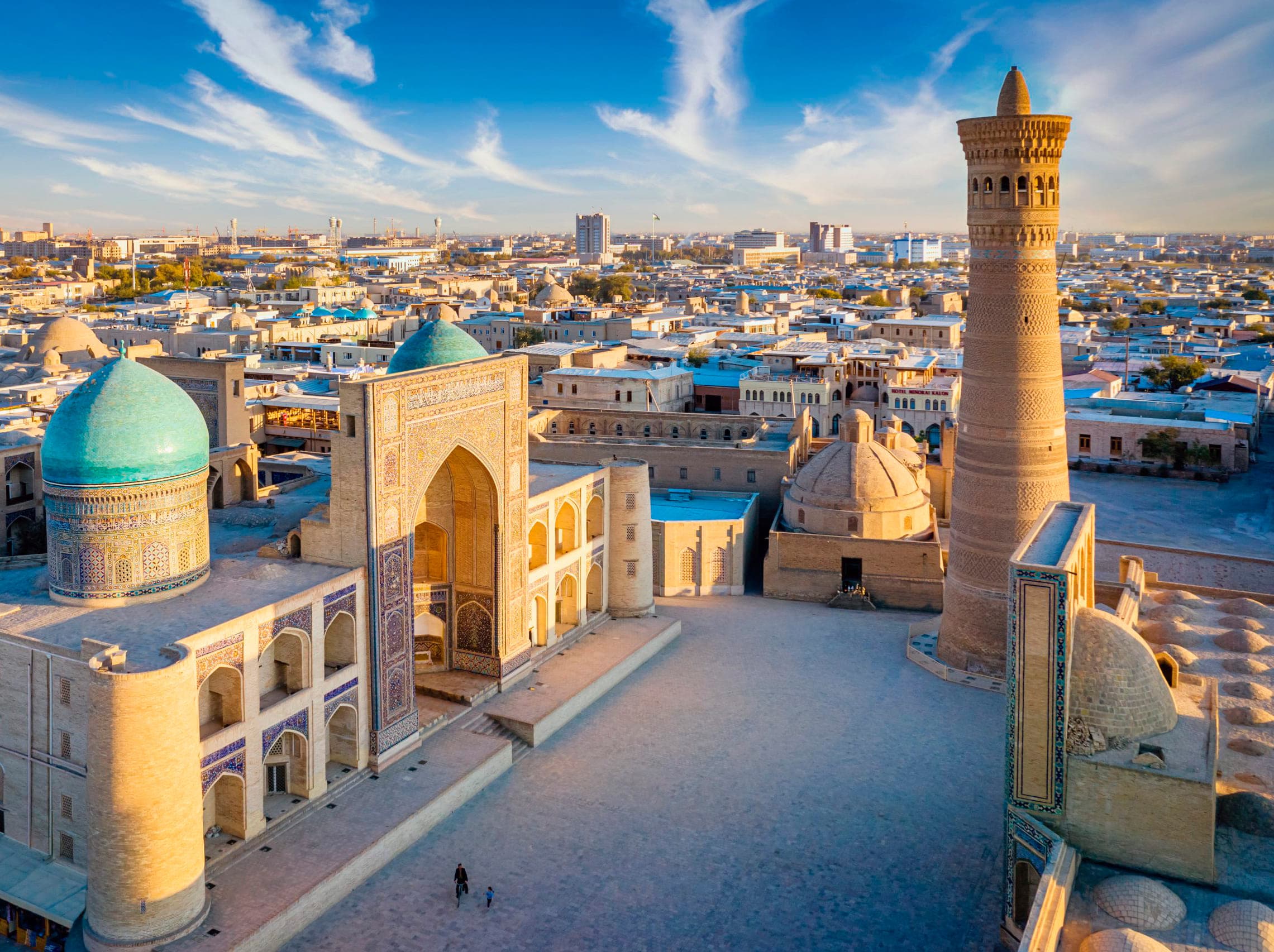
Start in Nukus with the Savitsky Museum, then connect Karakalpak culture with Moynaq, Mizdakhan, Chilpyk, and the desert fortress road.
View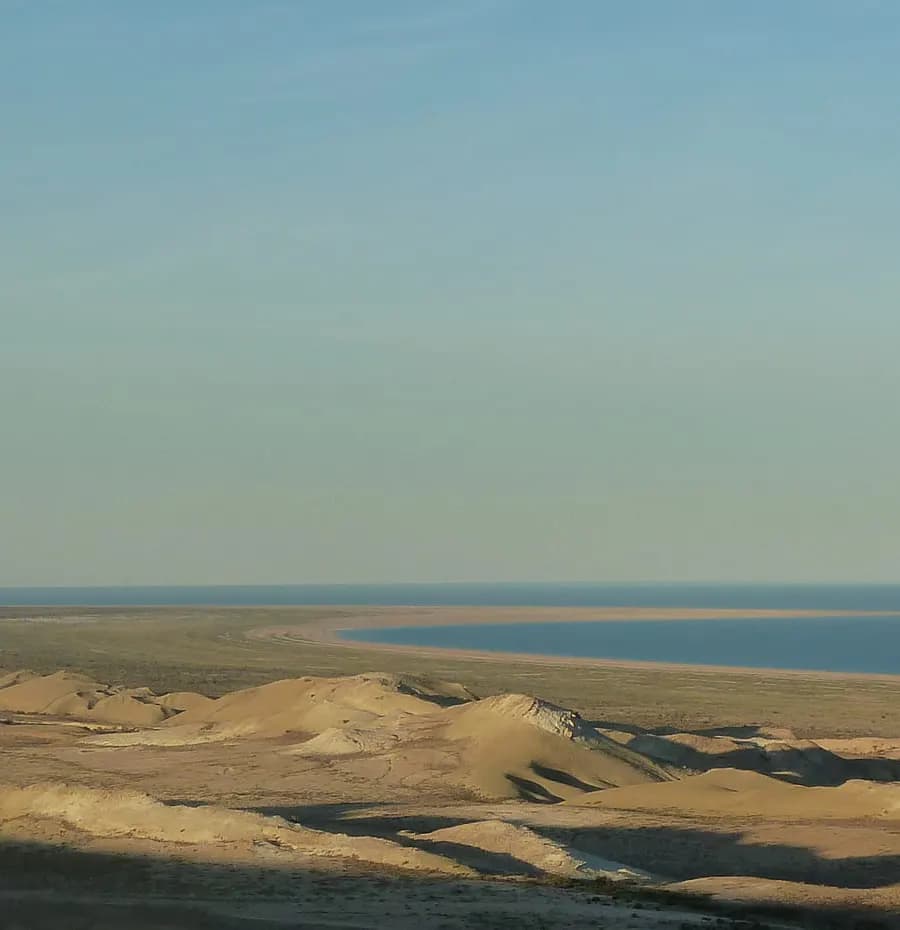
Plan Moynaq from Nukus with the ship graveyard, former fishing port, local museum, dry seabed, and Karakalpakstan route context.
View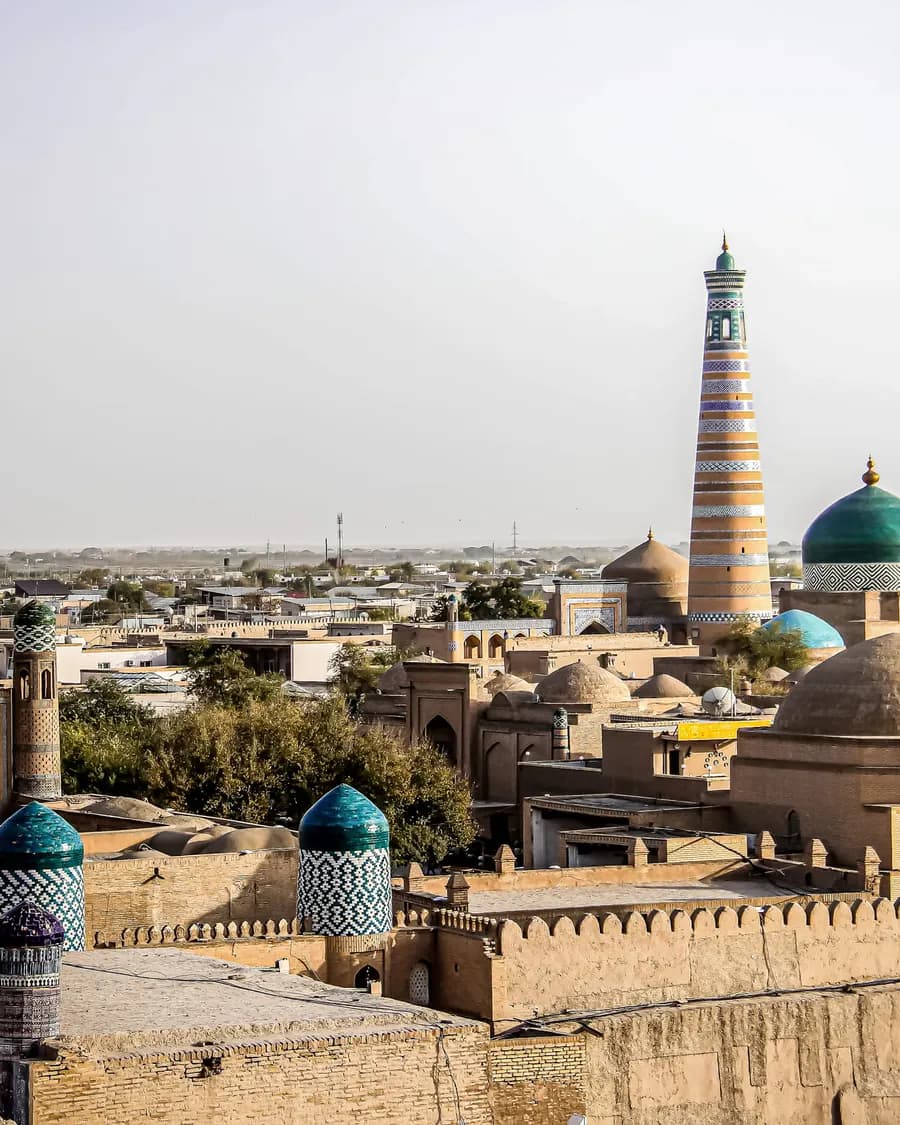
Khiva holds the western edge of the classic route: Itchan Kala, Kalta Minor, Juma Mosque, palace courtyards, workshops, and the roads that continue through Khorezm.
ViewCity in detail
Walking time, overnight location, and when day trips make sense.
2–3 nights is usually enough when the old core or main anchors get a full walking window. City tone: “Desert fortresses of Ancient Khorezm between Nukus and Khiva”.
Start with the compact city walk first. Day trips only after the centre has settled — otherwise the stop feels like a transfer with monuments attached.
Stay close enough for an evening return on foot or a short transfer. That keeps tea, dinner, and a second pass through the lanes easy without burning the next morning.
On request
We help agencies set a realistic pace and choose the right next move — without rushing the places that matter.