TourLink
About
Nukus makes western Uzbekistan more than a transfer.
Plan Nukus as more than a late arrival and an early departure: museum time comes first, then the road can turn toward Moynaq, Ellikqala, Mizdakhan, or Chilpyk without feeling like a transit afterthought.
The Savitsky Museum and the State Museum show why Nukus matters before the route continues north to Moynaq, east to Ellikqala, or toward Mizdakhan and Chilpyk.
Agencies and travellers who need Nukus as a readable stop — strong places, honest pacing, and logistics that hold.
Route order
Plan Nukus as more than a late arrival and an early departure: museum time comes first, then the road can turn toward Moynaq, Ellikqala, Mizdakhan, or Chilpyk without feeling like a transit afterthought.
Route choice
The Savitsky Museum and the State Museum show why Nukus matters before the route continues north to Moynaq, east to Ellikqala, or toward Mizdakhan and Chilpyk.
The Savitsky Museum is the reason to slow down in Nukus: art, Karakalpak objects, and regional memory give the western route its first museum stop.
Western route points
Use the map as a route check: Nukus anchors the museum start, Moynaq points north to the Aral story, and Ellikqala points east to ancient Khorezm.
What to see
Start with Savitsky and the State Museum, then use Nukus for Mizdakhan, Chilpyk, and the road toward ancient Khorezm. A fuller city stop can include Berdakh-related culture, bazaar life, craft, and Aral-route logistics when access and timing fit.
The Savitsky Museum is the reason to pause in Nukus instead of treating the city as a transfer. Inside, Russian avant-garde painting, Karakalpak craft, archaeological material, and Igor Savitsky's collecting story bring the region close before the route continues toward Moynaq, C
Open place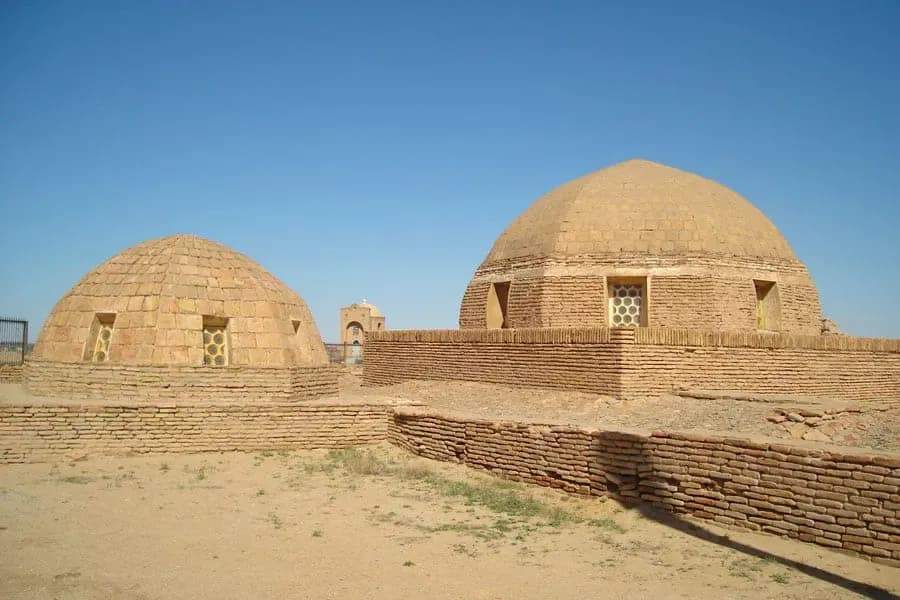
Beside Savitsky, this museum shows Karakalpakstan differently: archaeology from ancient Khorezm, ethnographic objects, folk craft, Aral-region nature, and the republic's memory gathered in Nukus.
Open place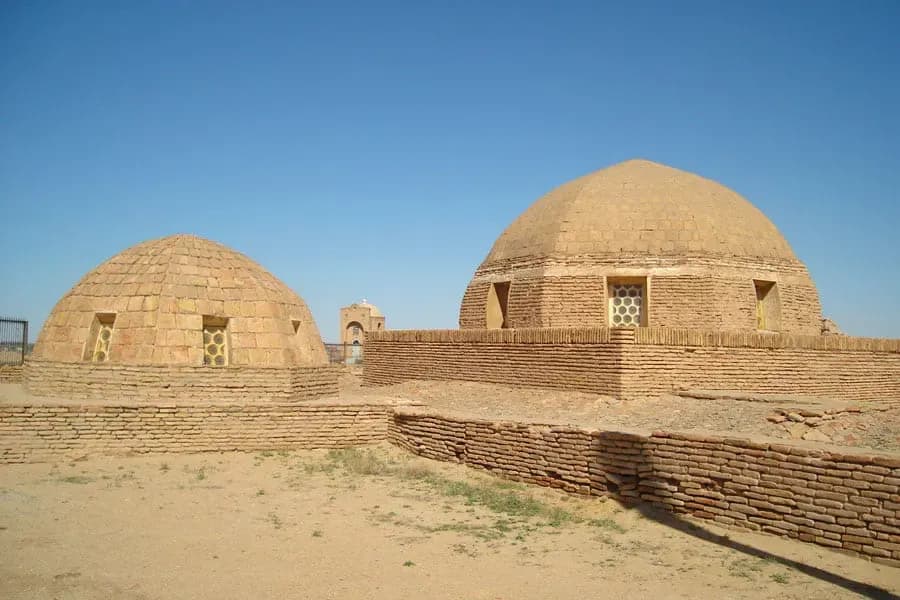
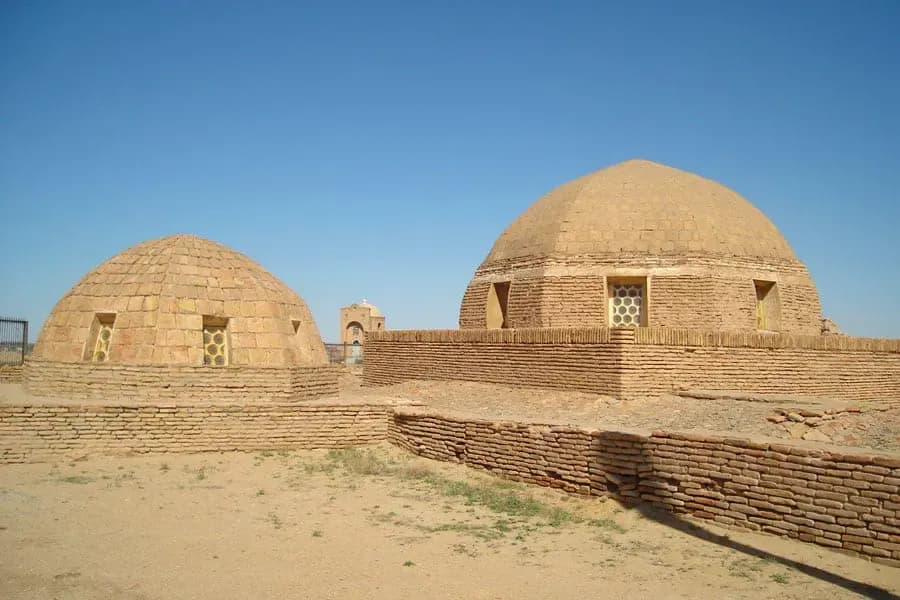
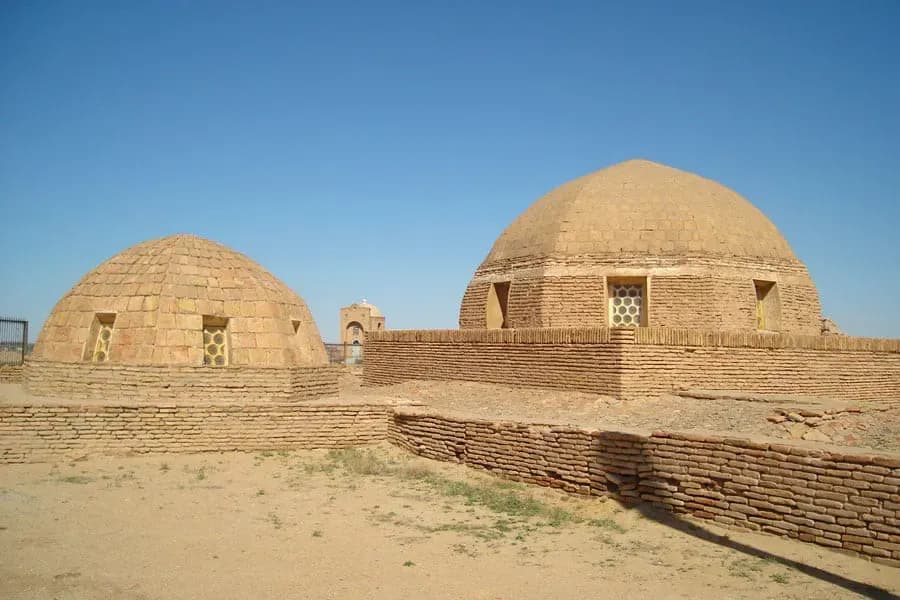
Mizdakhan is not a single monument. It is a walk across hills near Khojeyli, where ancient burials, pilgrimage stories, mausoleum domes, and nearby Gyaur-Kala move the route beyond Nukus museums.
Open place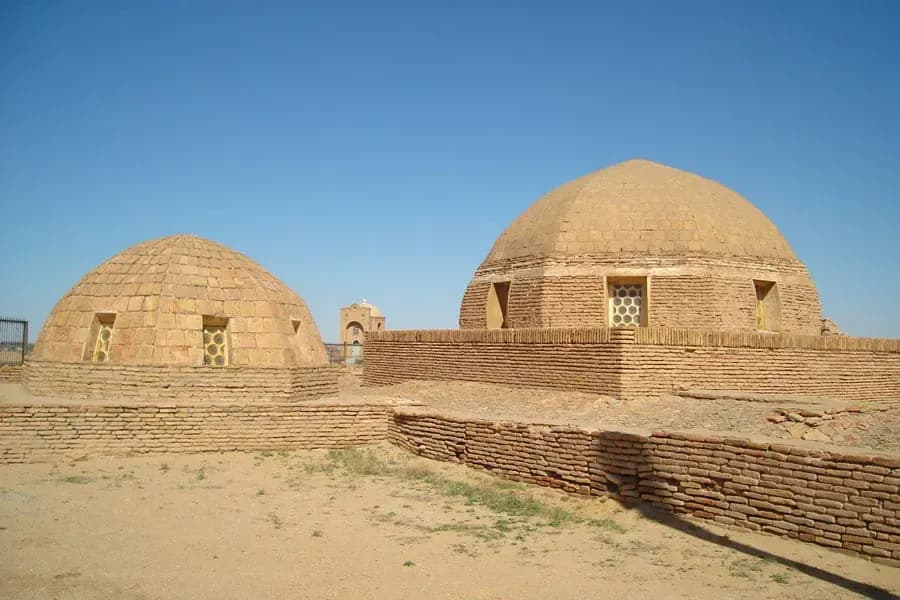
Chilpyk is best read as a hill and a ritual structure, not as another fortress. The circular adobe wall, exposed steps, and Amu Darya landscape connect Nukus with ancient Khorezm before the route continues toward Khiva or the desert fortresses.
Open placeCity moments
The strongest Nukus moments come from what the city actually adds to the route: Savitsky rooms, Karakalpak patterns, Mizdakhan or Chilpyk outside the city, and the first decision toward the Aral Sea or ancient Khorezm.
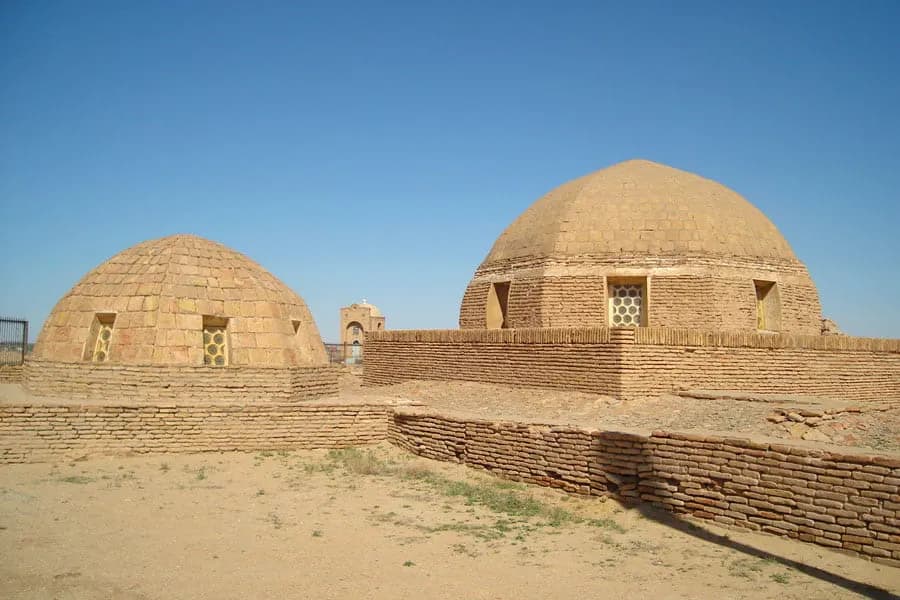
Near Khojeyli, hill paths, mazars, baked earth, and a guide's quiet explanation turn the Nukus chapter toward pilgrimage memory and ancient Khorezm under open sky.
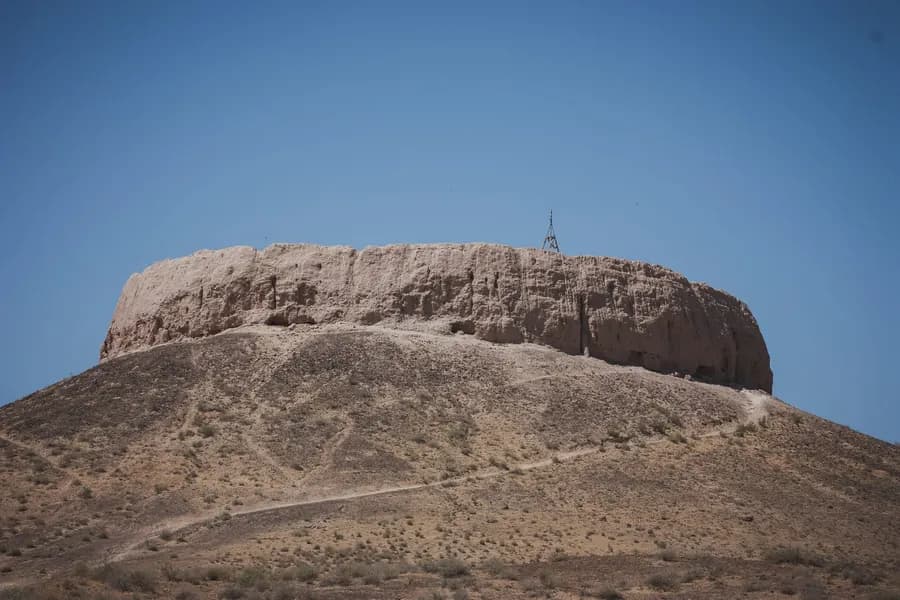
On the hill south of Nukus, dry wind, adobe wall, and Amu Darya light turn the road pause into an ancient open-air memory rather than a quick viewpoint.
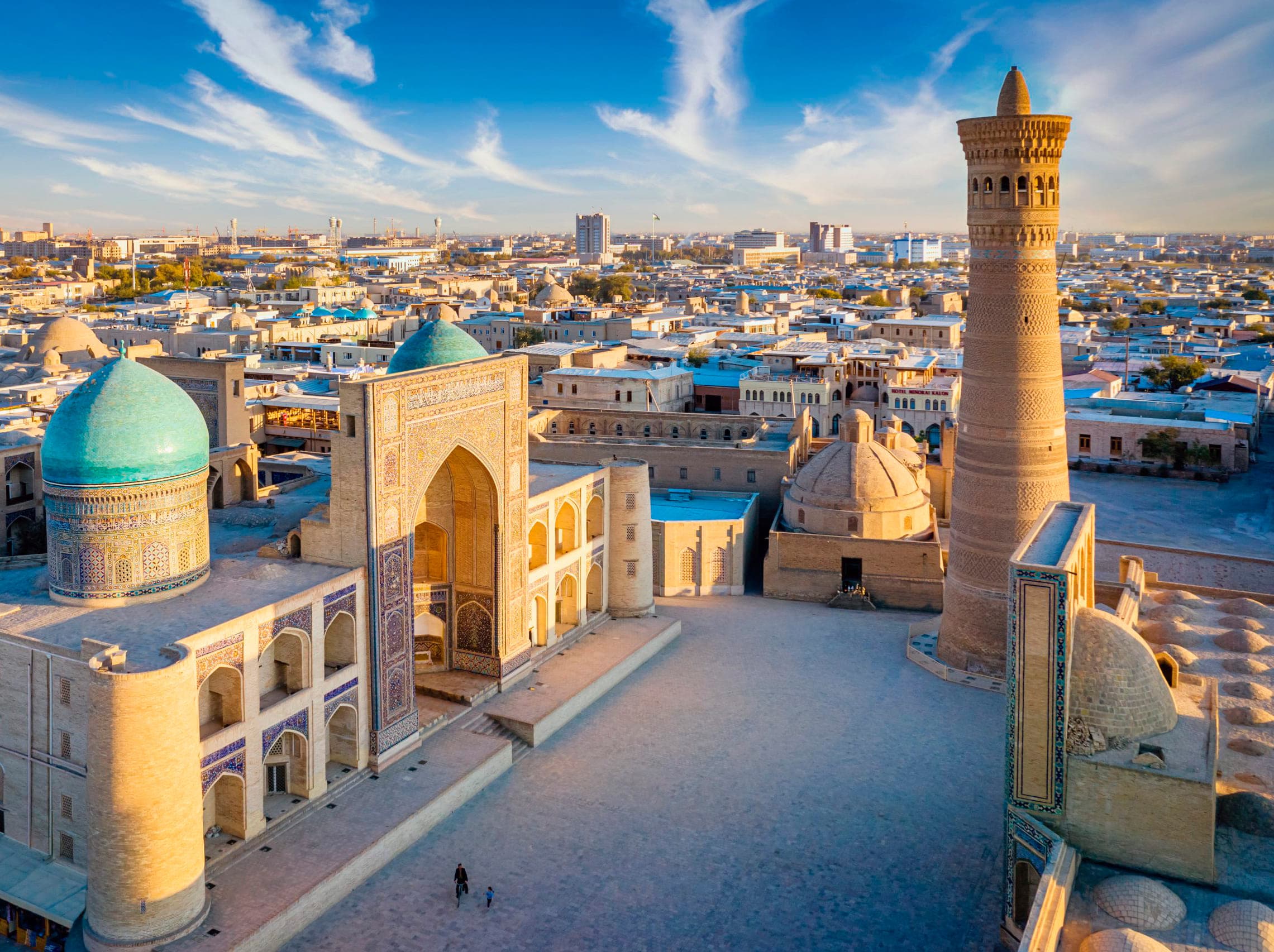
Embroidery, headdresses, woven lines, and museum cases give Karakalpak identity a close scale. The patterns turn the city pause into a quiet conversation with the region.
In a calm museum room, avant-garde color, Karakalpak objects, a lowered voice, and the hush of footsteps make Nukus feel larger than its broad streets outside.
Before you go
Nukus works best when the route gives it a clear role: museum city, Karakalpak culture, and the decision point before Moynaq, Mizdakhan, Chilpyk, Ellikqala, or the return toward Khiva.
Start with Savitsky and add the State Museum when the route needs more local history. That keeps Nukus from becoming only an overnight stop before the next road.
Nukus is where the western route stops being only a transfer.
Berdakh-related culture, applied arts, bazaar life, and Karakalpak food can make the city more complete, but they need current access and timing checks.
Moynaq, Mizdakhan, Chilpyk, and Ellikqala should not be compressed automatically. Each one changes the route in a different direction.
Treat Nukus as the museum and planning stop for western Uzbekistan: Savitsky first, then the road that best fits Moynaq, Mizdakhan, Chilpyk, Ellikqala, or the return toward Khiva.
Before you go Route role
Museum city and route anchor for Karakalpakstan after Khiva or Urgench.
First stop
Savitsky Museum, then the State Museum when the schedule allows.
Season and pace
Spring and autumn are easiest; summer routes need heat-aware timing and confirmed transport.
Next roads
Moynaq, Mizdakhan, Chilpyk, Ellikqala, or a longer Aral and Ustyurt continuation.
Route connections
Moynaq, Ellikqala, and Khiva are not the same kind of continuation. Choose by distance, season, and whether the route needs the Aral story, ancient Khorezm, or a return toward Khiva.
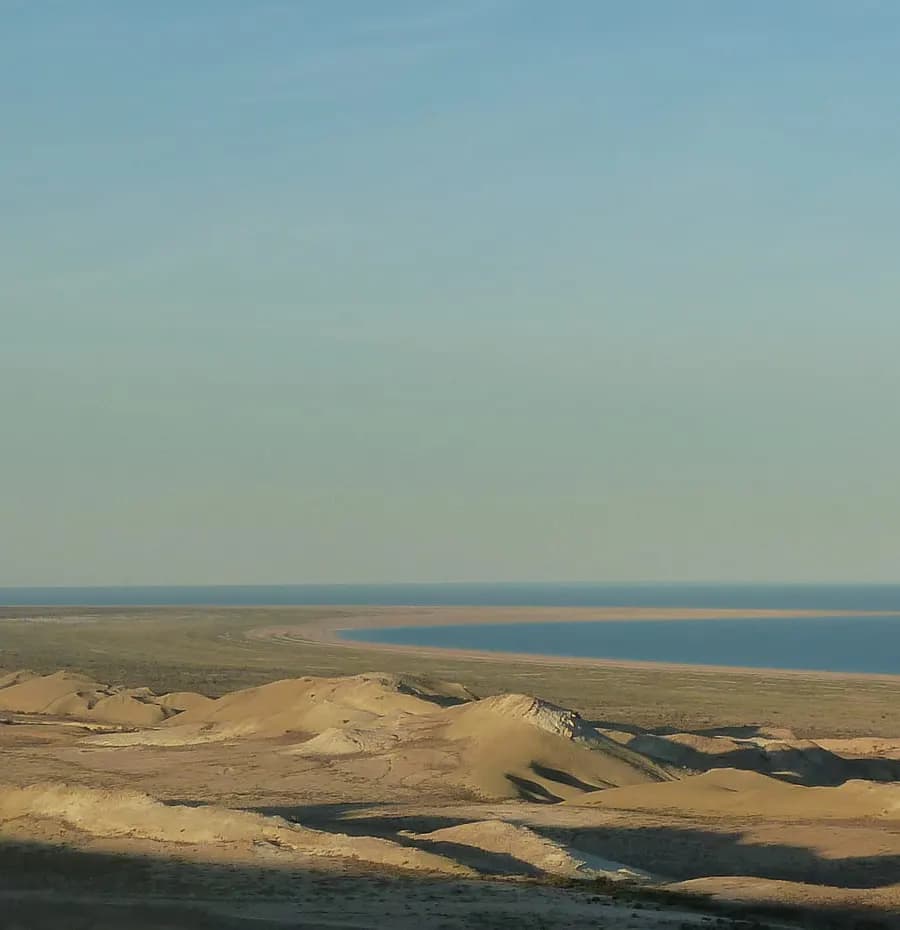
Plan Moynaq from Nukus with the ship graveyard, former fishing port, local museum, dry seabed, and Karakalpakstan route context.
View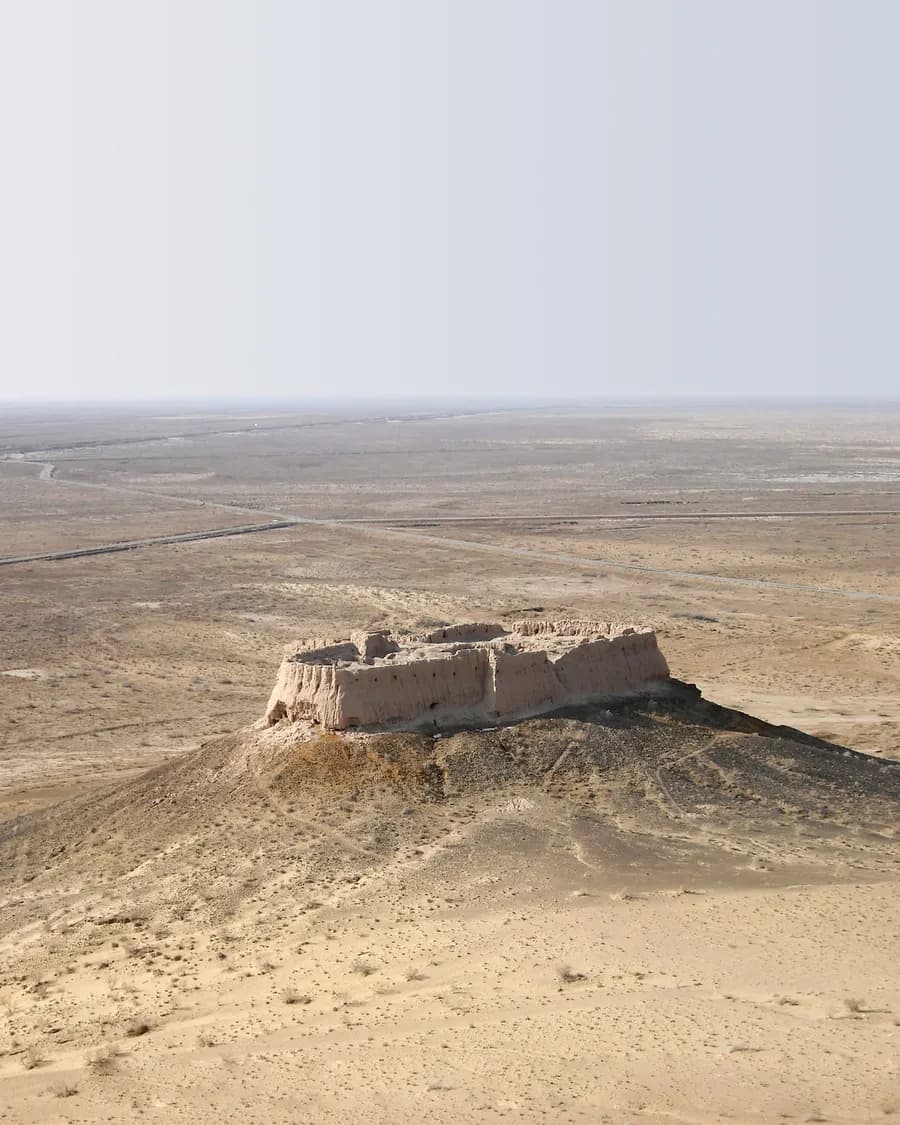
Ellikqala brings the Karakalpakstan route to the desert fortresses of Ancient Khorezm: Toprak-Kala, Kyzyl-Kala, Ayaz-Kala, open roads, access checks, and the link between Nukus and Khiva.
ViewCity in detail
Walking time, overnight location, and when day trips make sense.
1–2 nights is usually enough when the old core or main anchors get a full walking window. City tone: “Savitsky Museum, Moynaq, and ancient Khorezm”.
Start with the compact city walk first. Day trips only after the centre has settled — otherwise the stop feels like a transfer with monuments attached.
Stay close enough for an evening return on foot or a short transfer. That keeps tea, dinner, and a second pass through the lanes easy without burning the next morning.
On request
We help agencies set a realistic pace and choose the right next move — without rushing the places that matter.