
TourLink
About
Bogibaland is where Samarkand loosens its pace.
Bogibaland fits best as a short pause after Samarkand’s monumental scale: fig trees, seasonal produce, and a mahalla setting without turning the day into another heavy sightseeing block.
Bogibaland fits best as a short pause after Samarkand’s monumental scale: fig trees, seasonal produce, and a mahalla setting without turning the day into another heavy sightseeing block.
Agencies and travellers who need Bogibaland as a readable stop — strong places, honest pacing, and logistics that hold.
Route fit
Bogibaland fits best as a short pause after Samarkand’s monumental scale: fig trees, seasonal produce, and a mahalla setting without turning the day into another heavy sightseeing block.
Route fit
Bogibaland fits best as a short pause after Samarkand’s monumental scale: fig trees, seasonal produce, and a mahalla setting without turning the day into another heavy sightseeing block.
Official tourism-mahalla status gives Bogibaland a clear role as a short local pause near the city.
Map orientation
The marker gives approximate orientation for the mahalla area, not a fixed visitor entrance.
What gives the mahalla its shape
These Bogibaland-owned stops explain why the mahalla can work as a gentler Samarkand pause rather than another monument visit.
Anjirzor turns Bogibaland from a map point into a place you can feel: trees, shade, seasonal fruit, and a pause that belongs after Samarkand’s monuments.
Open placeThis is the practical face of Bogibaland as a tourism mahalla: signs, a park map, visitor information, recreation areas, and fair tables that can carry figs, crafts, dried fruit, and preserves.
Open placeBogibaland works because it stays close to Samarkand but changes the day’s texture: from monumental squares to a mahalla edge, fig shade, and a shorter local pause.
Open placeMahalla moments
Each moment stays light: fig shade, seasonal produce, local fair texture, and a clear return to the Samarkand route.
A short pause among yellow and black fig trees gives Samarkand’s monument day a softer edge.
Fruit, tea, and preserves make the stop feel rooted in Bogibaland’s garden season.
Handicrafts, figs, dried fruit, and preserves turn the mahalla stop into a small local fair moment.
Recreation spaces and fig shade let the route slow before returning to Samarkand’s monumental scale.
Signs, racks, and the information point help travelers read the mahalla before the garden areas.
The garden’s yellow and black fig trees give Bogibaland one of its most specific local images.
Before you go
Bogibaland belongs near Samarkand when the route needs a softer pause after monuments, not another long sightseeing chapter.
The strongest image is the fig garden: yellow and black trees, seasonal fruit, and shade that changes the scale of a Samarkand day.
Bogibaland is strongest when fig shade, seasonal fair texture, and Samarkand’s city edge meet in one calm pause.
Handicrafts, figs, dried fruit, preserves, signs, and the information point add value when they are part of the day’s real scene.
Bogibaland should feel like a short breath on the city edge before the route returns to Samarkand, Konigil, or another nearby village.
Choose Bogibaland for a short garden-and-mahalla pause when the season and route rhythm make the stop feel natural.
Good to know Status
Official tourism mahalla in Samarkand city coverage.
Main draw
Anjirzor fig gardens, seasonal produce, fair traditions, and a quieter mahalla pause.
Route role
A gentle city-edge stop after monument-heavy Samarkand.
Season and pace
Best treated as a short, seasonal pause rather than a full sightseeing block.
Nearby Samarkand-side stops
Samarkand, Konigil, and Yangijoy stay separate route choices; pair them with Bogibaland only when the day remains unhurried.
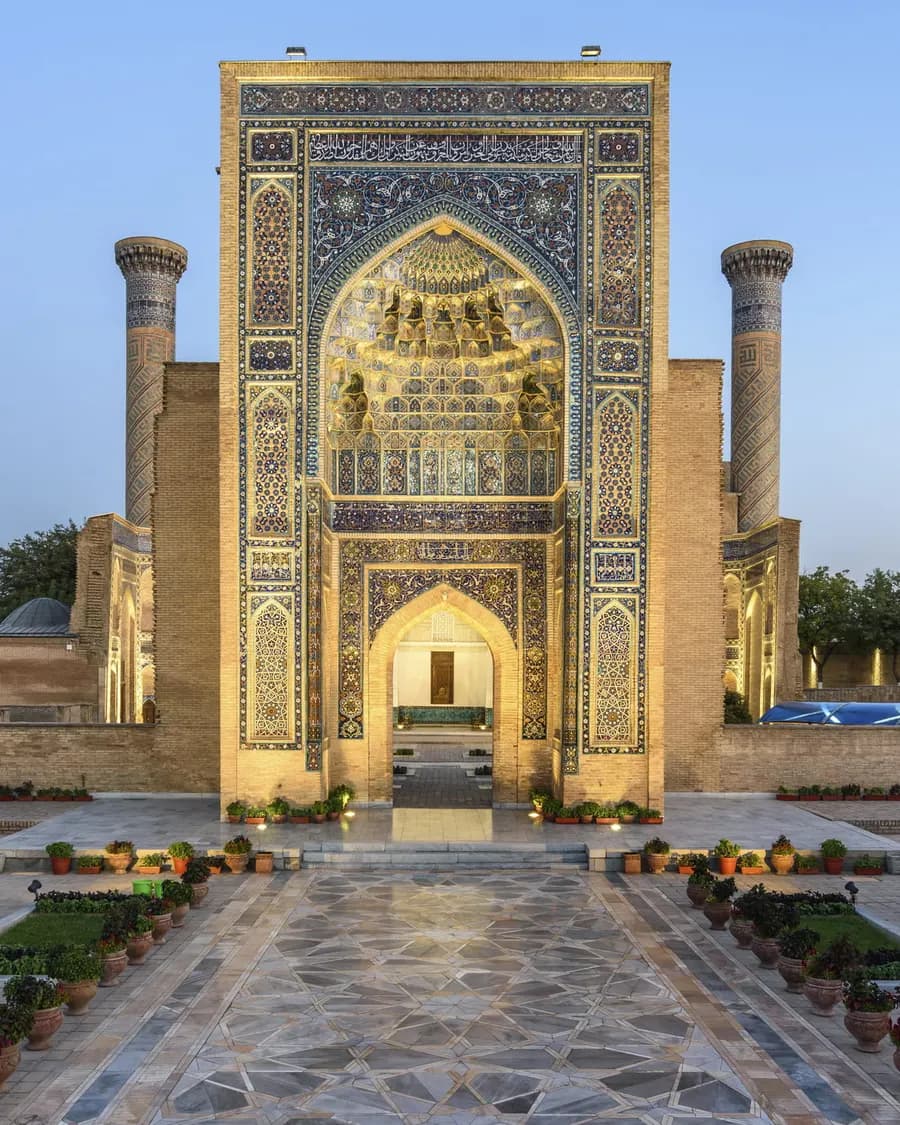
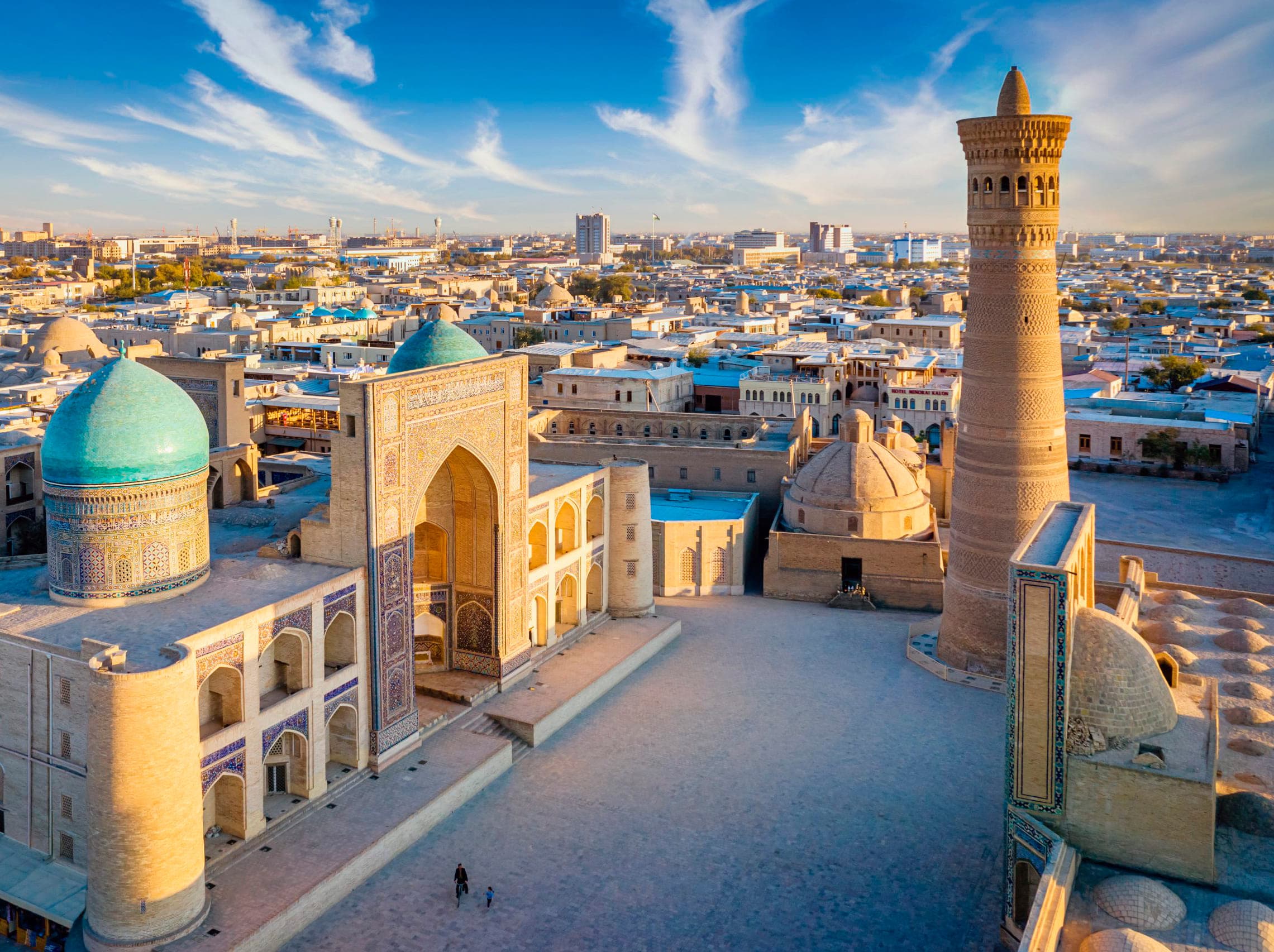
Samarkand brings the route to monumental scale: Registan, Shah-i-Zinda, Bibi-Khanym, Gur-e-Amir, Siab Bazaar, Afrosiab, and Ulugh Beg Observatory.
ViewKonigil turns a Samarkand route toward handmade paper at Meros, Siab-side shade, a water wheel, tea, and a clear return to the city.
ViewYangijoy is a developing Samarkand District tourism village where a small rural pause can soften the route after the city.
ViewCity in detail
Walking time, overnight location, and when day trips make sense.
one focused city day plus overnight is usually enough when the old core or main anchors get a full walking window. City tone: “A Samarkand city-edge mahalla of fig shade, fairs, and quieter pauses”.
Start with the compact city walk first. Day trips only after the centre has settled — otherwise the stop feels like a transfer with monuments attached.
Stay close enough for an evening return on foot or a short transfer. That keeps tea, dinner, and a second pass through the lanes easy without burning the next morning.
On request
We help agencies set a realistic pace and choose the right next move — without rushing the places that matter.