TourLink
Impression · Samarkand
Some places stay with you better when there are fewer people around. Registan is one of them.
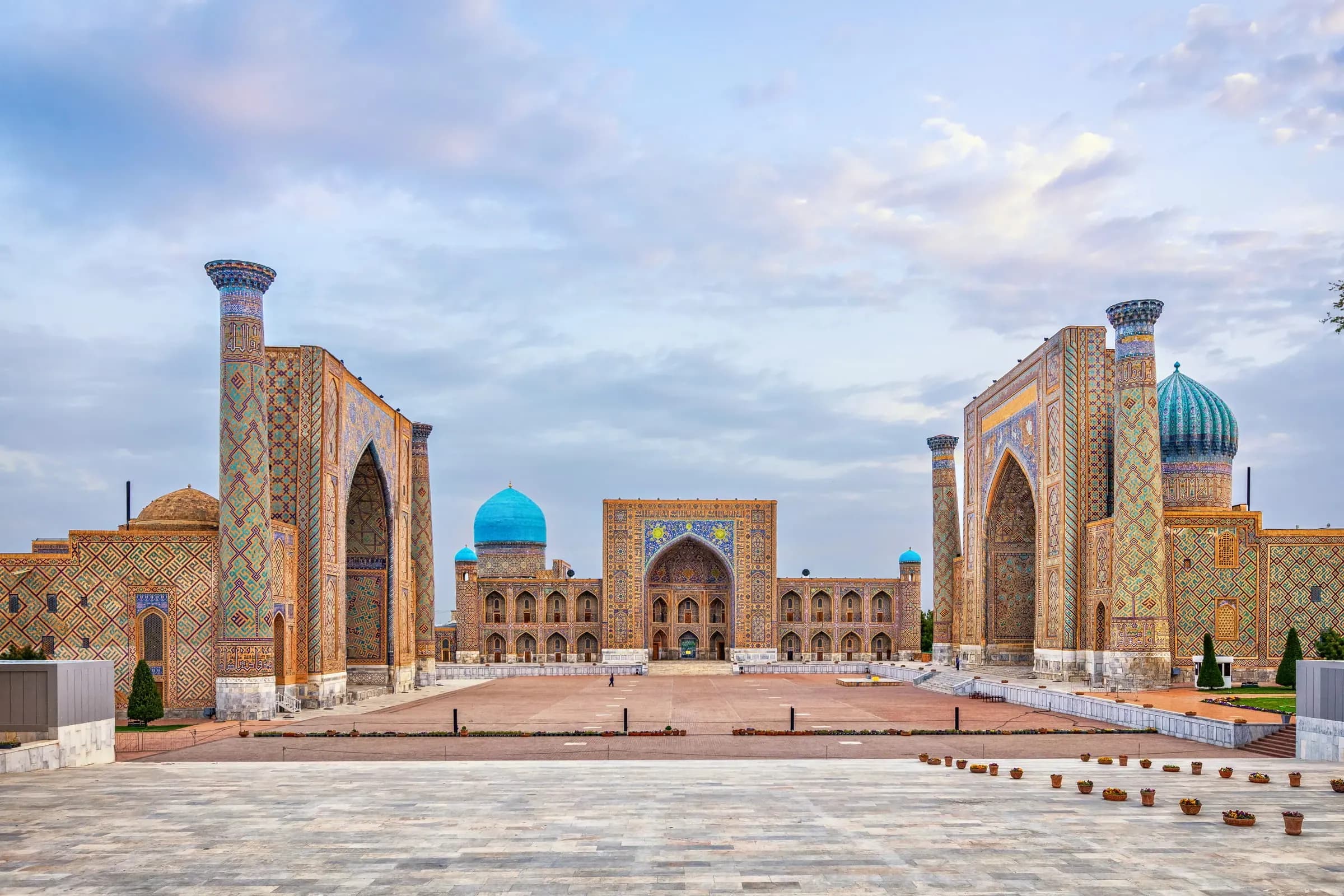
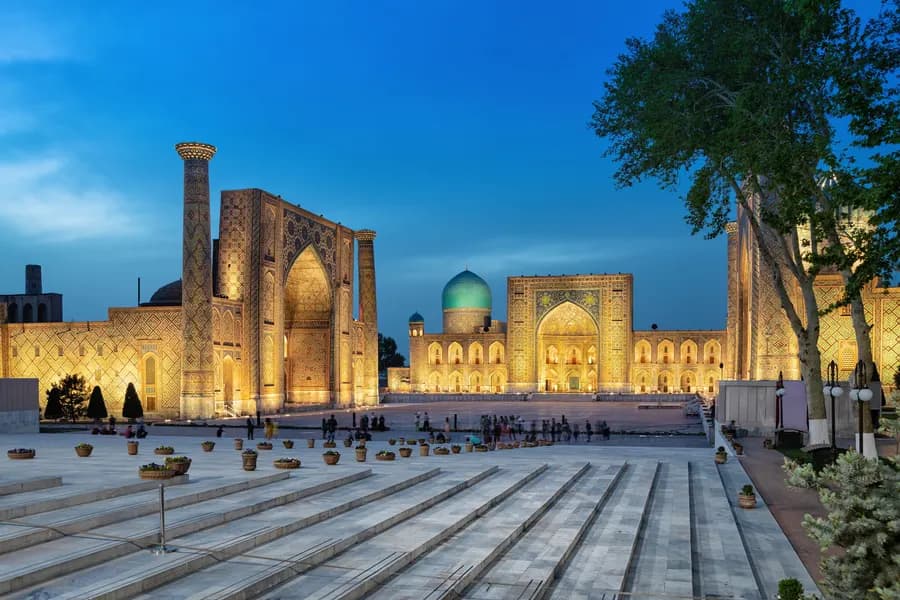
By day the square is loud. Tour groups follow one another, the guides speak in four languages, everyone photographs the blue mosaics and hunts for details on the portals. Towards evening that ends. The sun drops, the light falls on the madrasah façades from the side, the shadows stretch out, and the square seems to slow its pace.
The three madrasahs did not appear here all at once. The first was the Ulugbek Madrasah, built between 1417 and 1420, when Samarkand was the scholarly centre of the Timurids. Ulugbek was a ruler and an astronomer, and his madrasah taught not only religion but mathematics and astronomy. Two centuries later Sher-Dor was raised opposite it. Its façade answers Ulugbek's, but speaks in its own voice: above the portal, tigers with the sun on their backs, a subject you rarely see in Islamic architecture. Tilla-Kari closes the ensemble, the one “covered in gold”. Inside is a mosque finished in gold, and in the evening it glows more softly than by day.
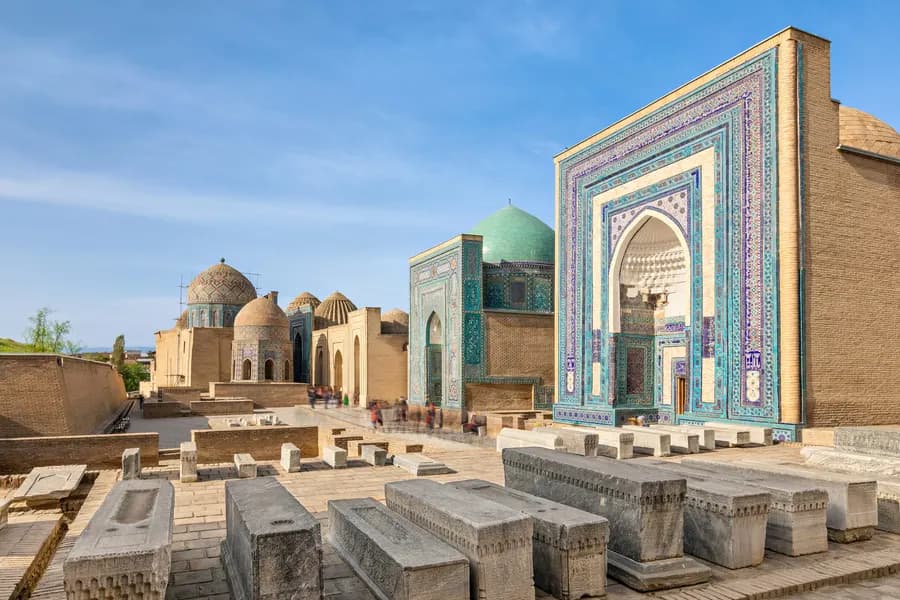
The word “Registan” is usually translated as “sandy place”. Trade was done here once and decrees were read out; the square was the centre of the city, not a museum. In 2001 historic Samarkand, Registan included, was added to the UNESCO World Heritage List.
But the buildings are not the only thing worth looking at. What matters most at Registan is the space between them. Stand in the middle and the three façades form a stage. Each portal is a picture of its own; together they add up to a single whole.
The colours change by the hour. In the morning the mosaic is cold and severe. By day it is bright, almost graphic. In the evening the light blue sinks into deep blue and the gold grows warm.
If you stay on after the tour, the square empties and a different Samarkand appears. Small ornaments show up inside larger ones, calligraphy along the edges of the portals, the differences between the three madrasahs that blur together in daylight. Then the floodlights come on, and for a few minutes the familiar architecture looks like stage scenery, in the gap when the day is over and the night has not begun.
Then walk away from the square. Behind the big façades the mahallas begin: narrow lanes, houses built around inner courtyards. You can hear neighbours talking, there is a smell of fresh bread, and somewhere along the lane you come across a small workshop. Registan is part of this city, not a monument standing on its own.
If you are in Samarkand, do not leave the square the moment the tour is over. Wait for it to settle. It takes half an hour.
Share
More impressions